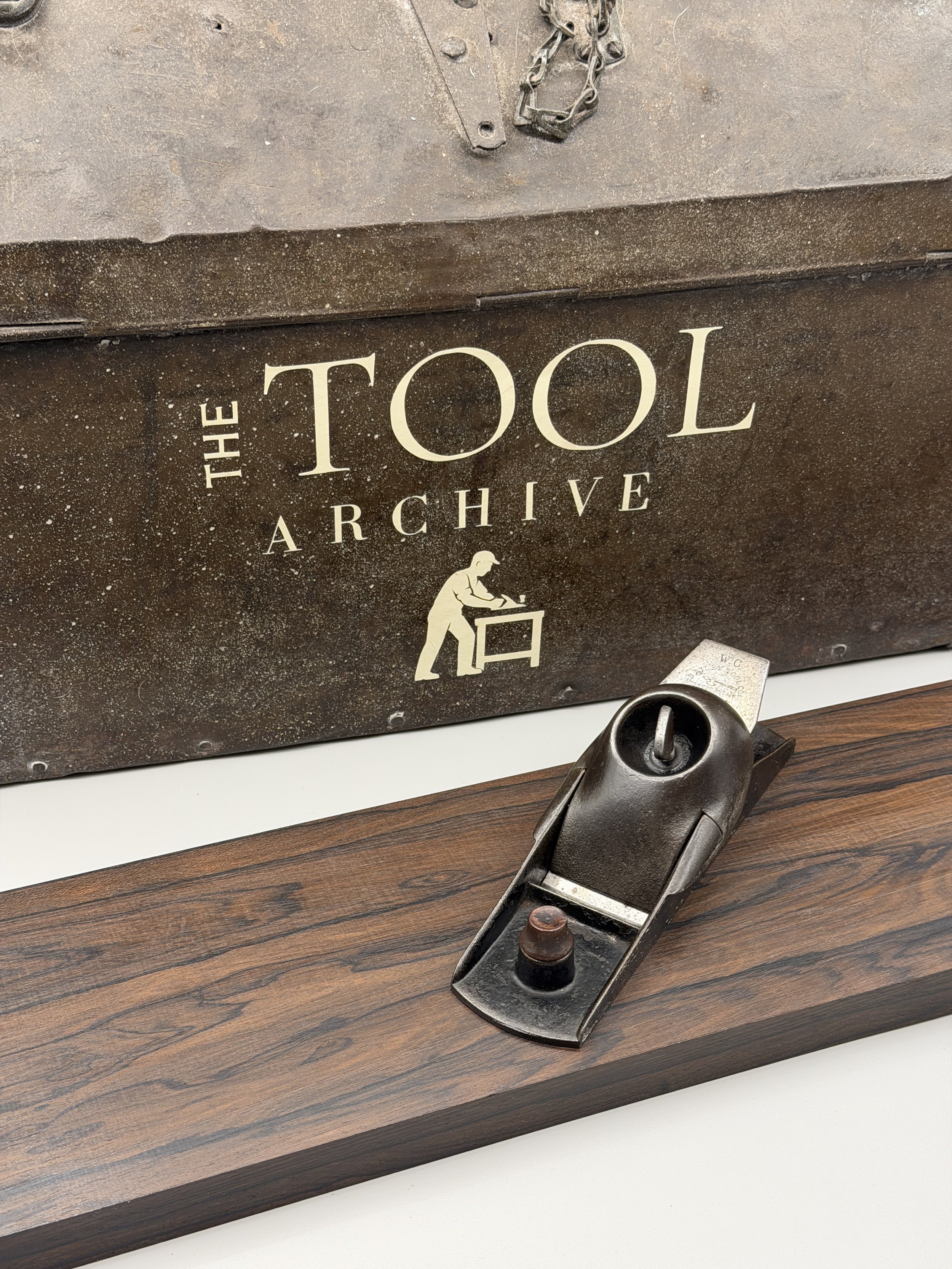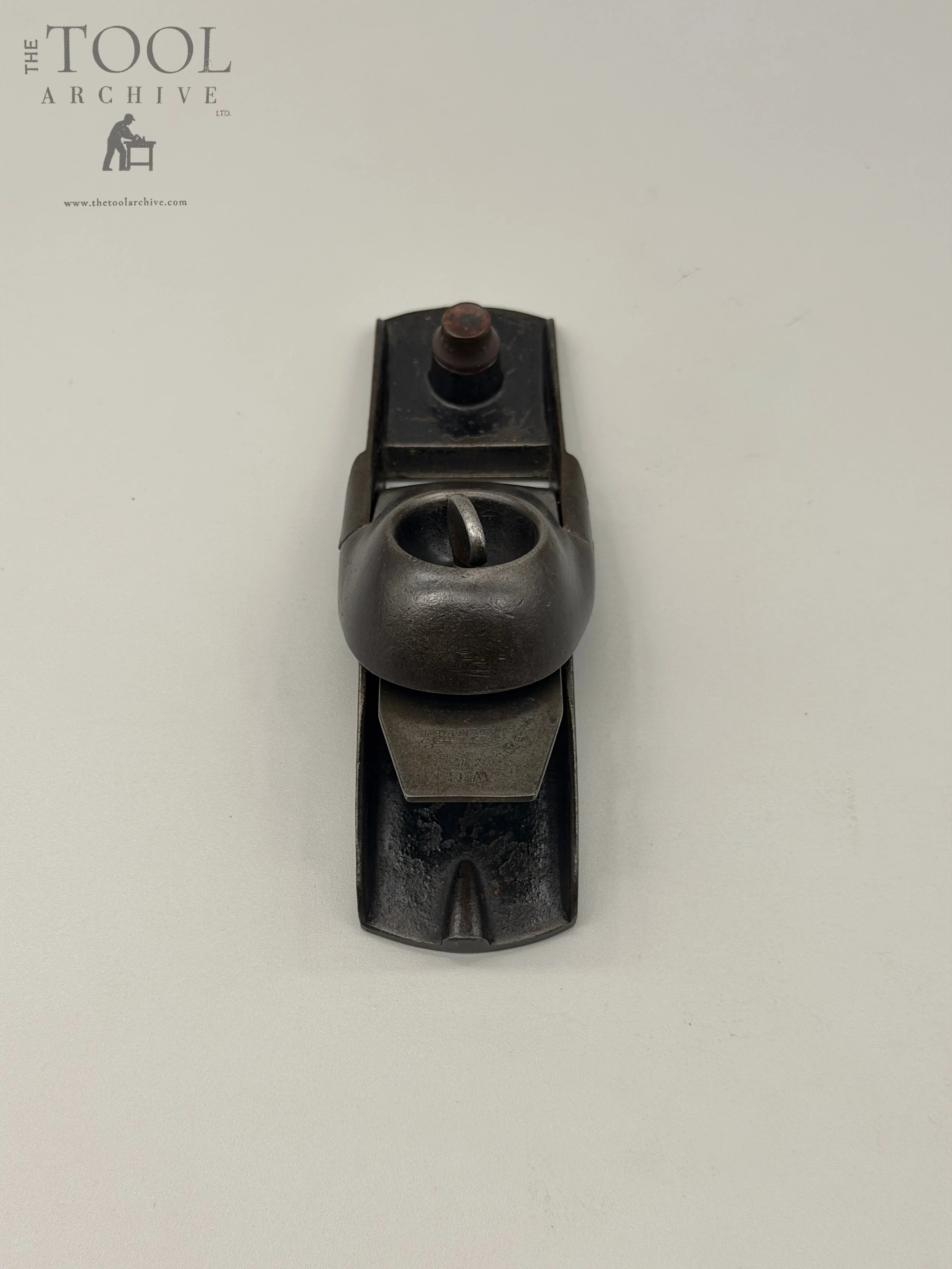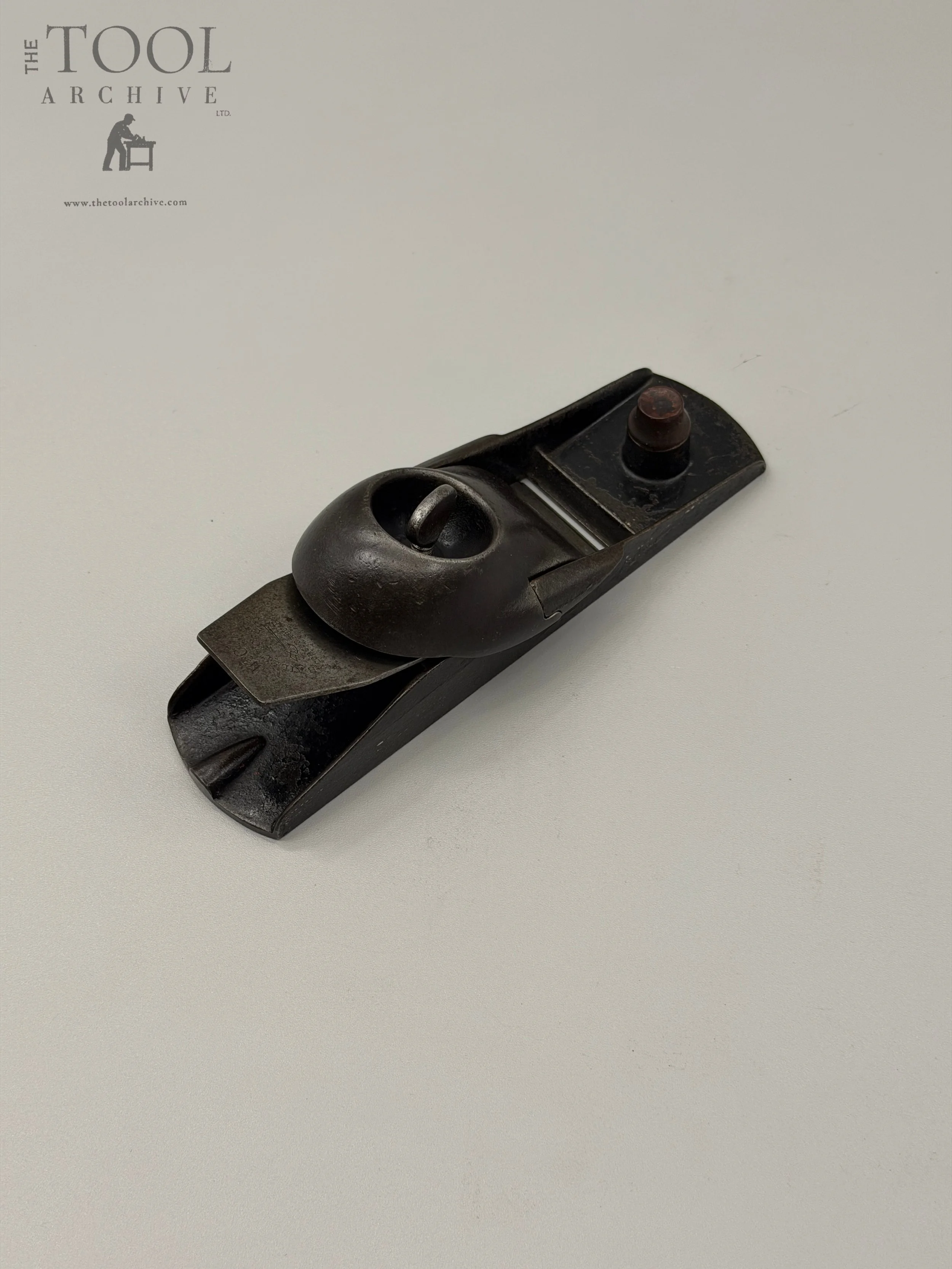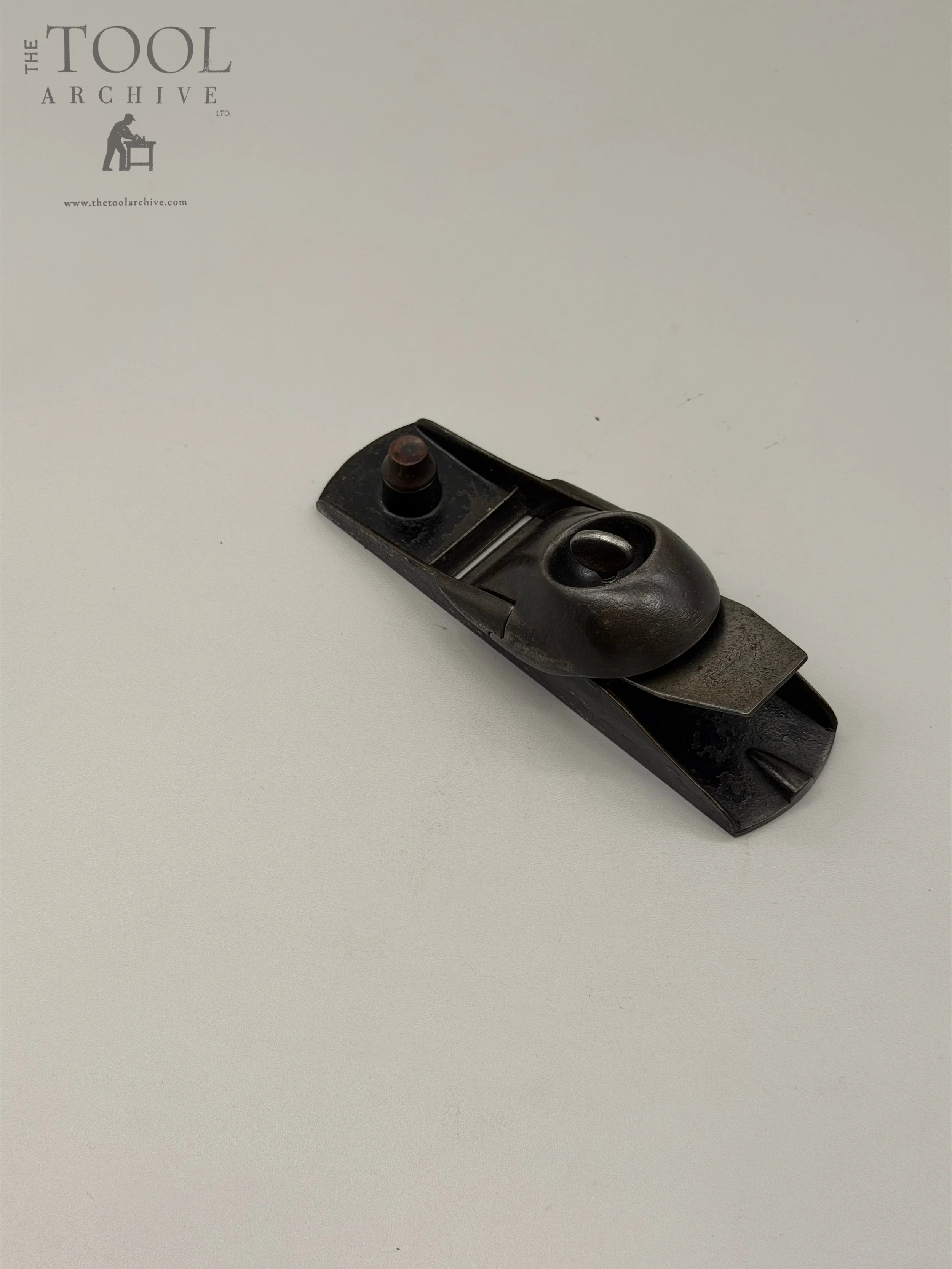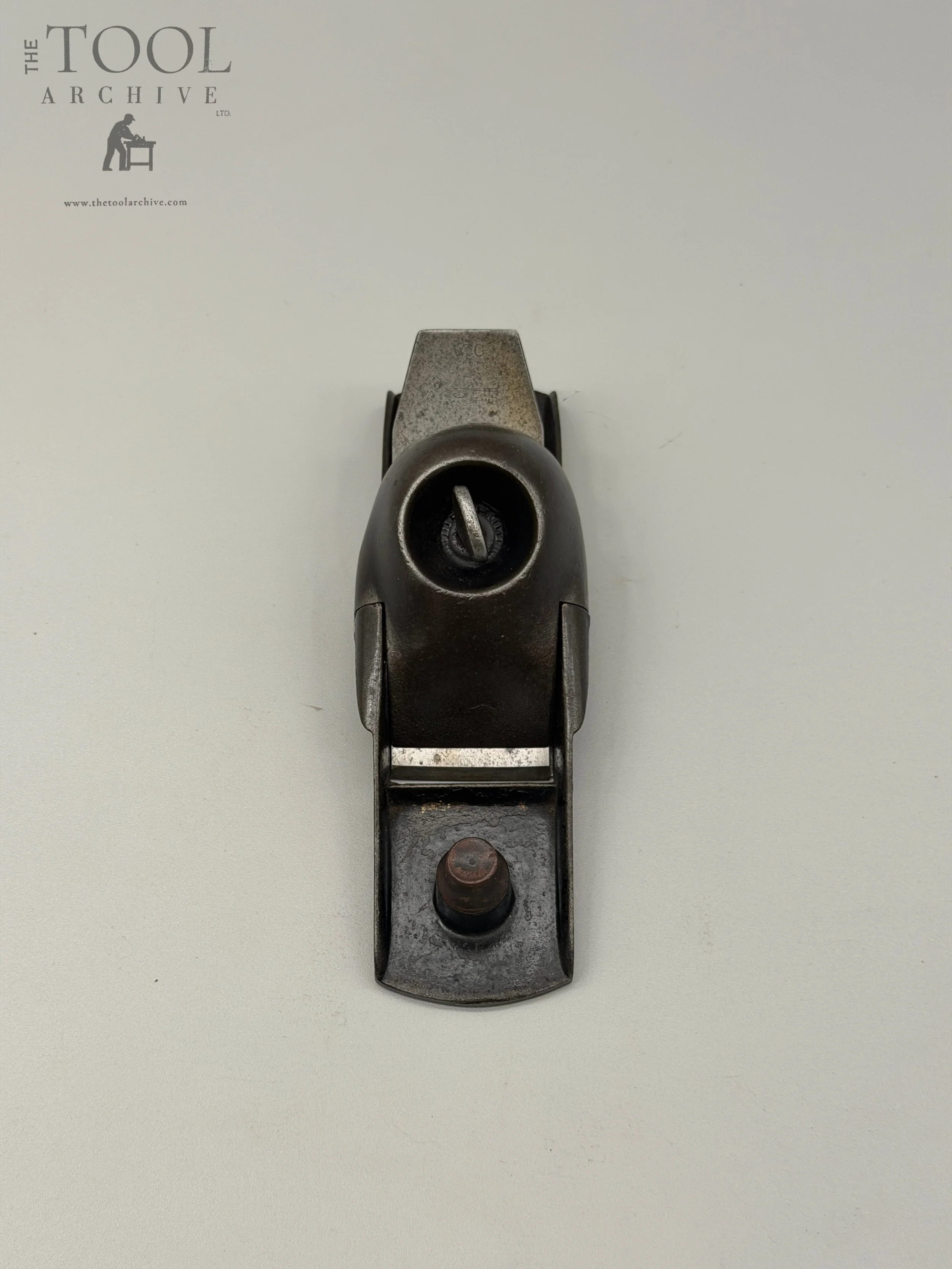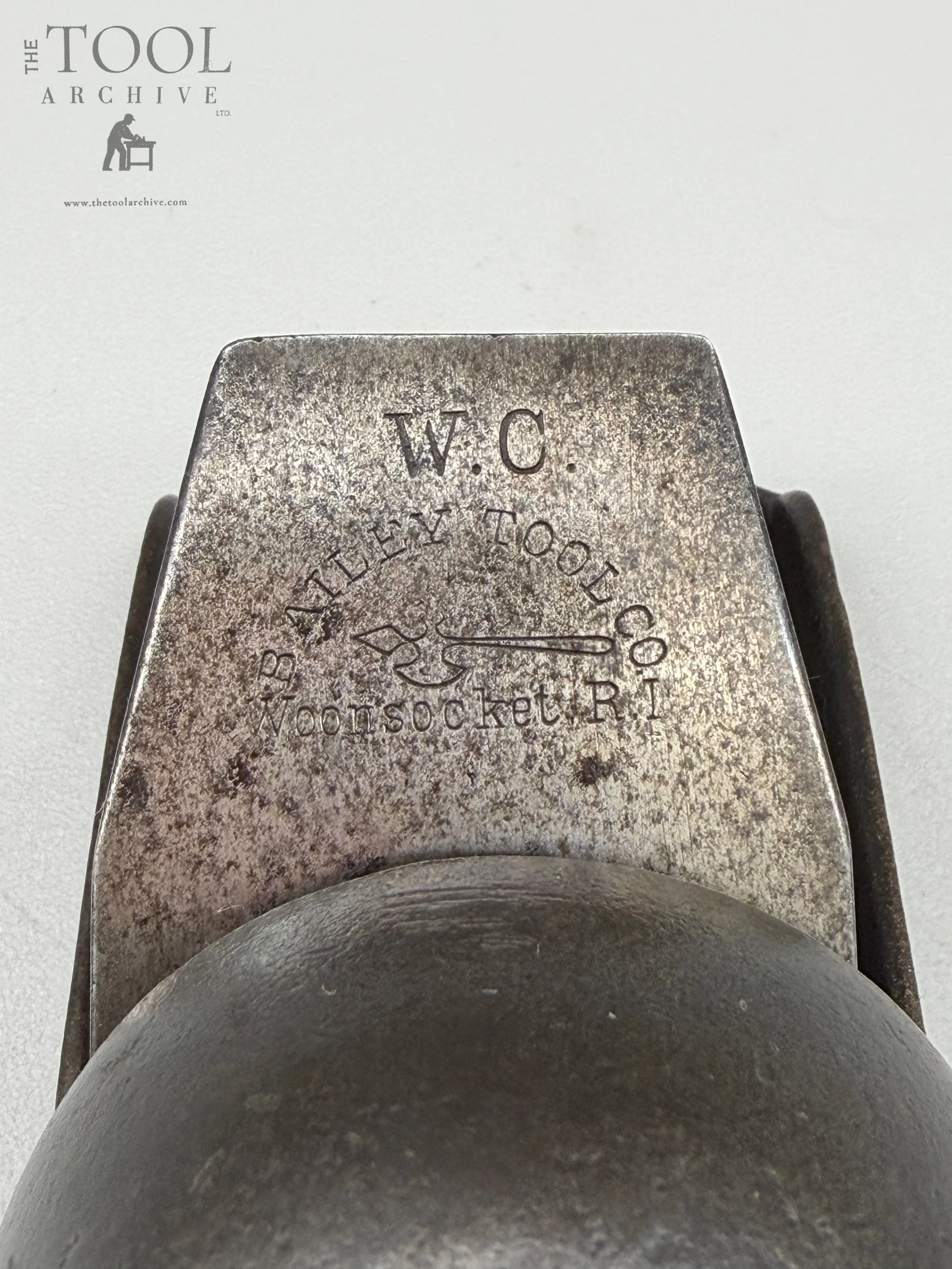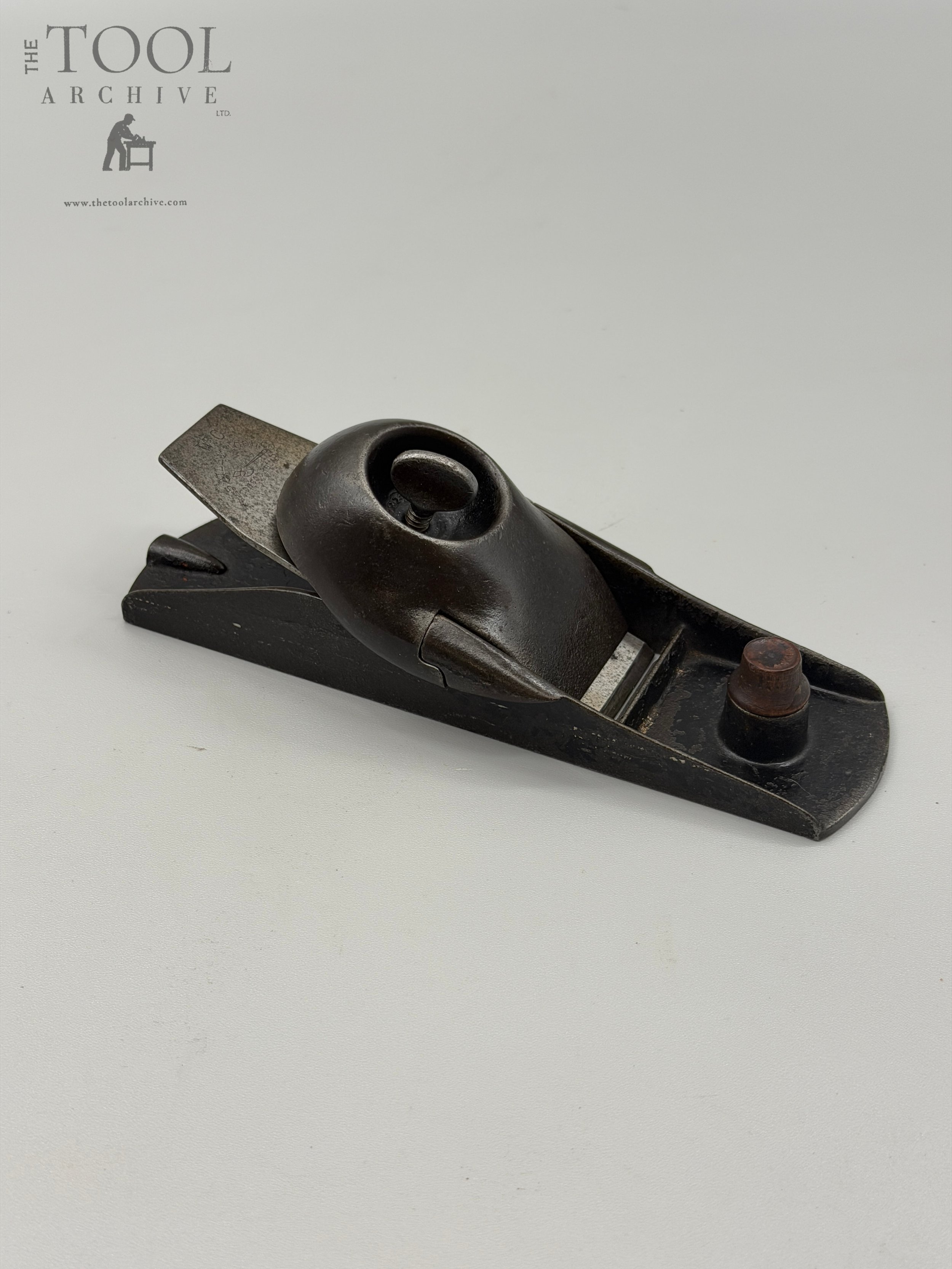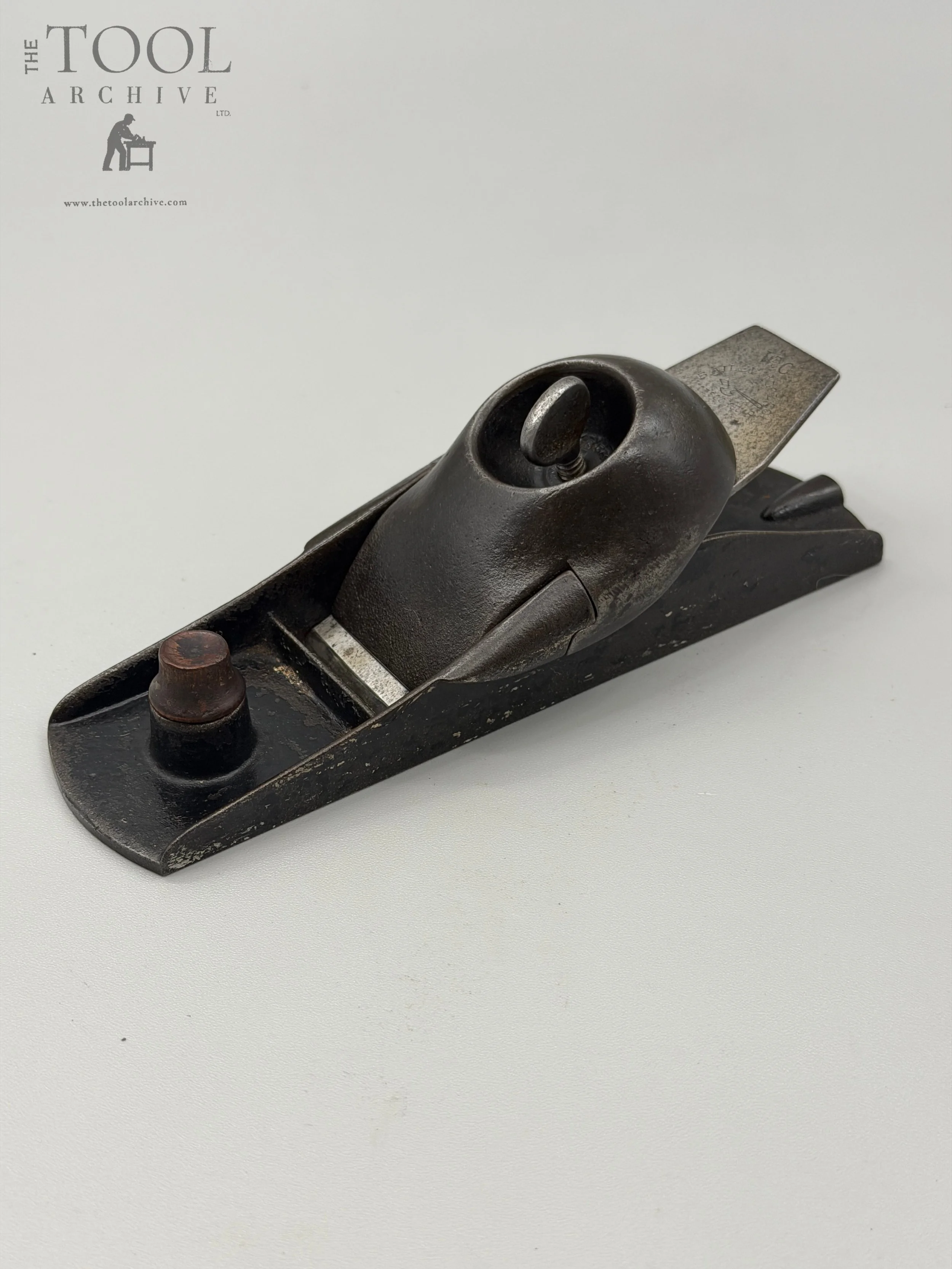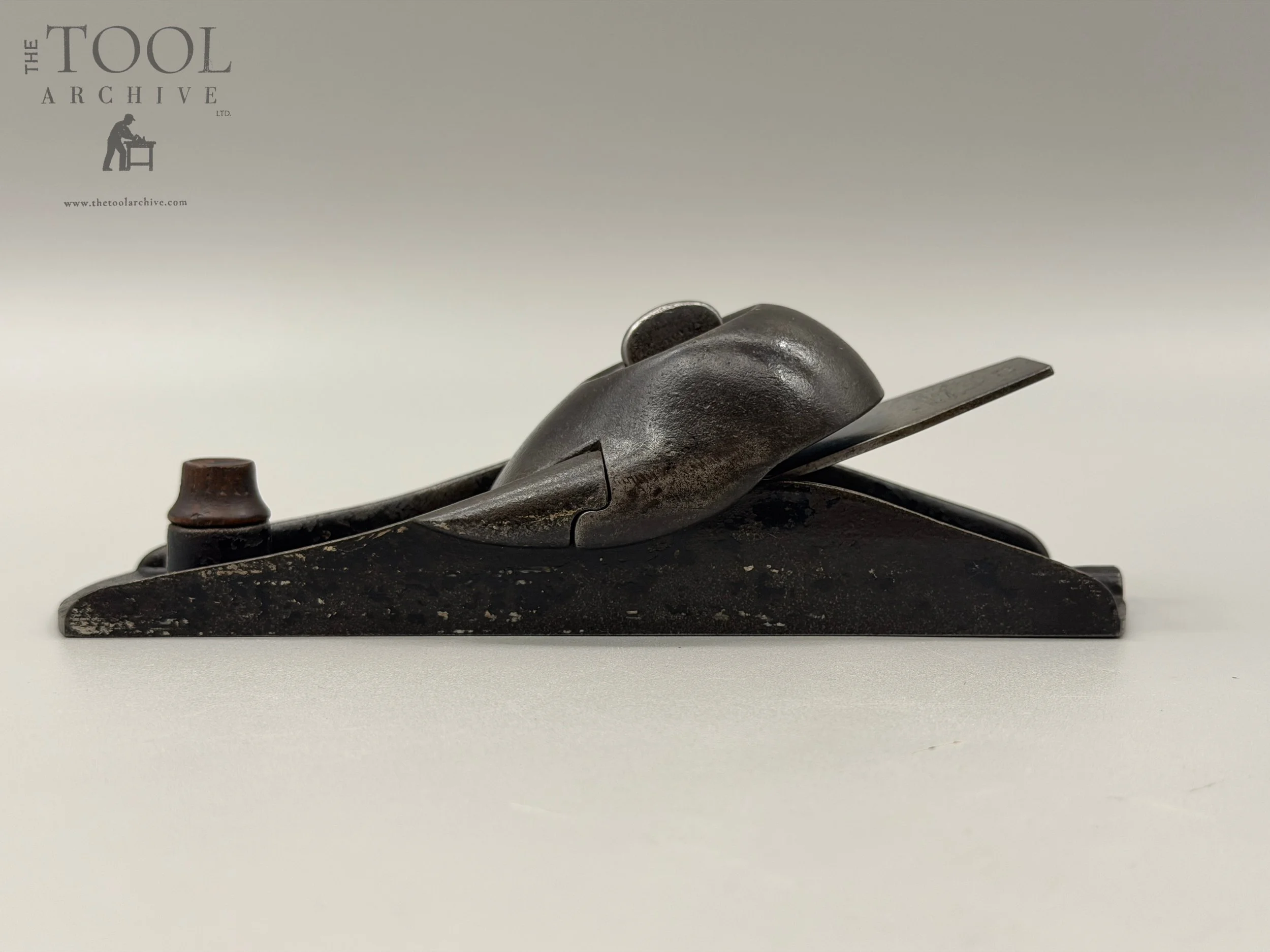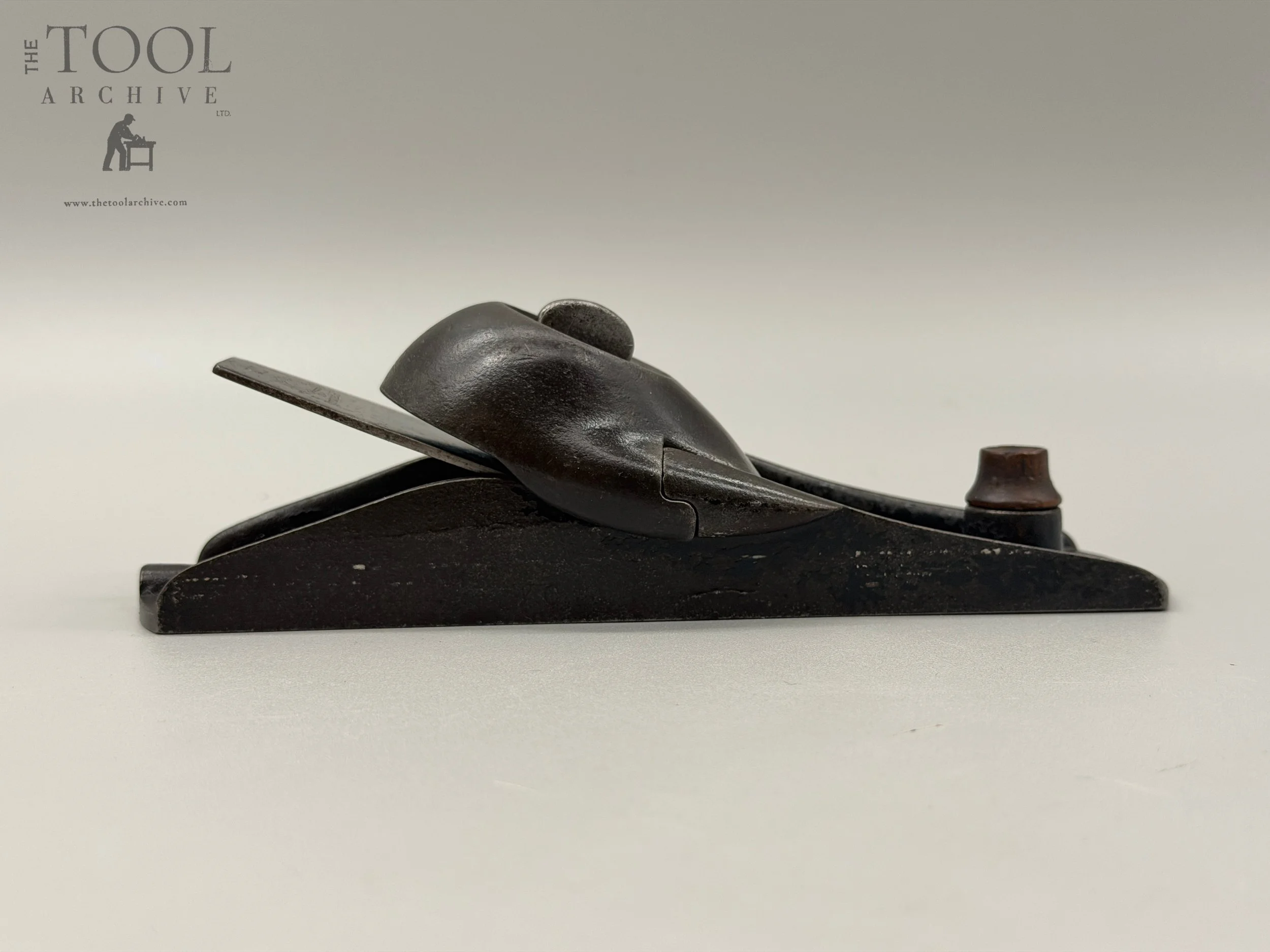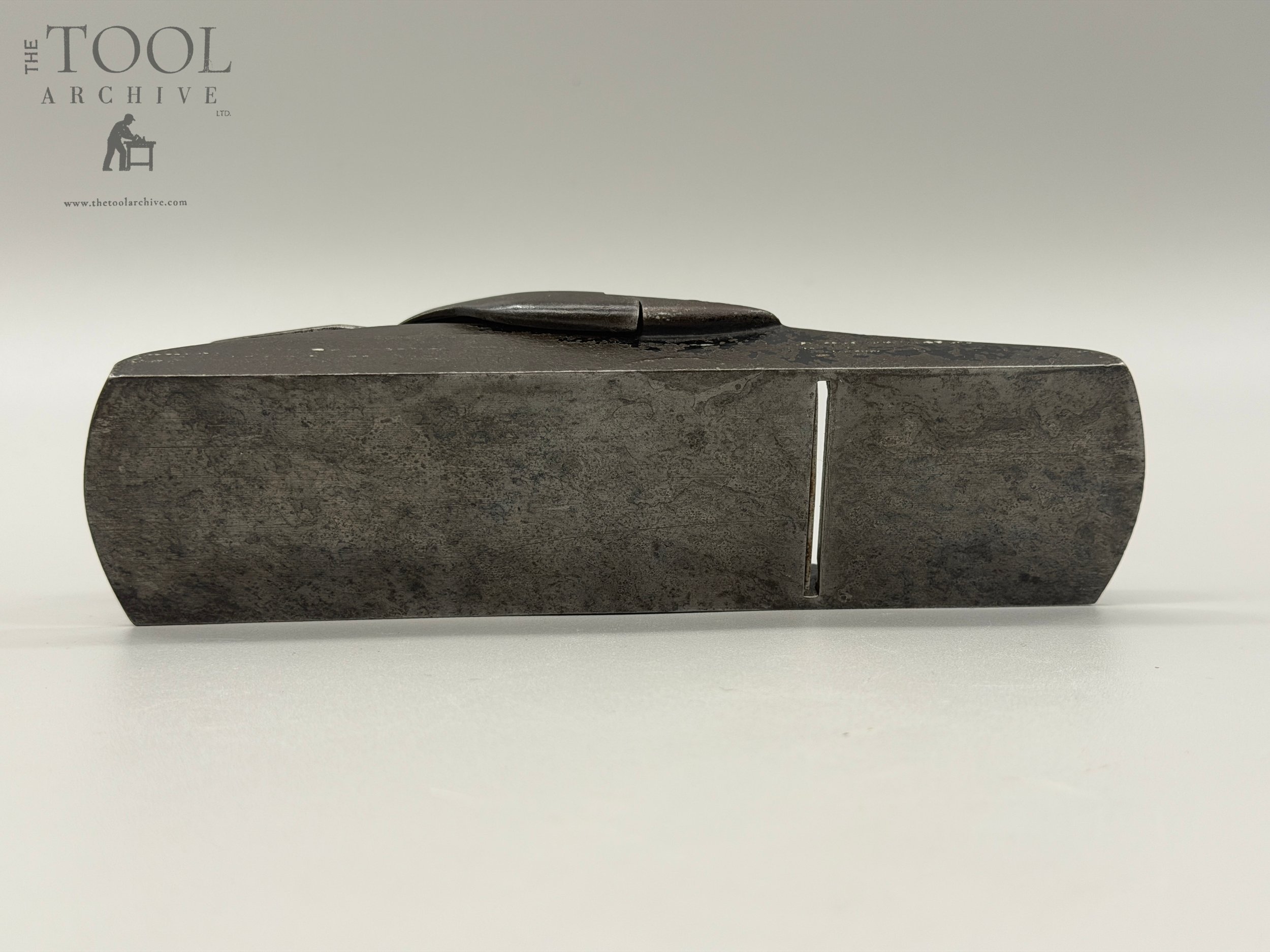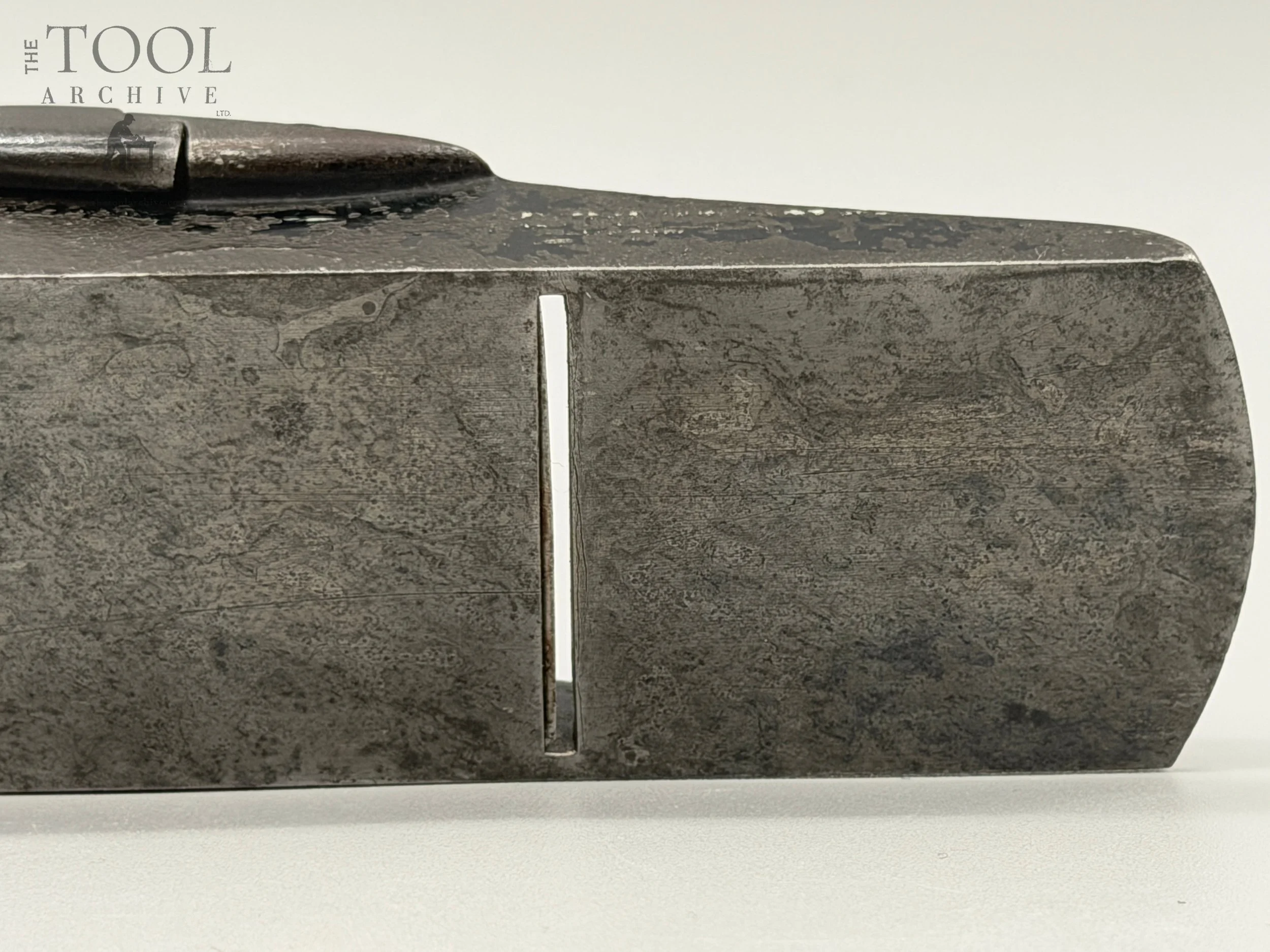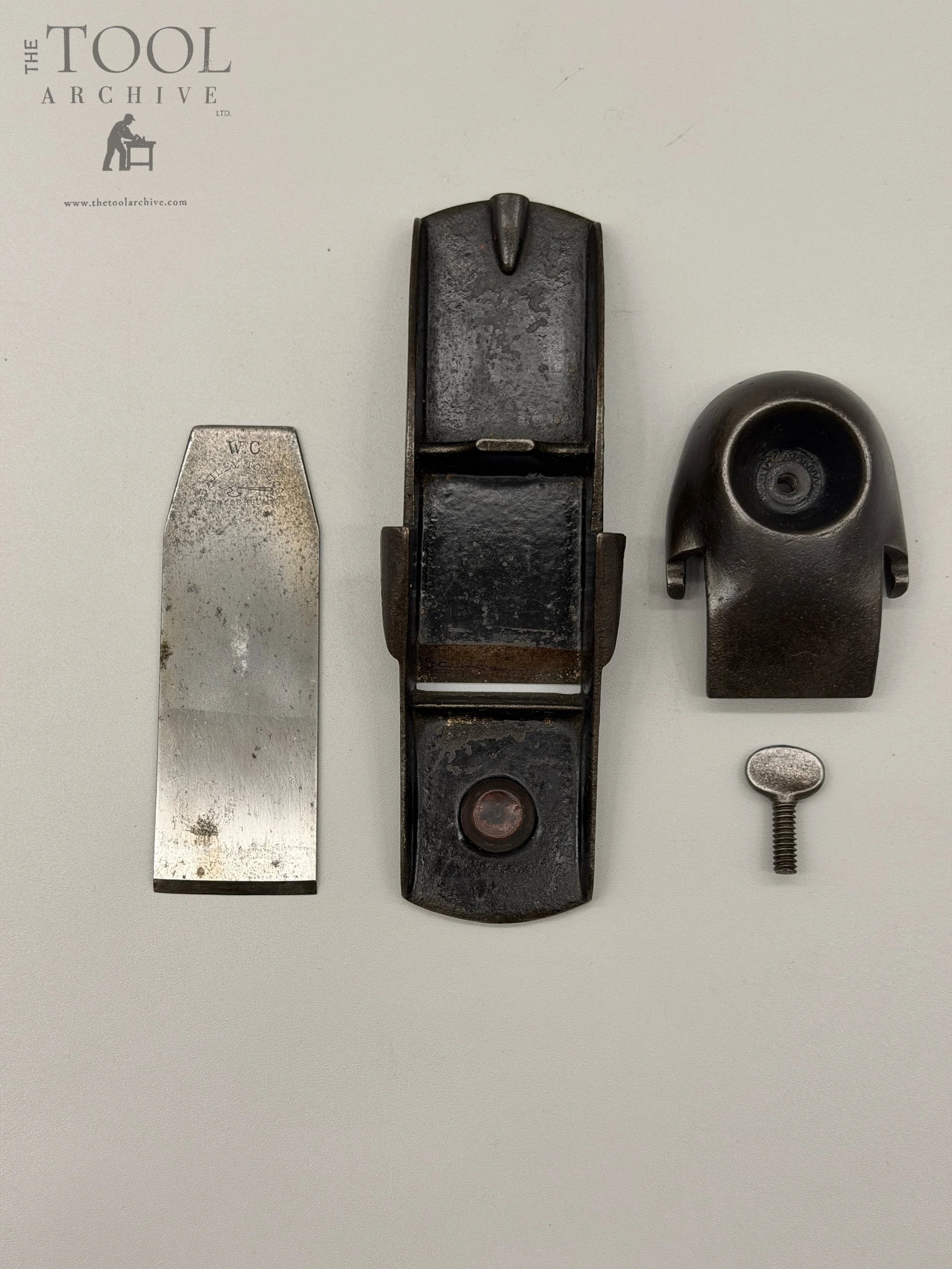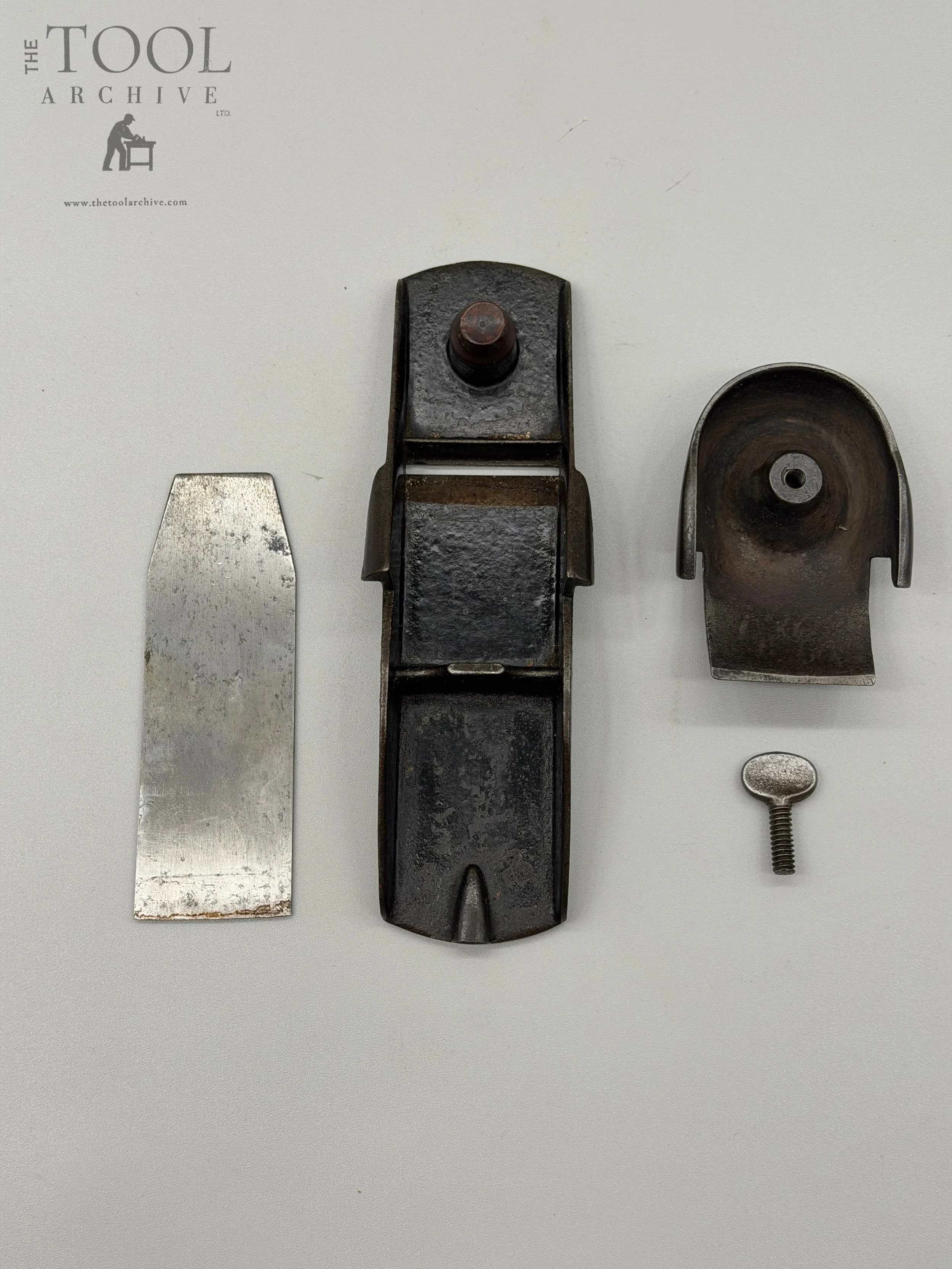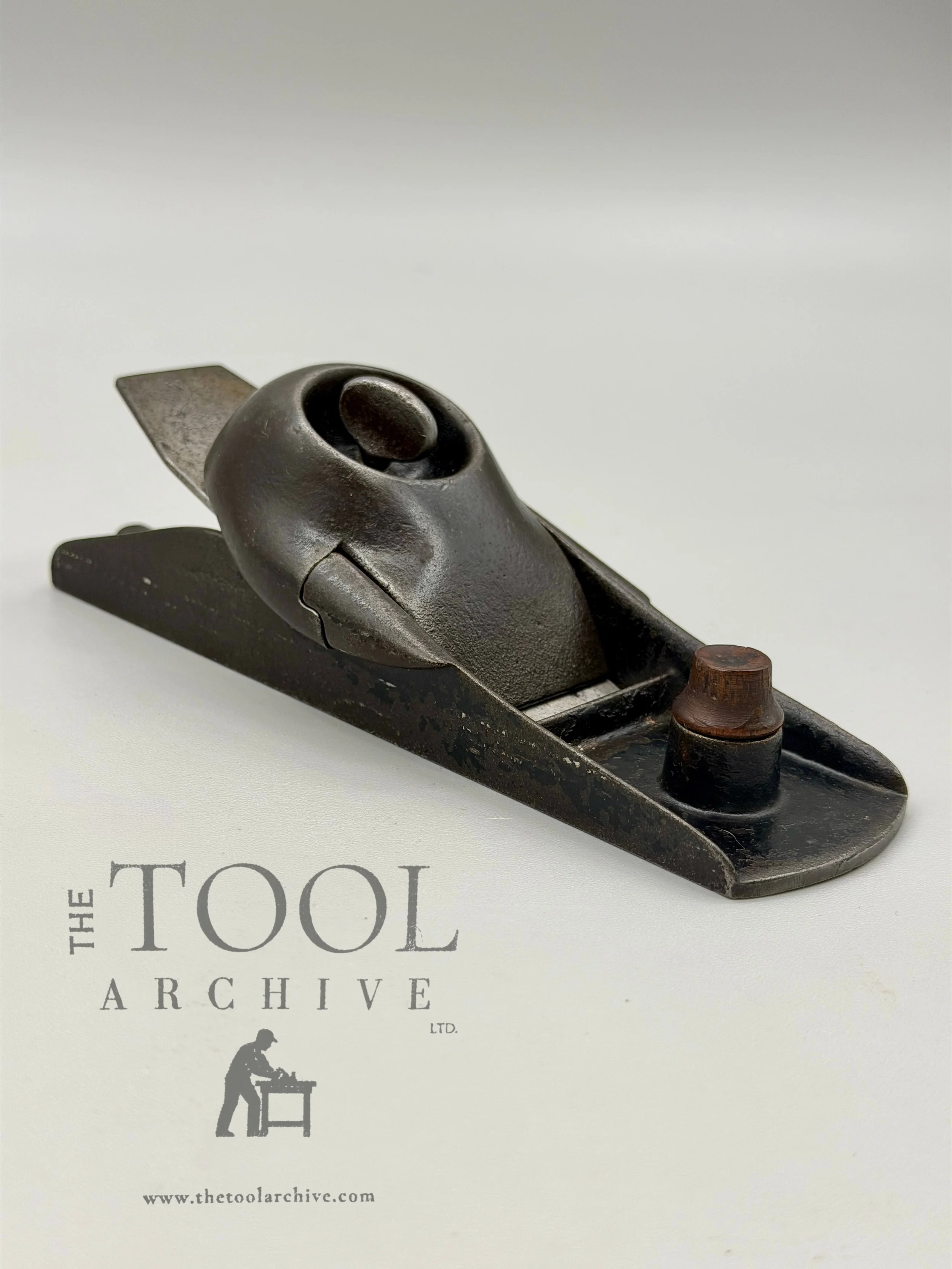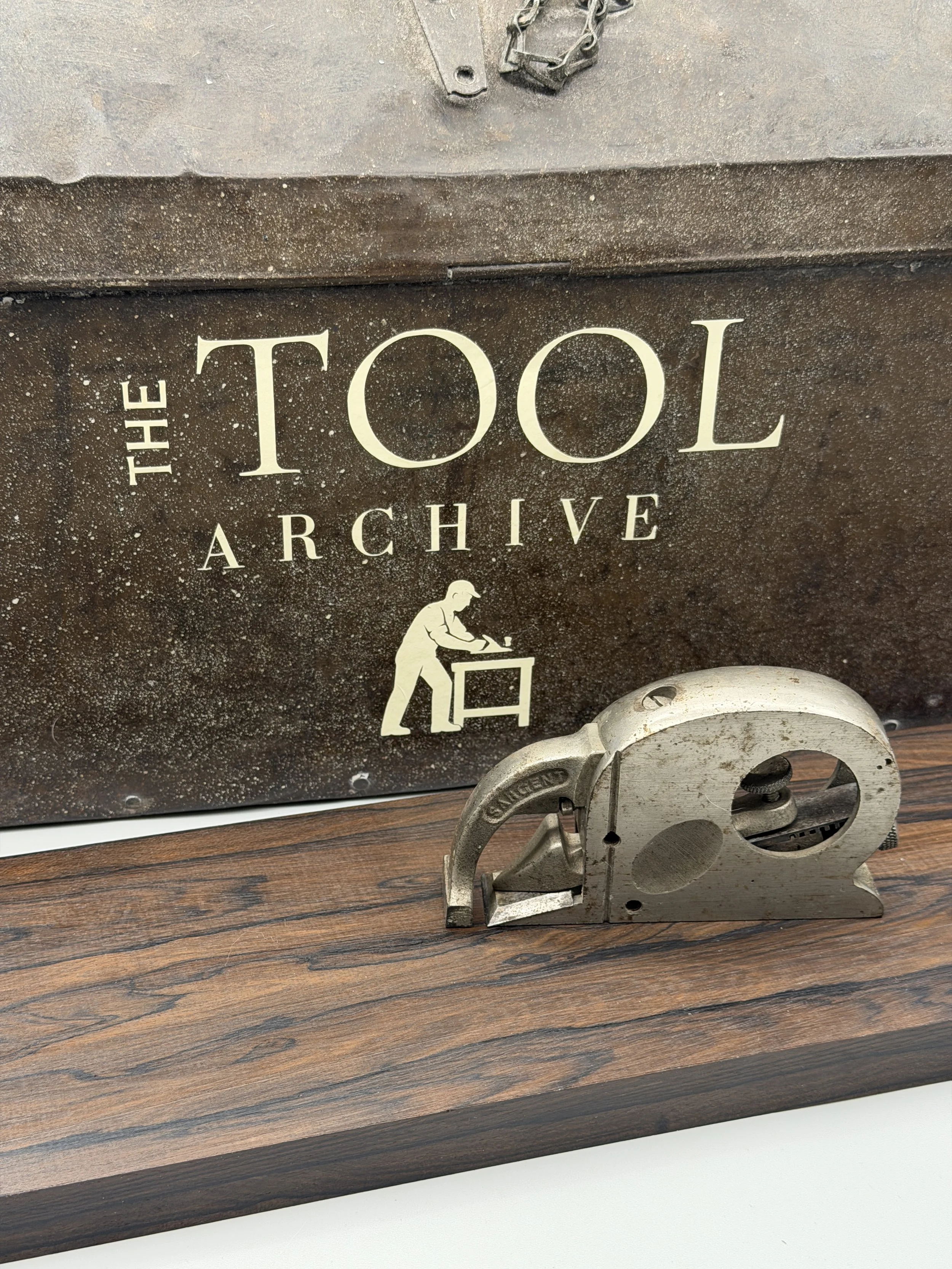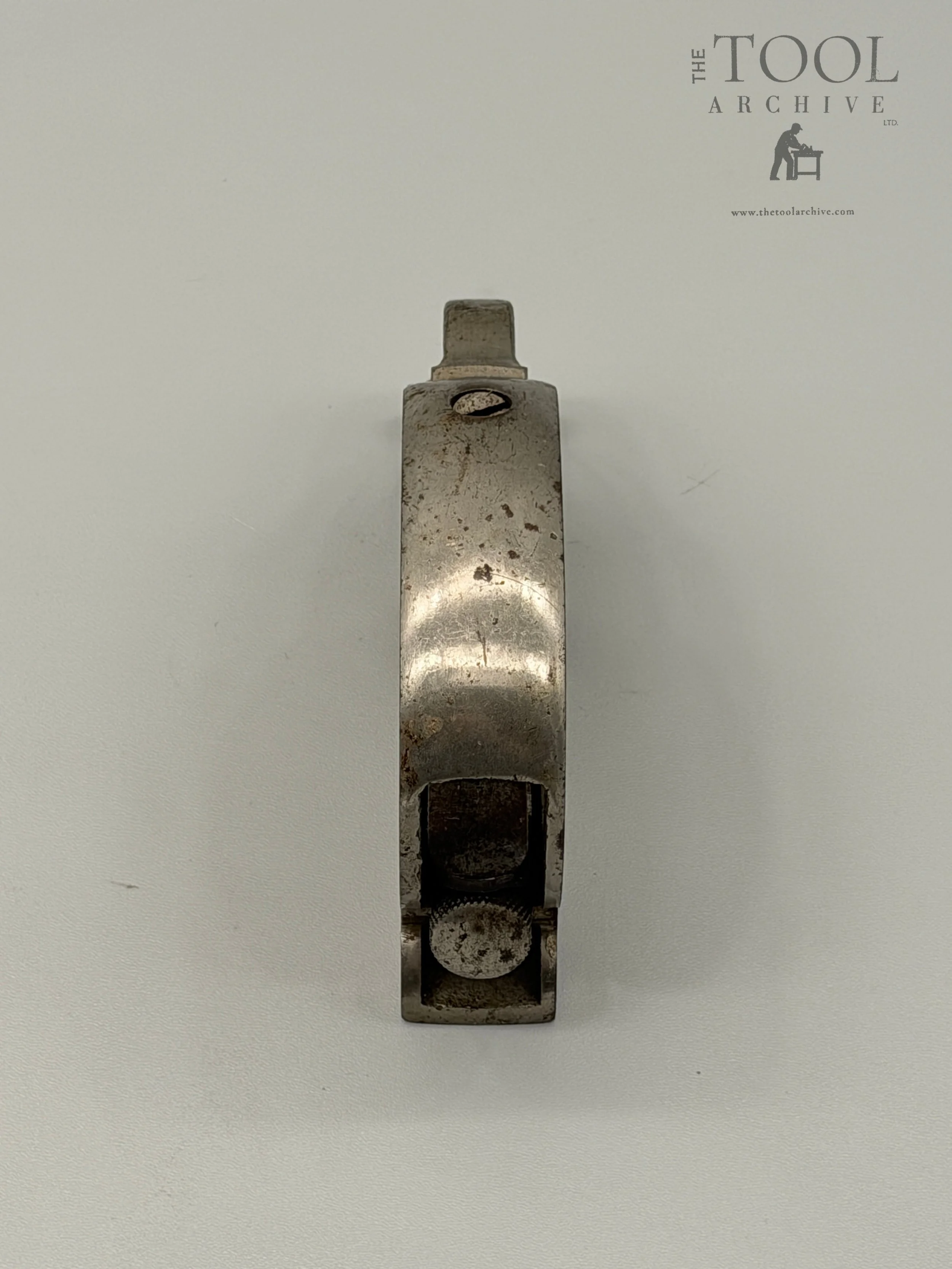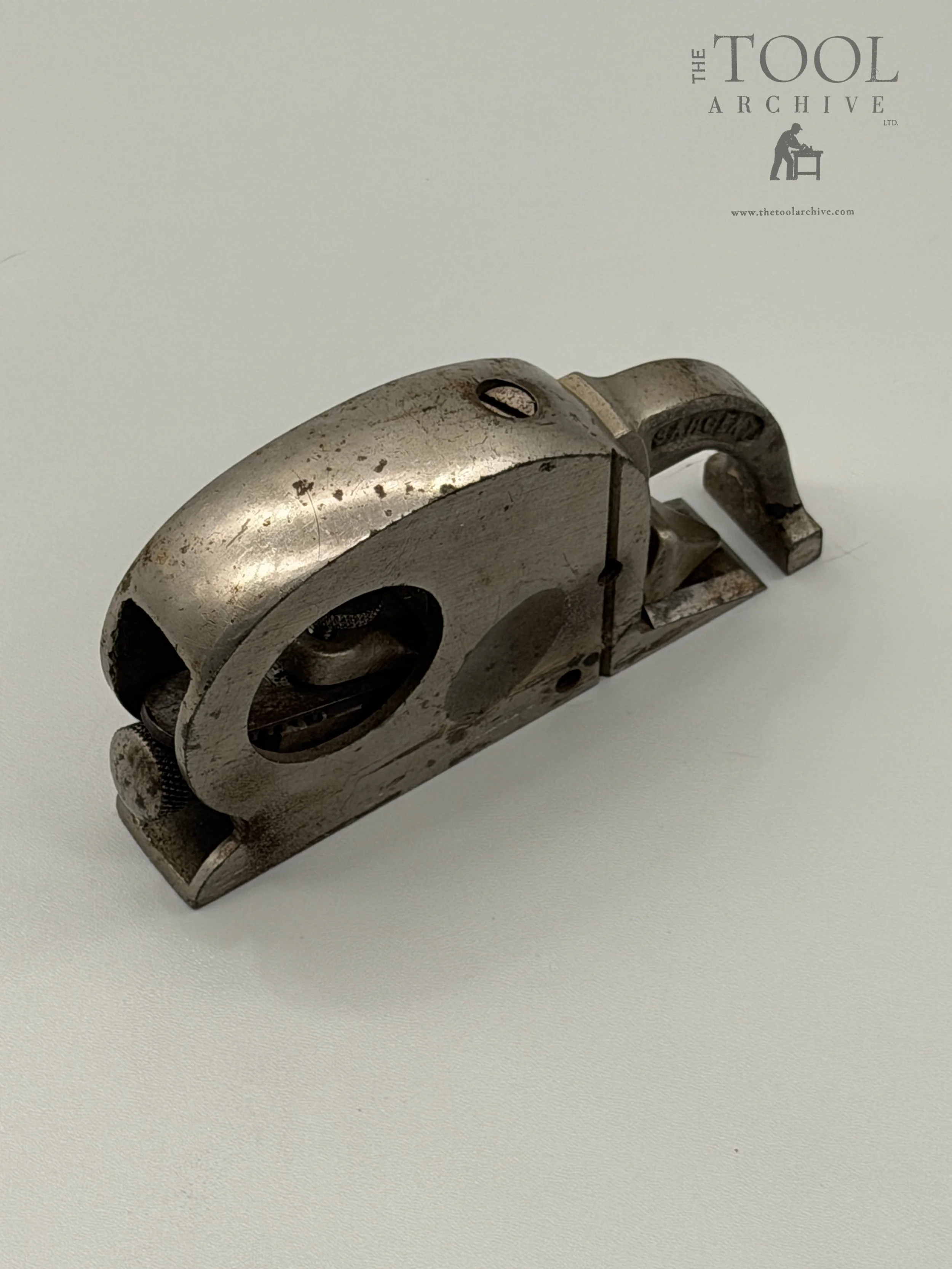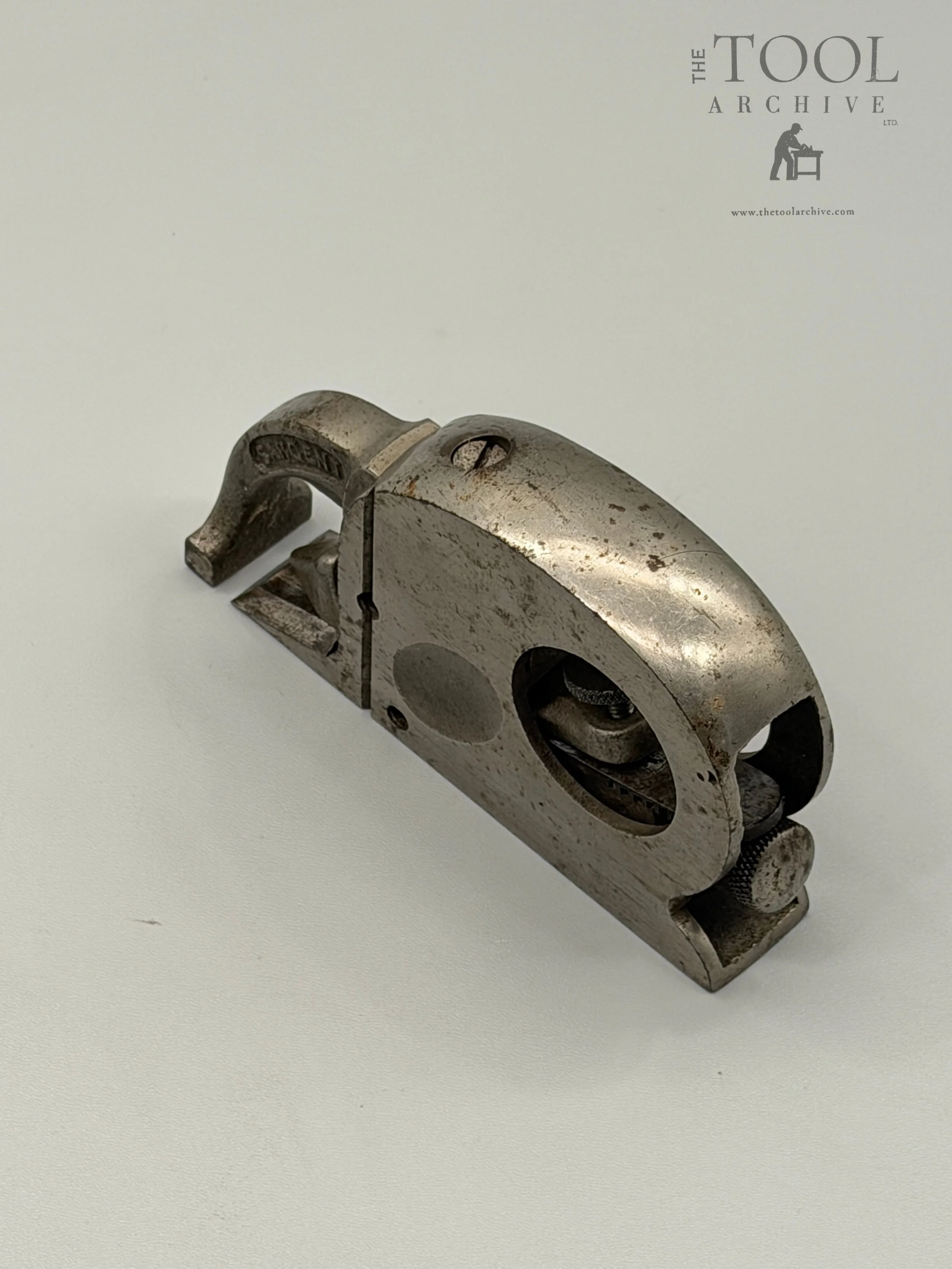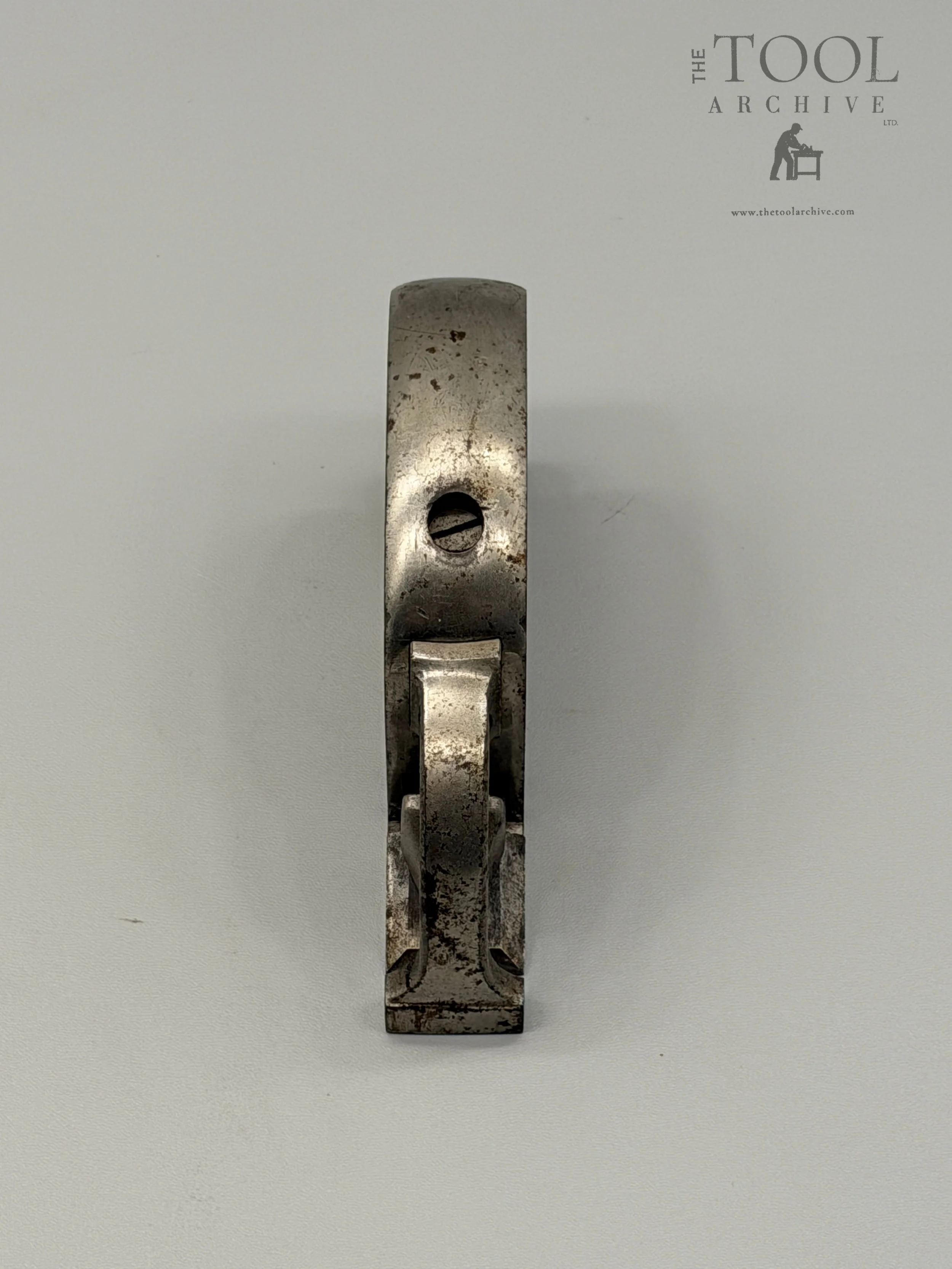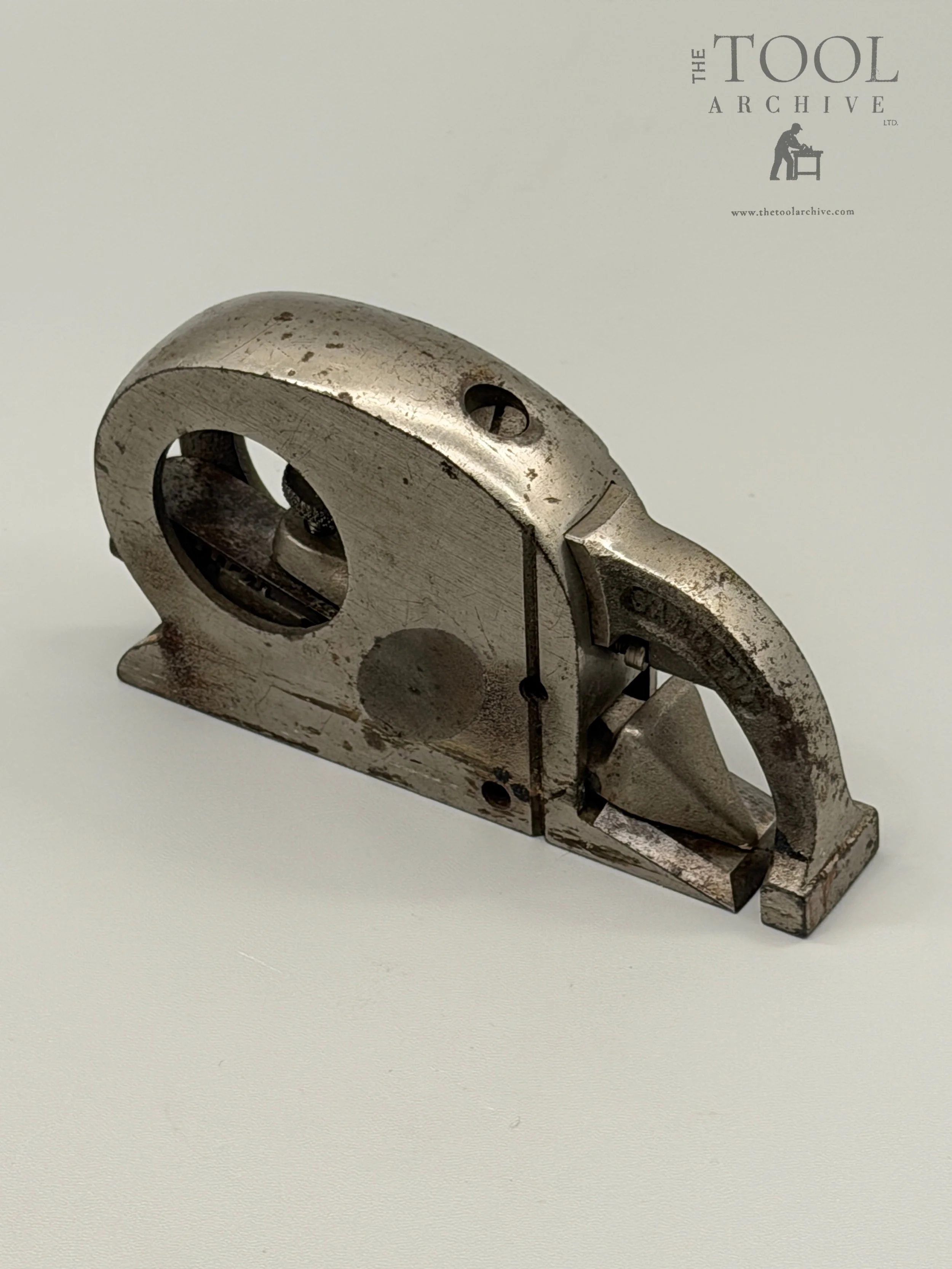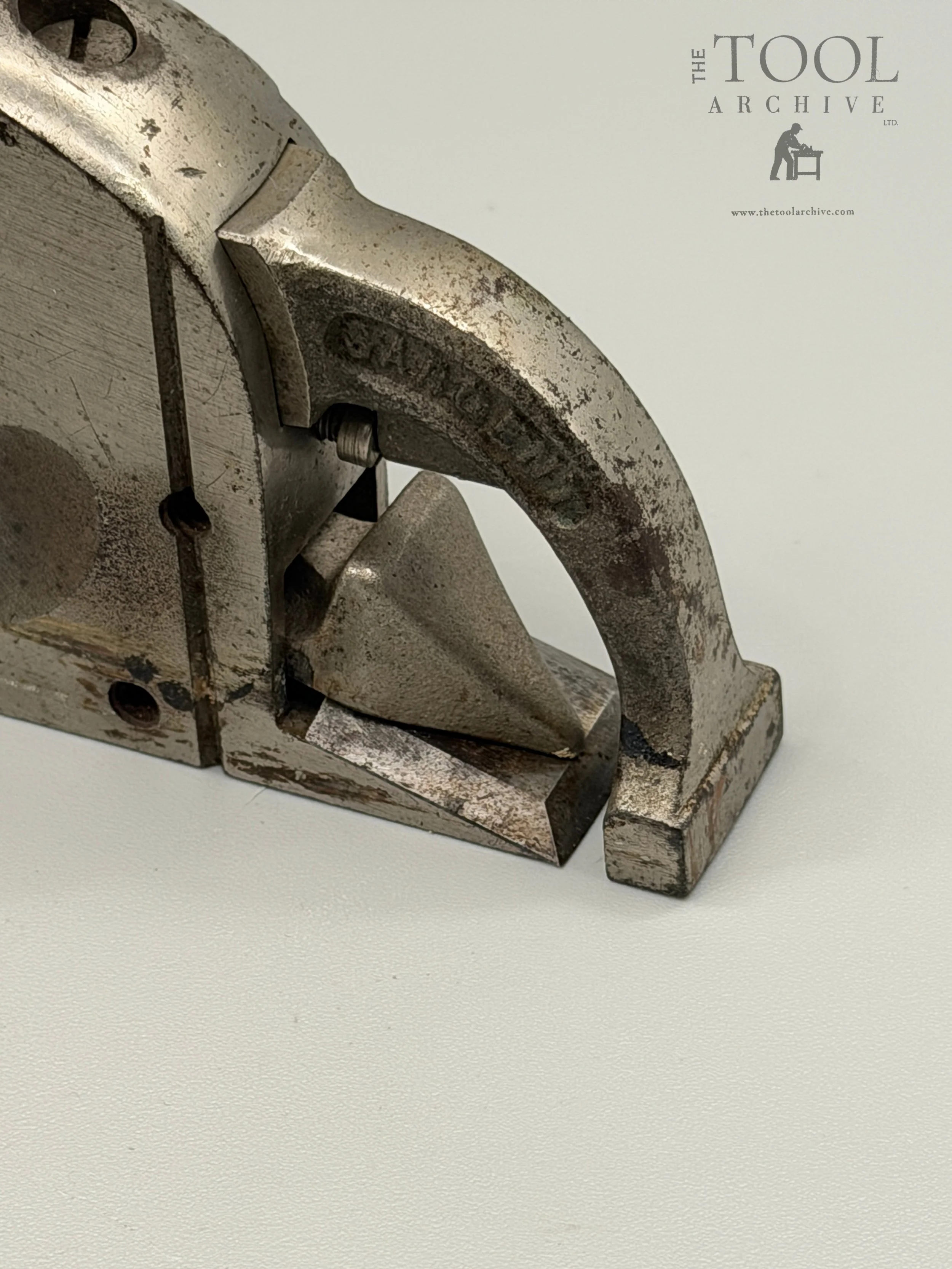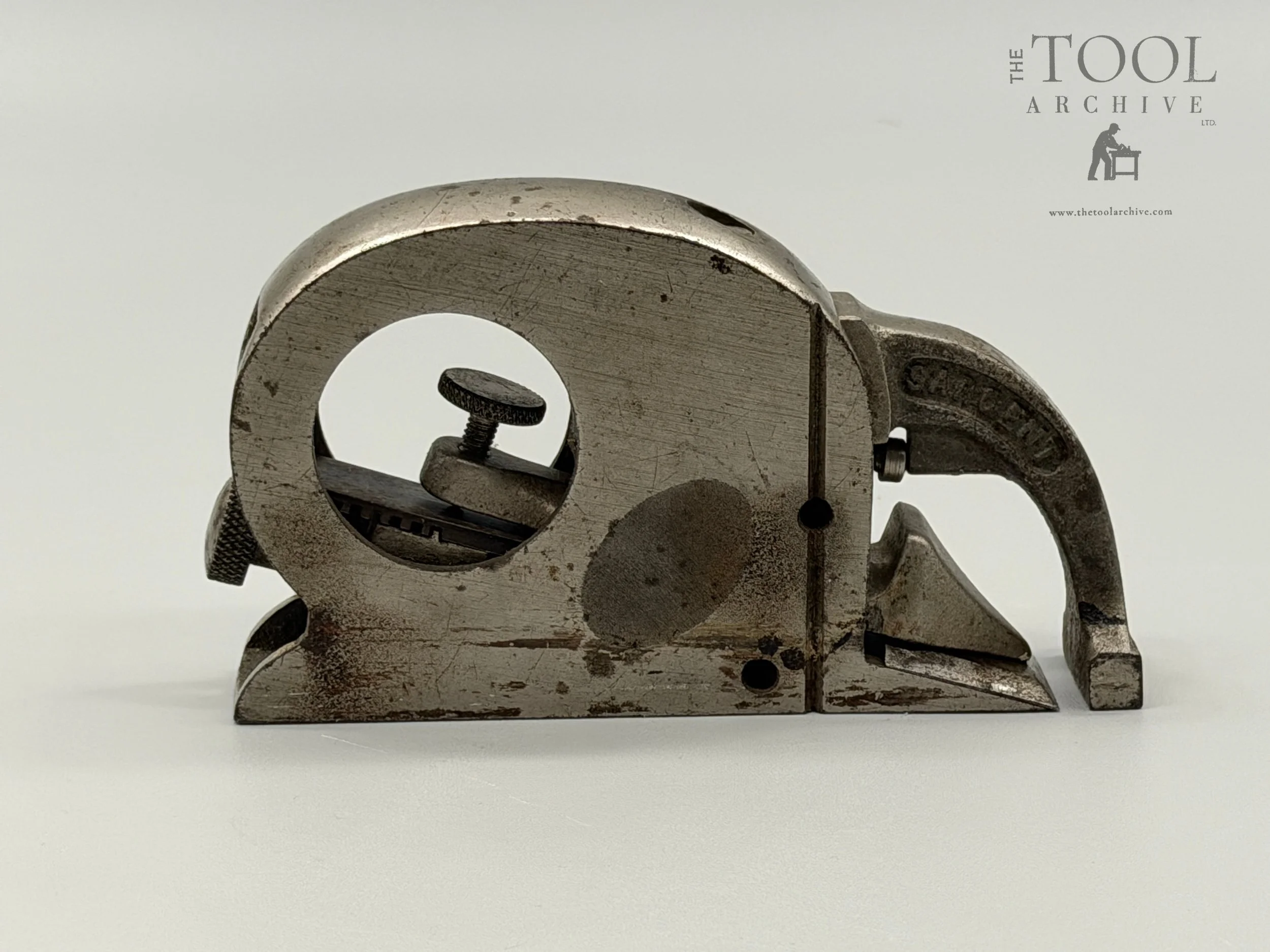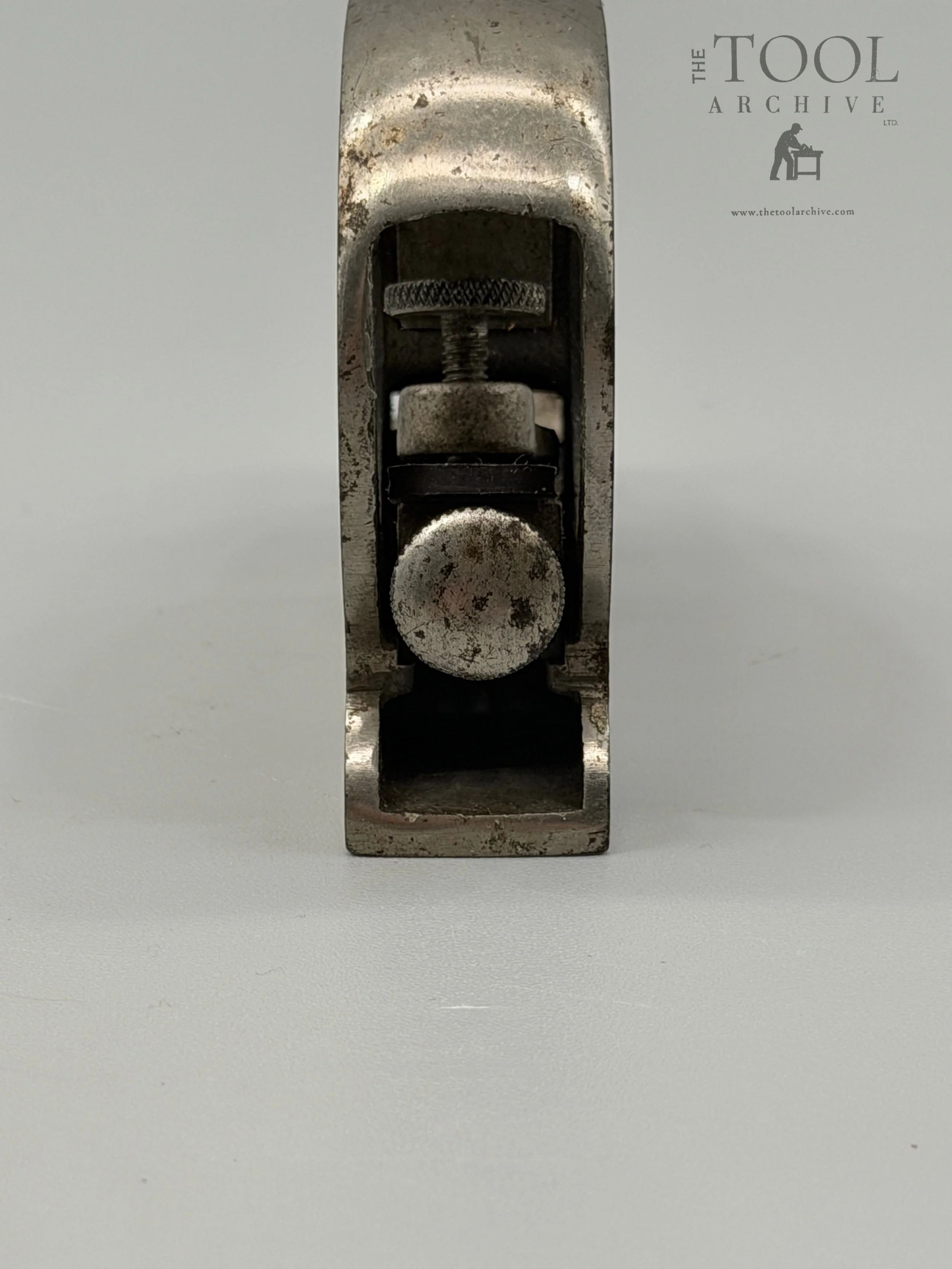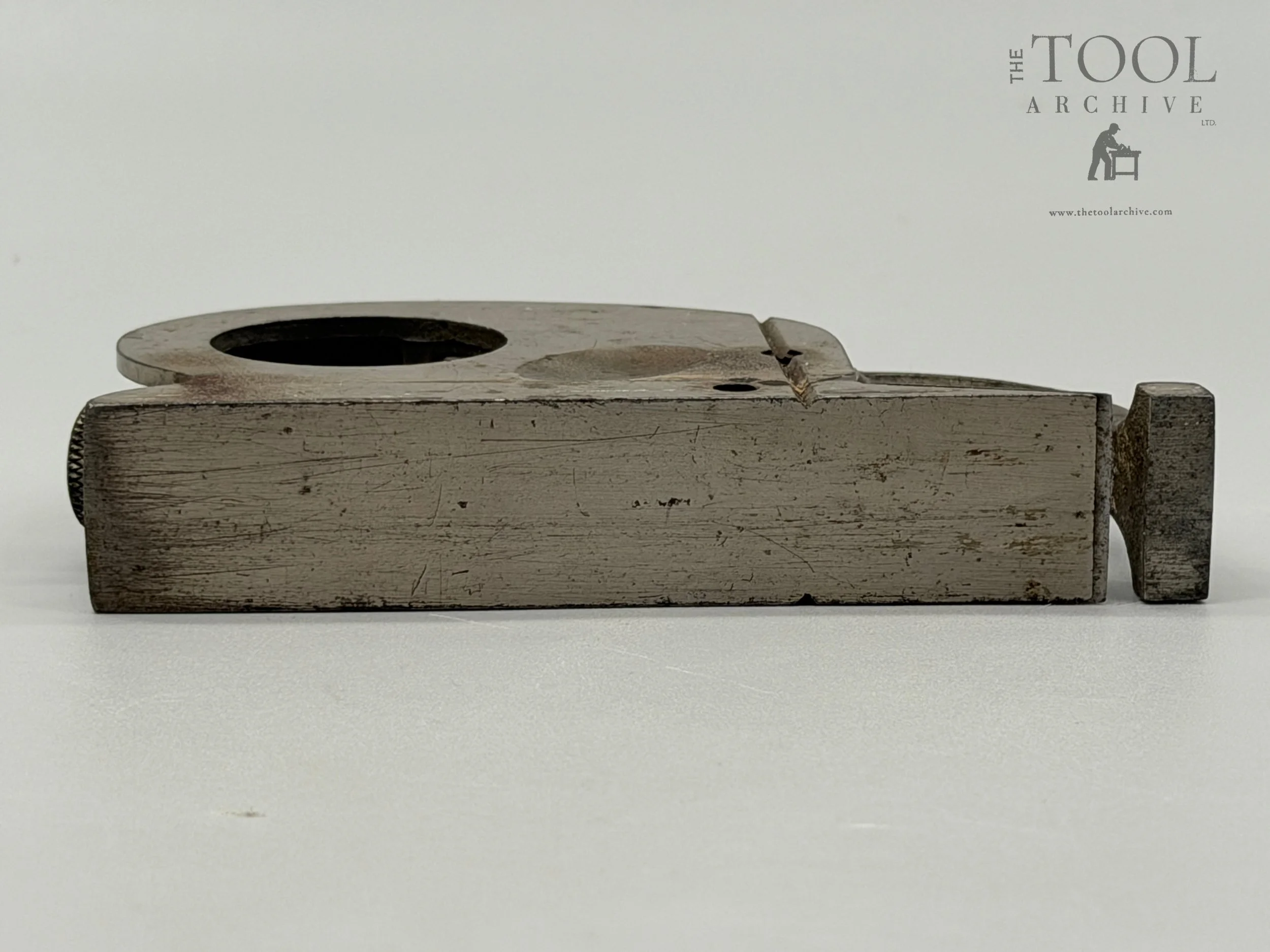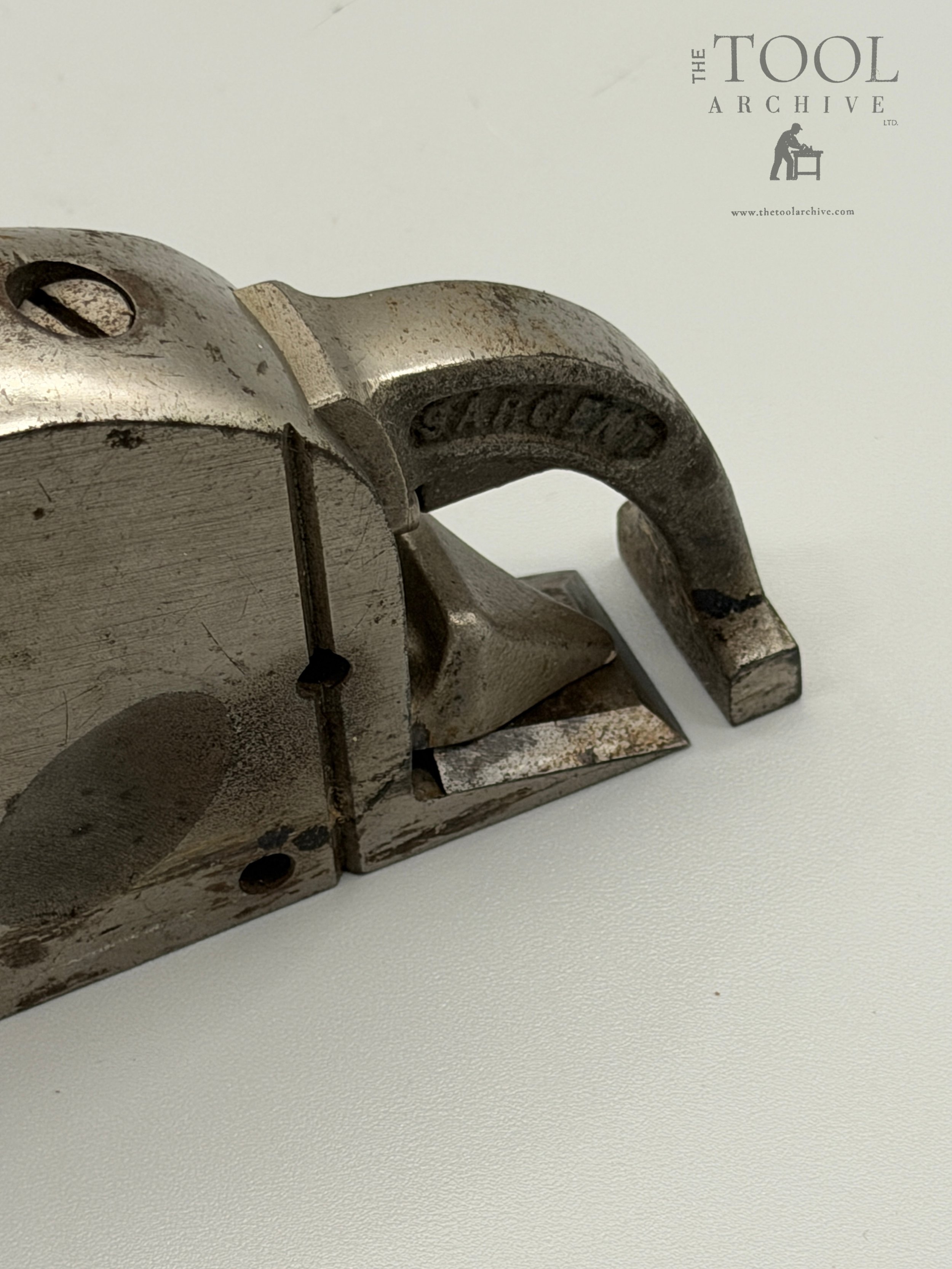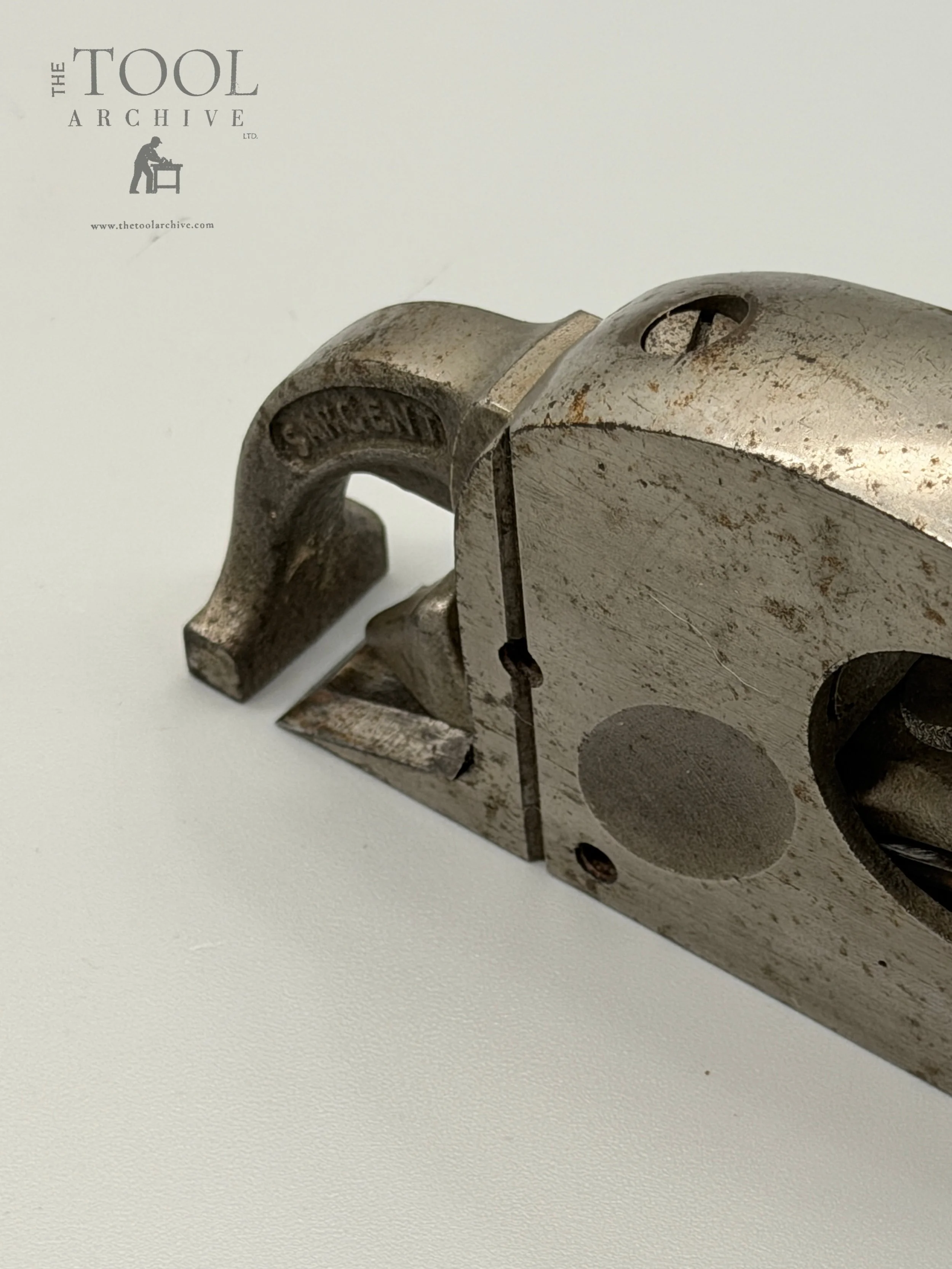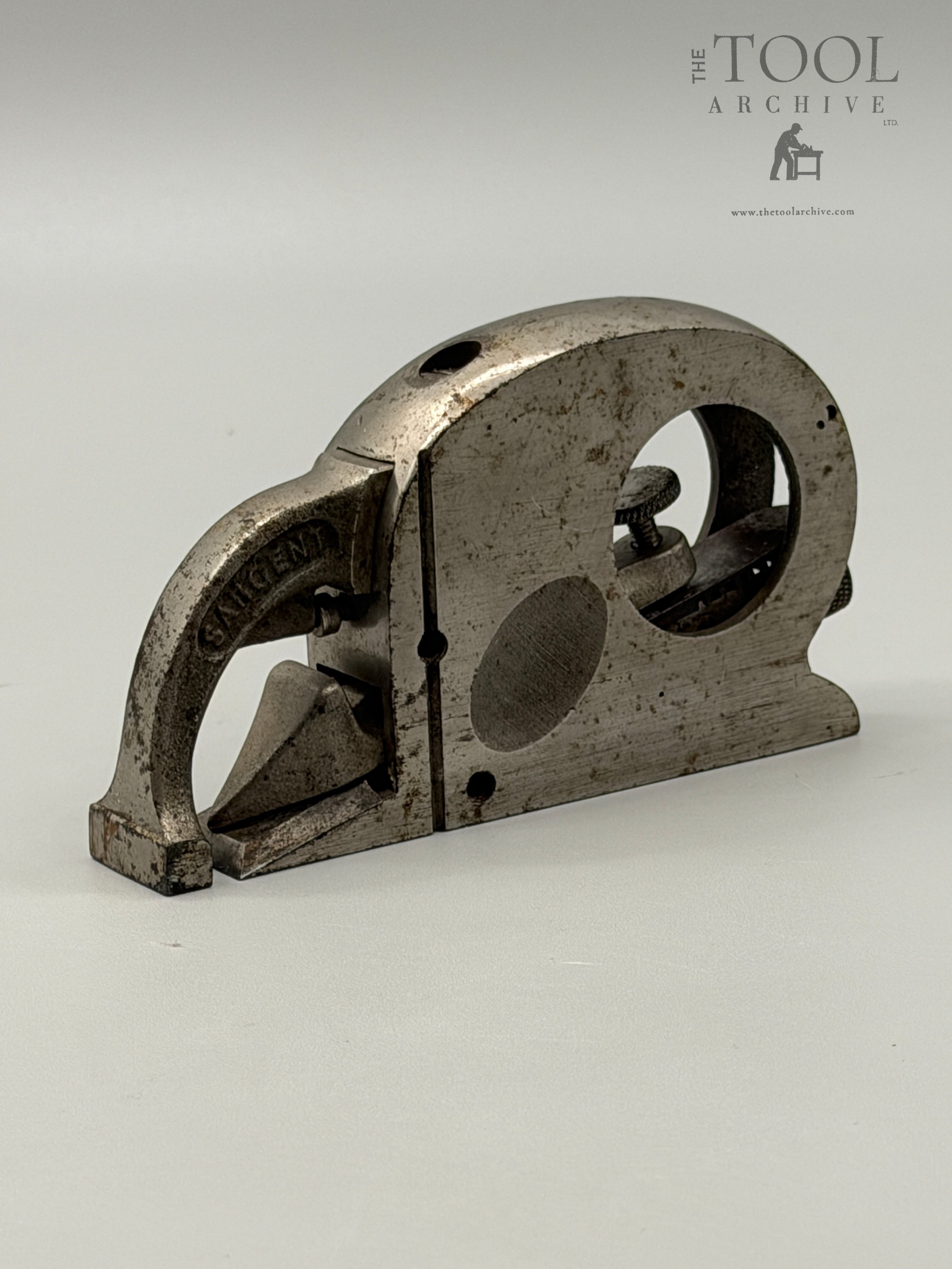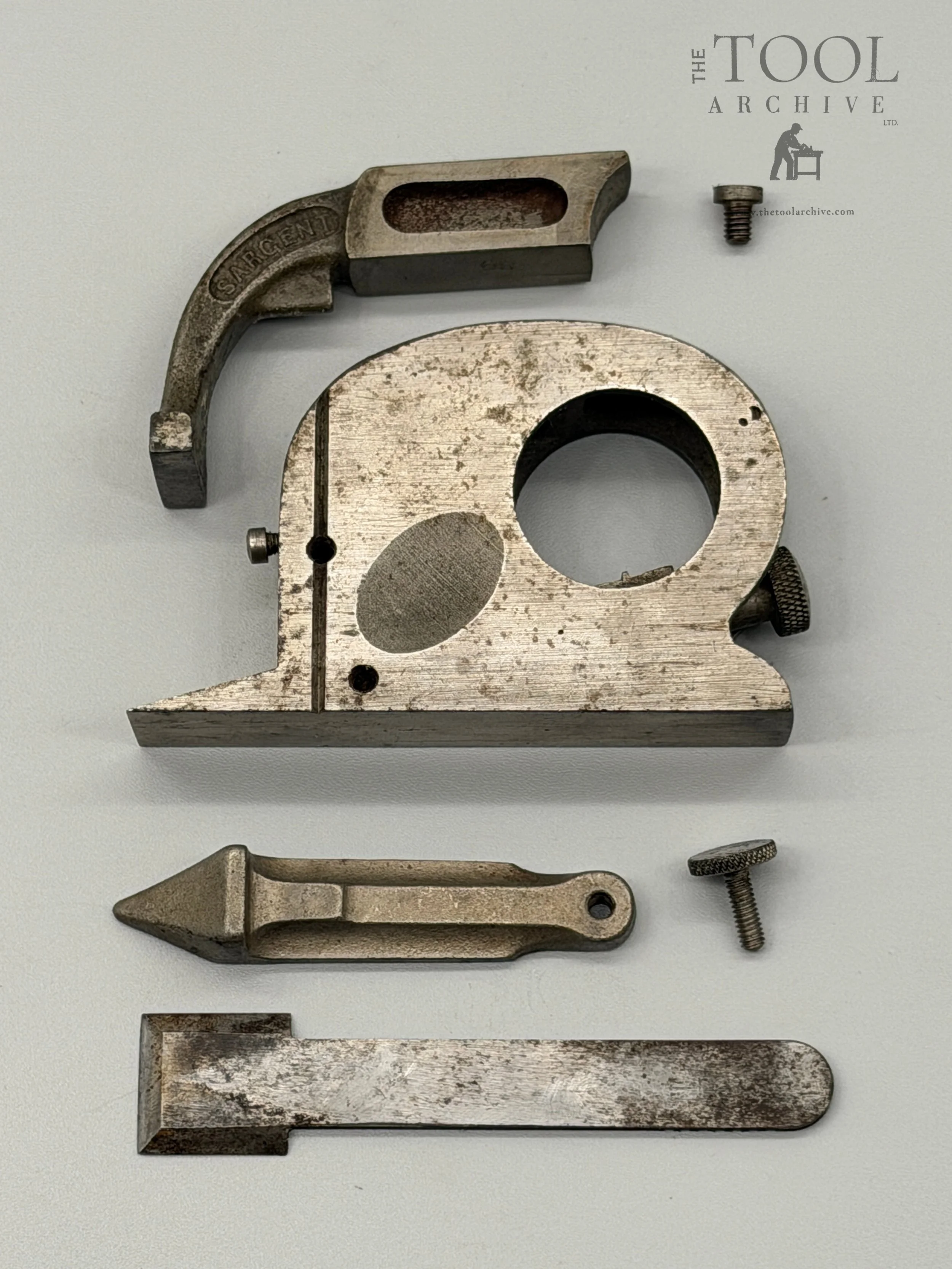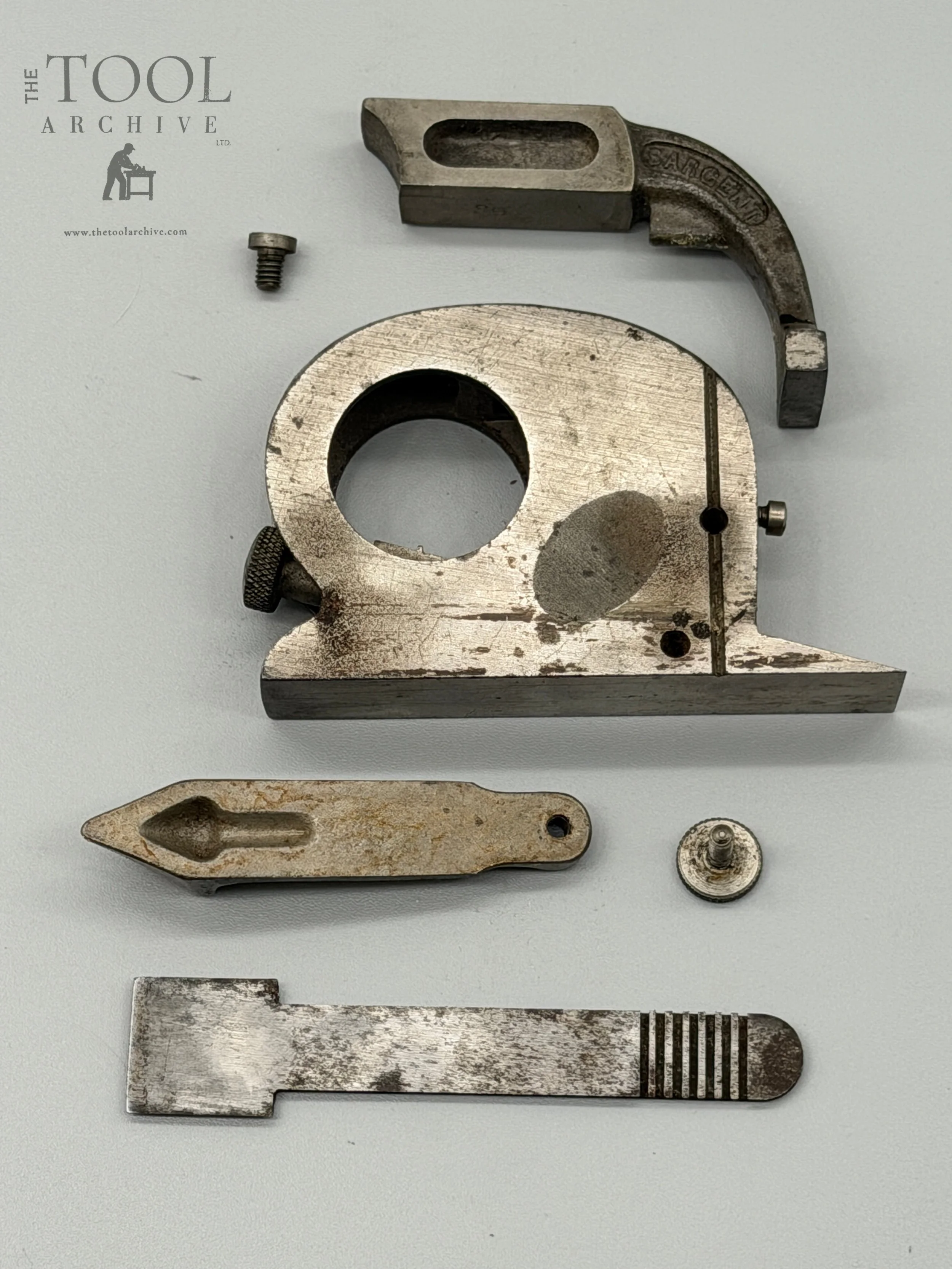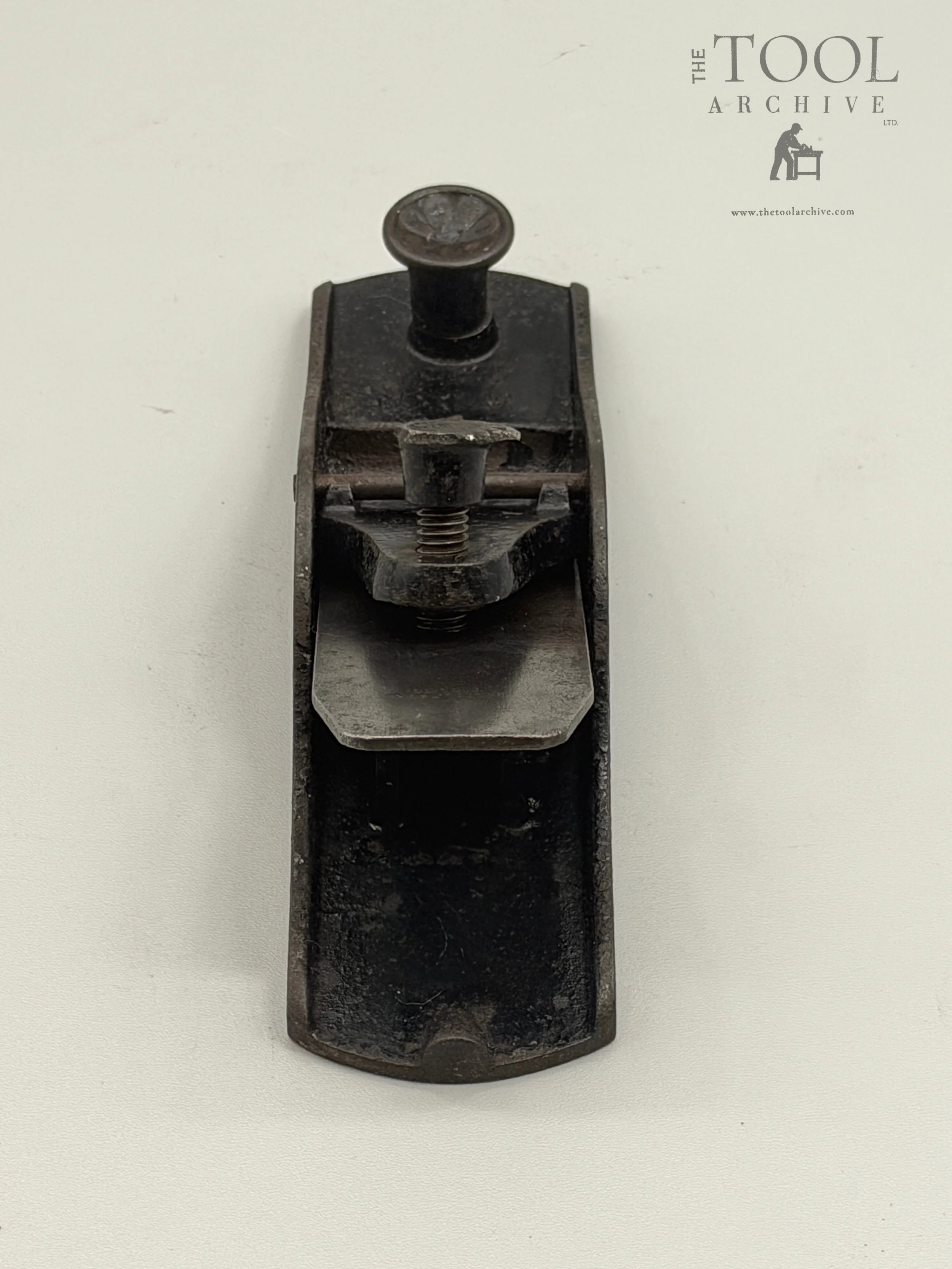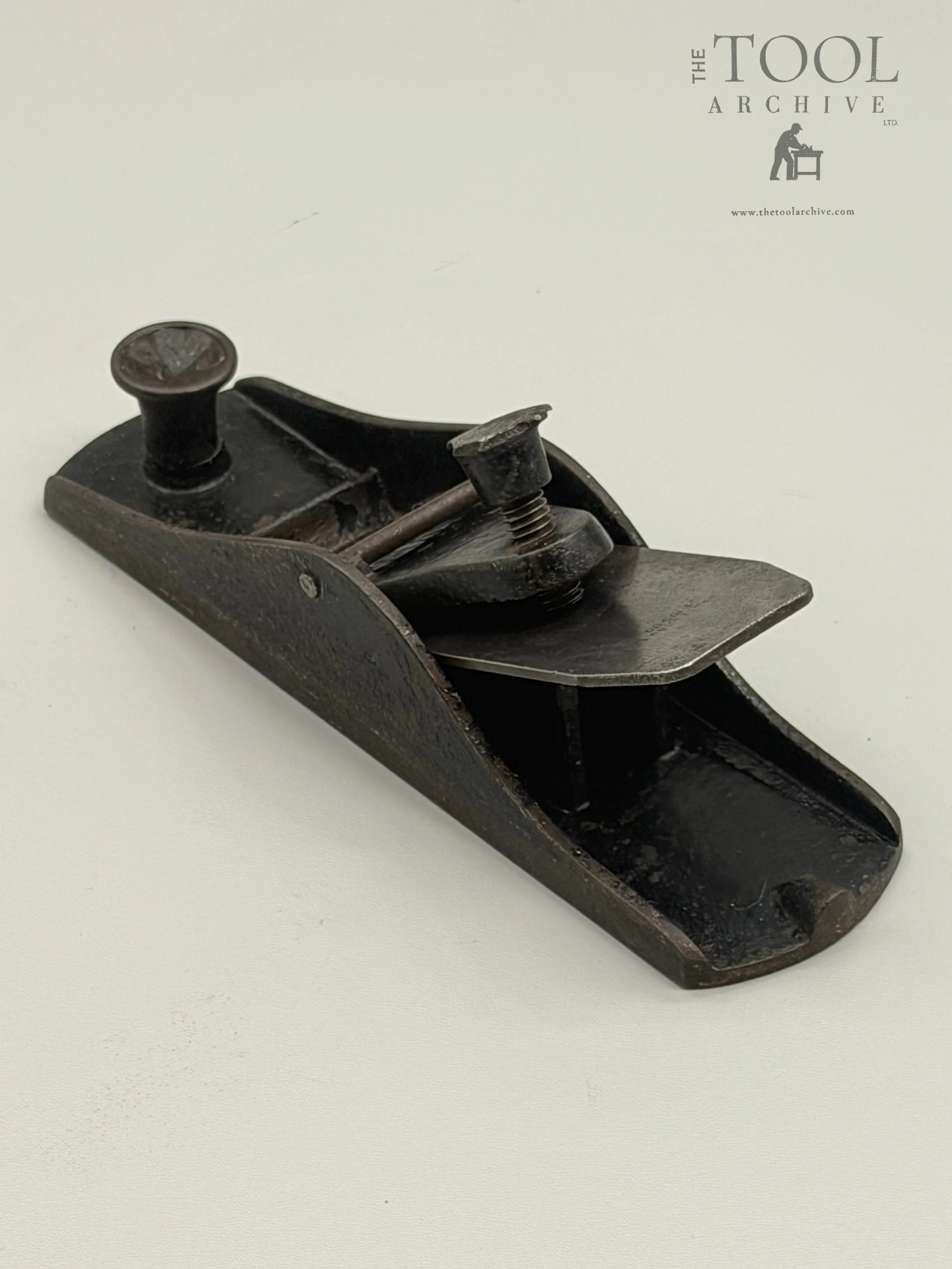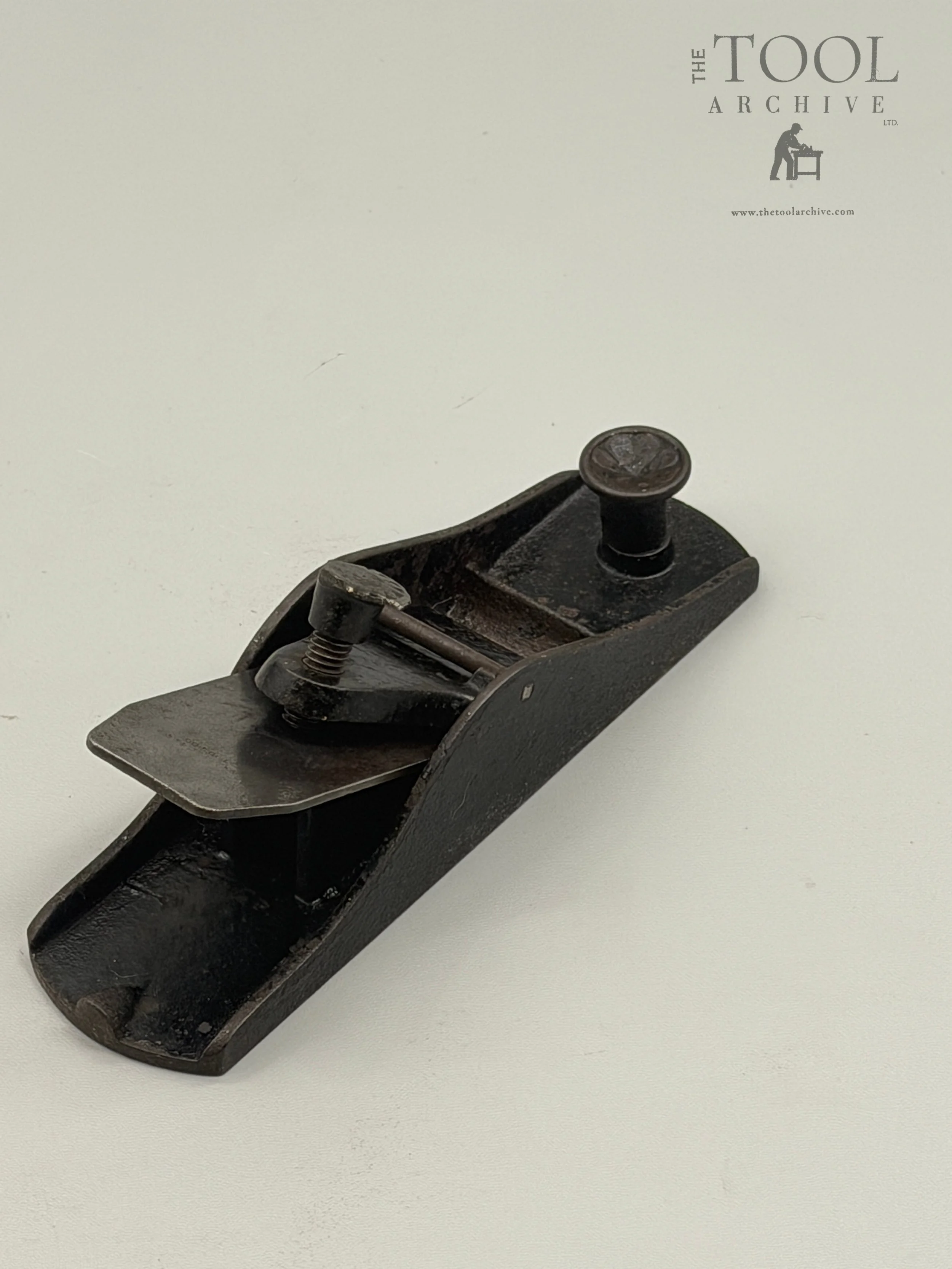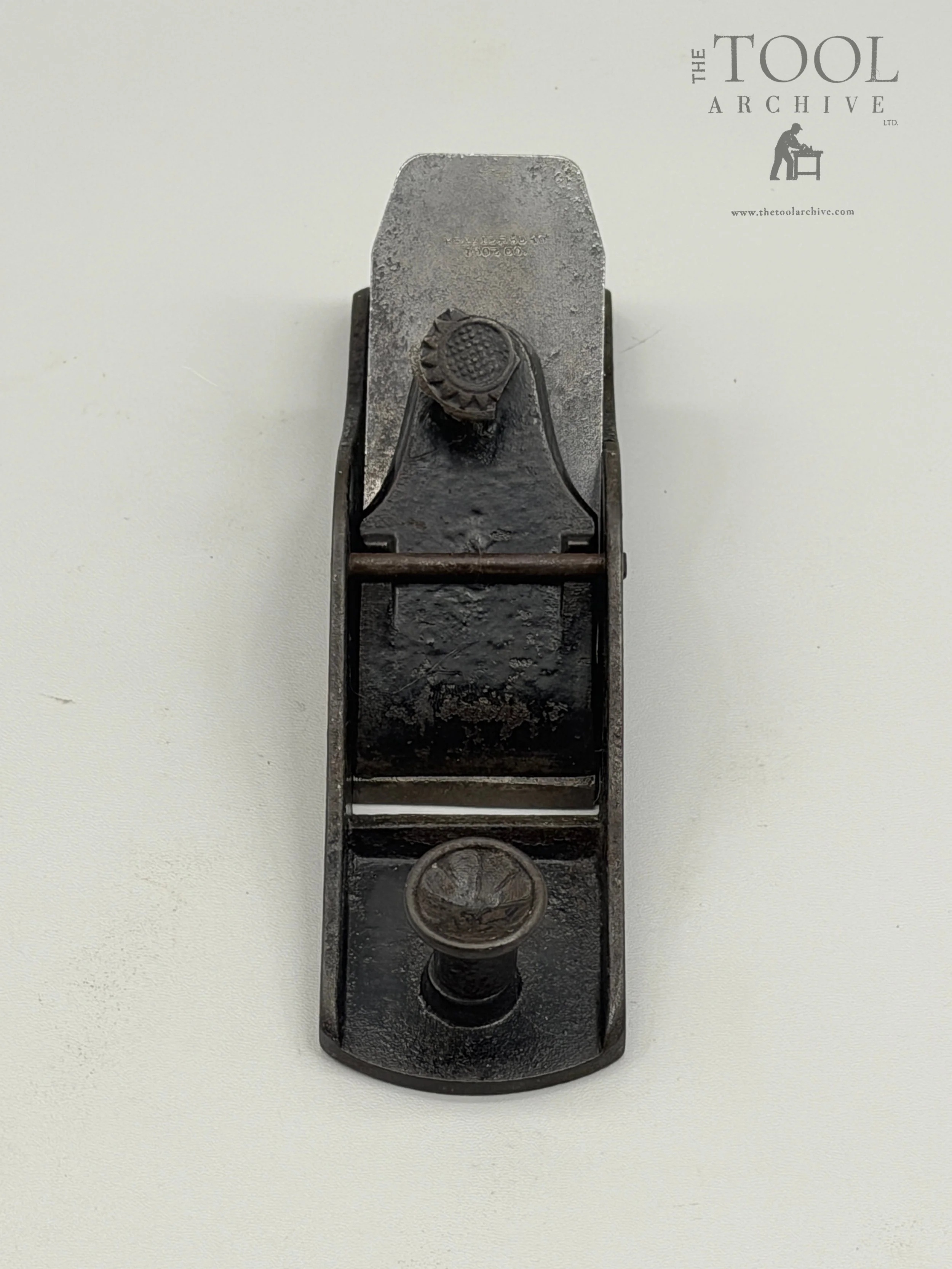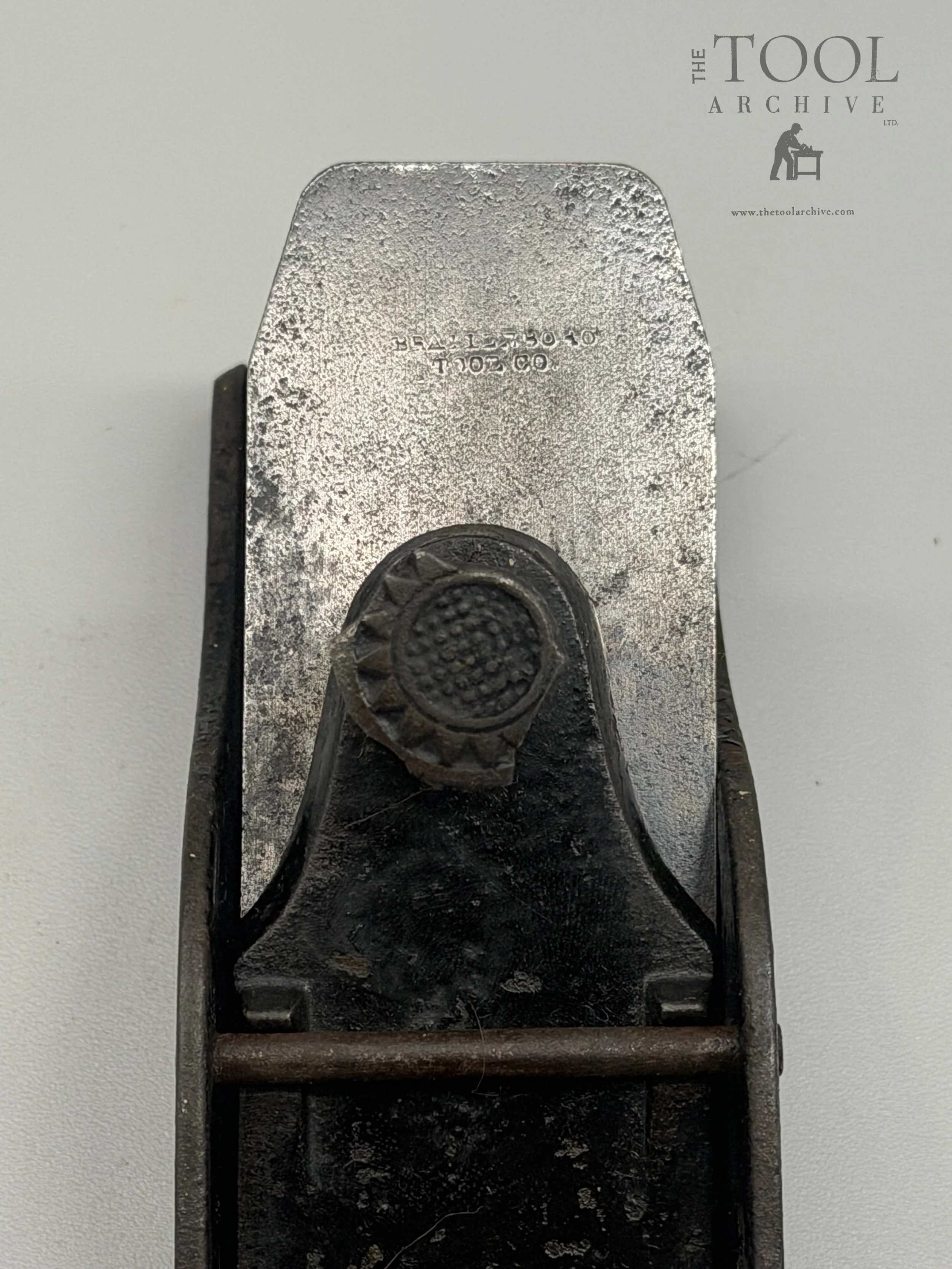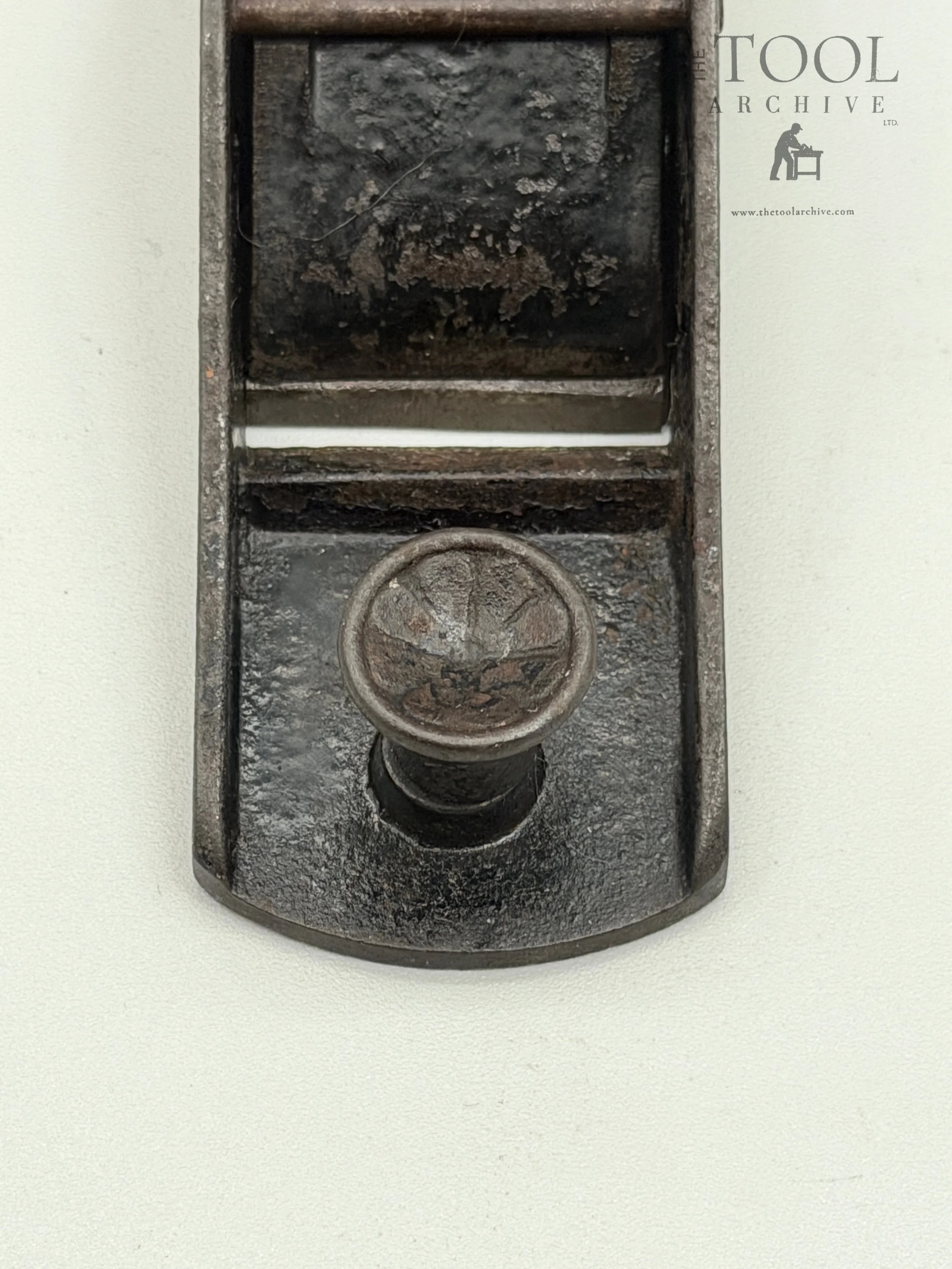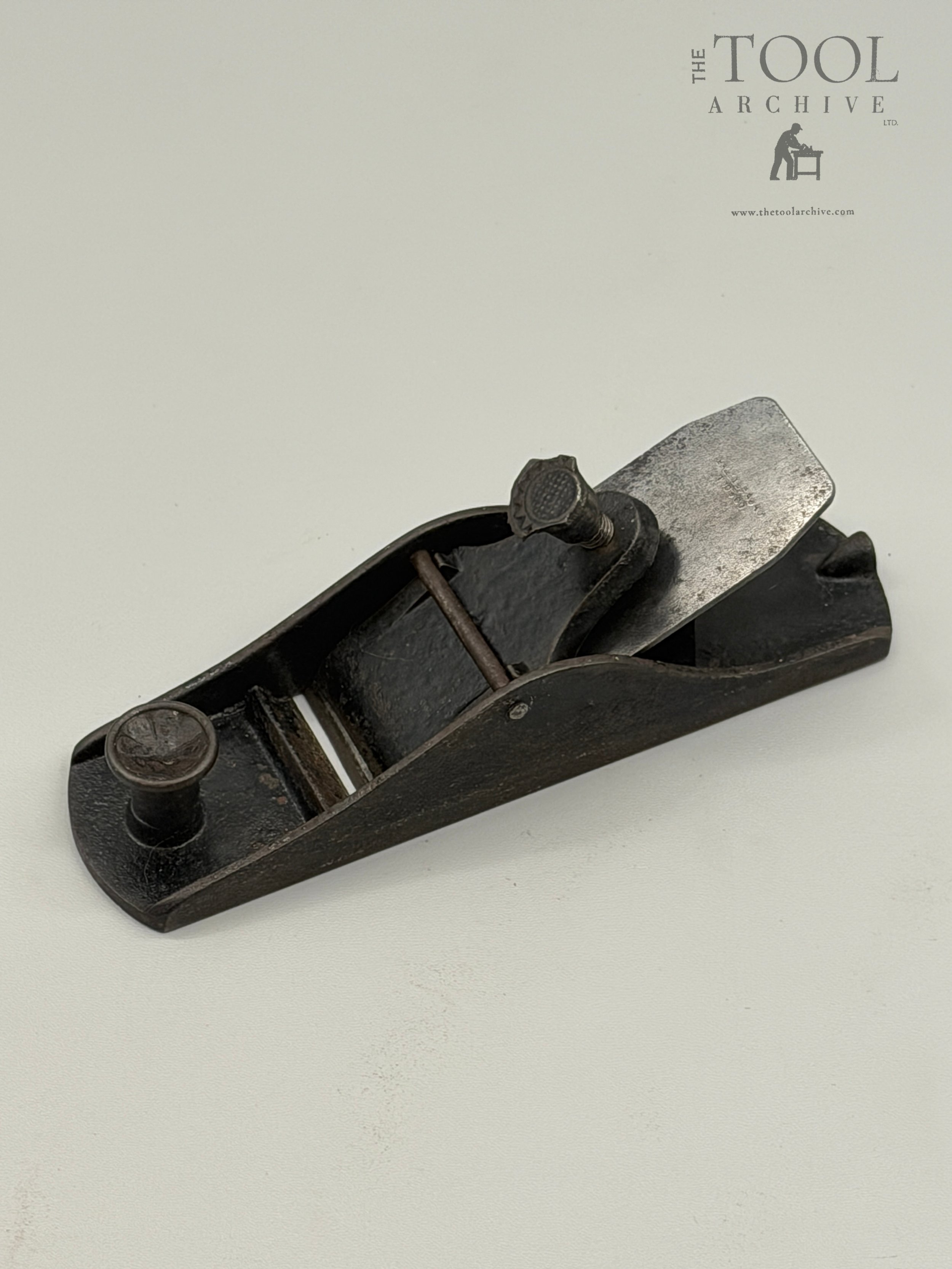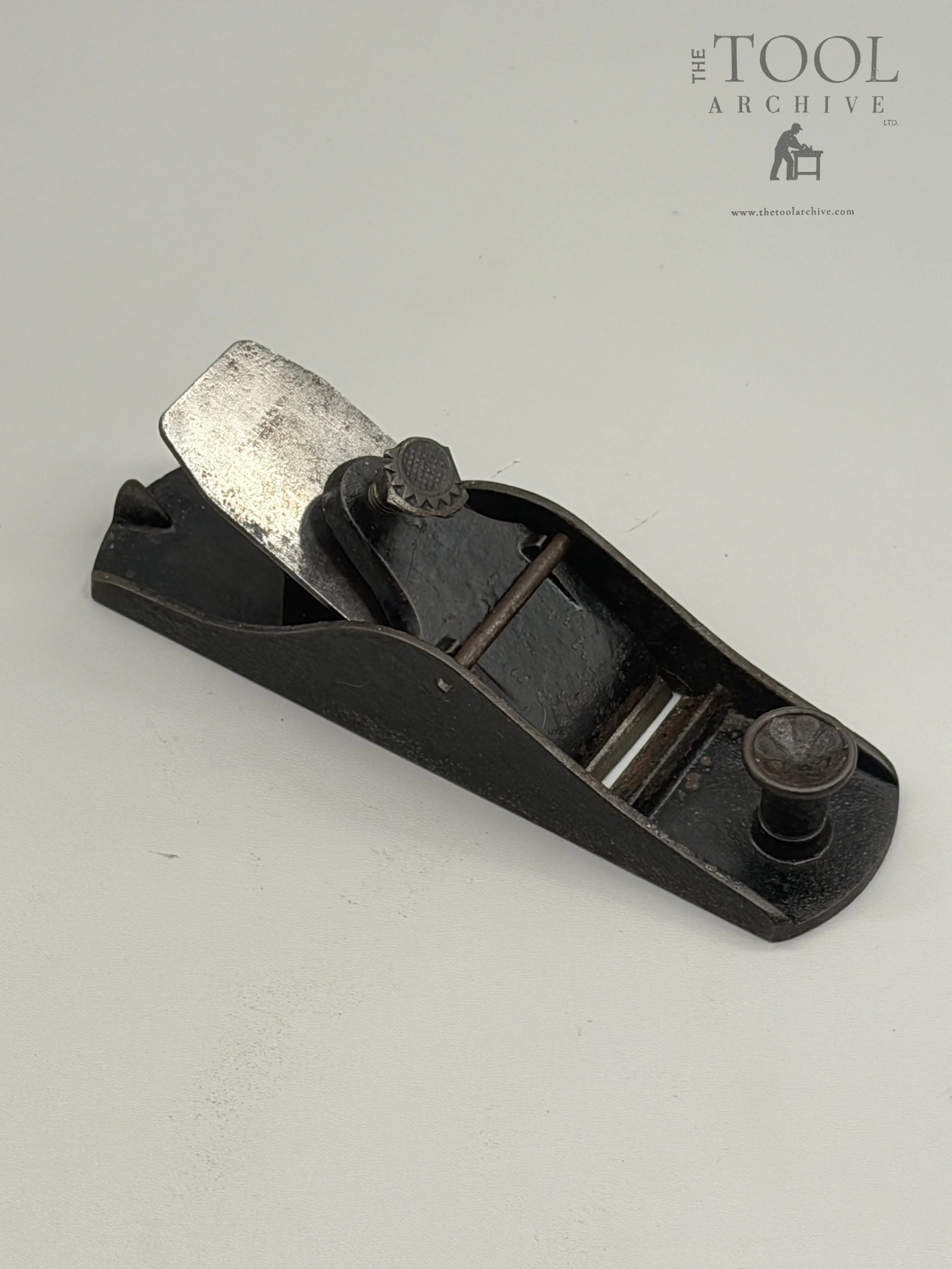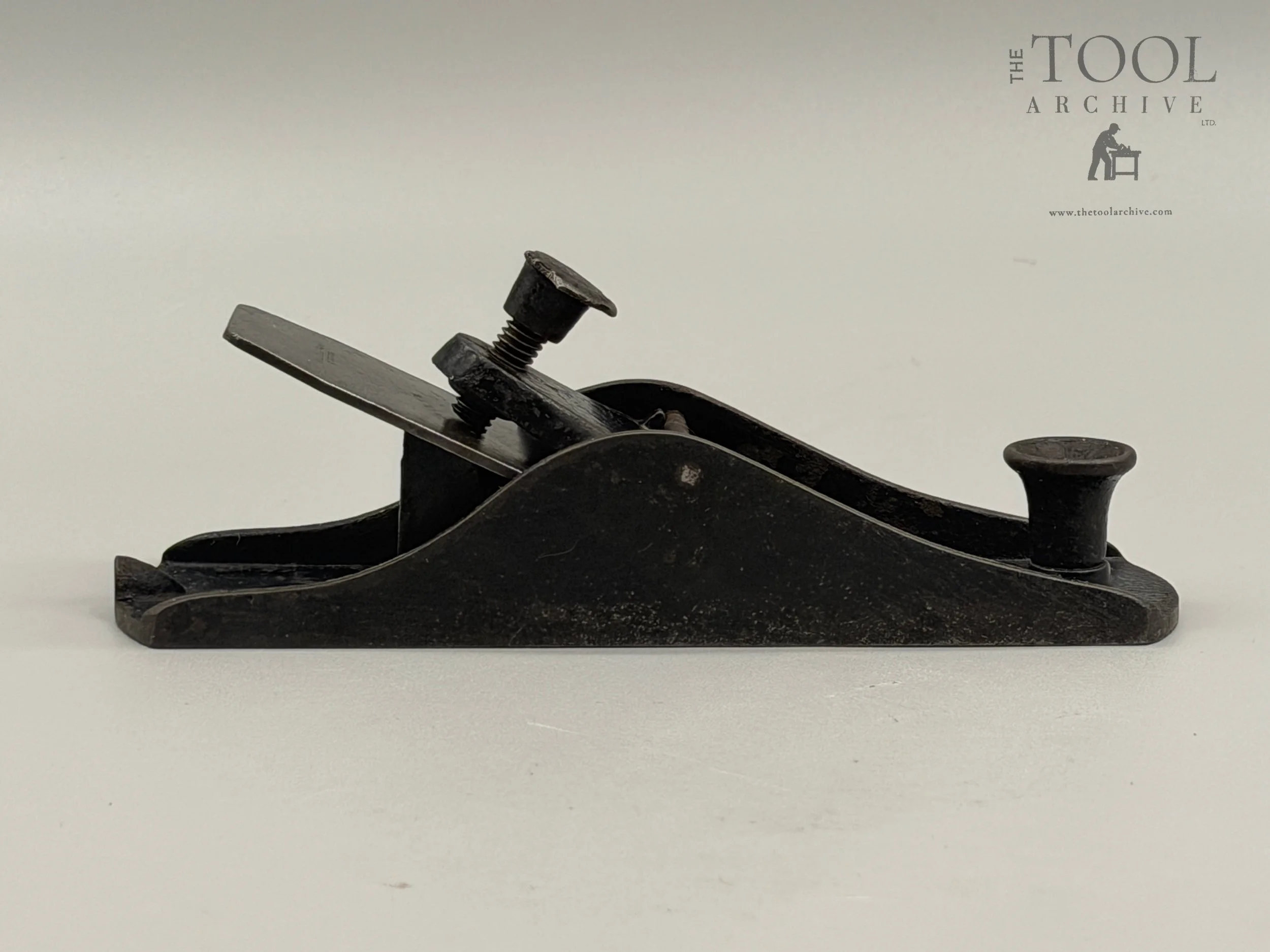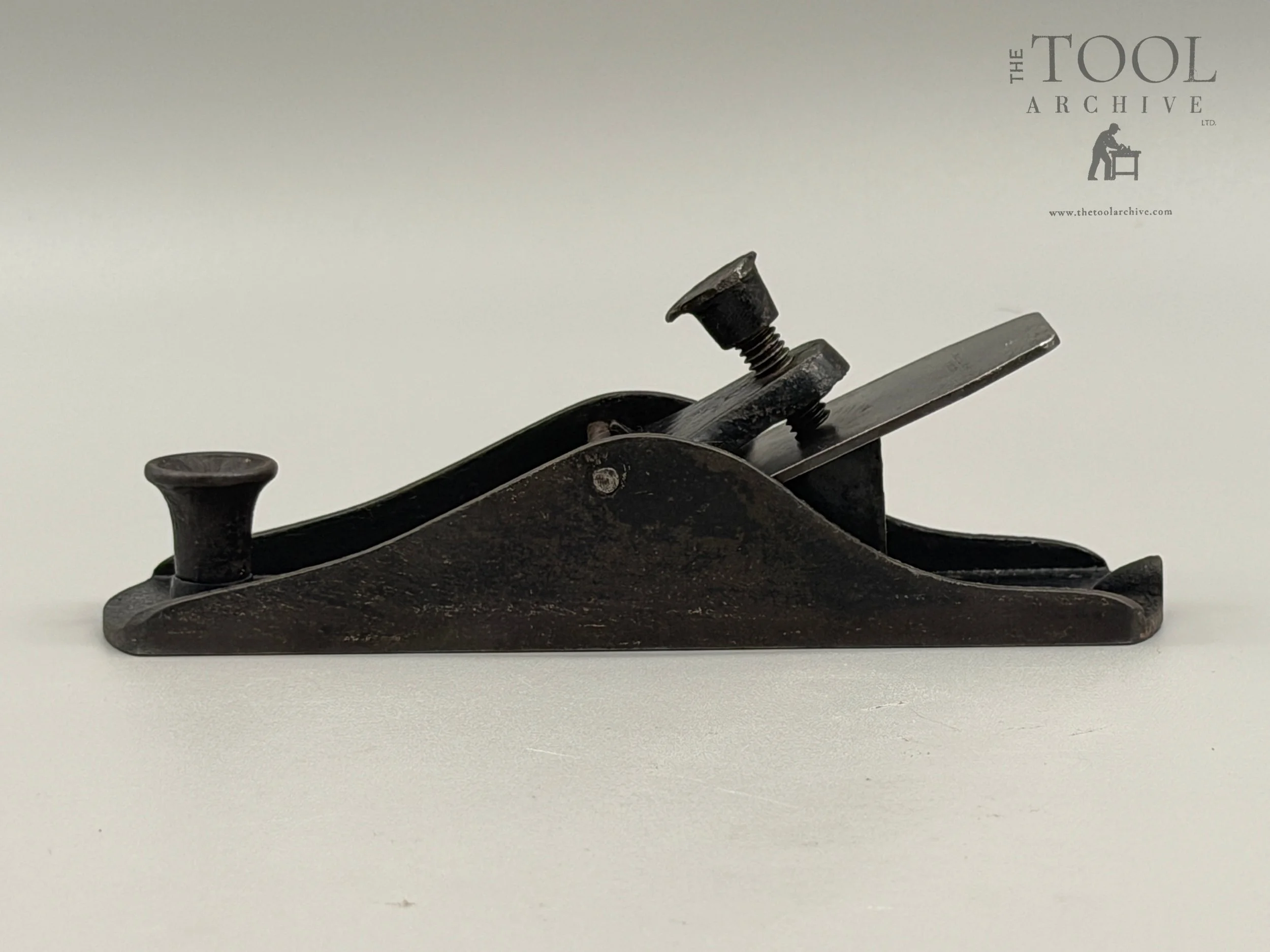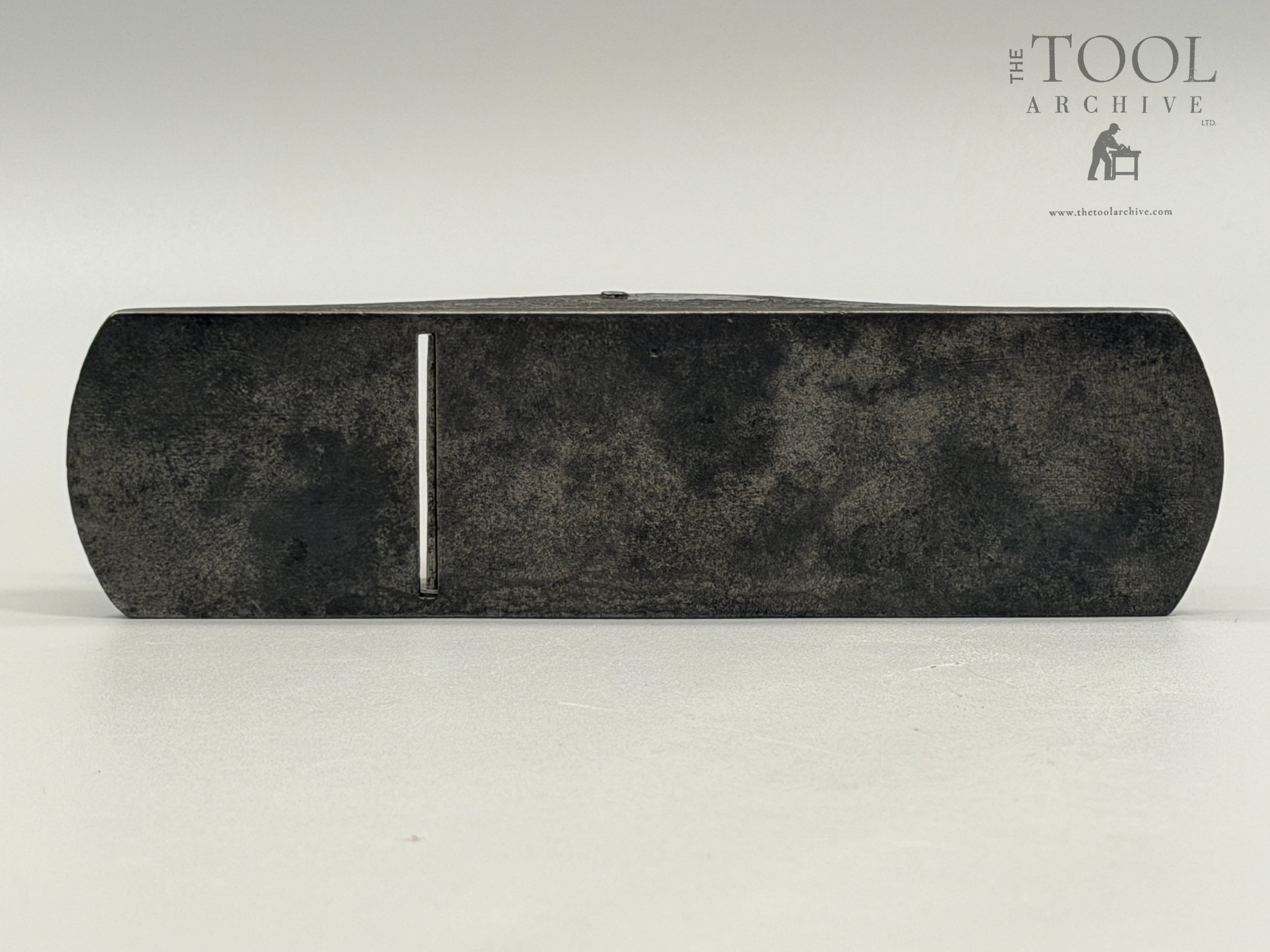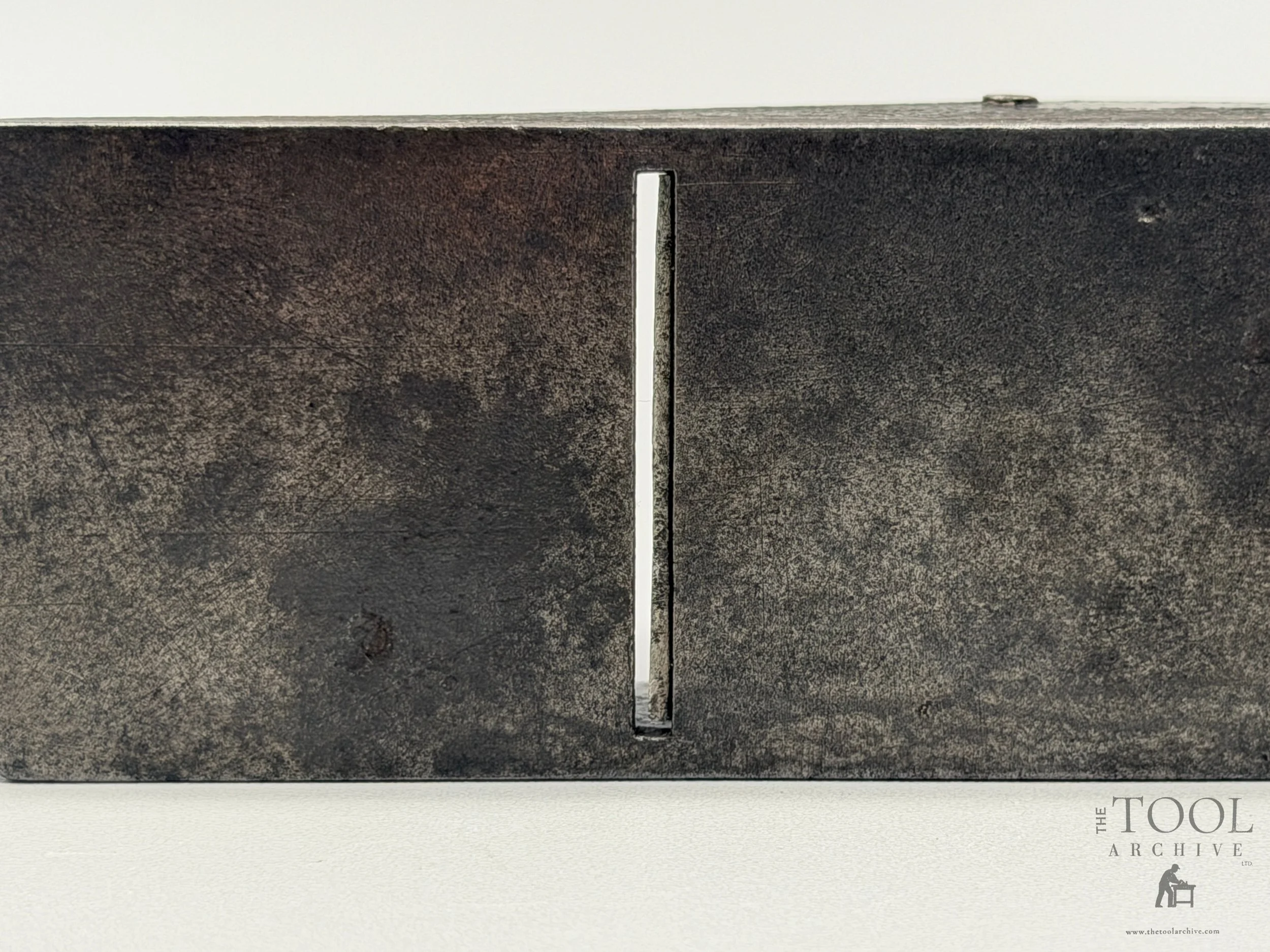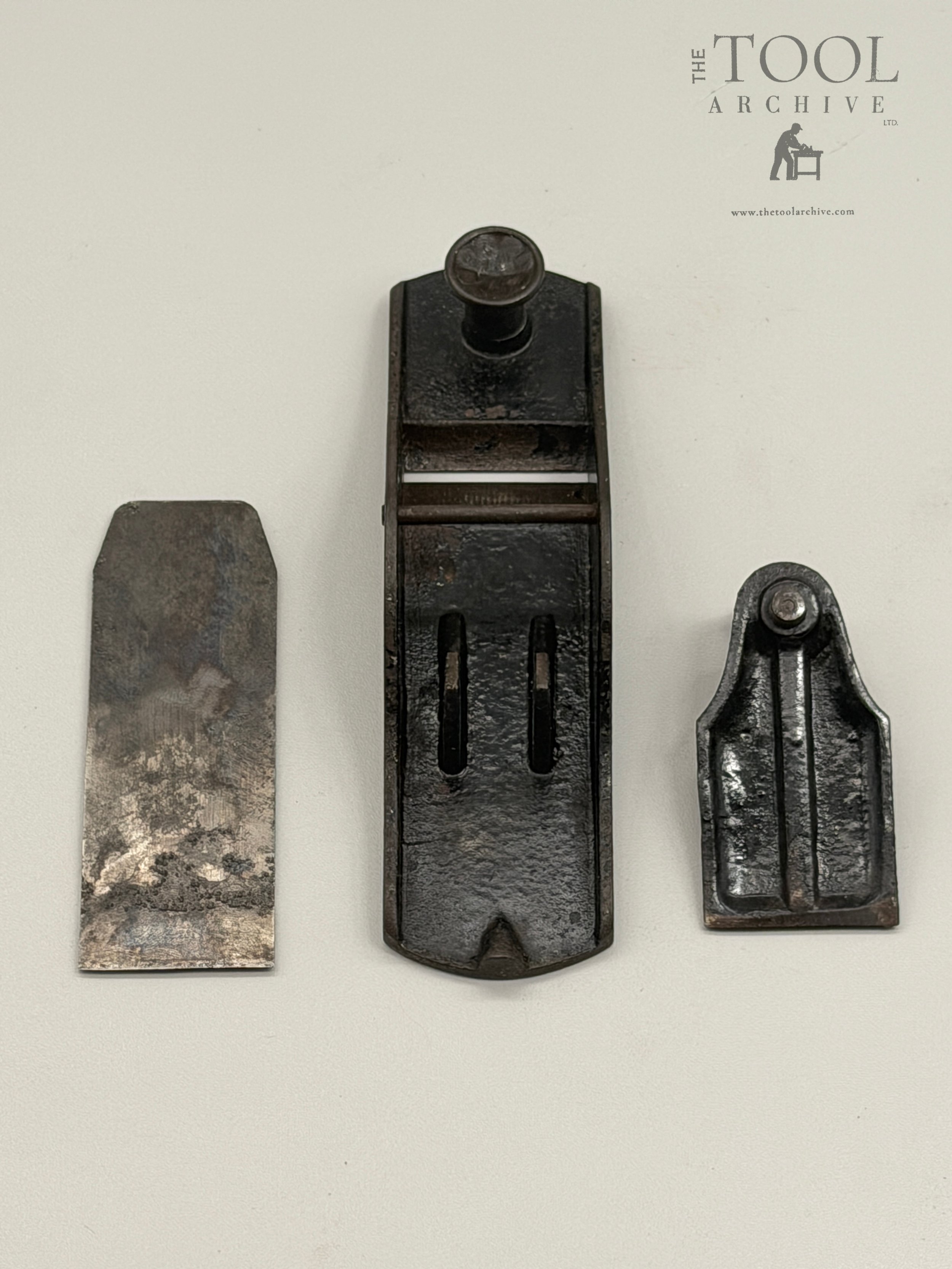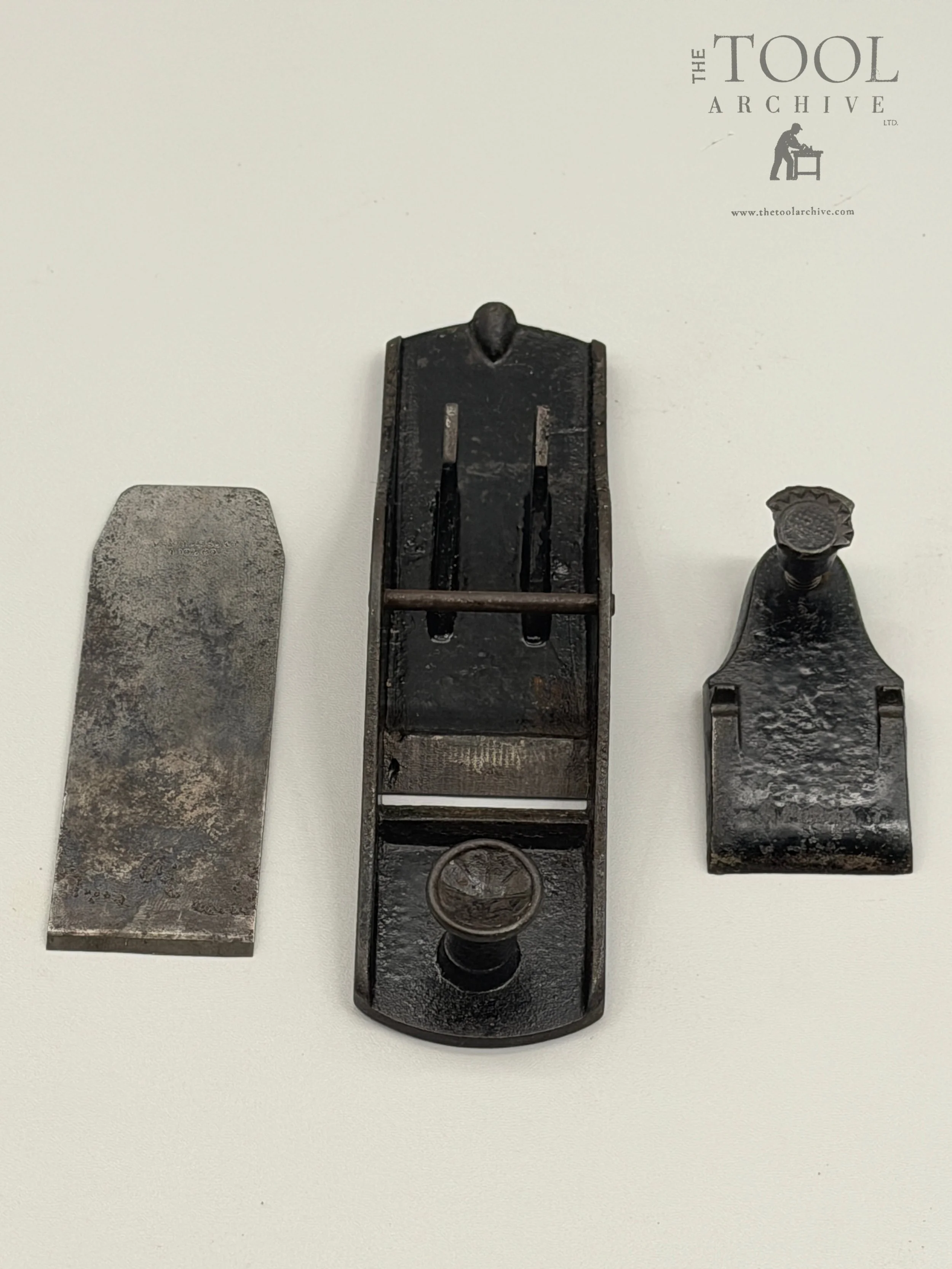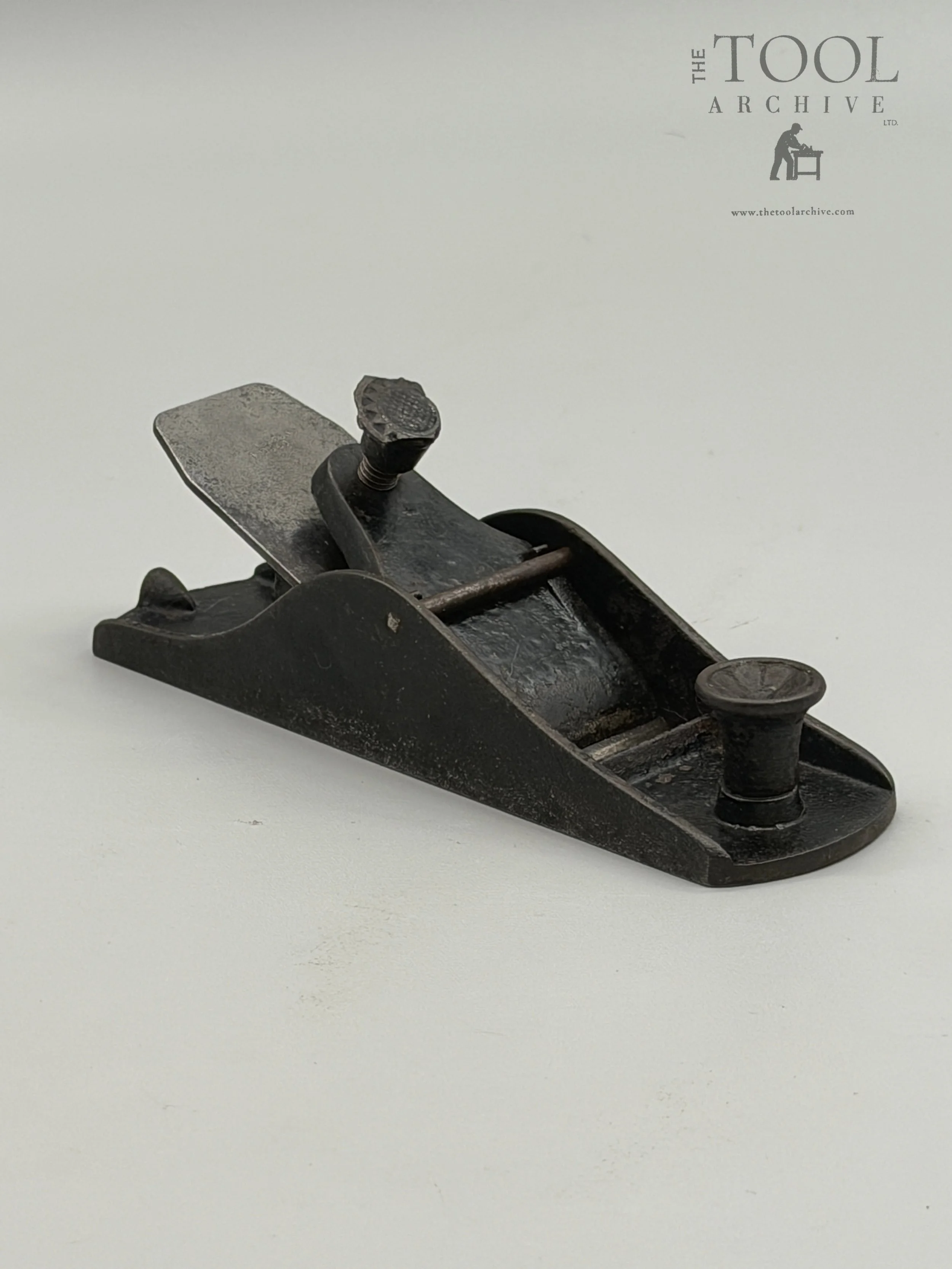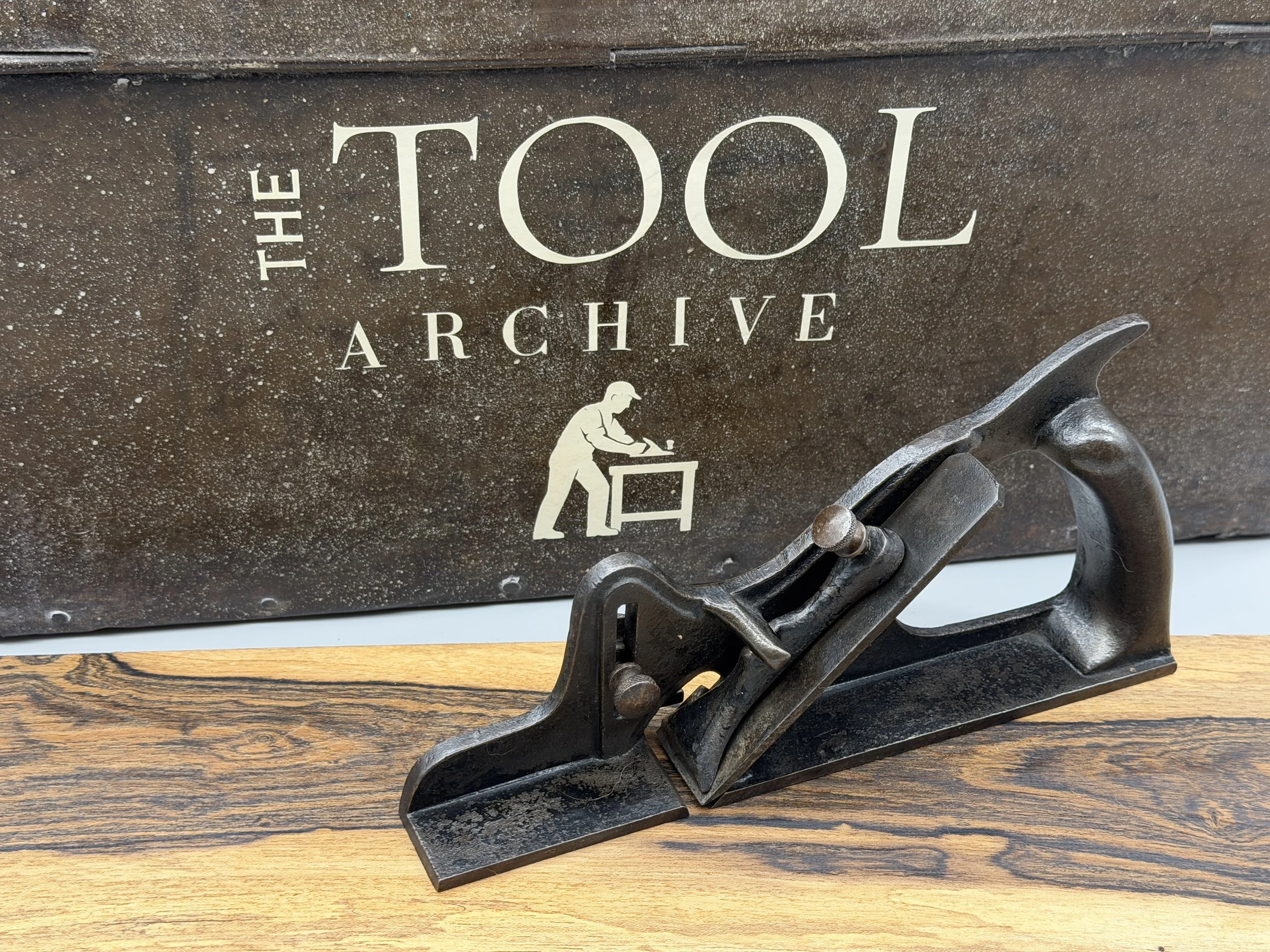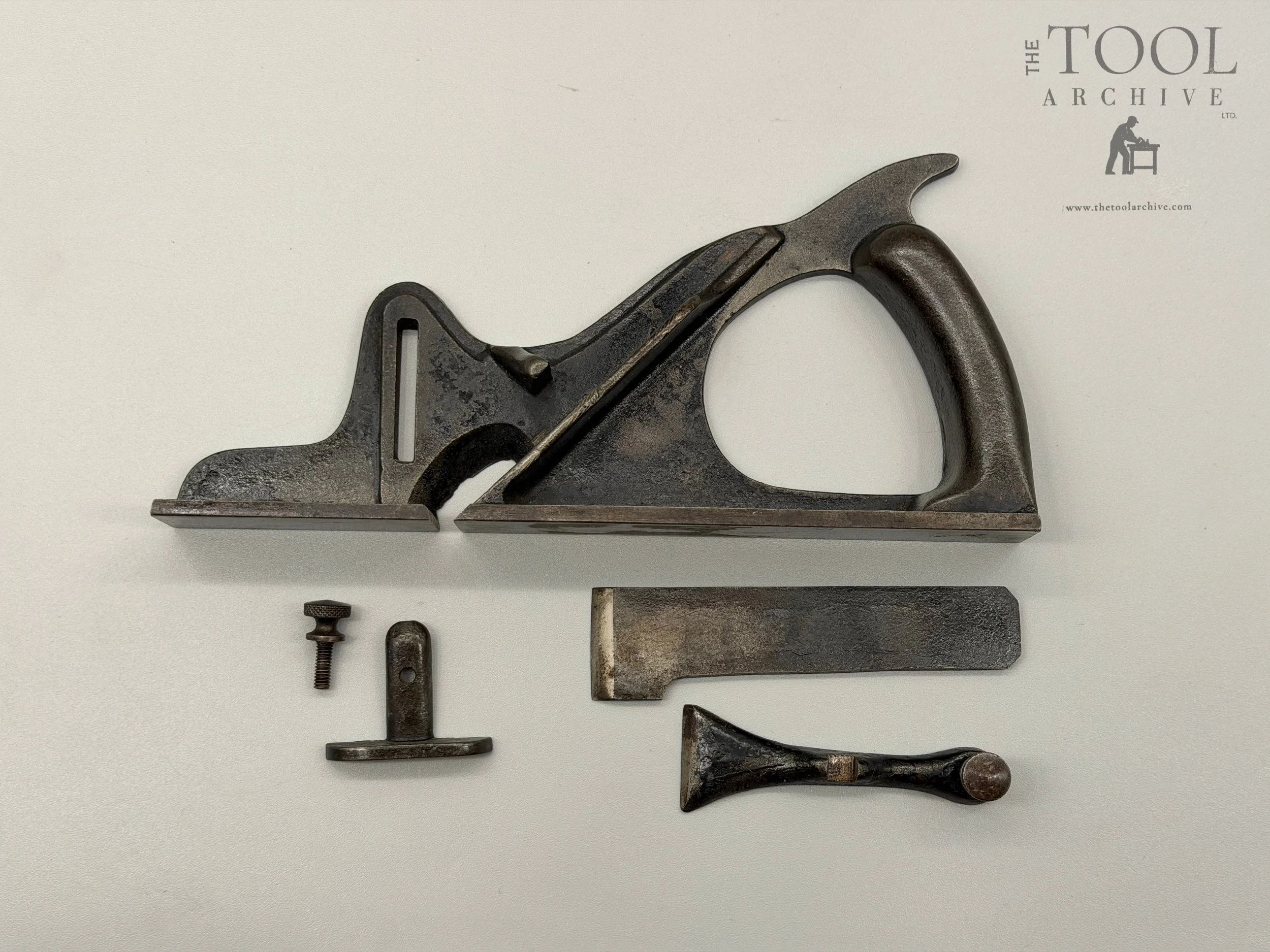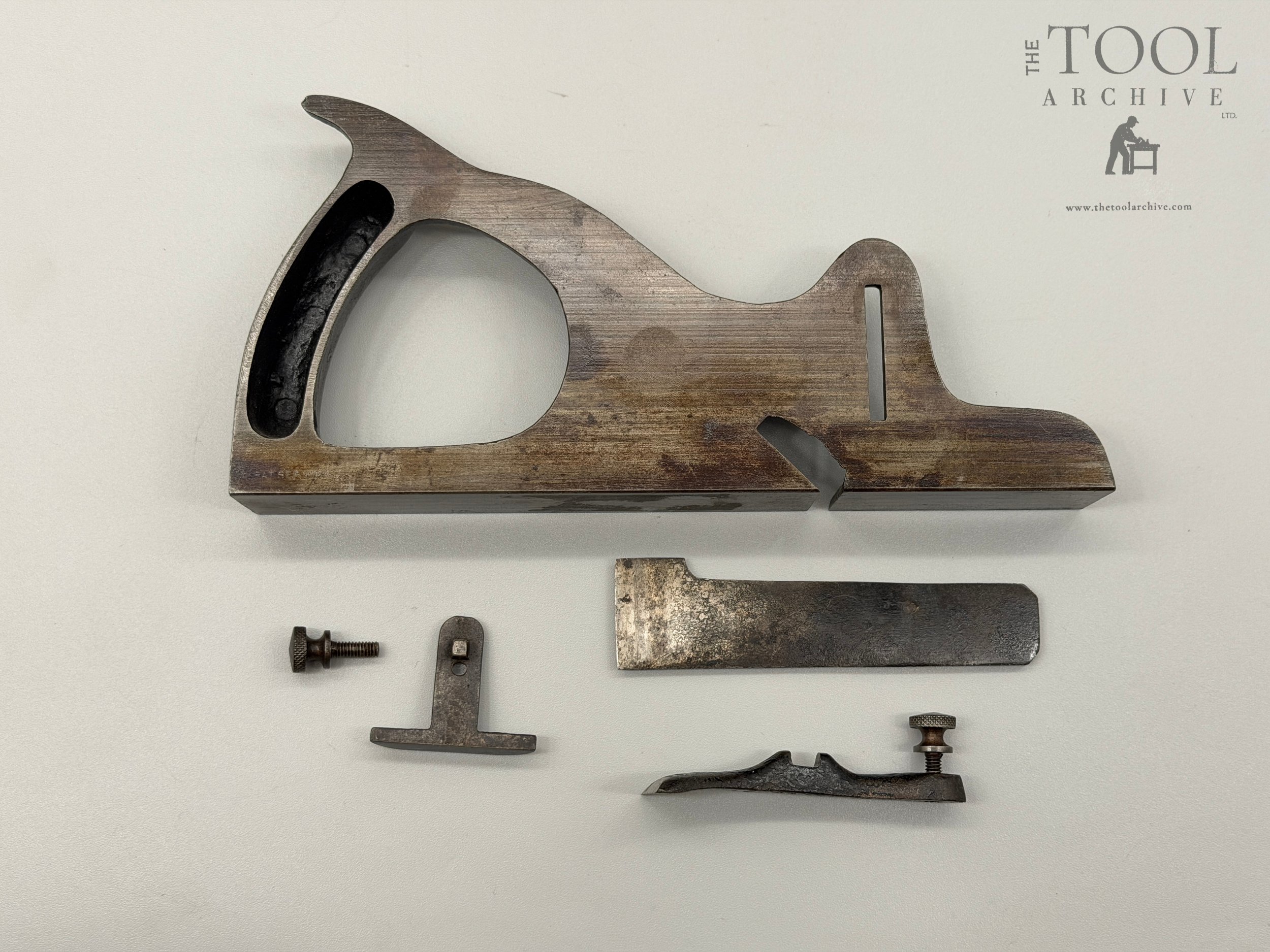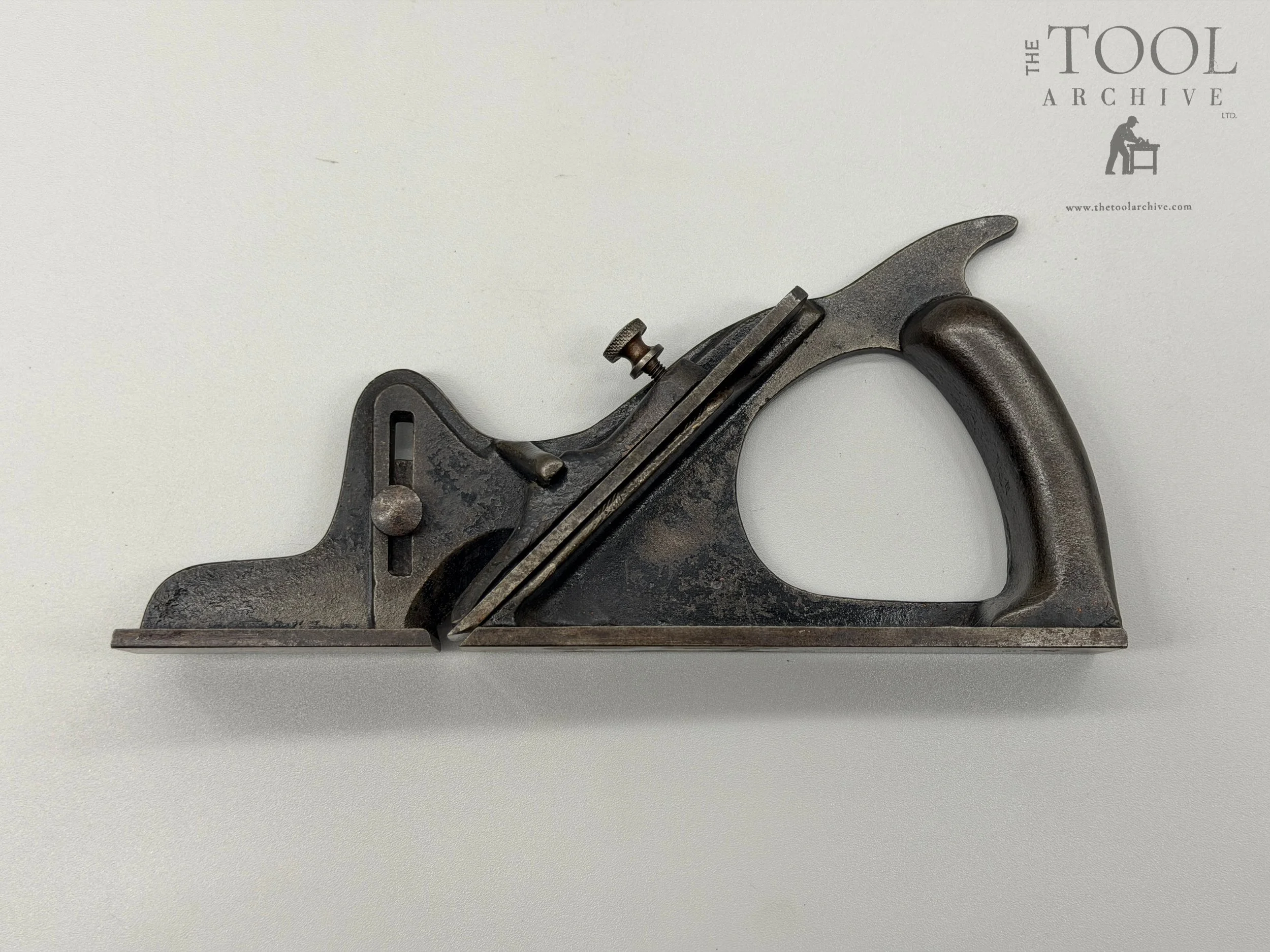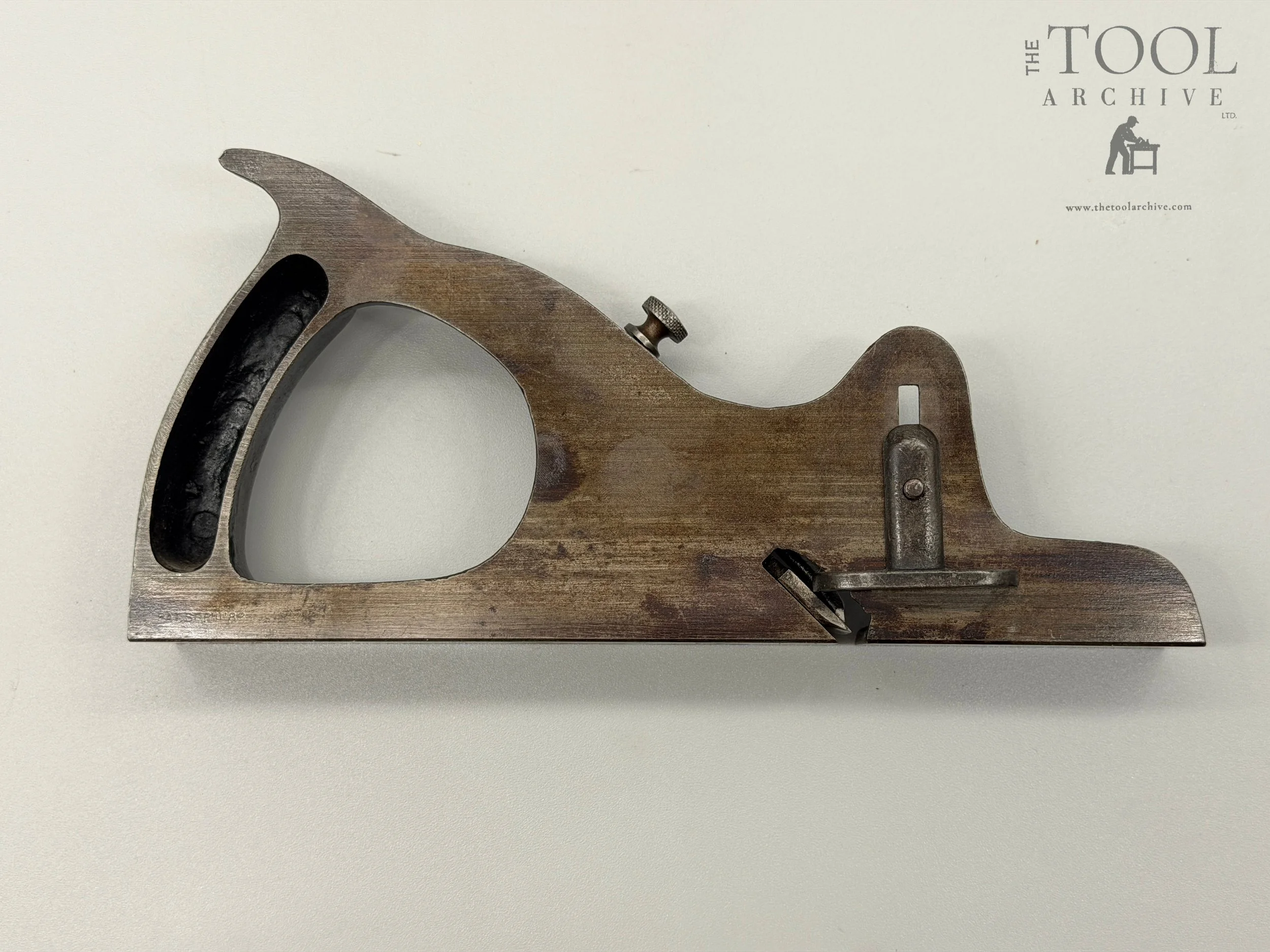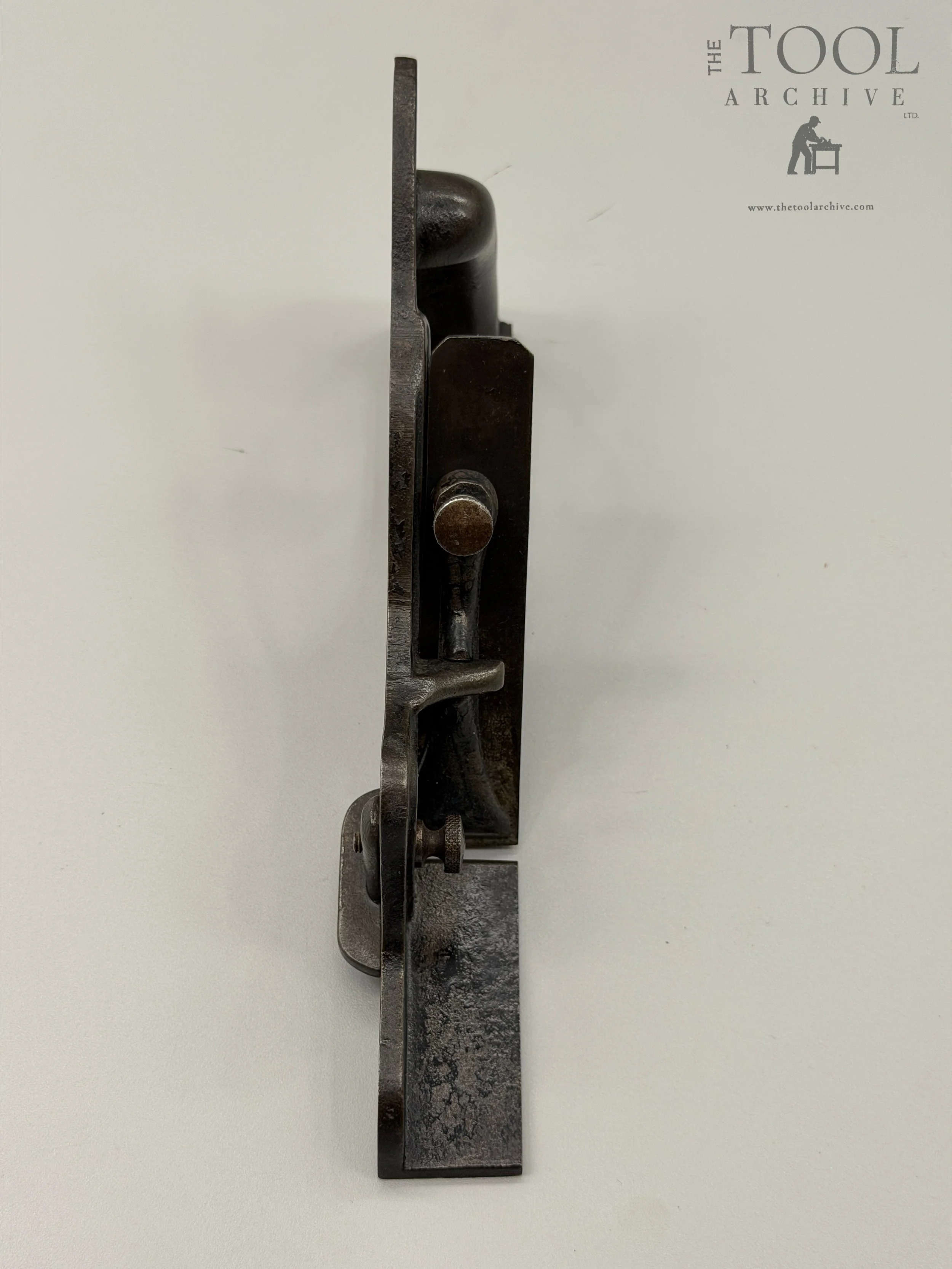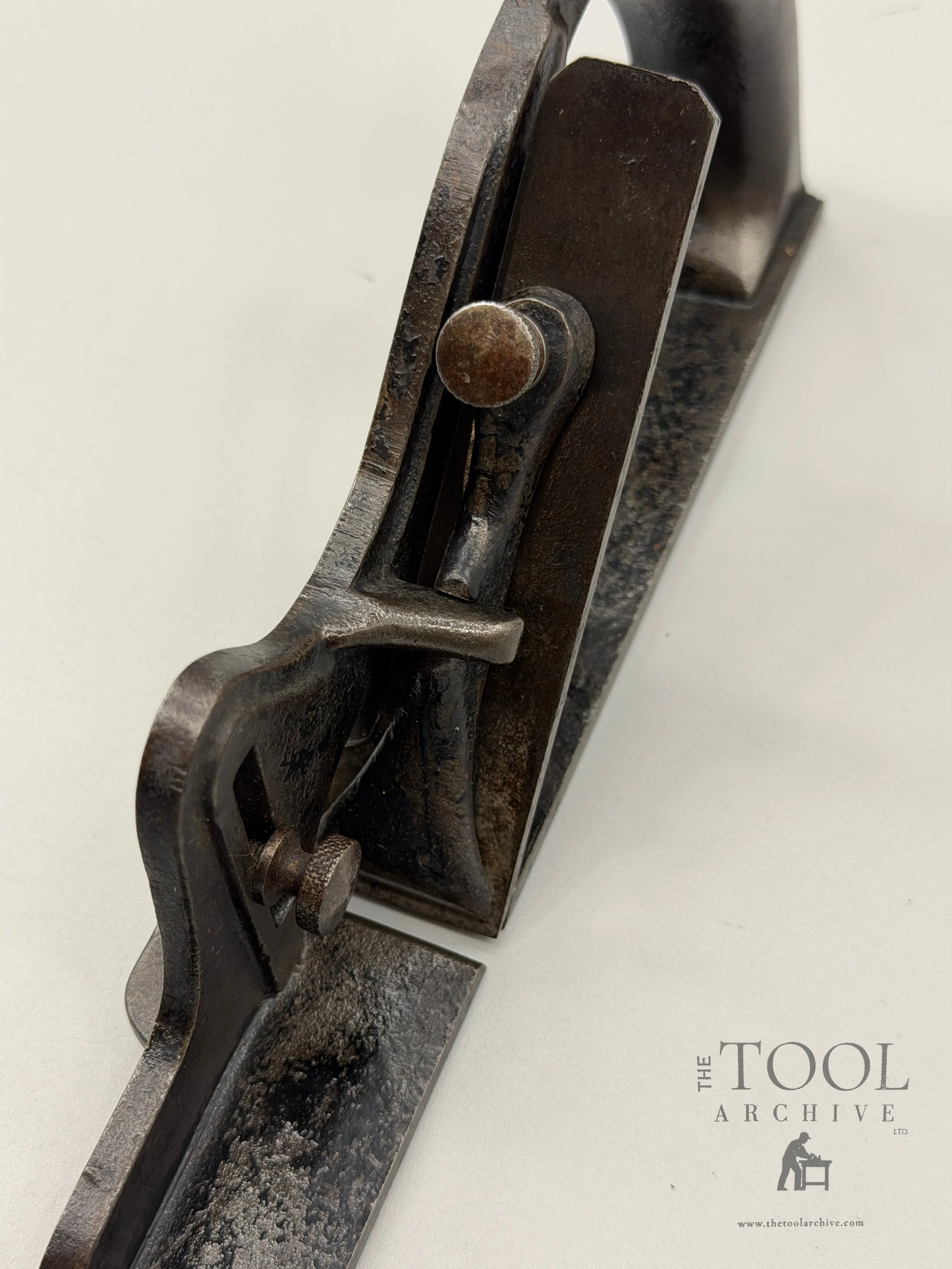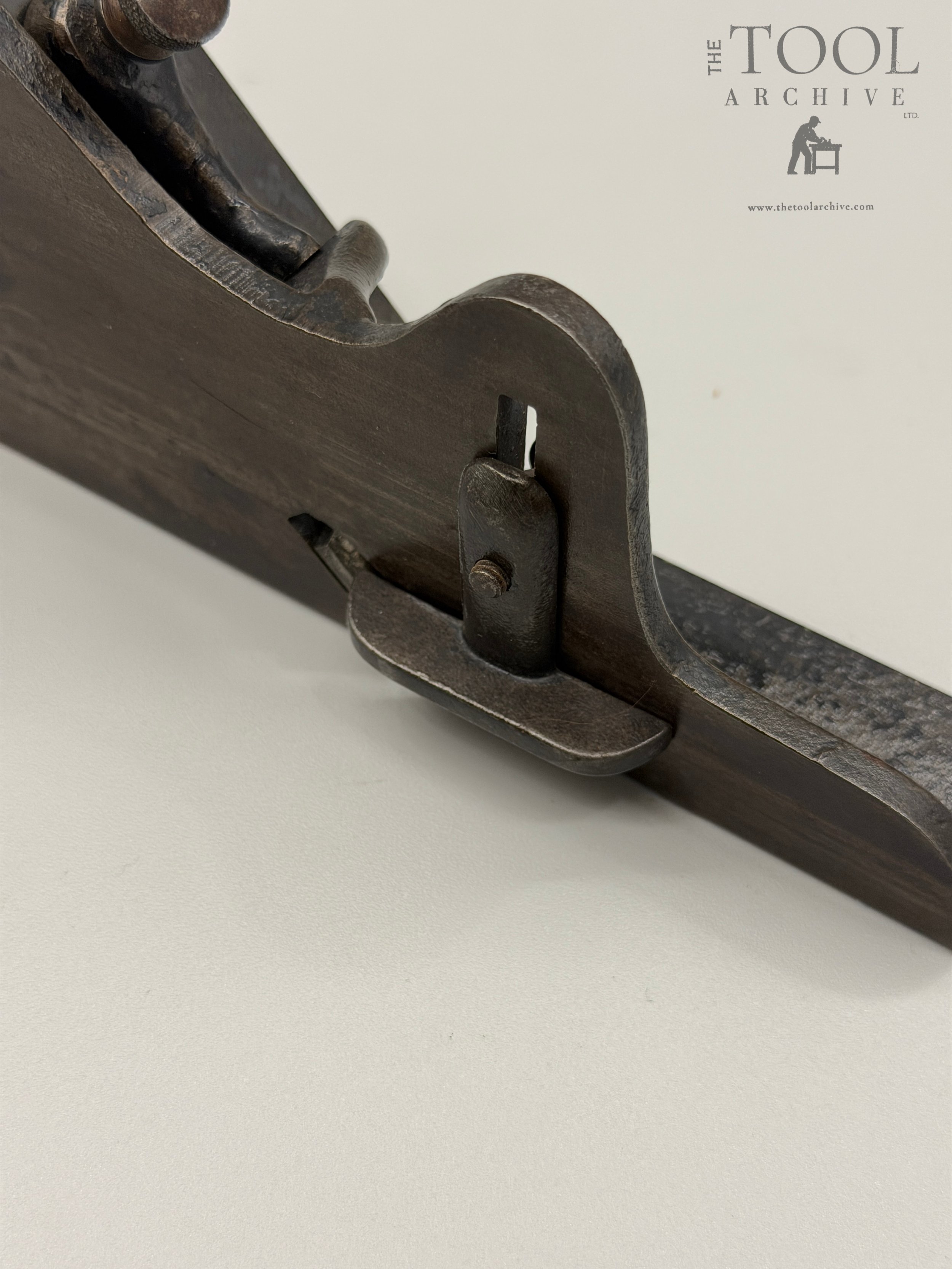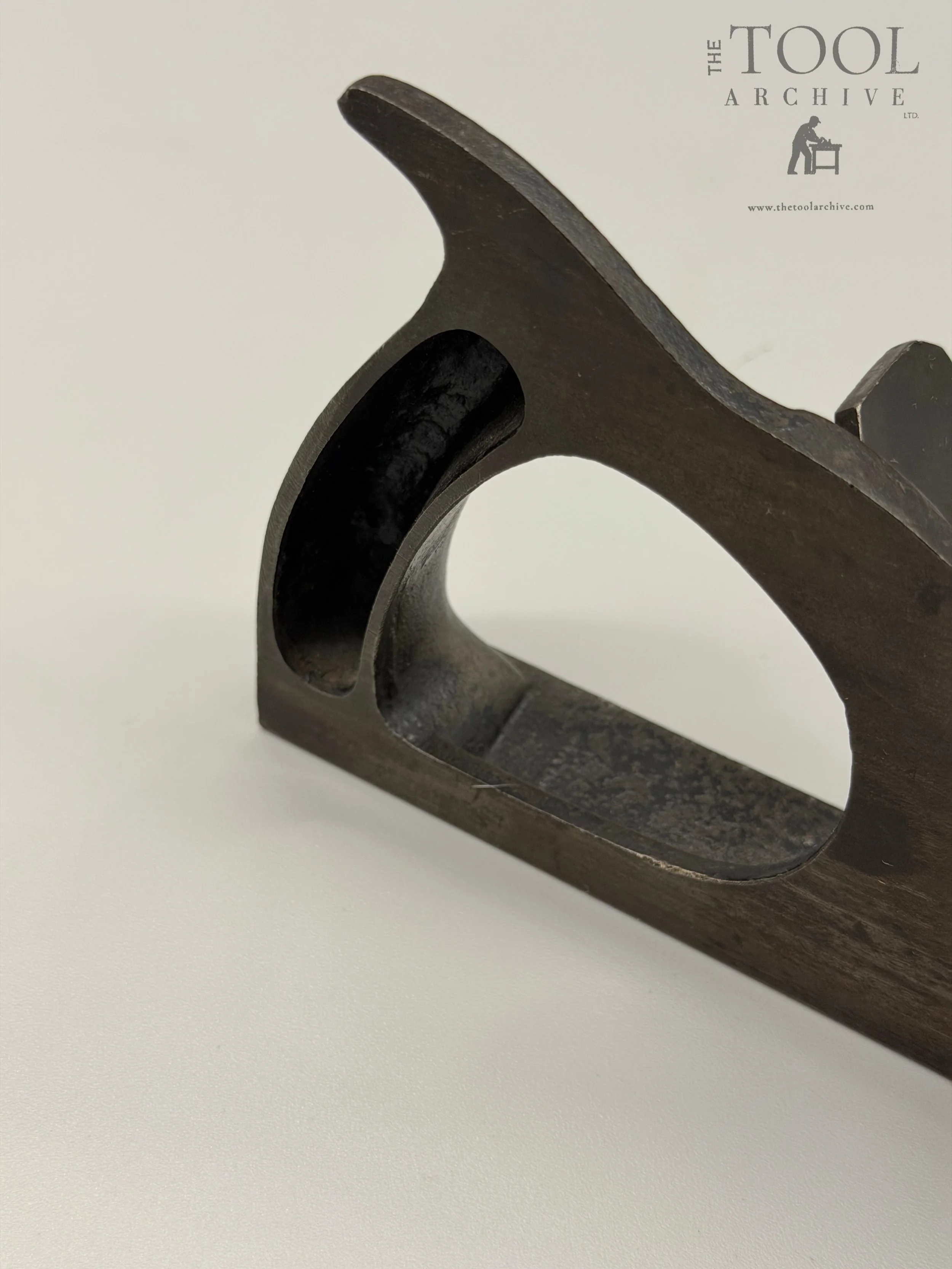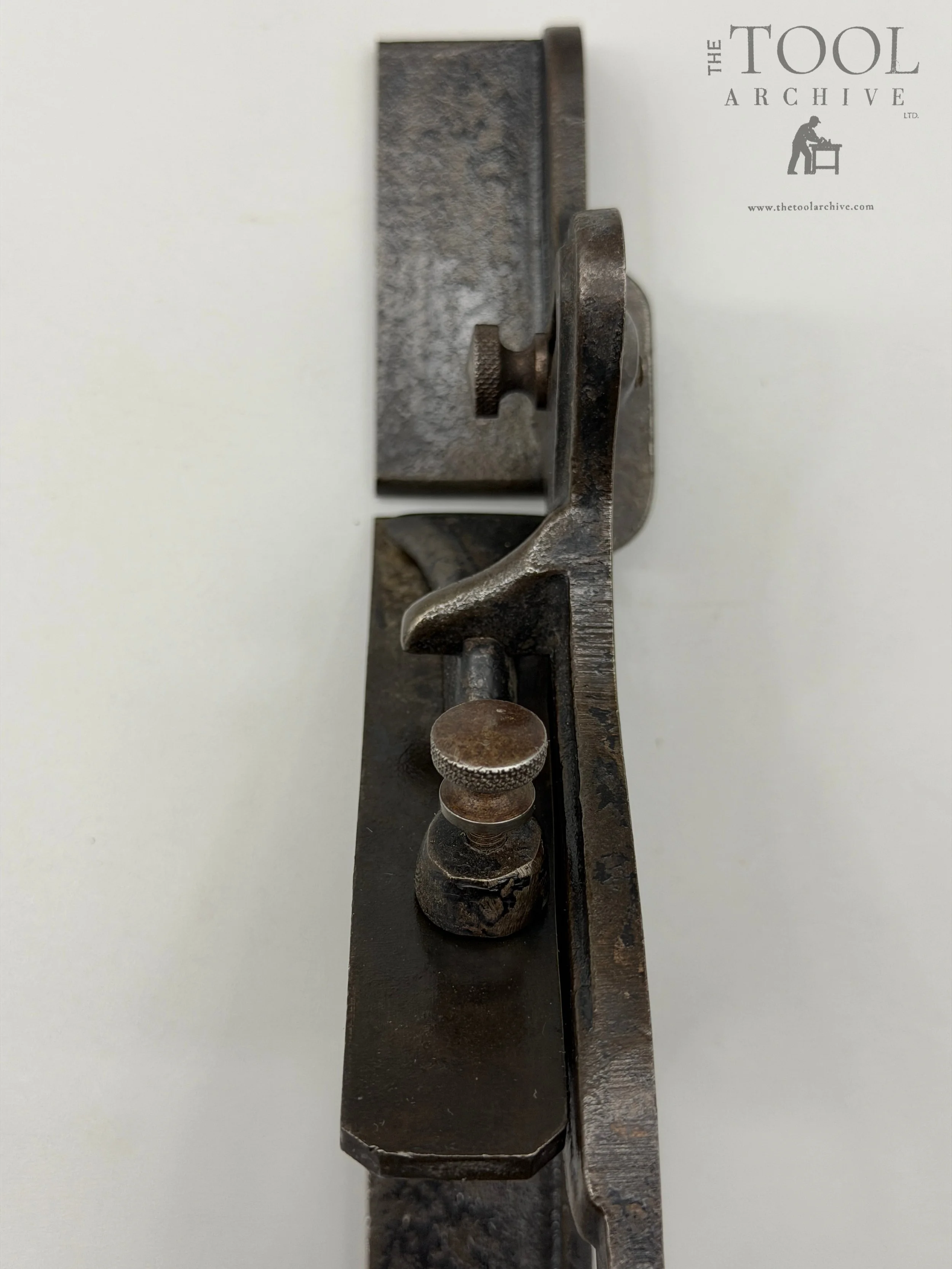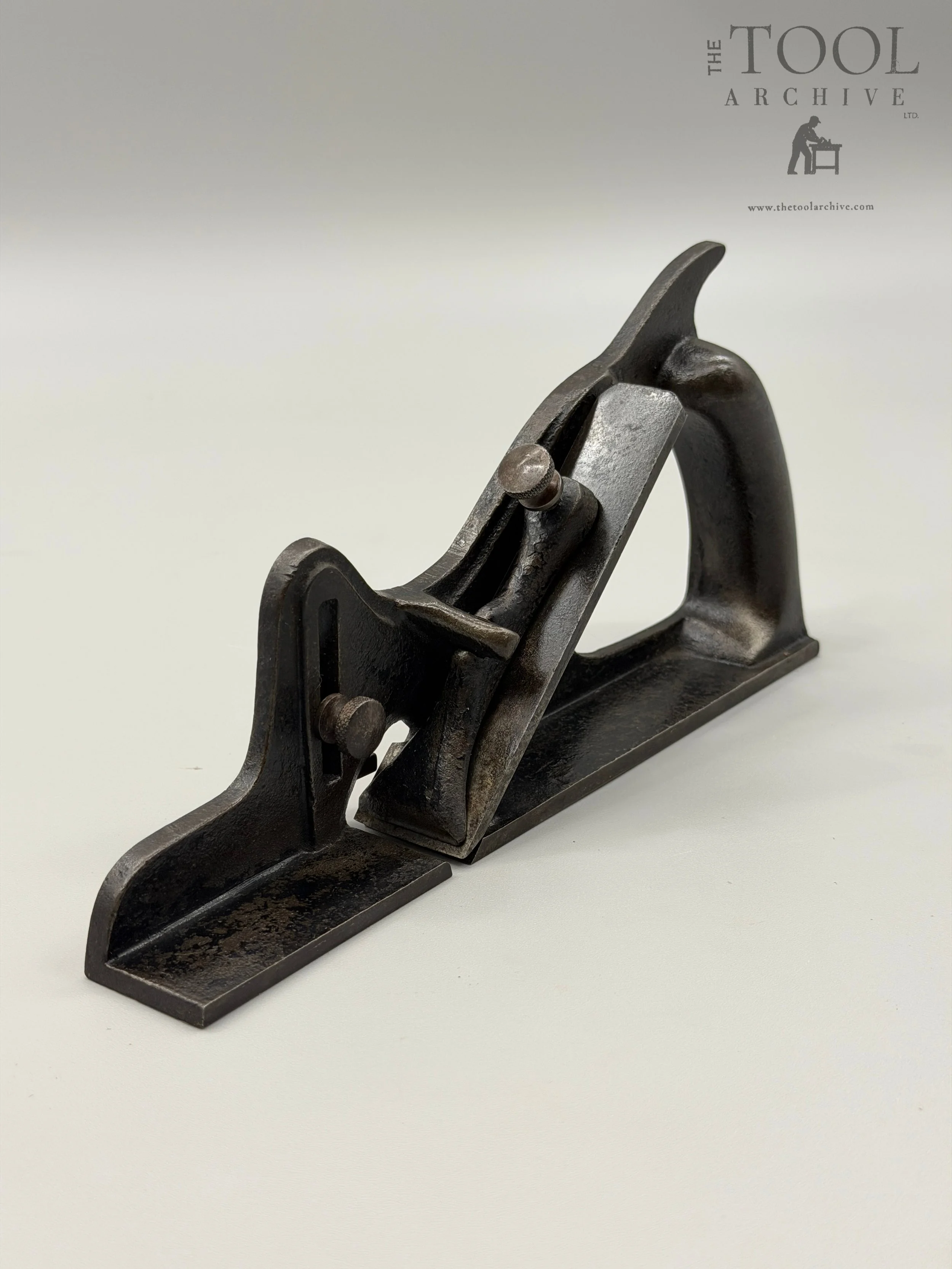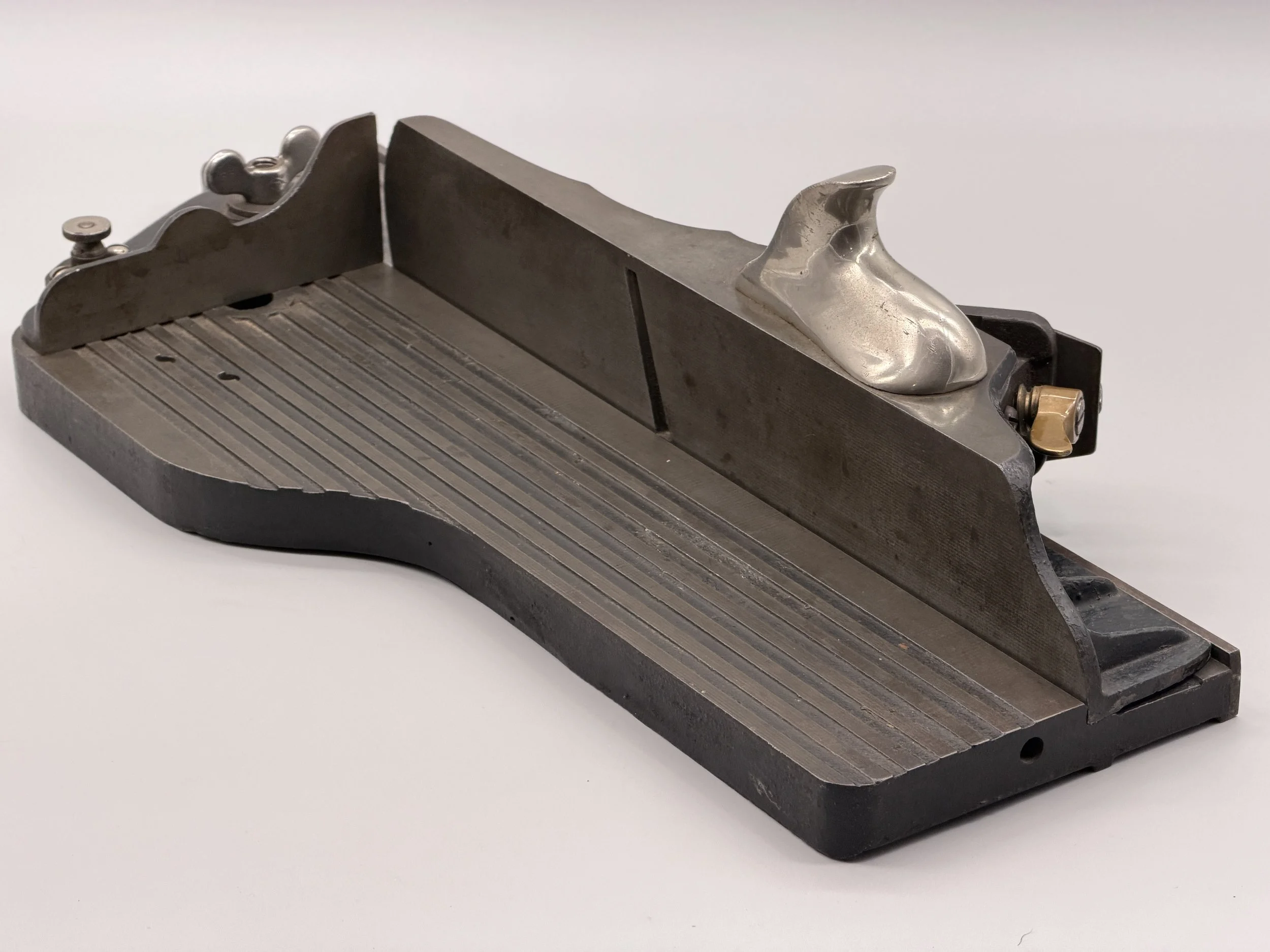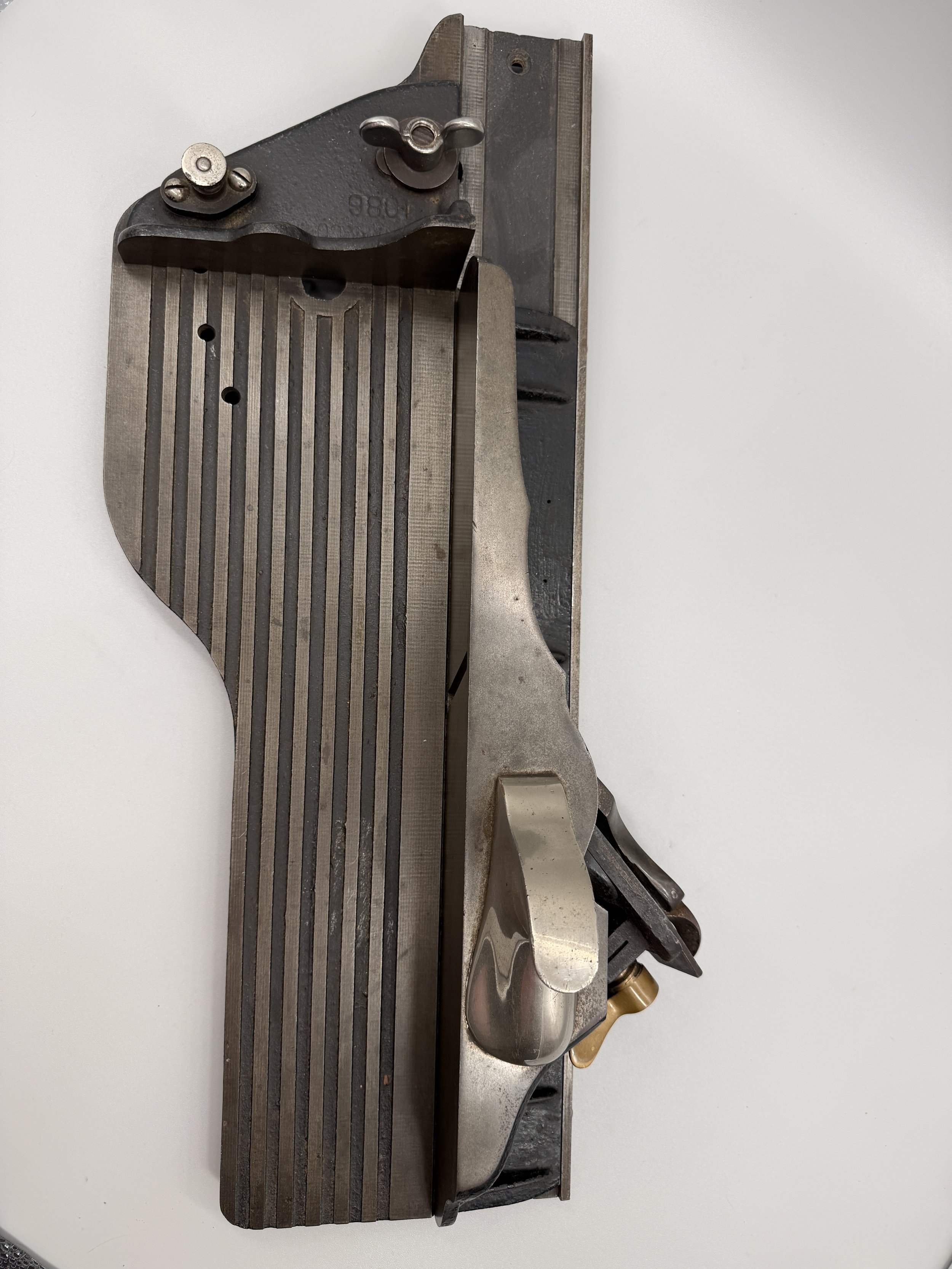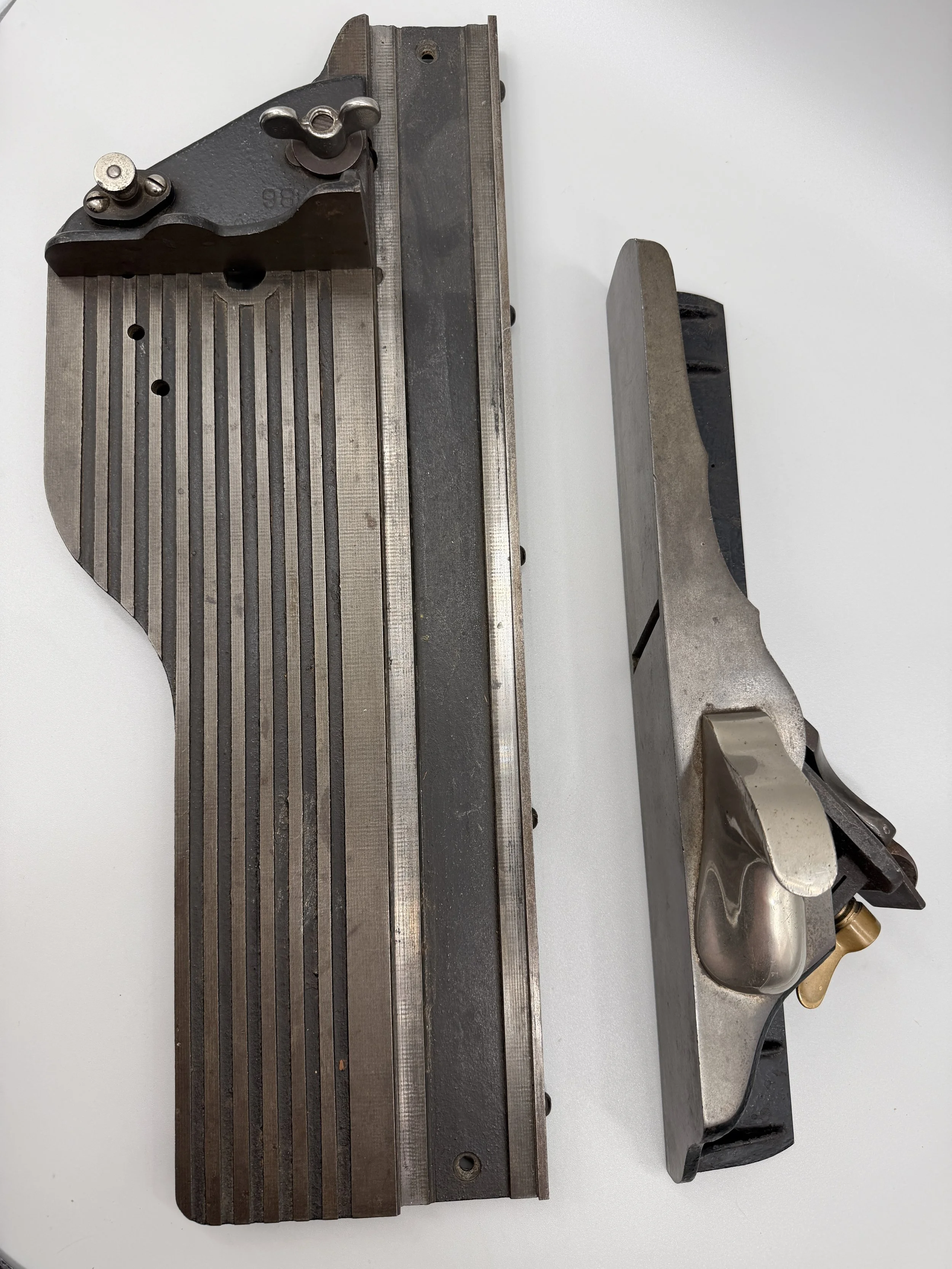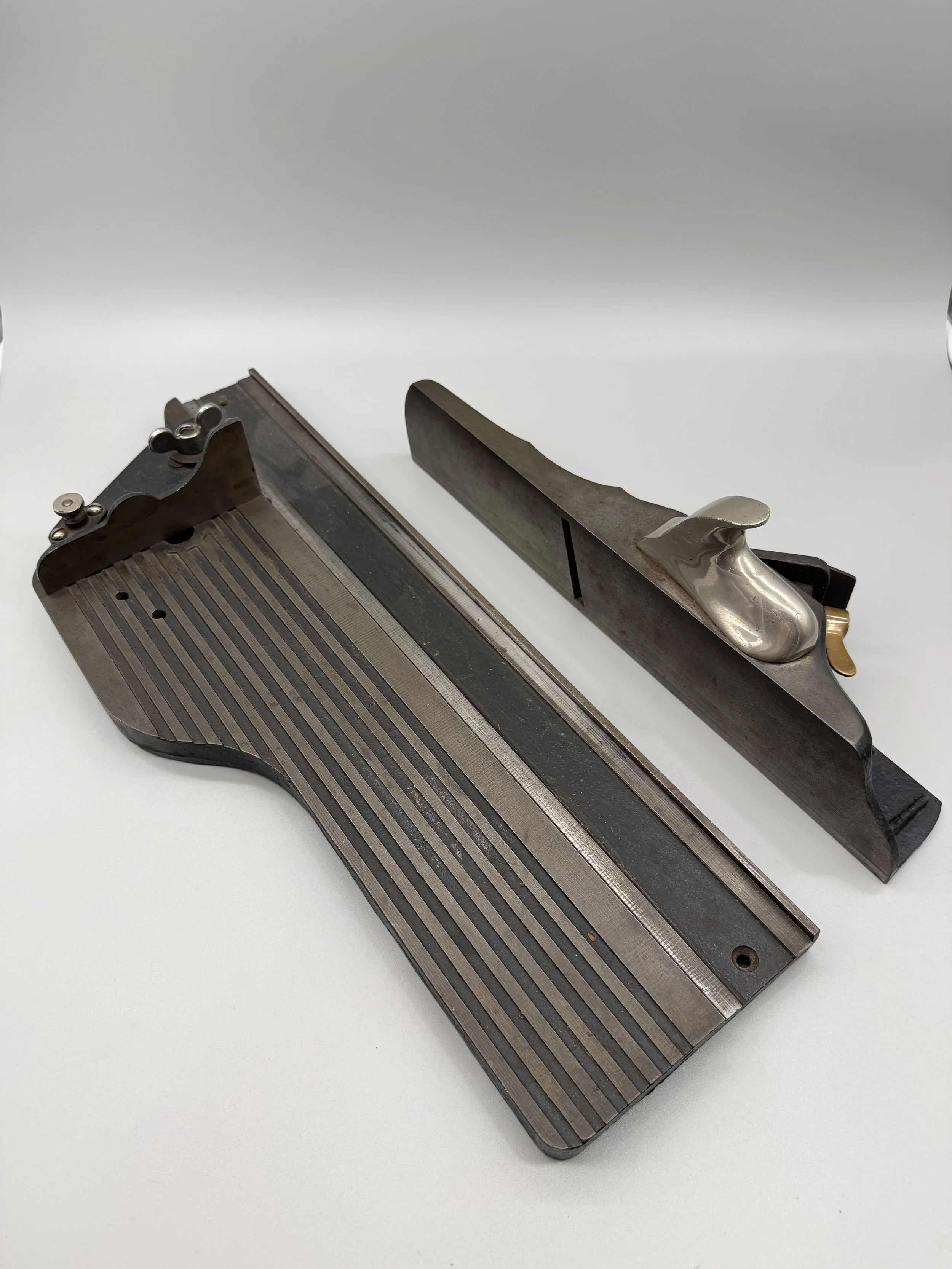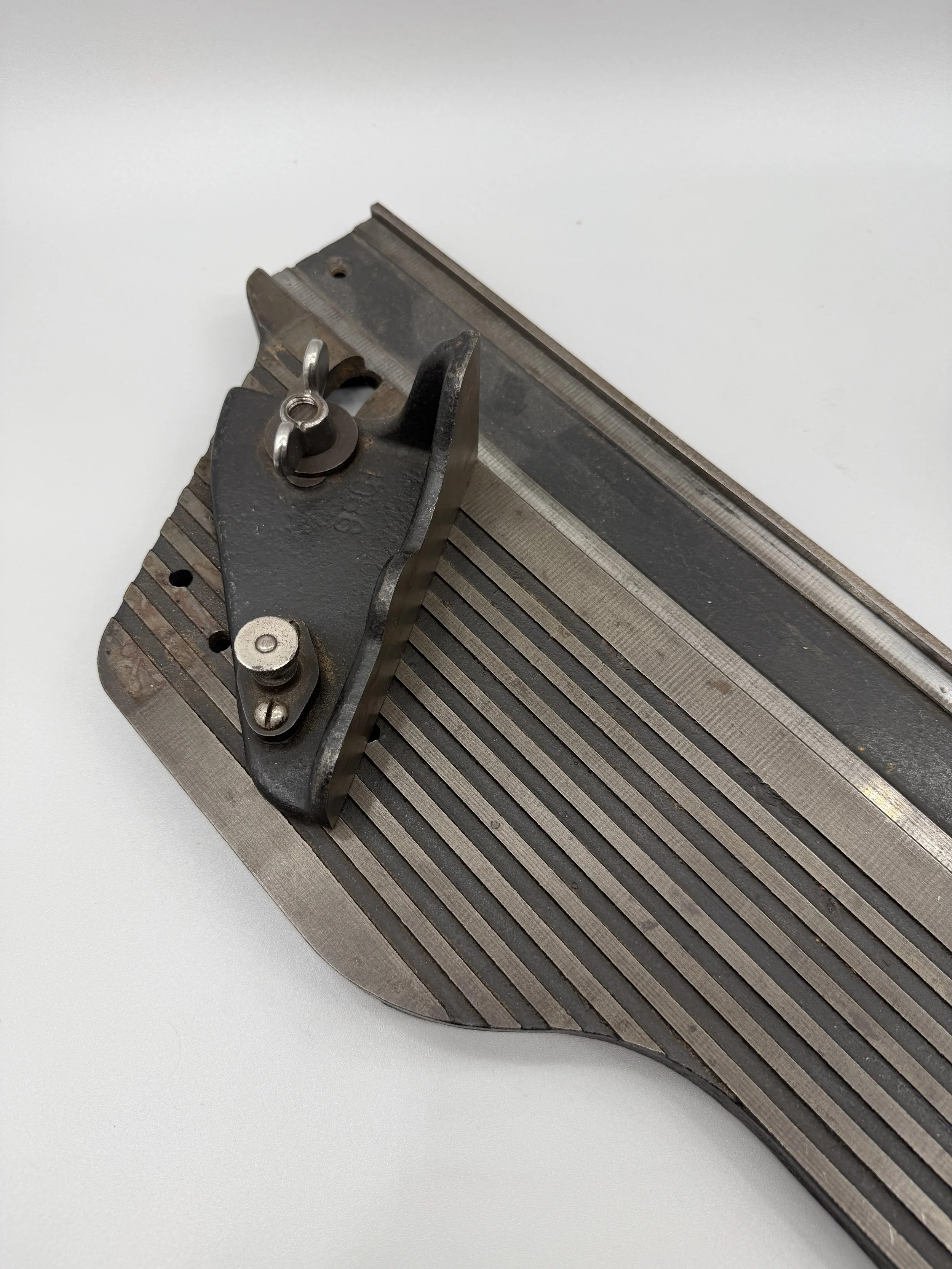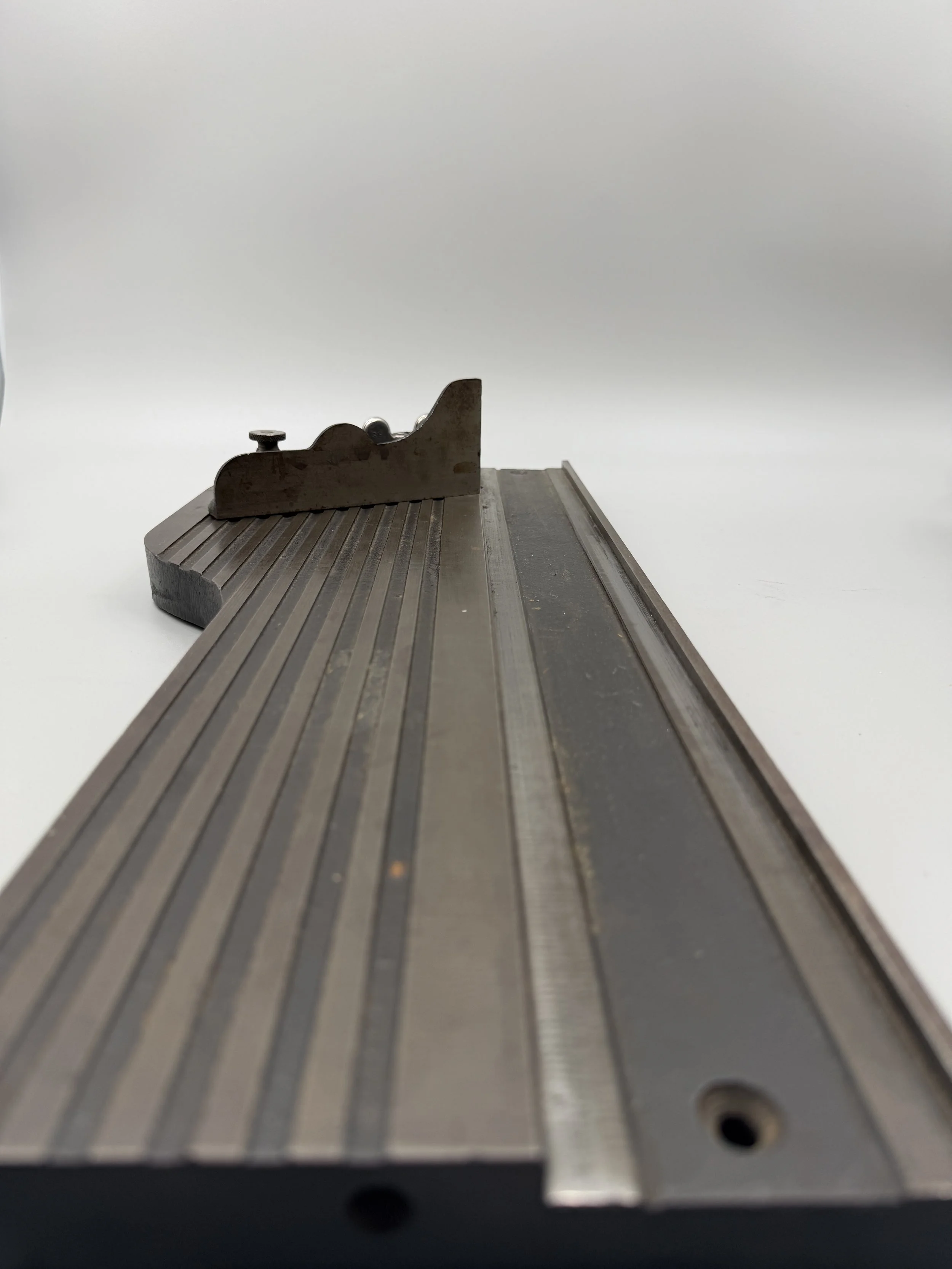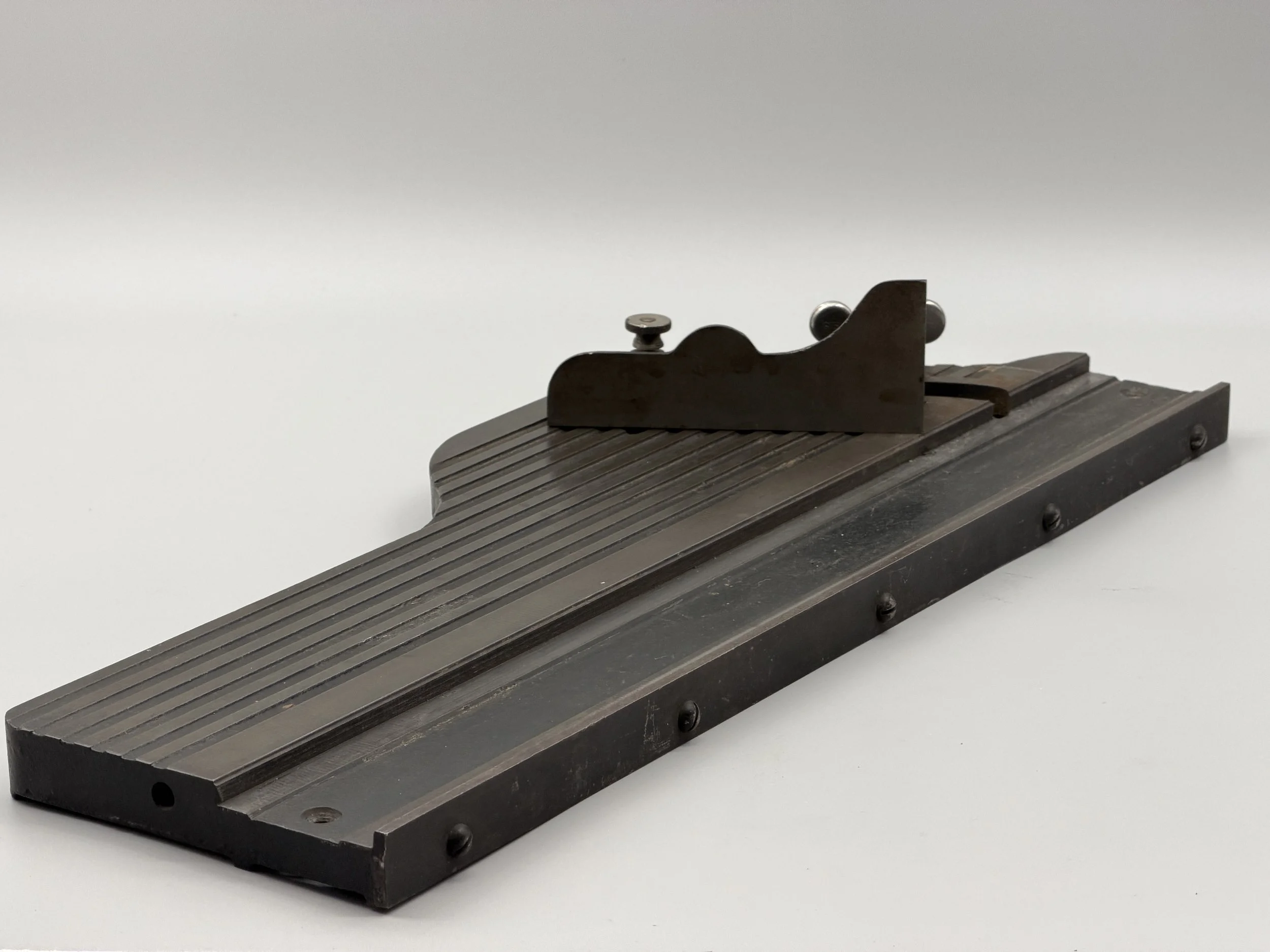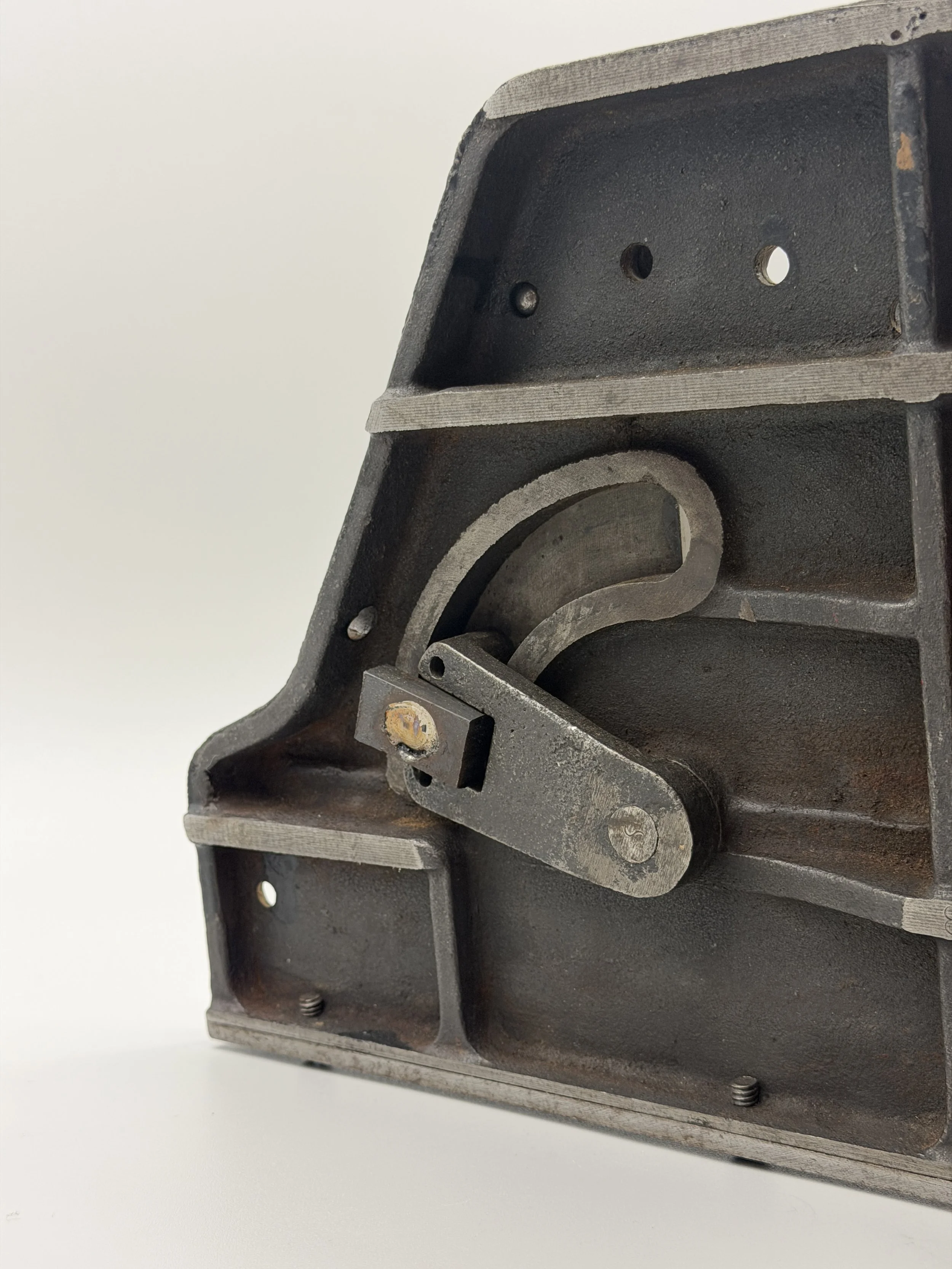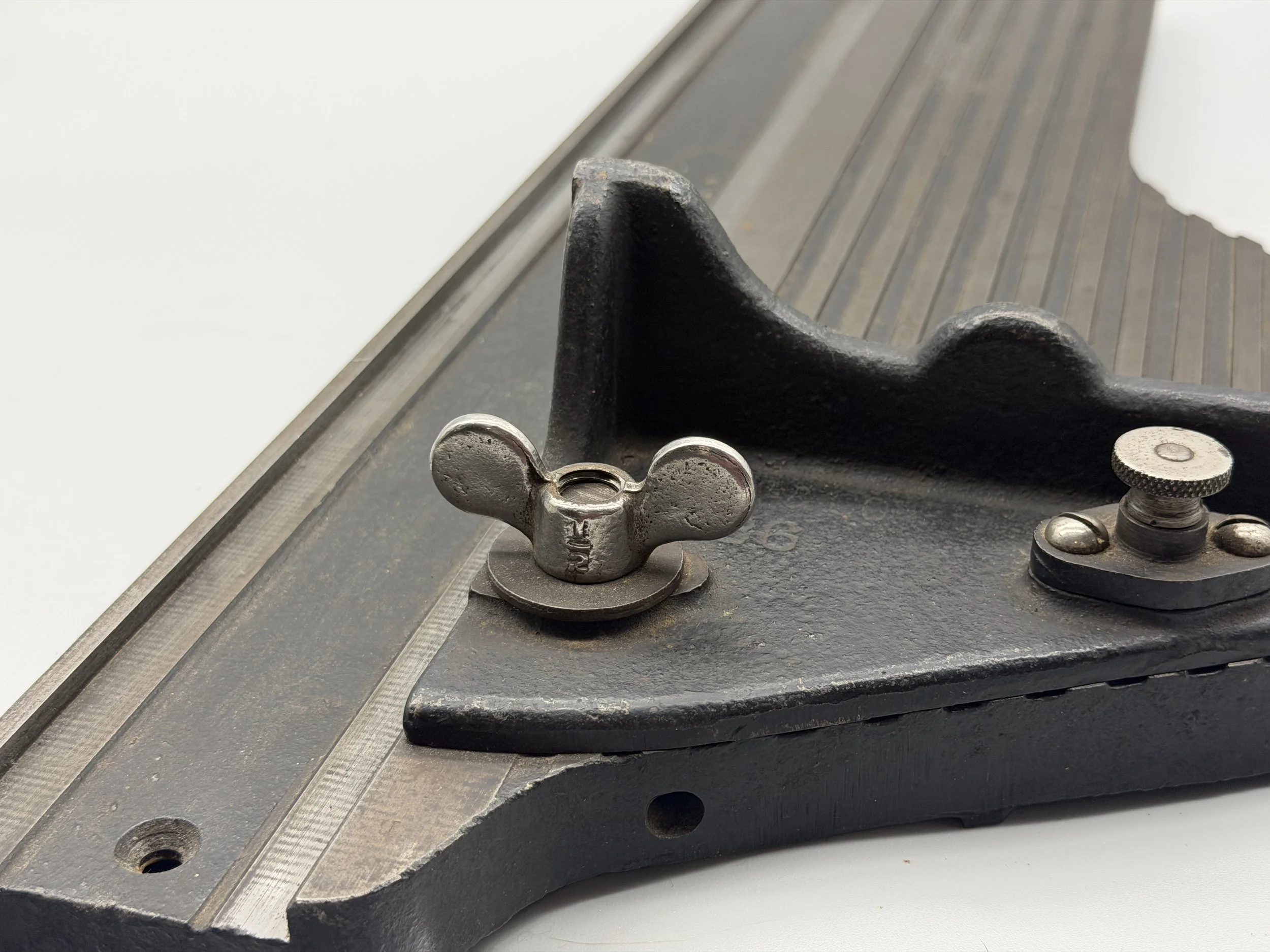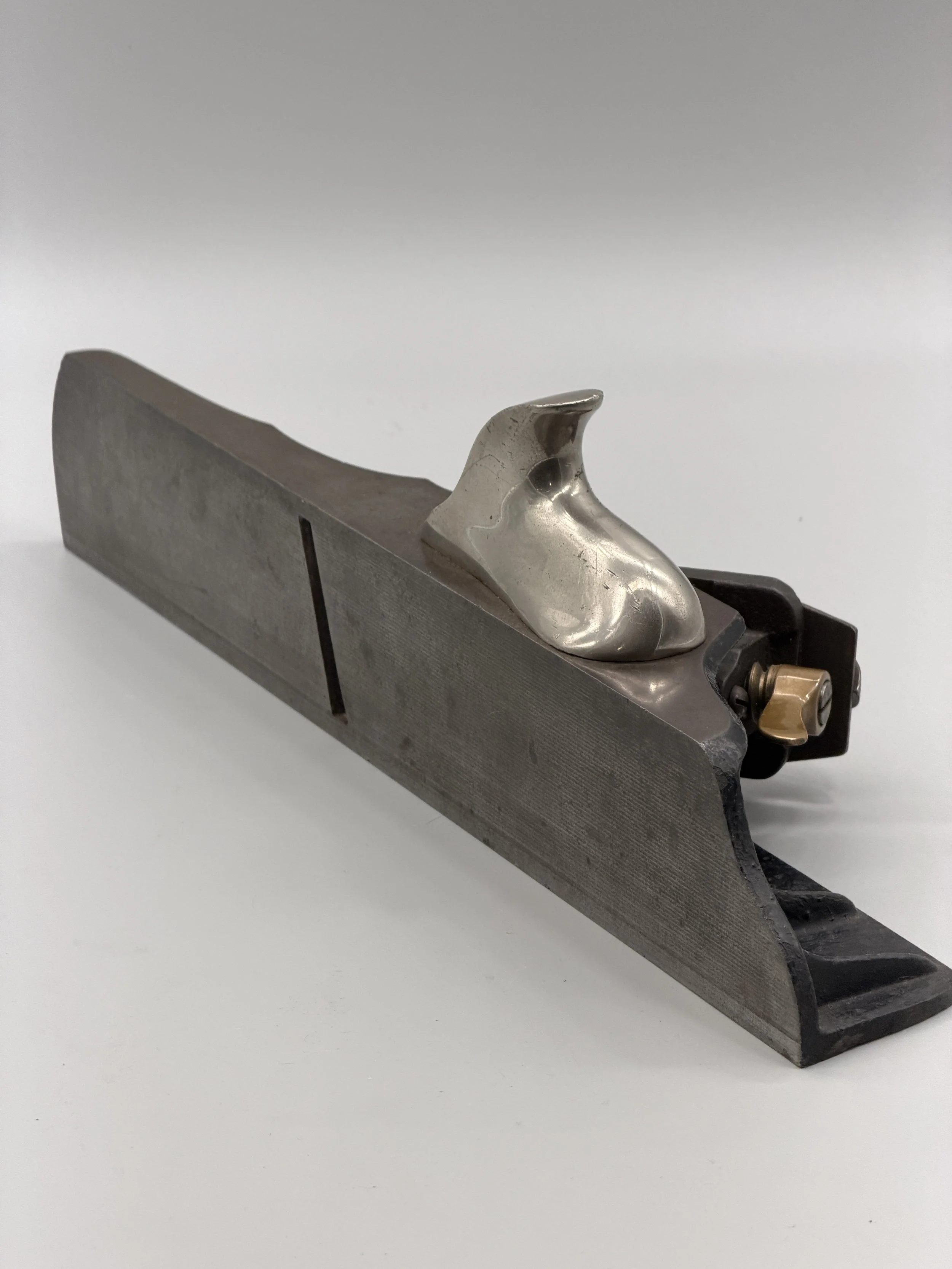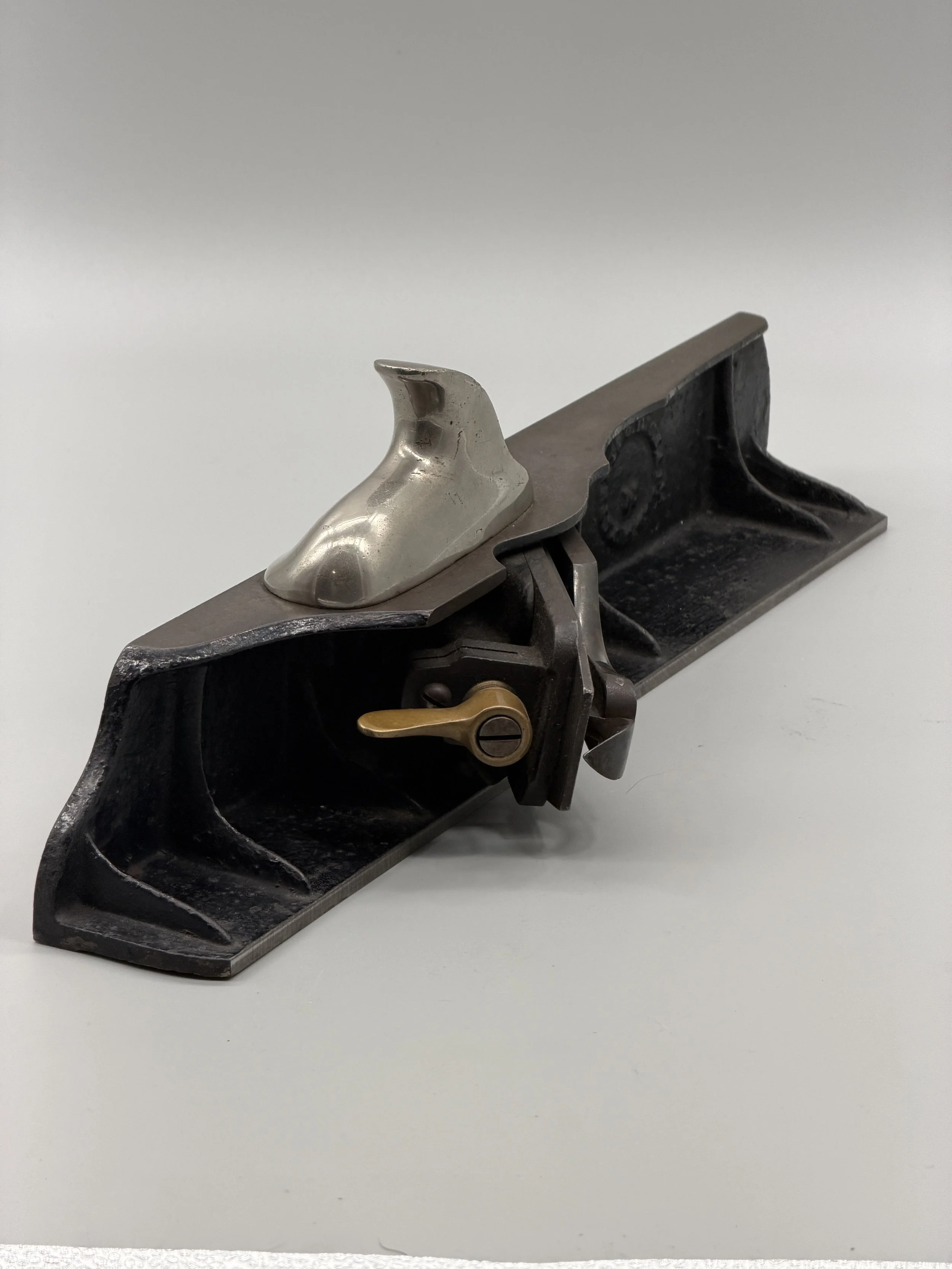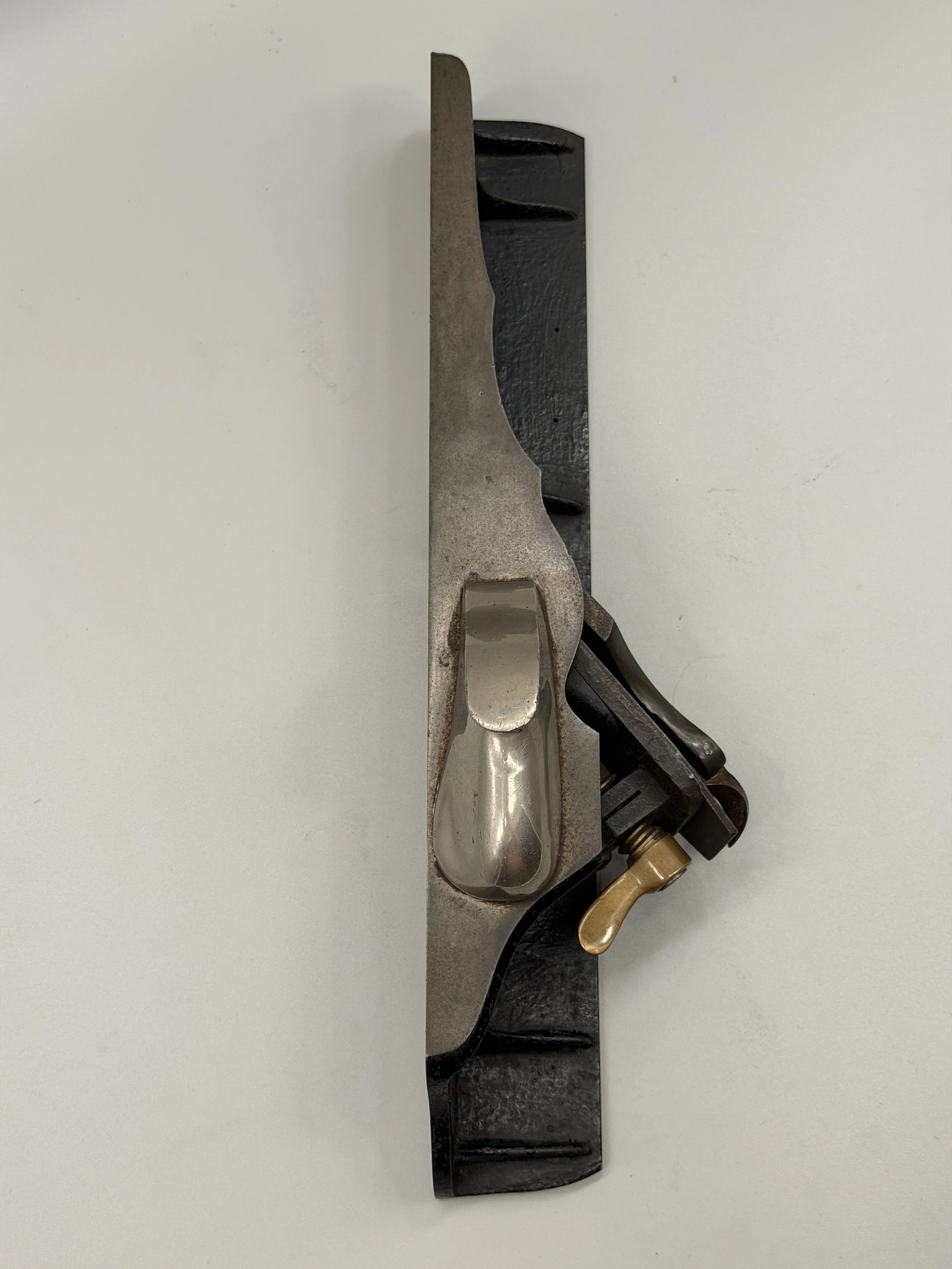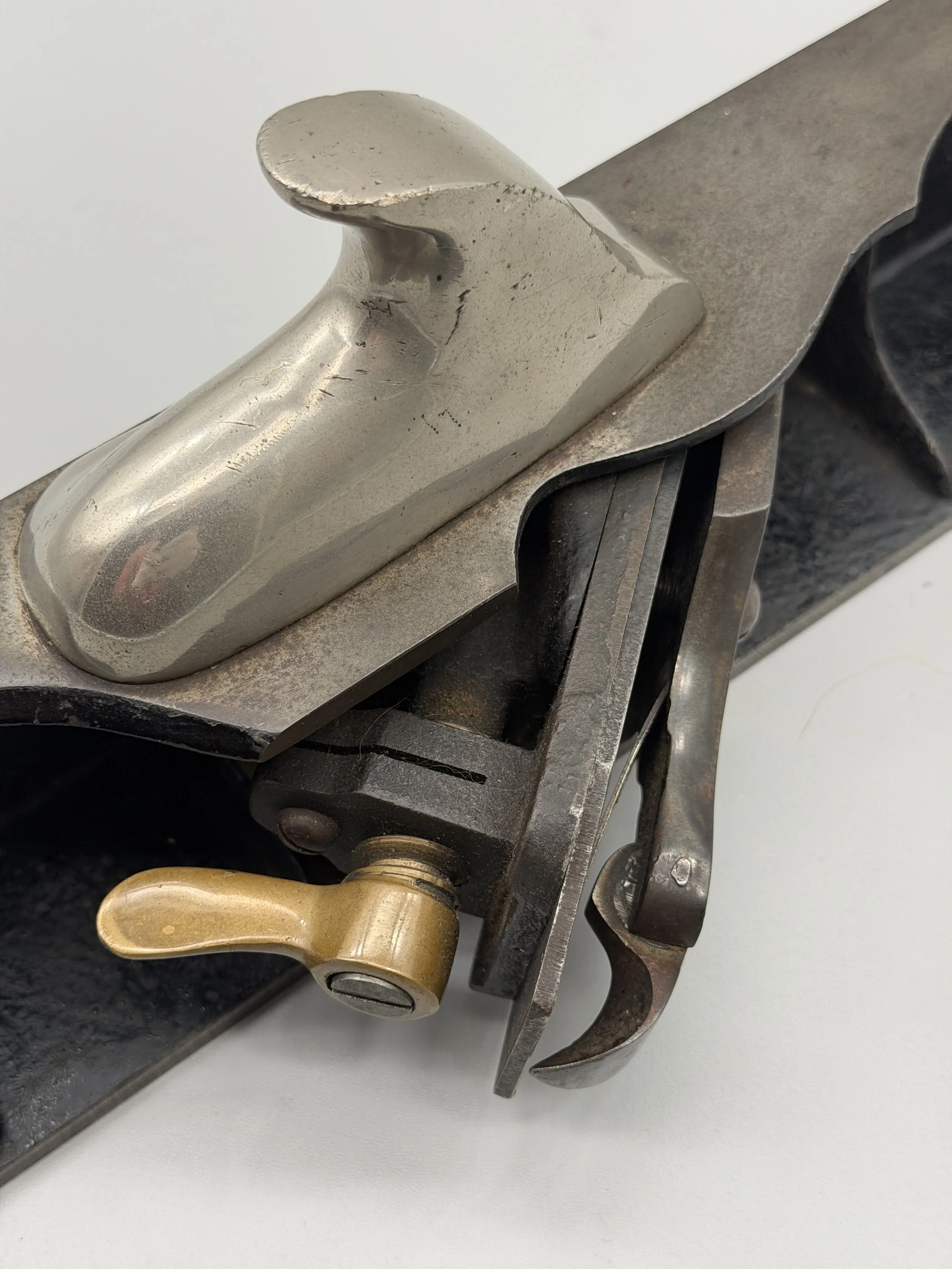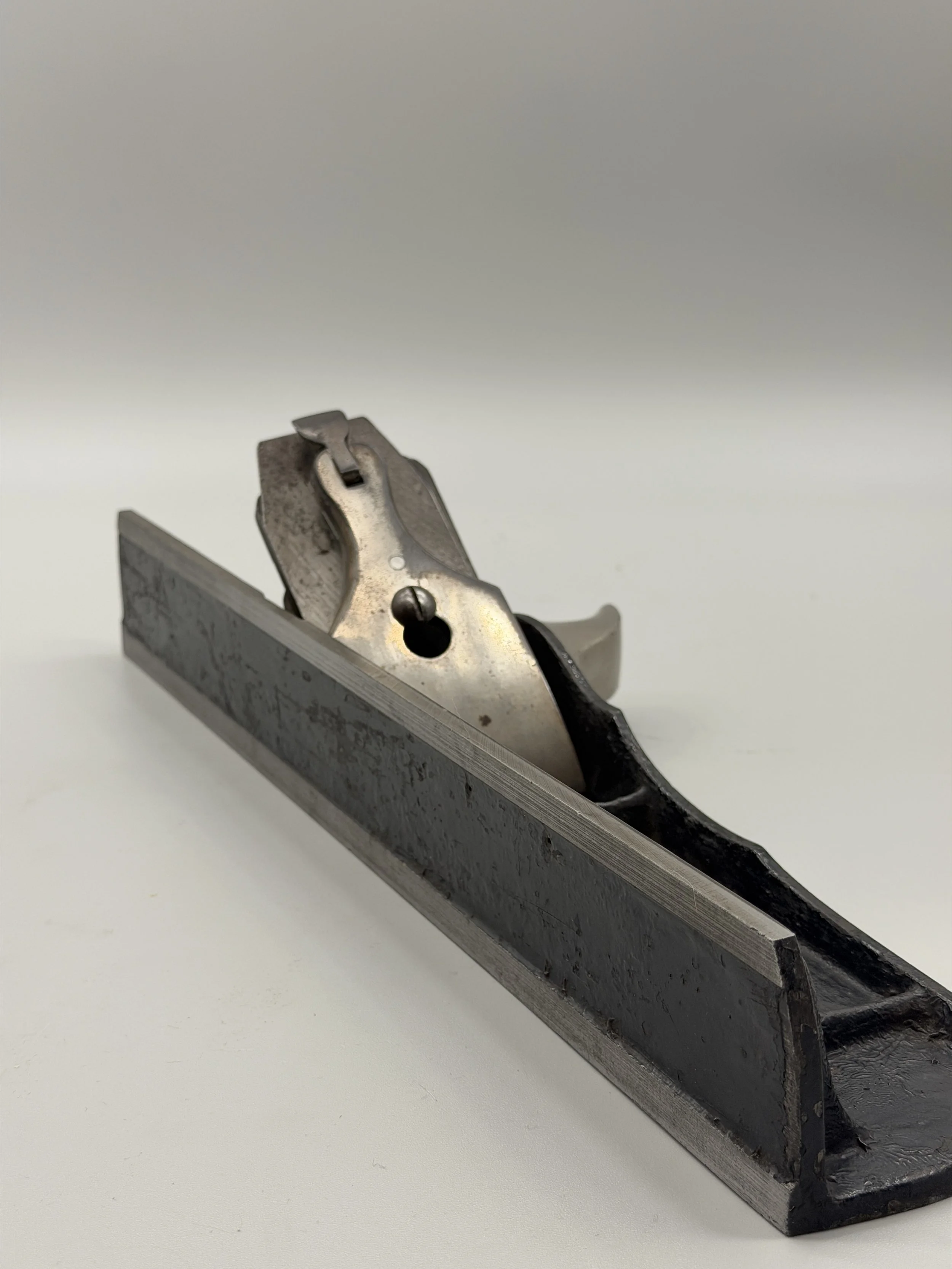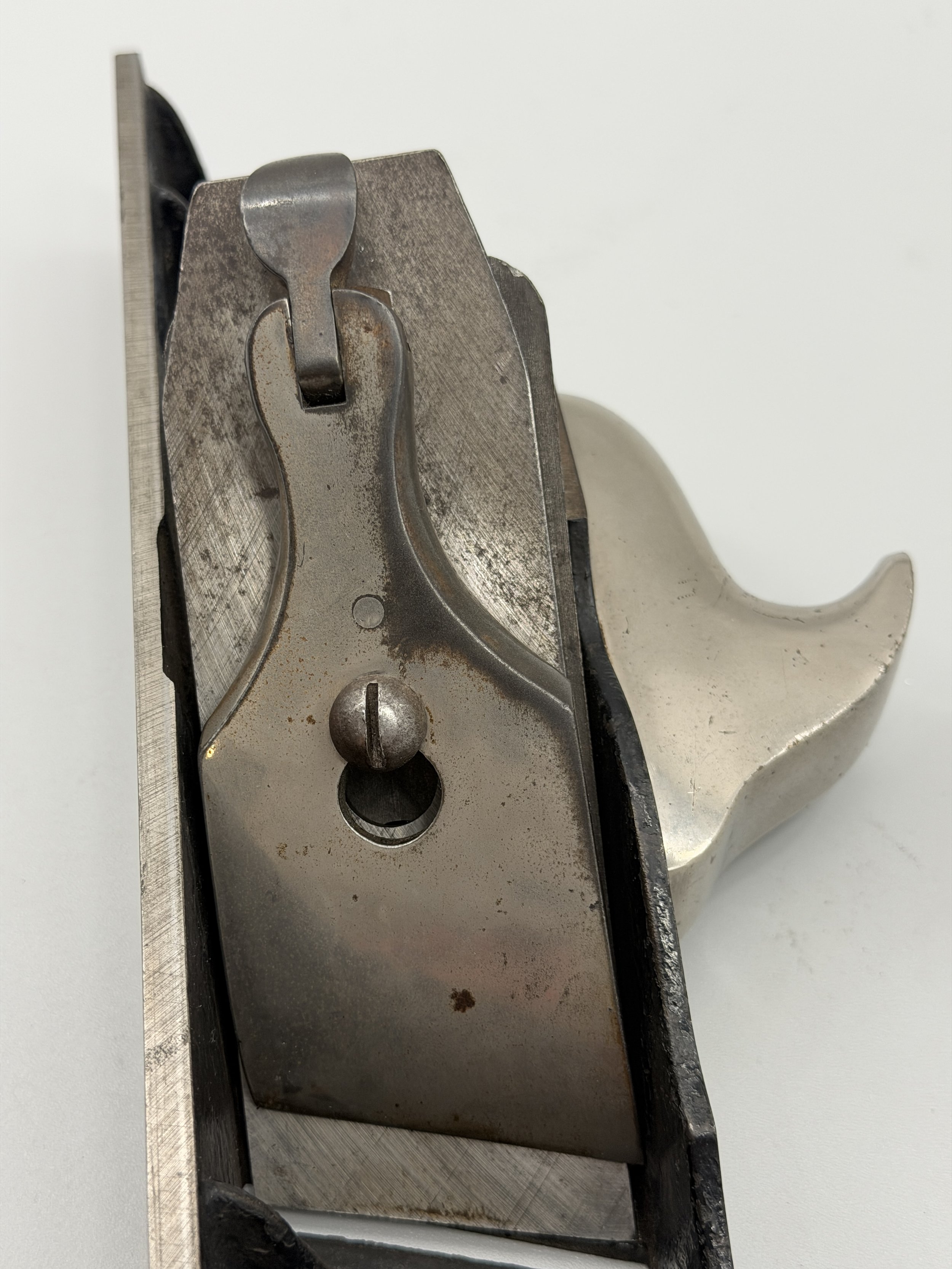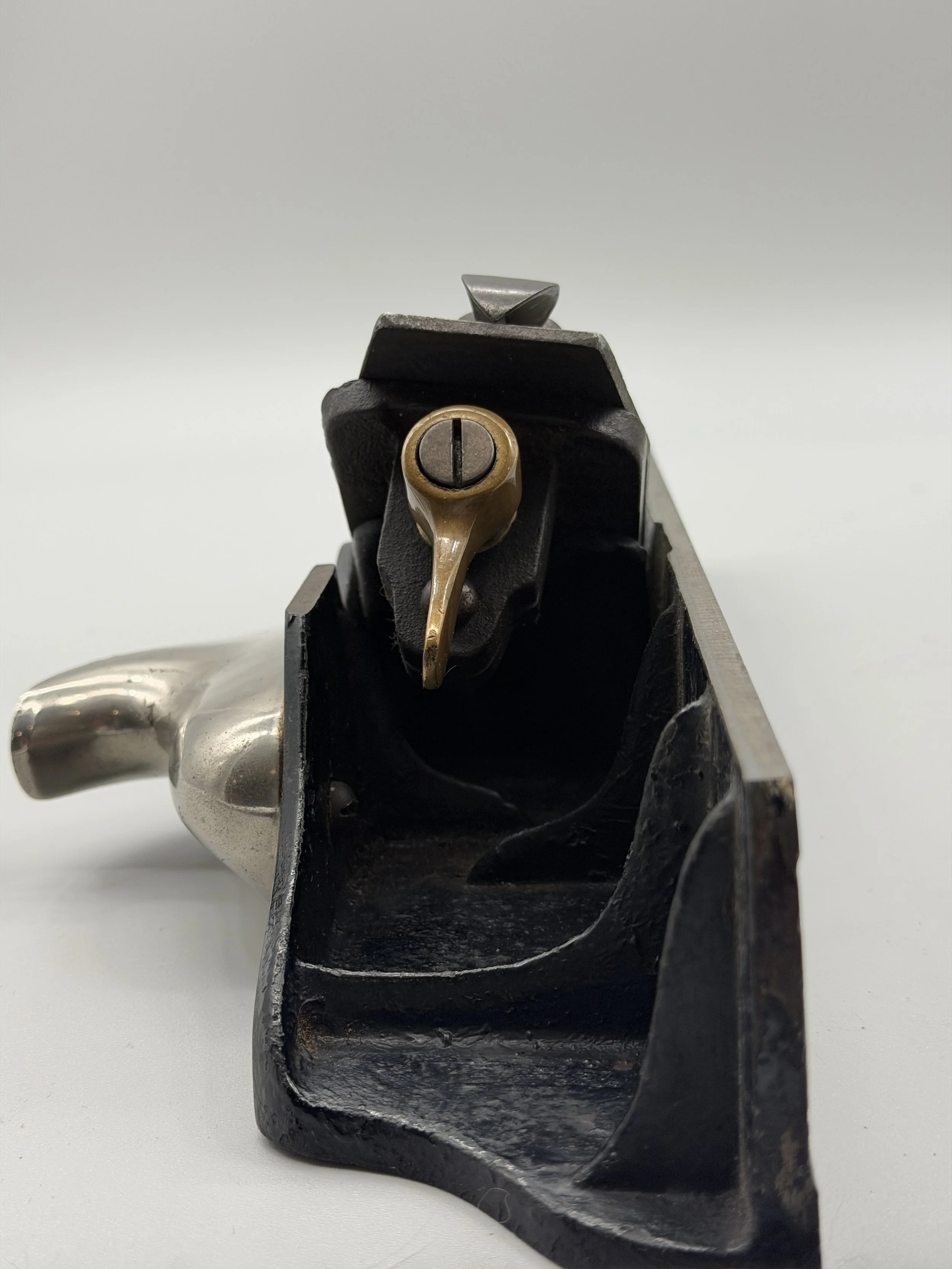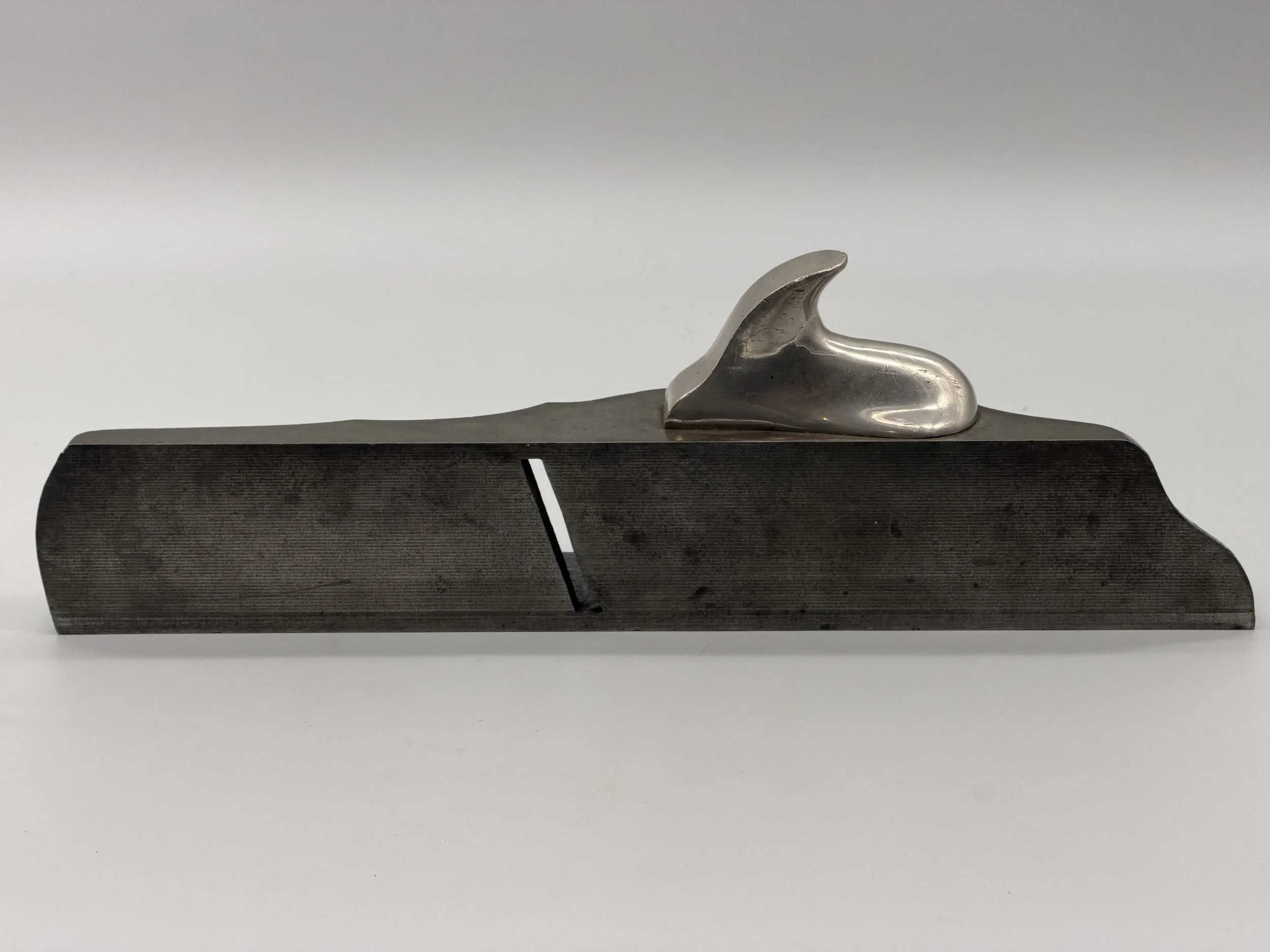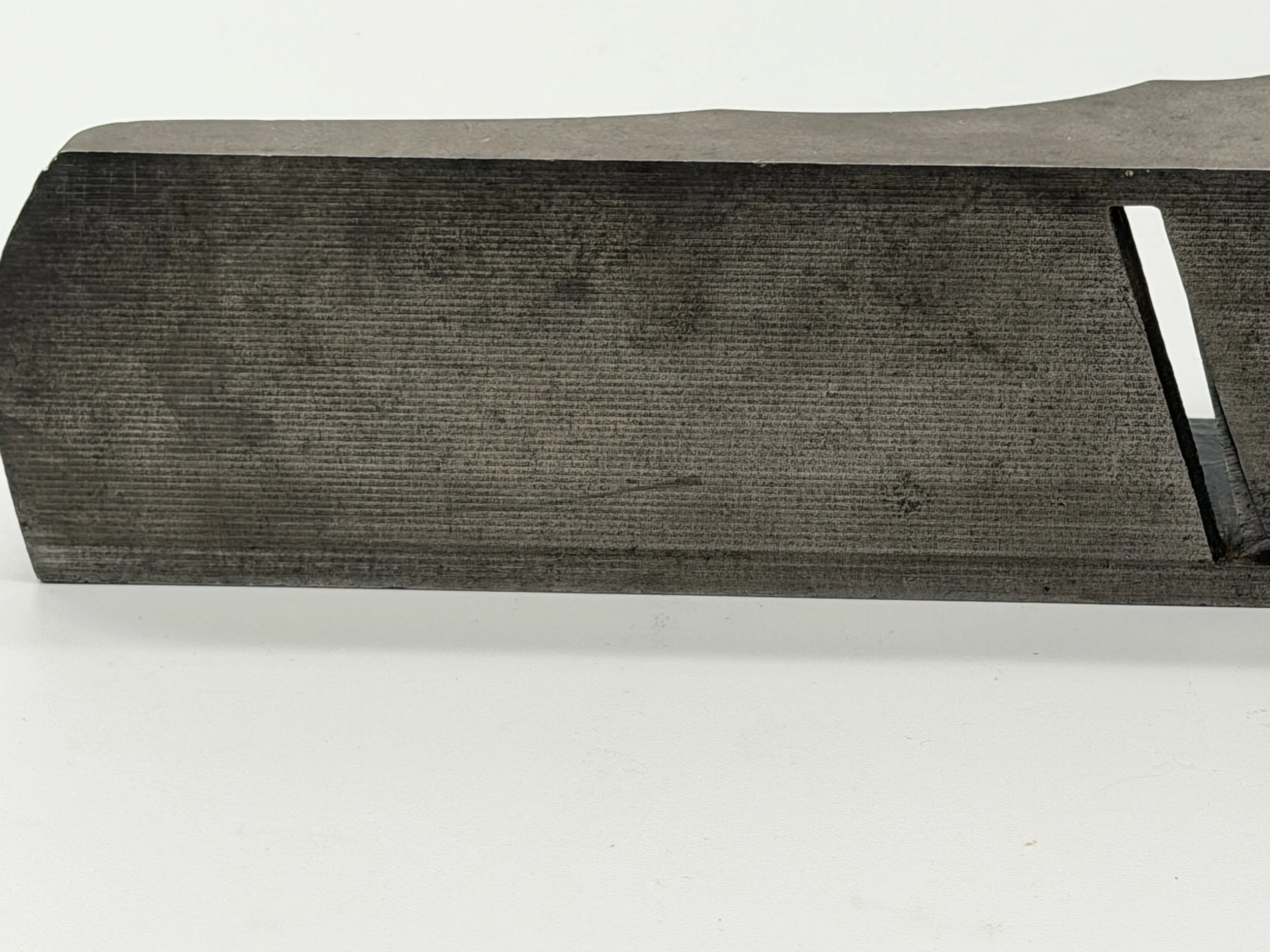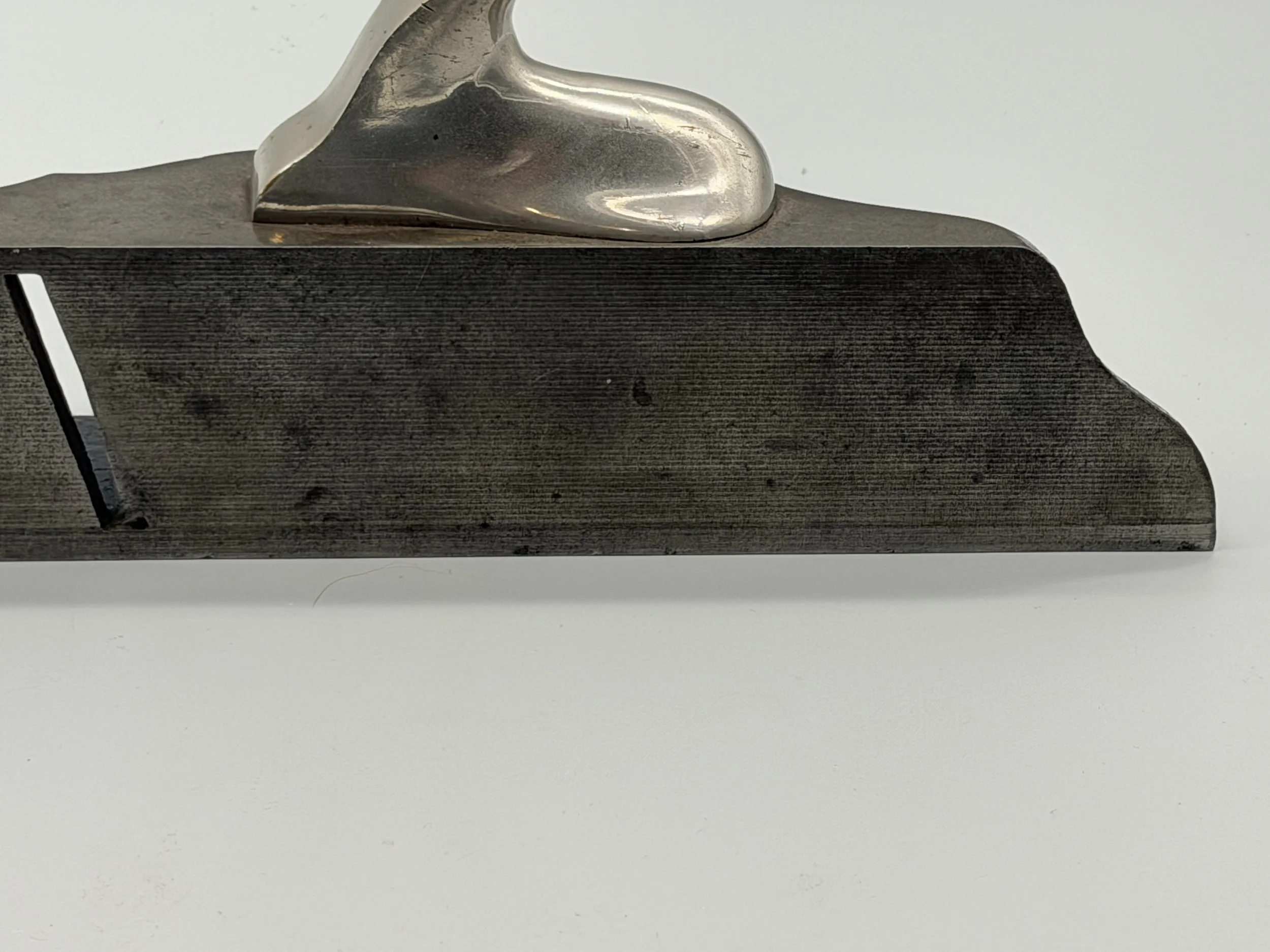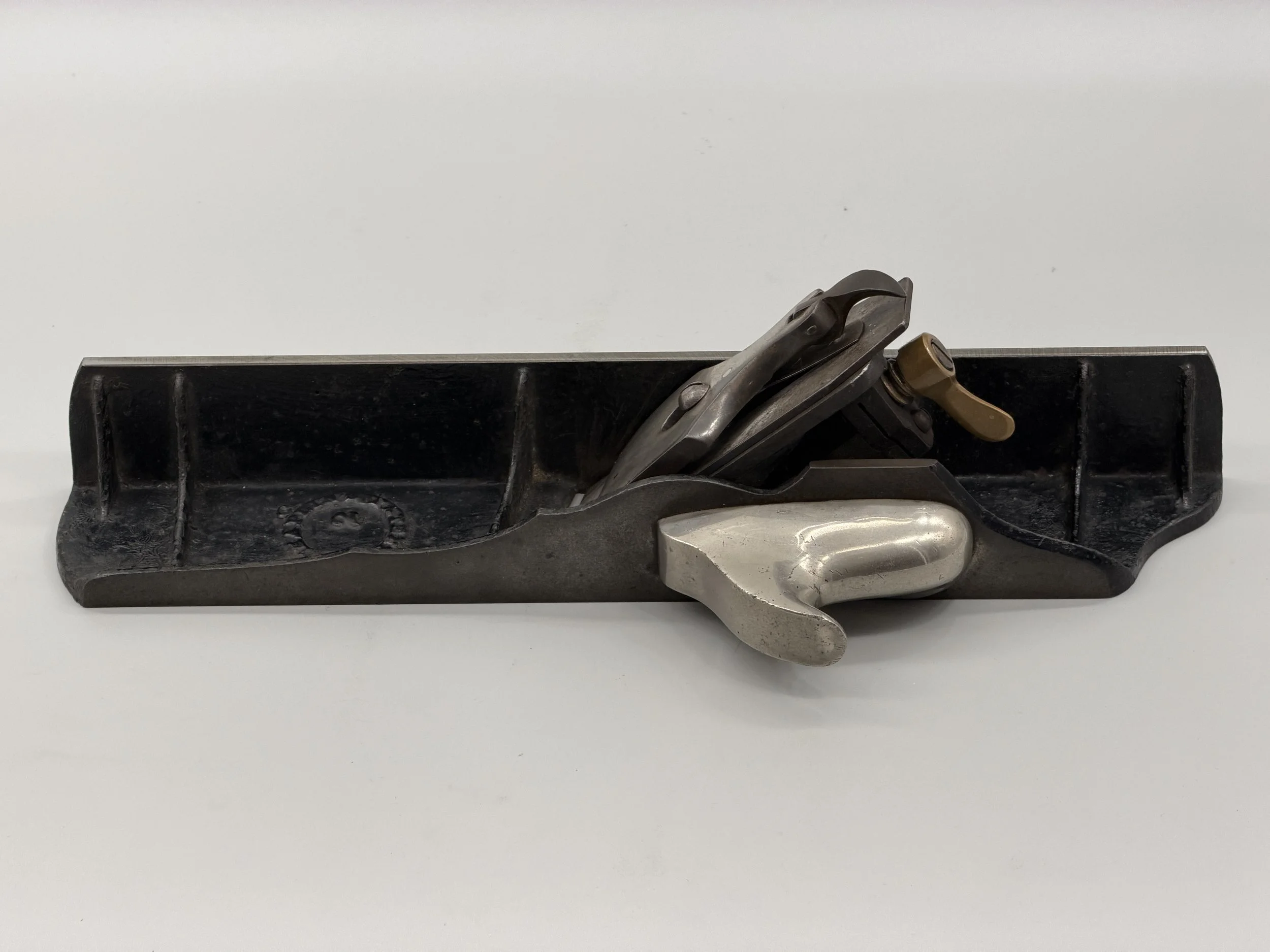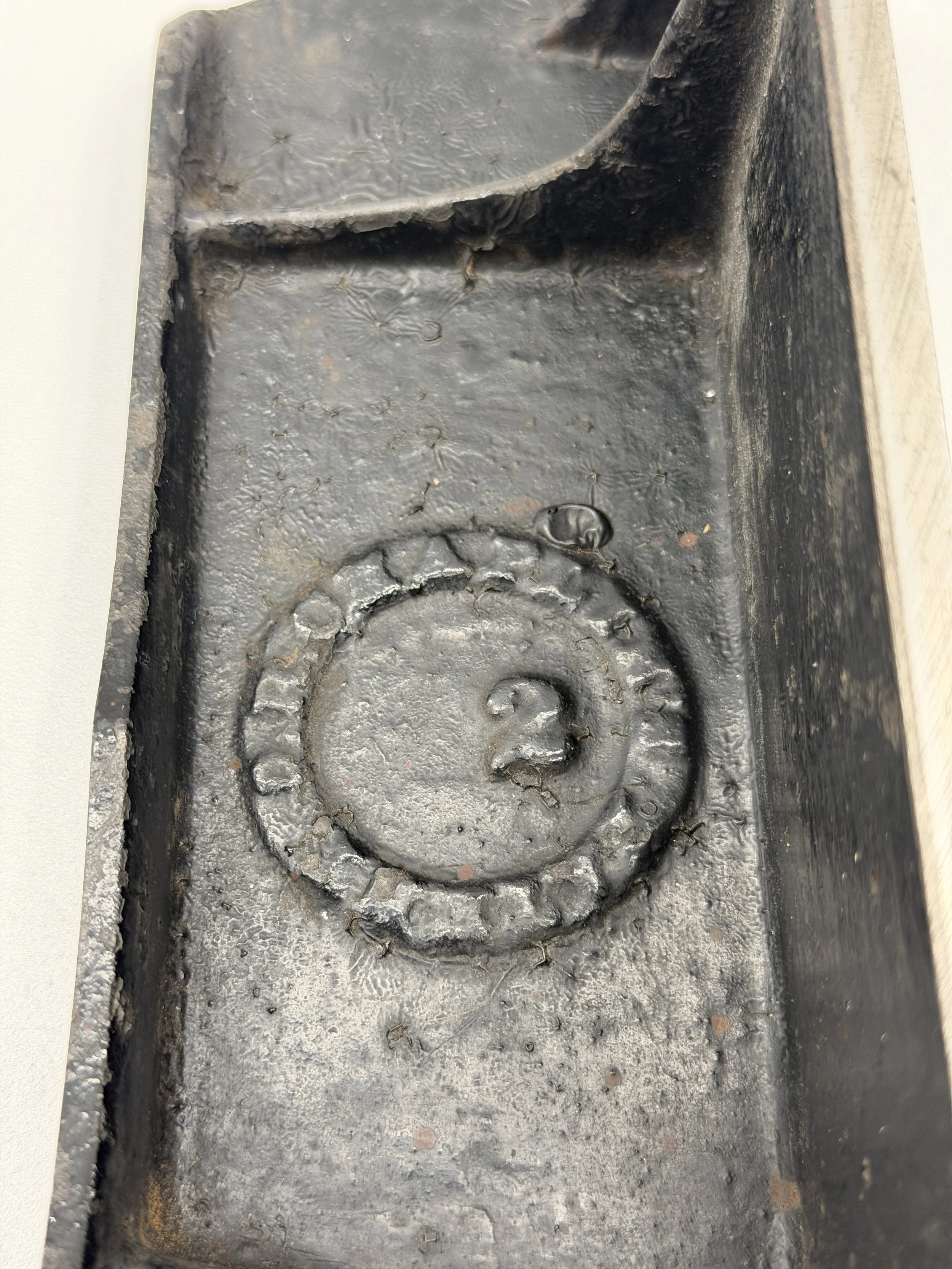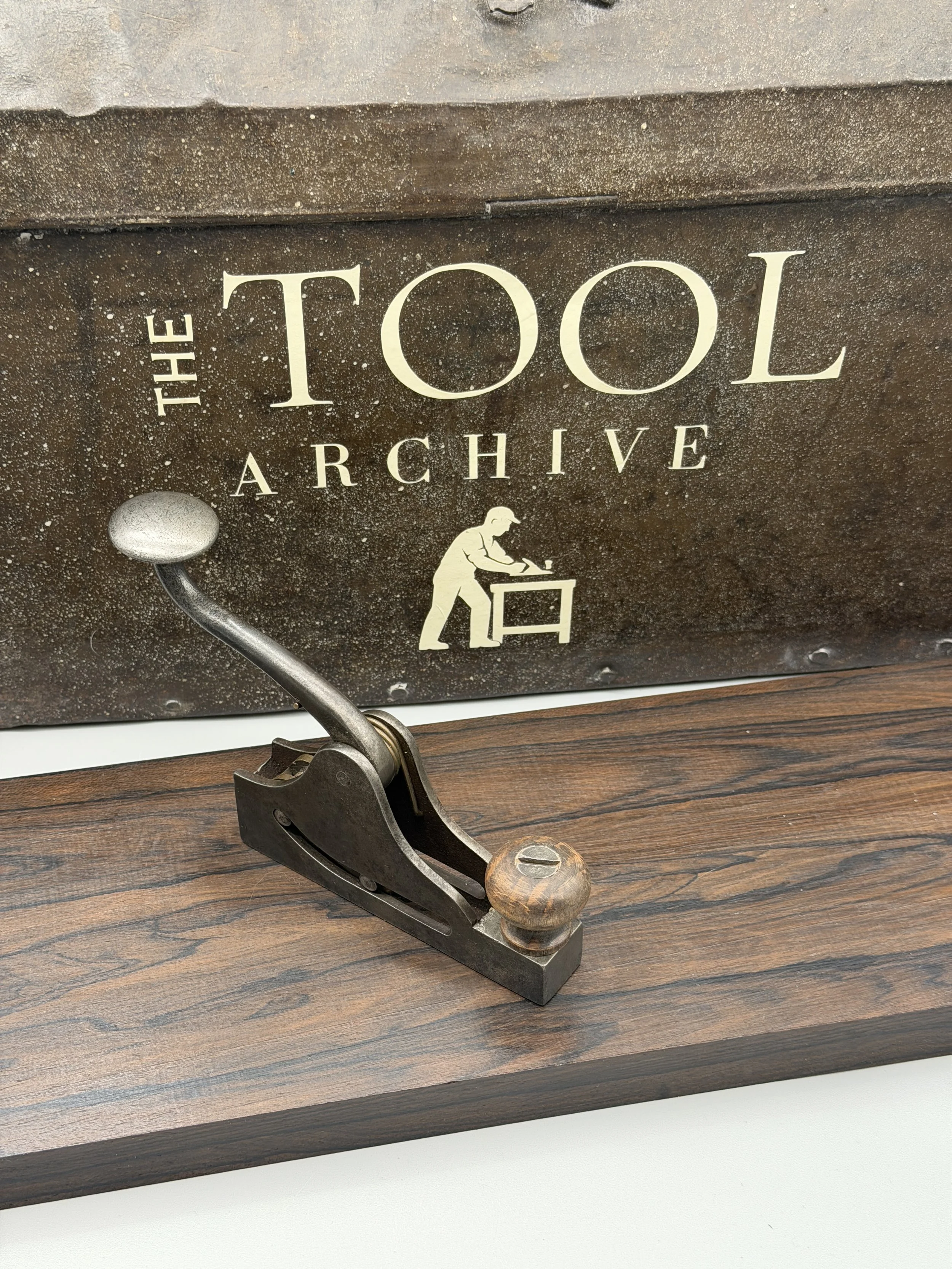
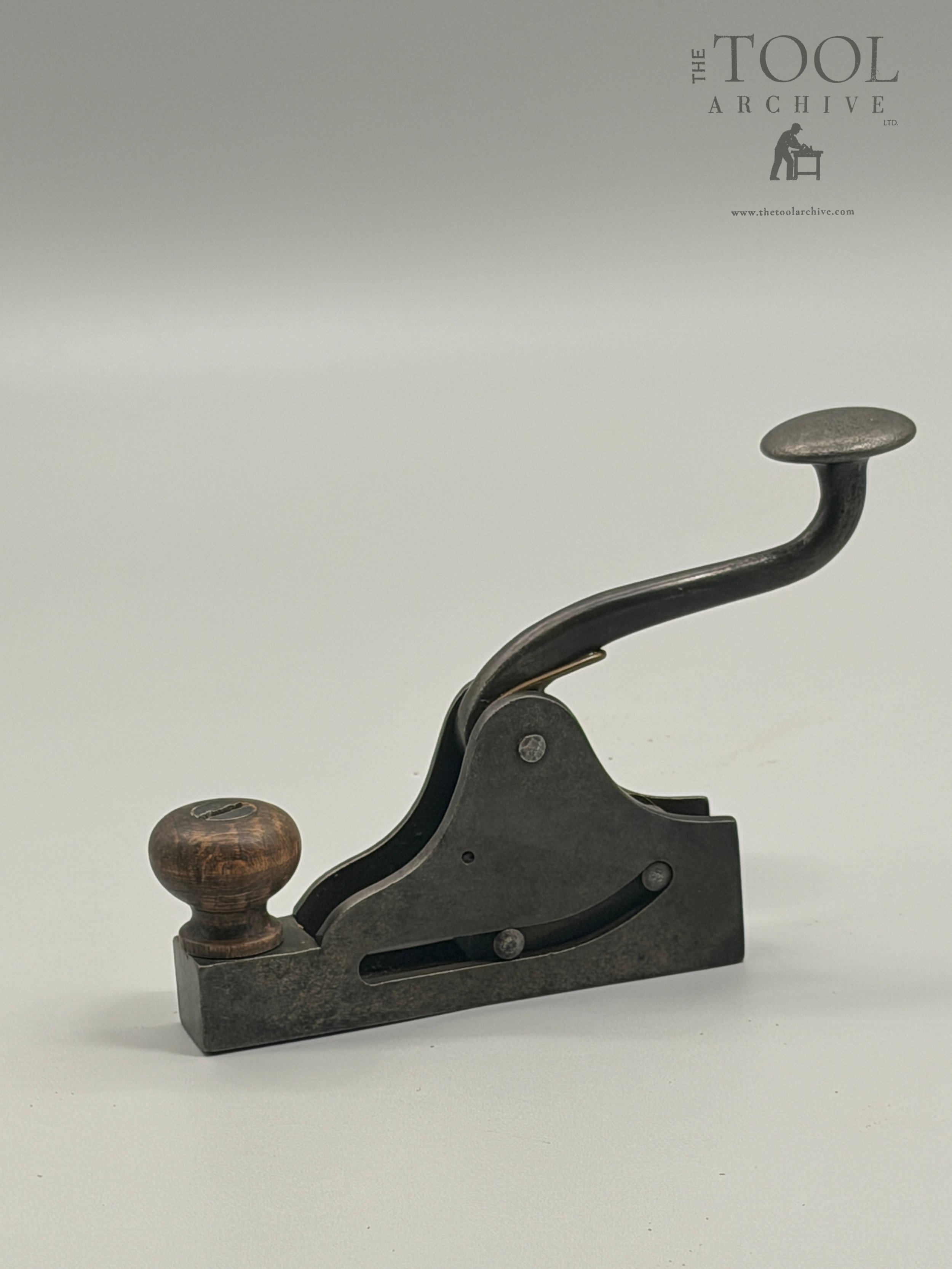
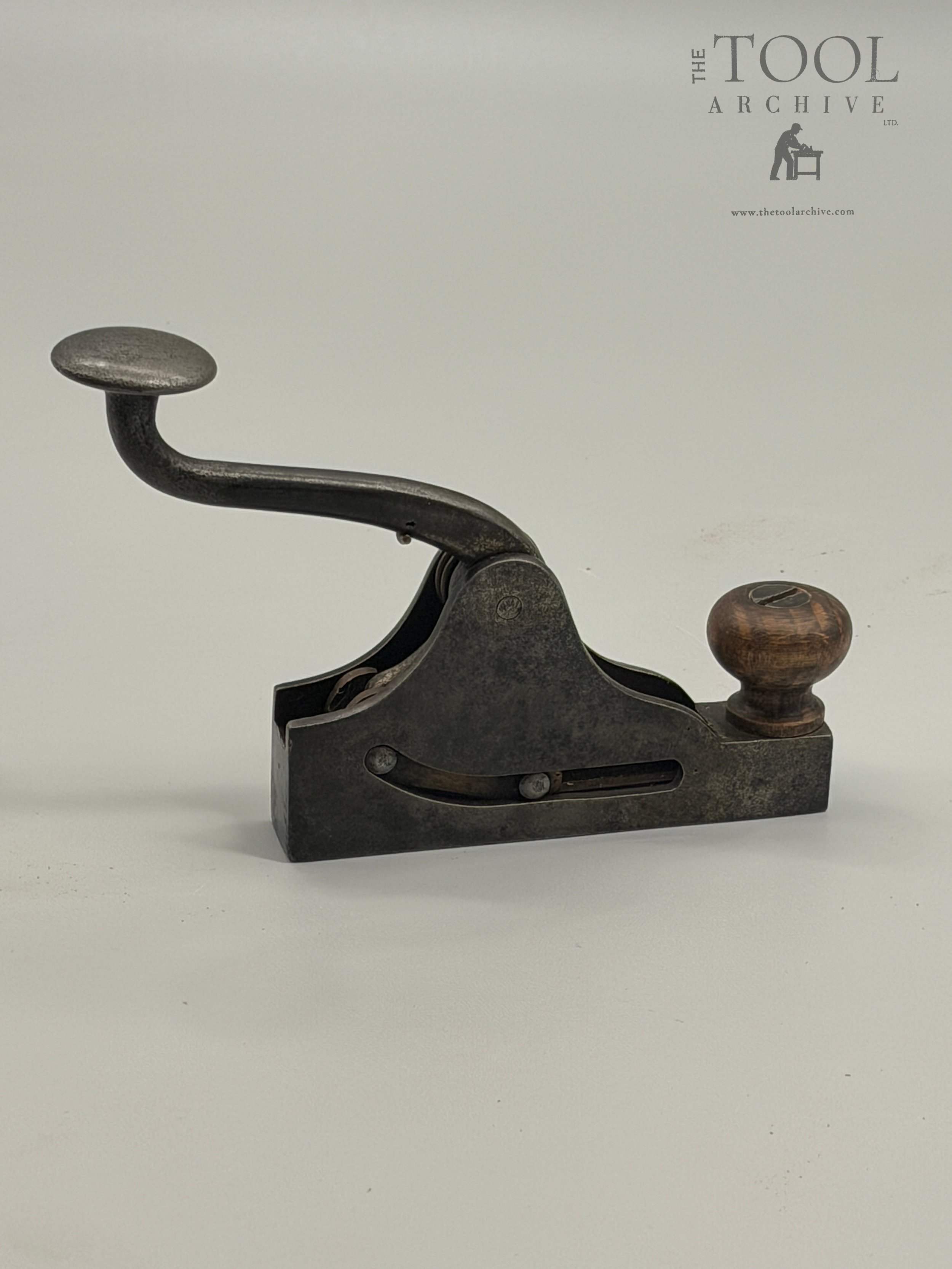
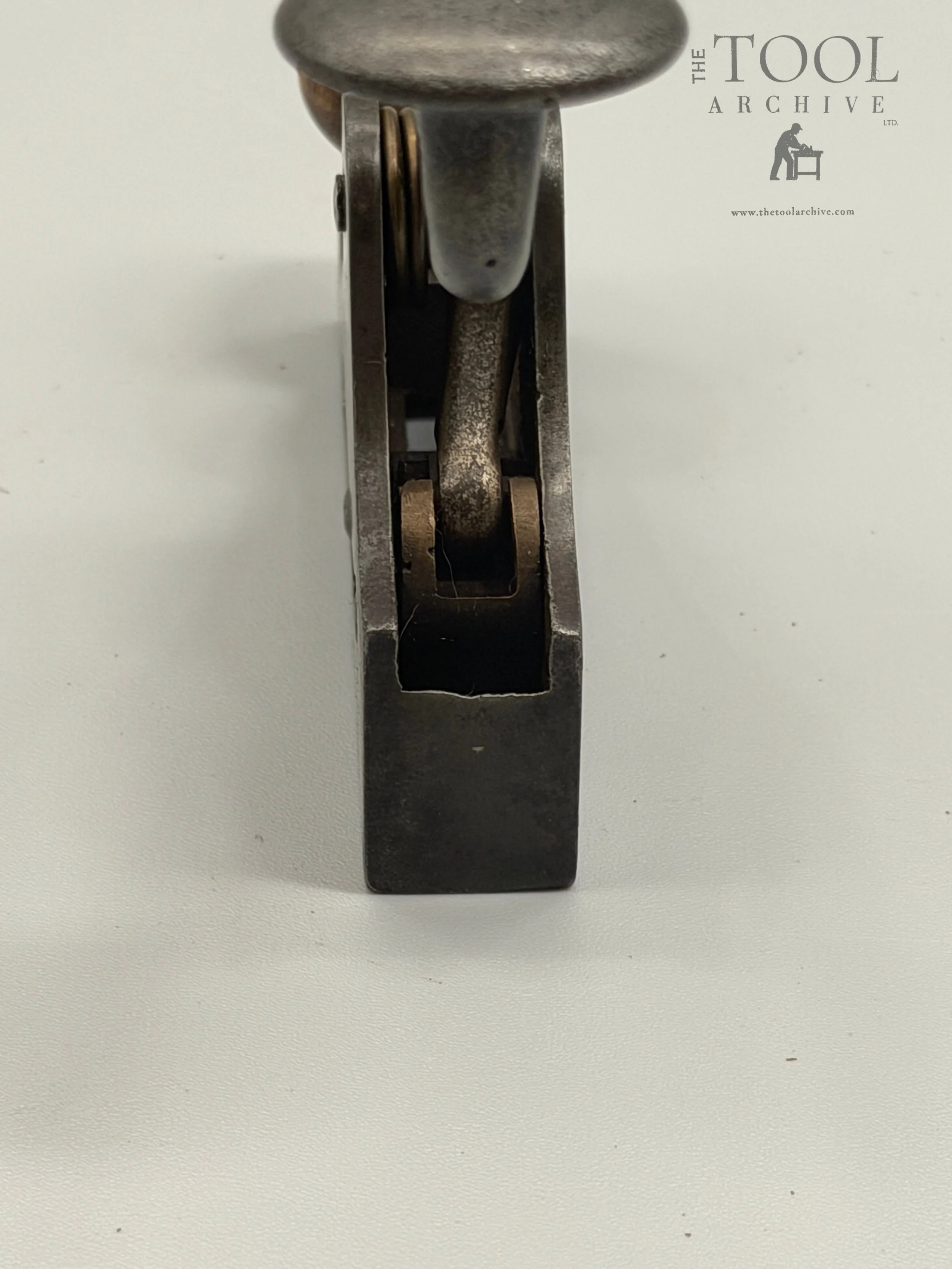
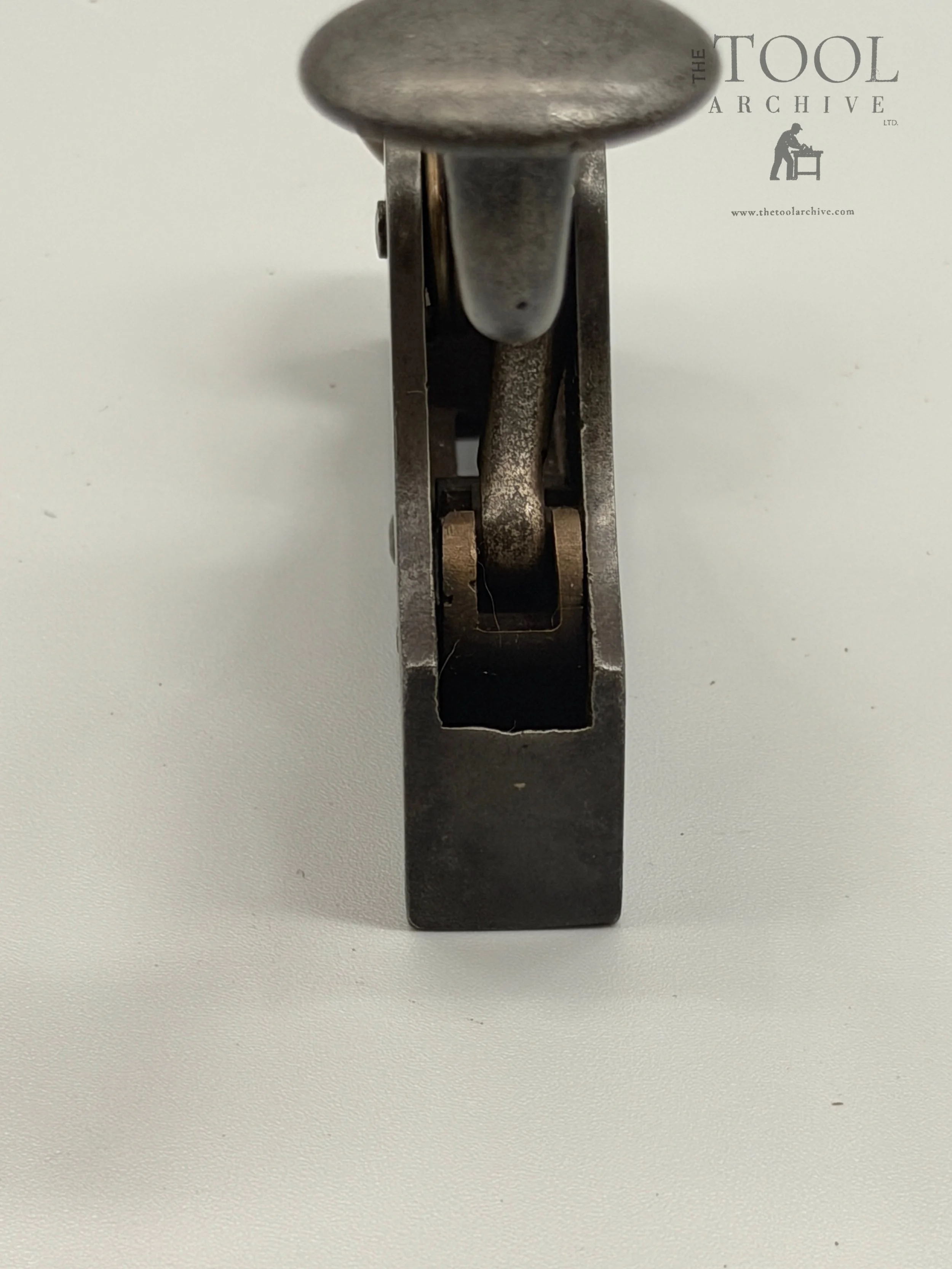
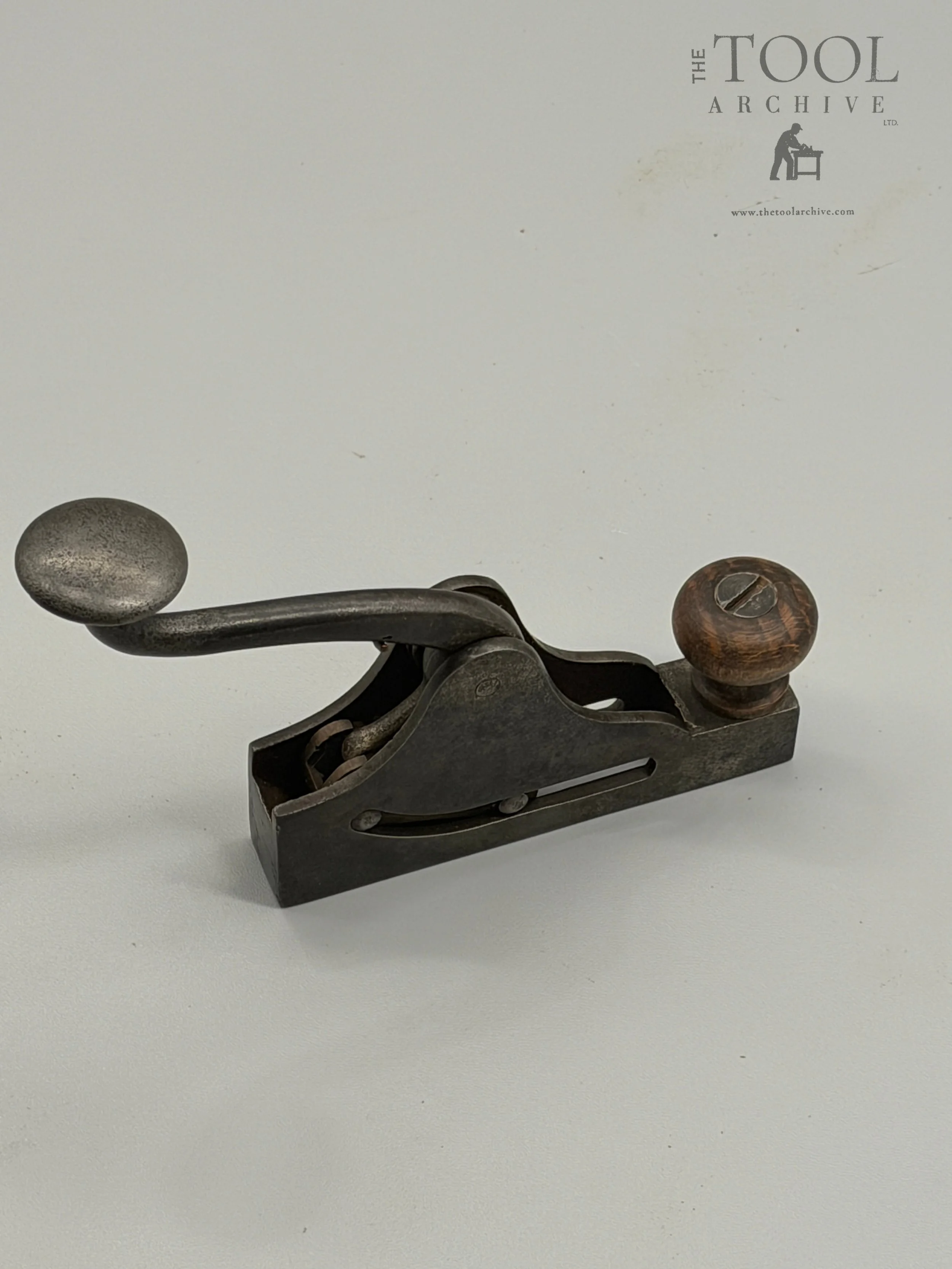
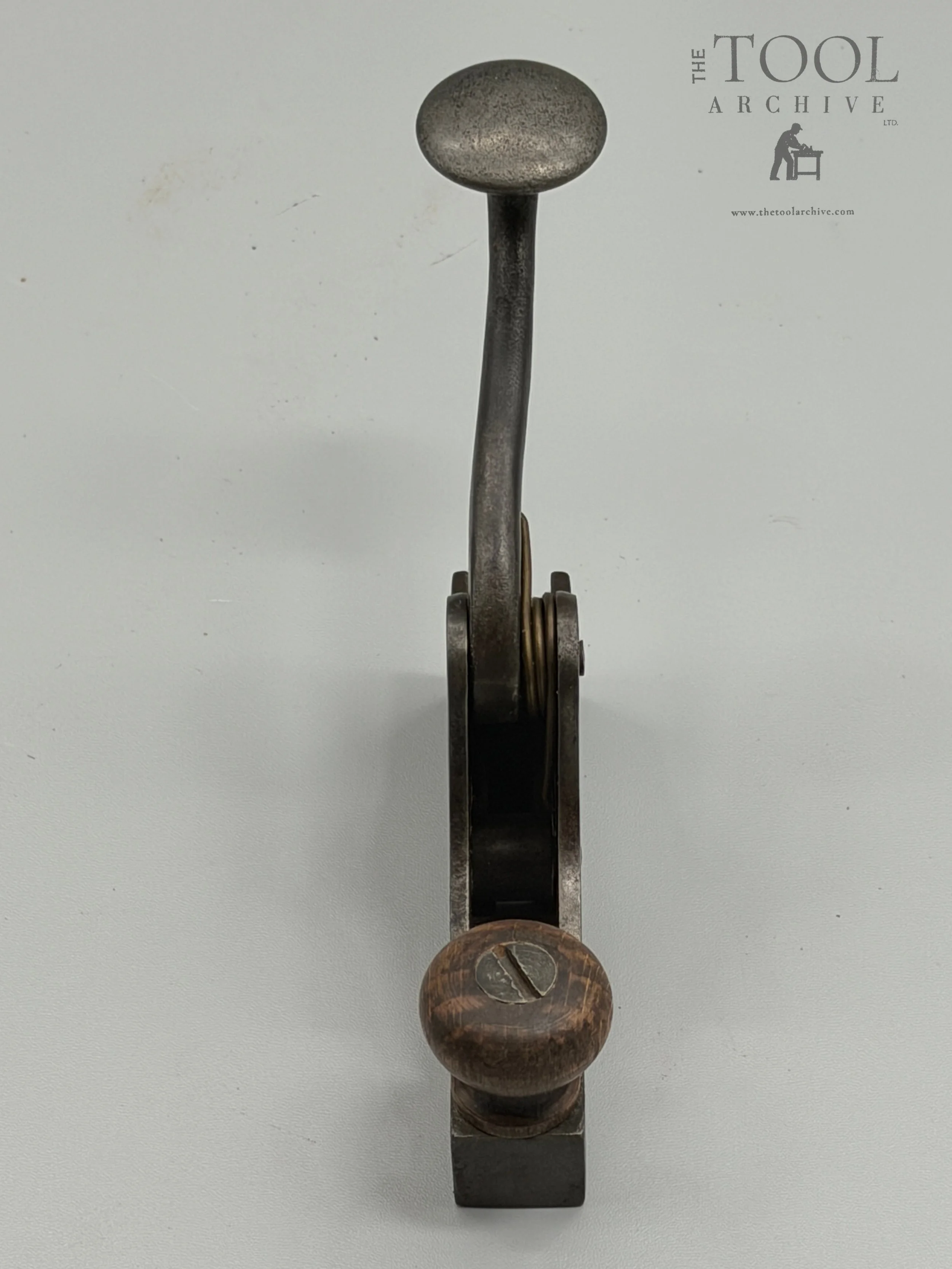
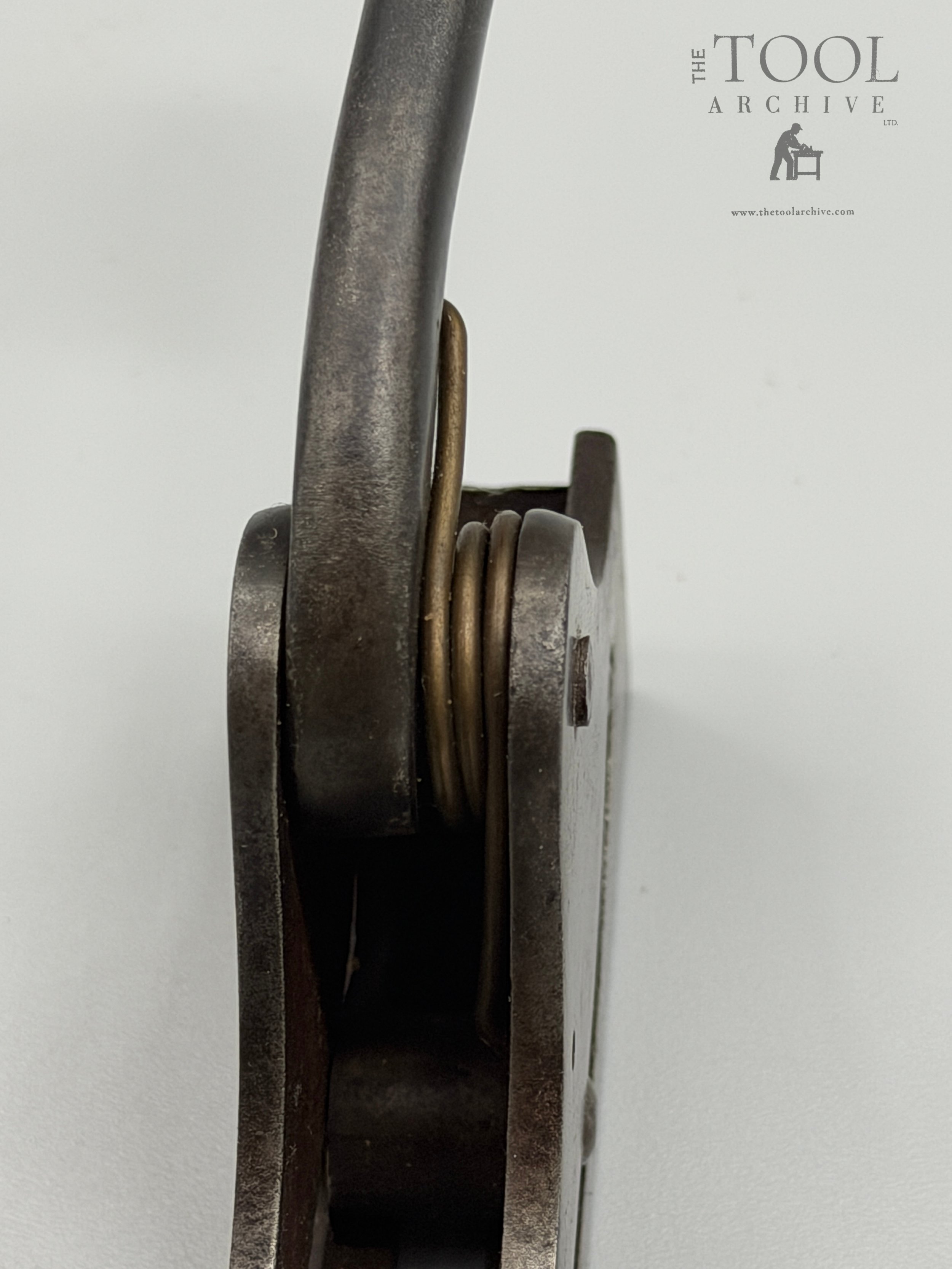
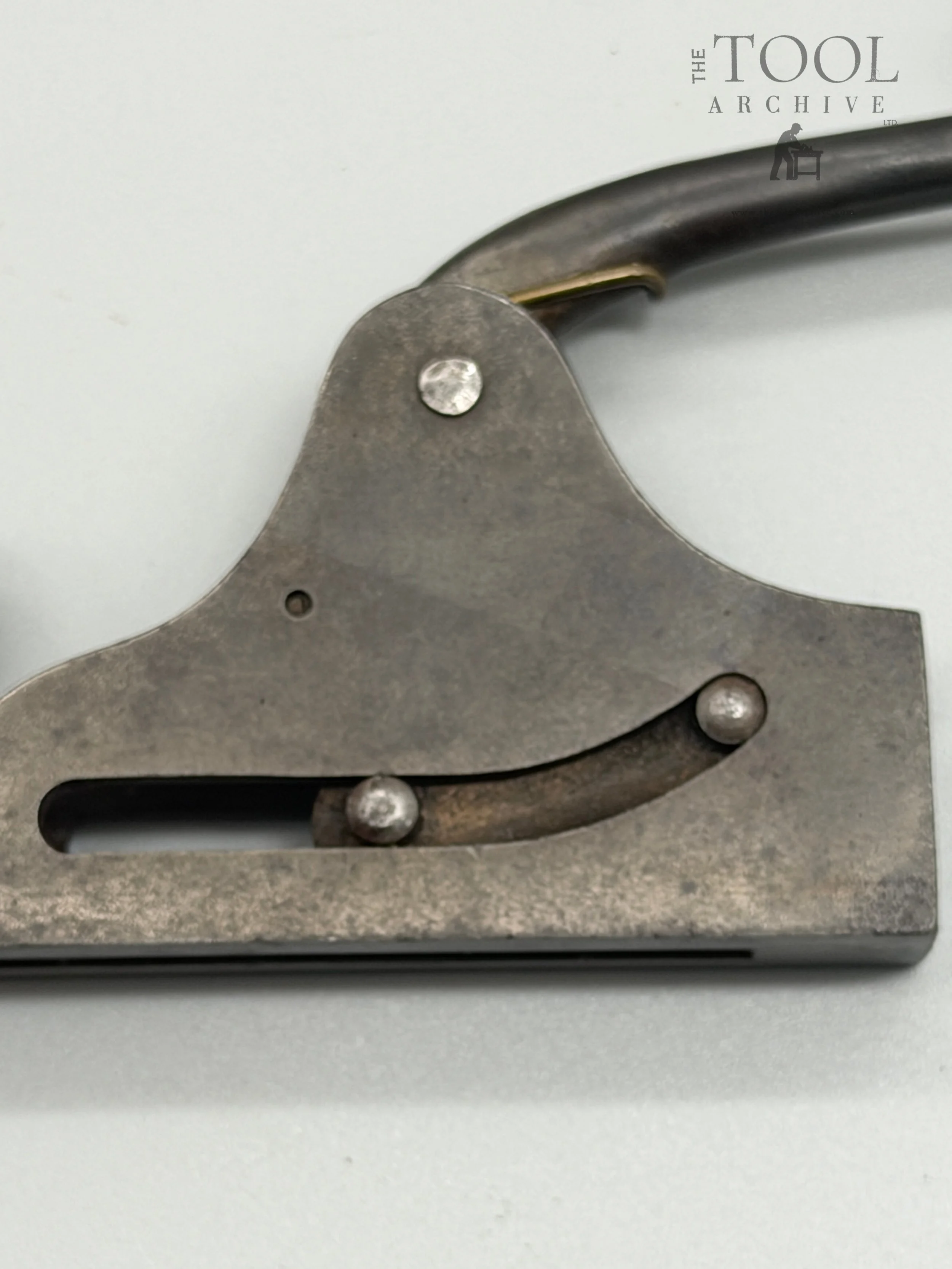
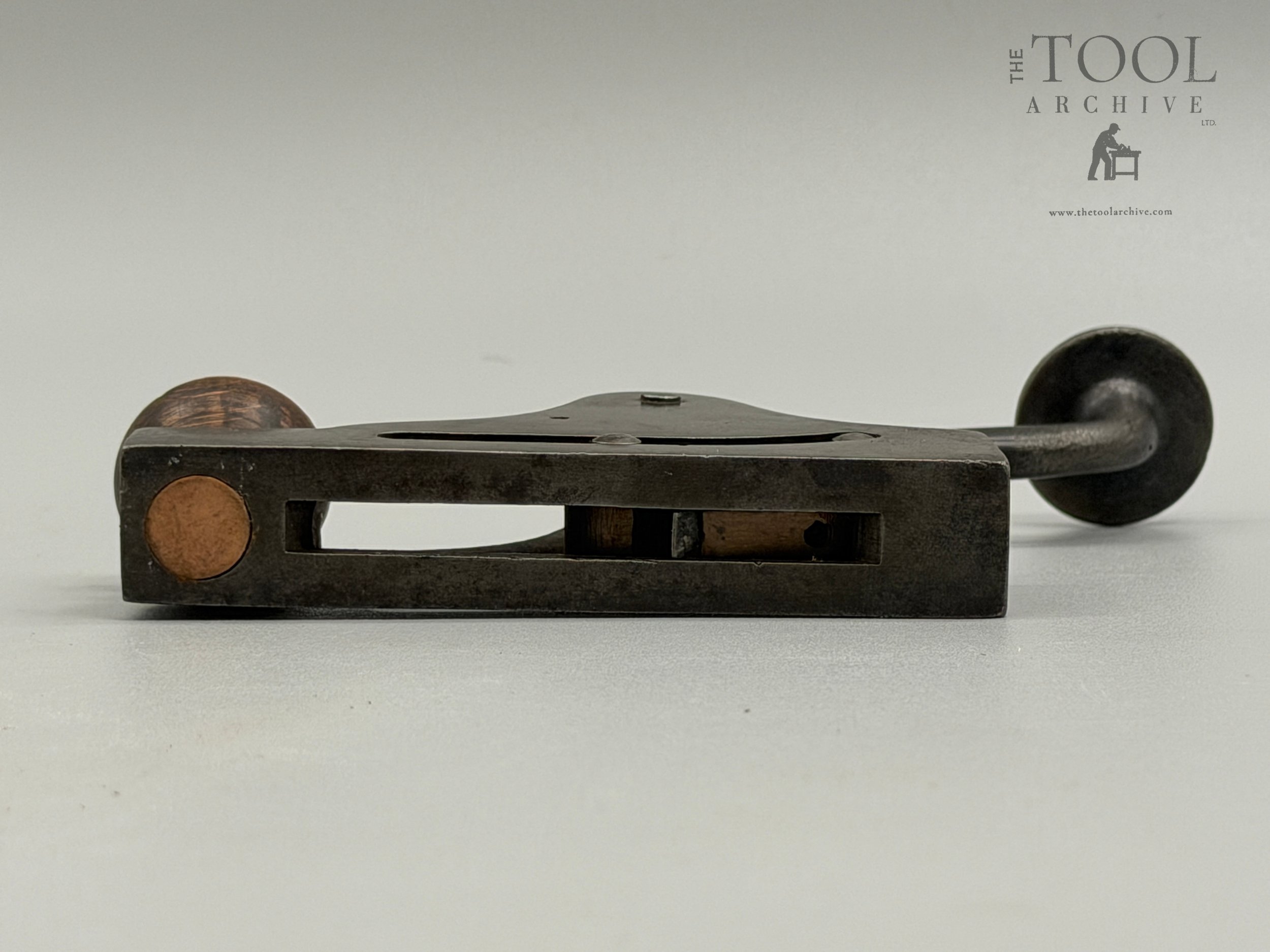
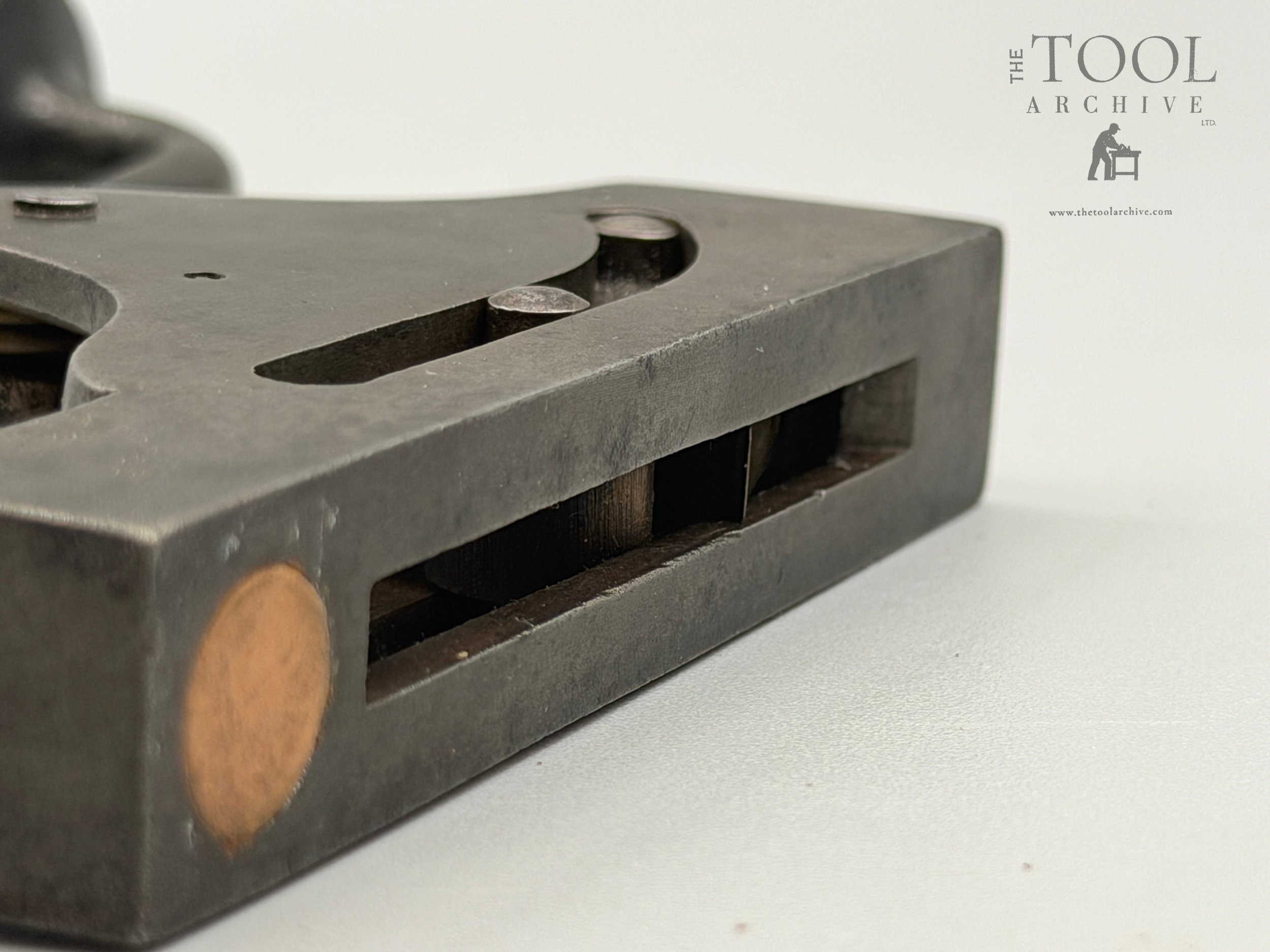
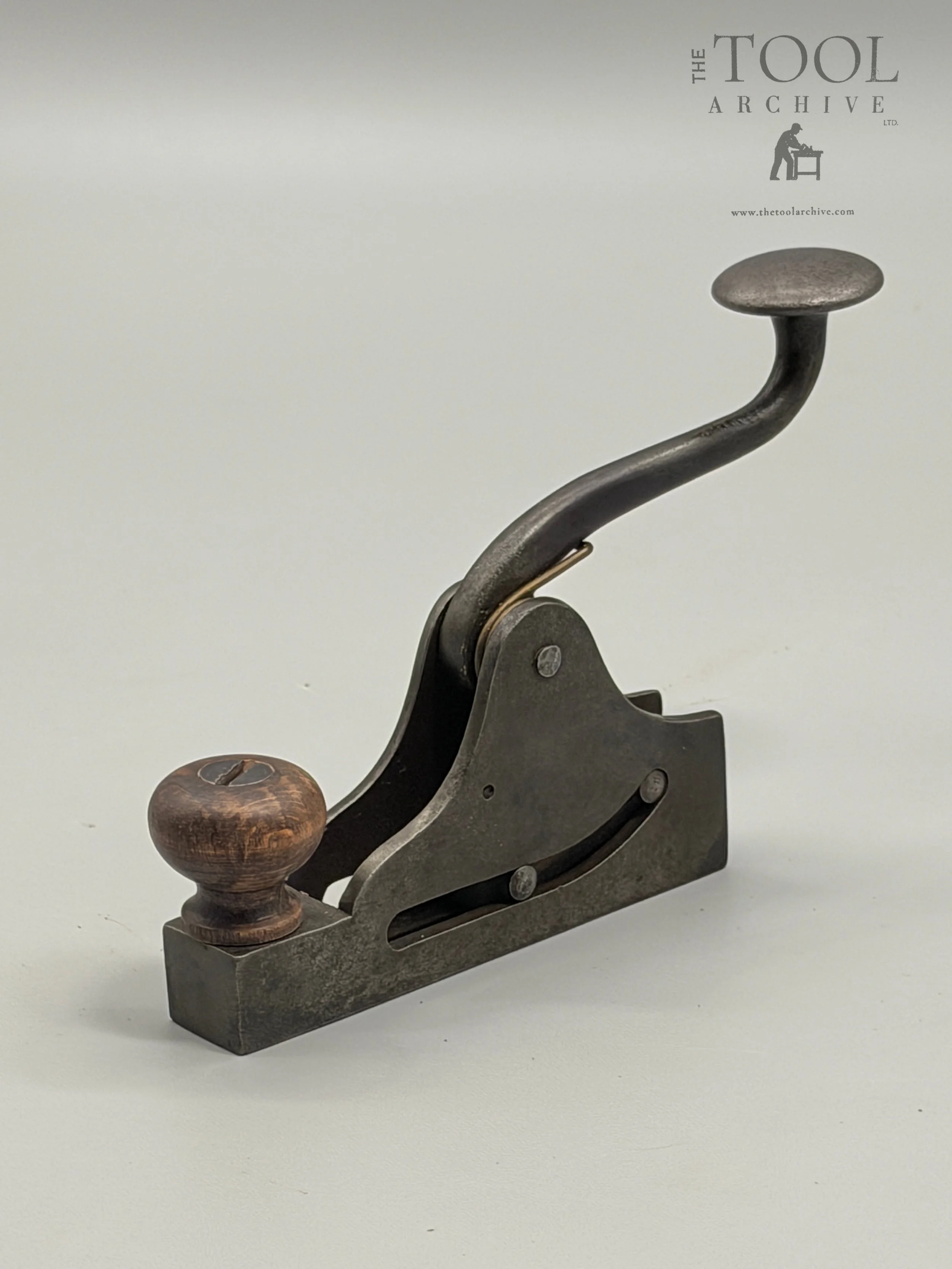
This plane has to be way up high on the list of quirky-cool, single-purpose planes that most people (even many “plane people”) have never heard of. Patented on July 20, 1886, William G. Stranahan of Minneapolis called this a “blind-nailing plane.” The goal is to bury the head of a nail under the wood so the nail is hidden. When this plane was invented, a specialized chisel was the main other tool used for the job, but was slow. This plane mechanized the process with a cutter that swings down and forward, raising a shaving that stays attached on the far end. The builder would then drive a nail in the divot and hide it by flipping the shaving back down and gluing it in place. Not unlike those massive chunks of dirt we dig up when trying to hit golf balls and then stomp back down to fill the hole.
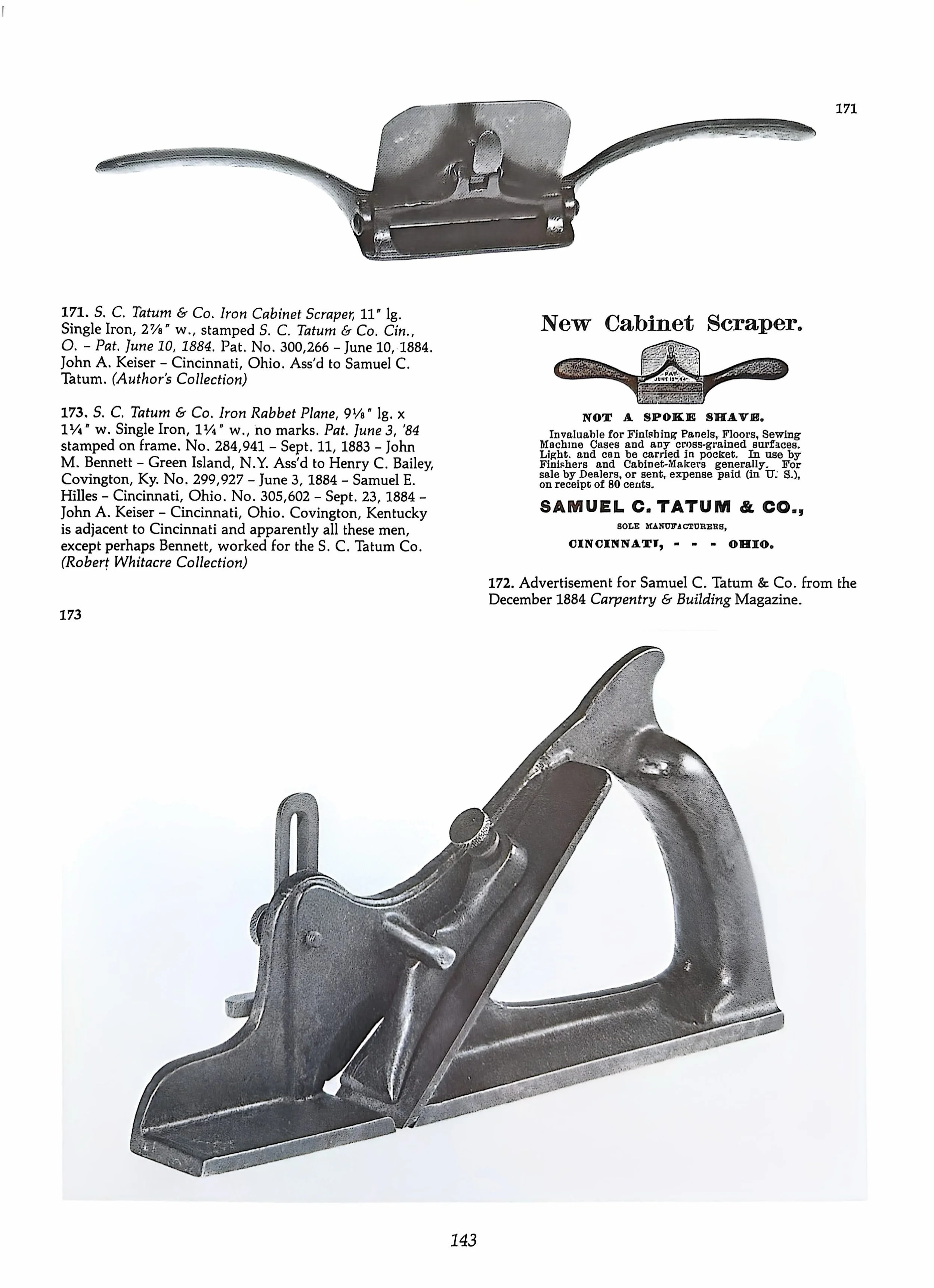
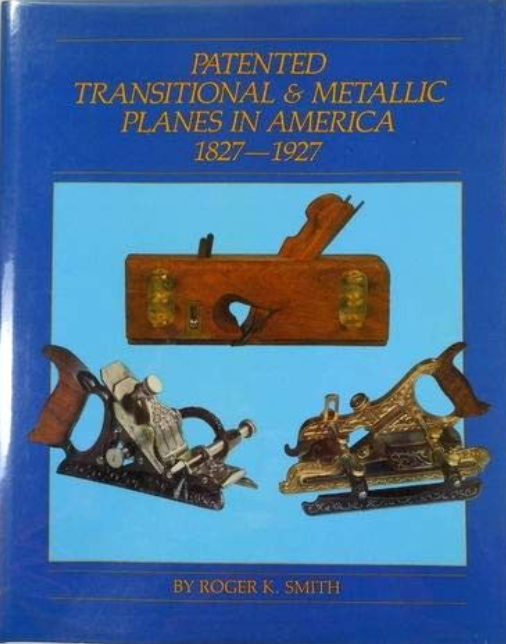
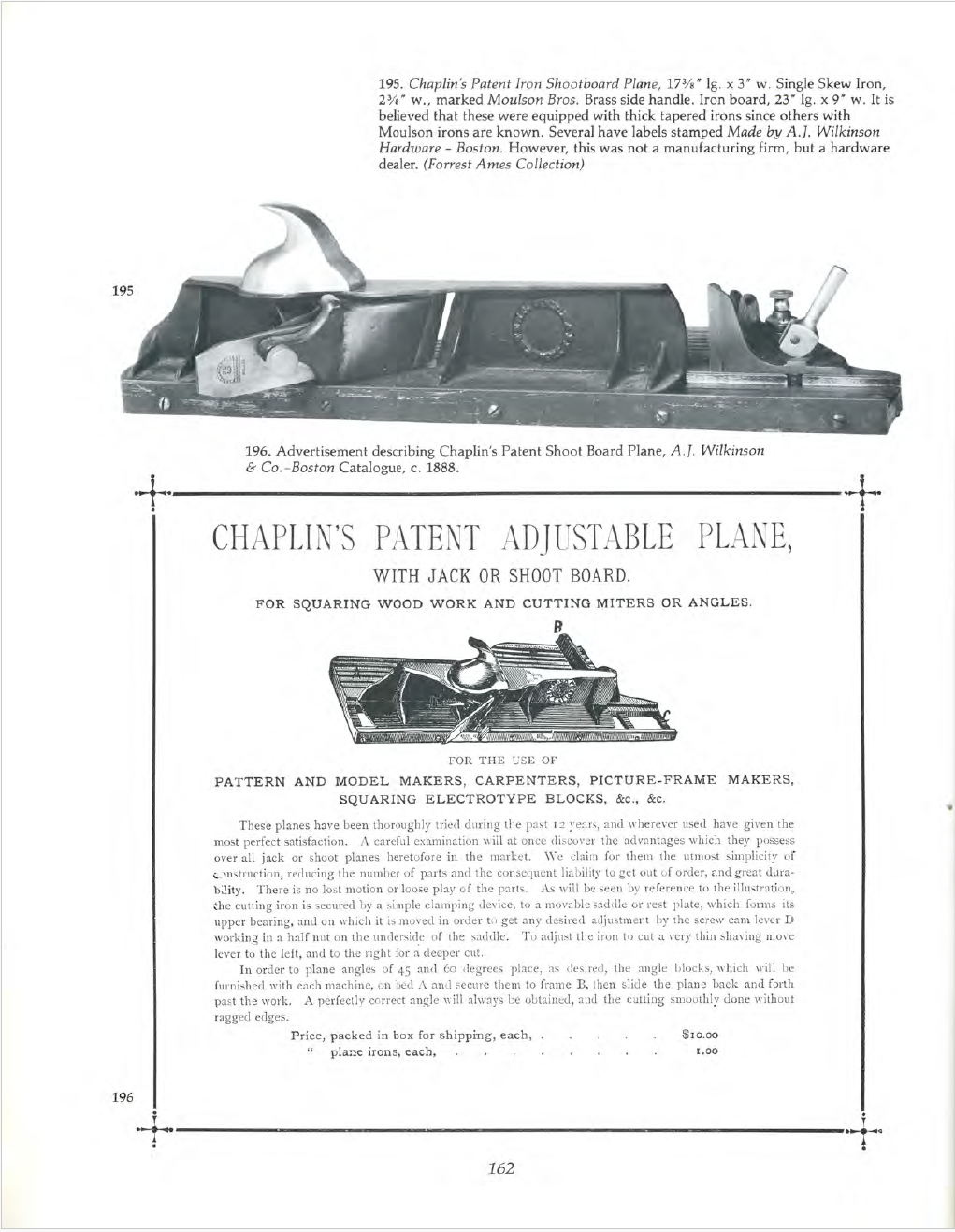
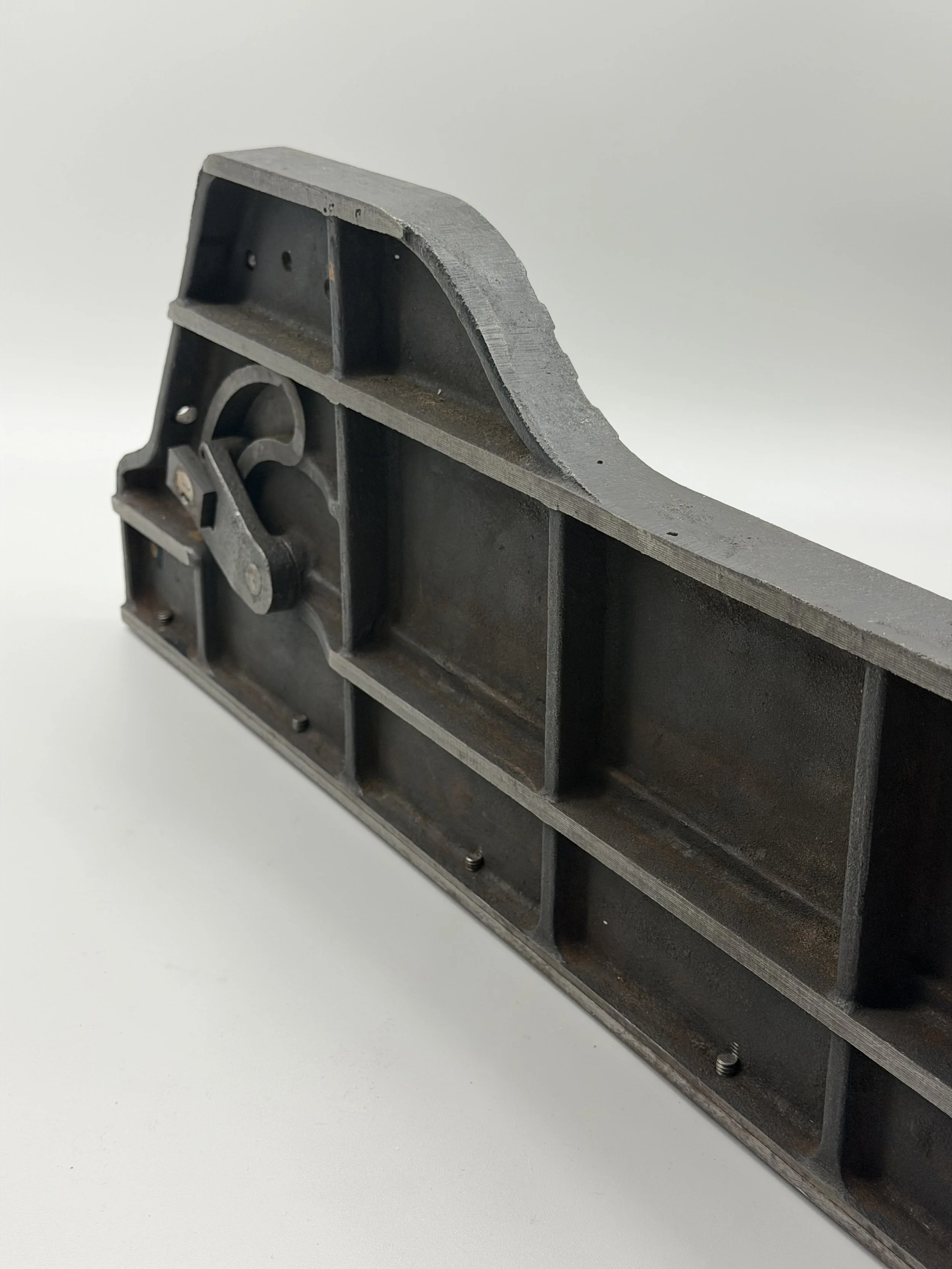
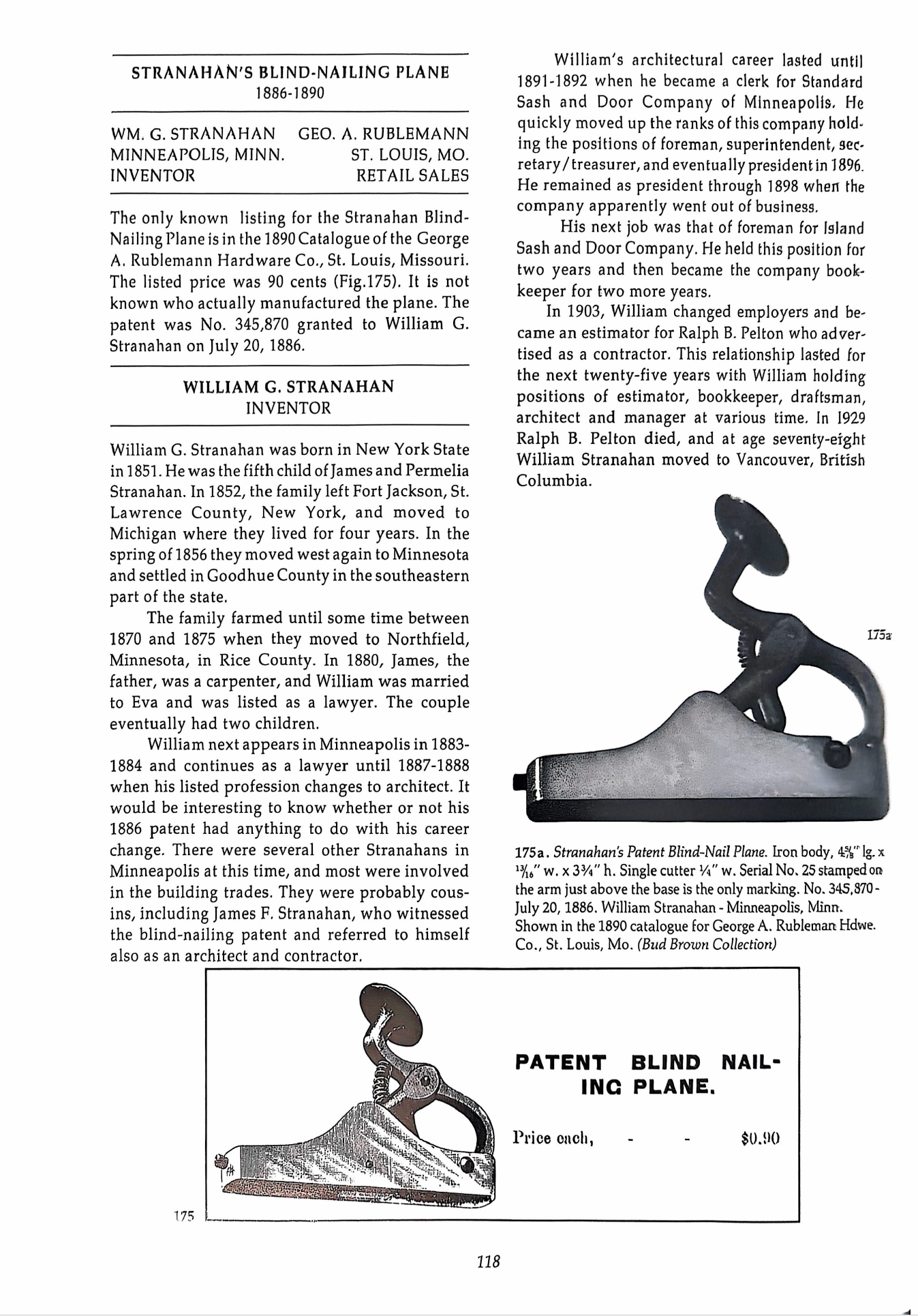
Resembles the examples in Patented & Transitional Planes in America Vol II (Roger Smith), page 118 but the arm protrudes to the rear rather than the front and matches the original patent drawing, so likely an early version. See last photo (#14) for book excerpt.
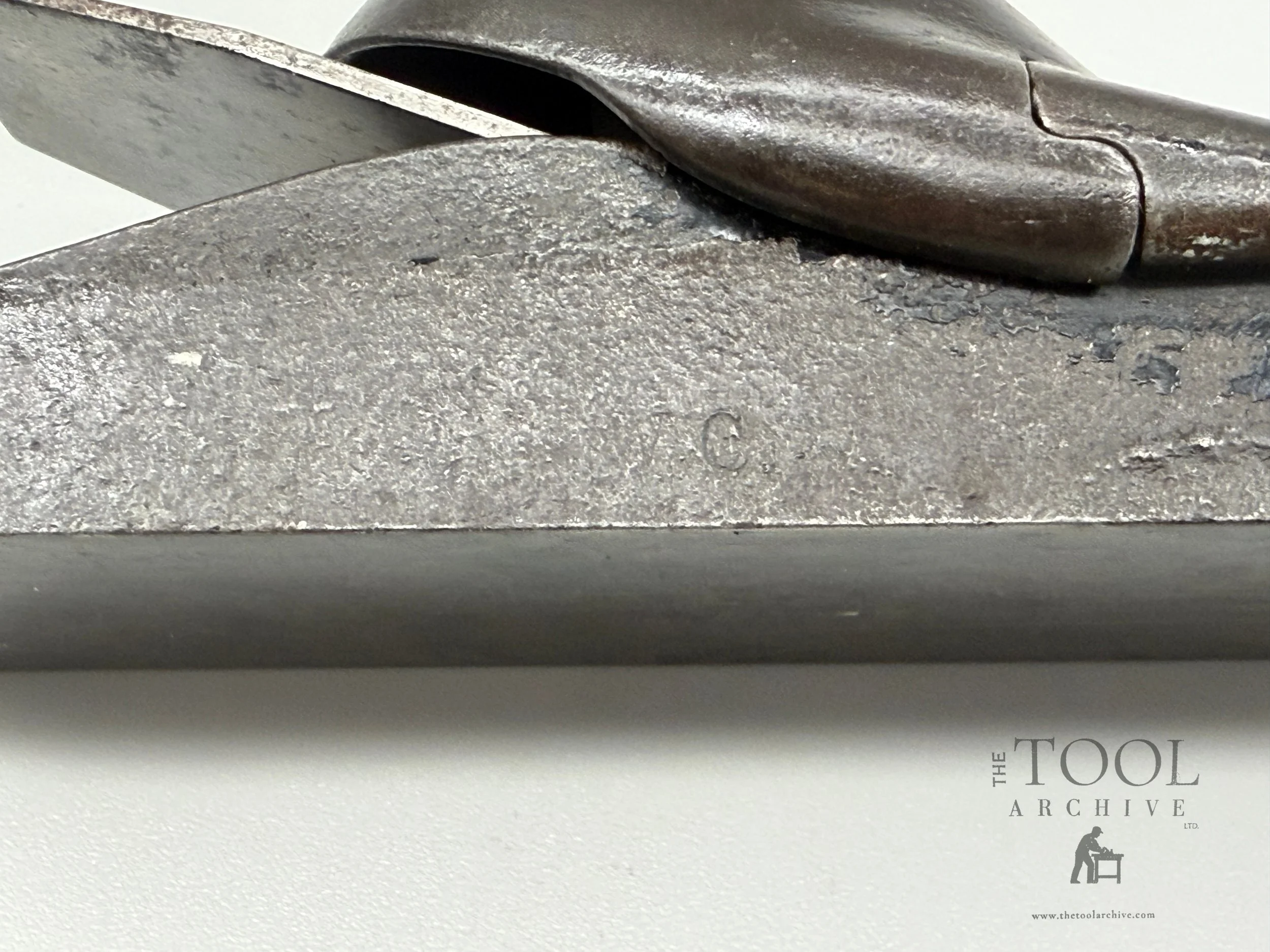
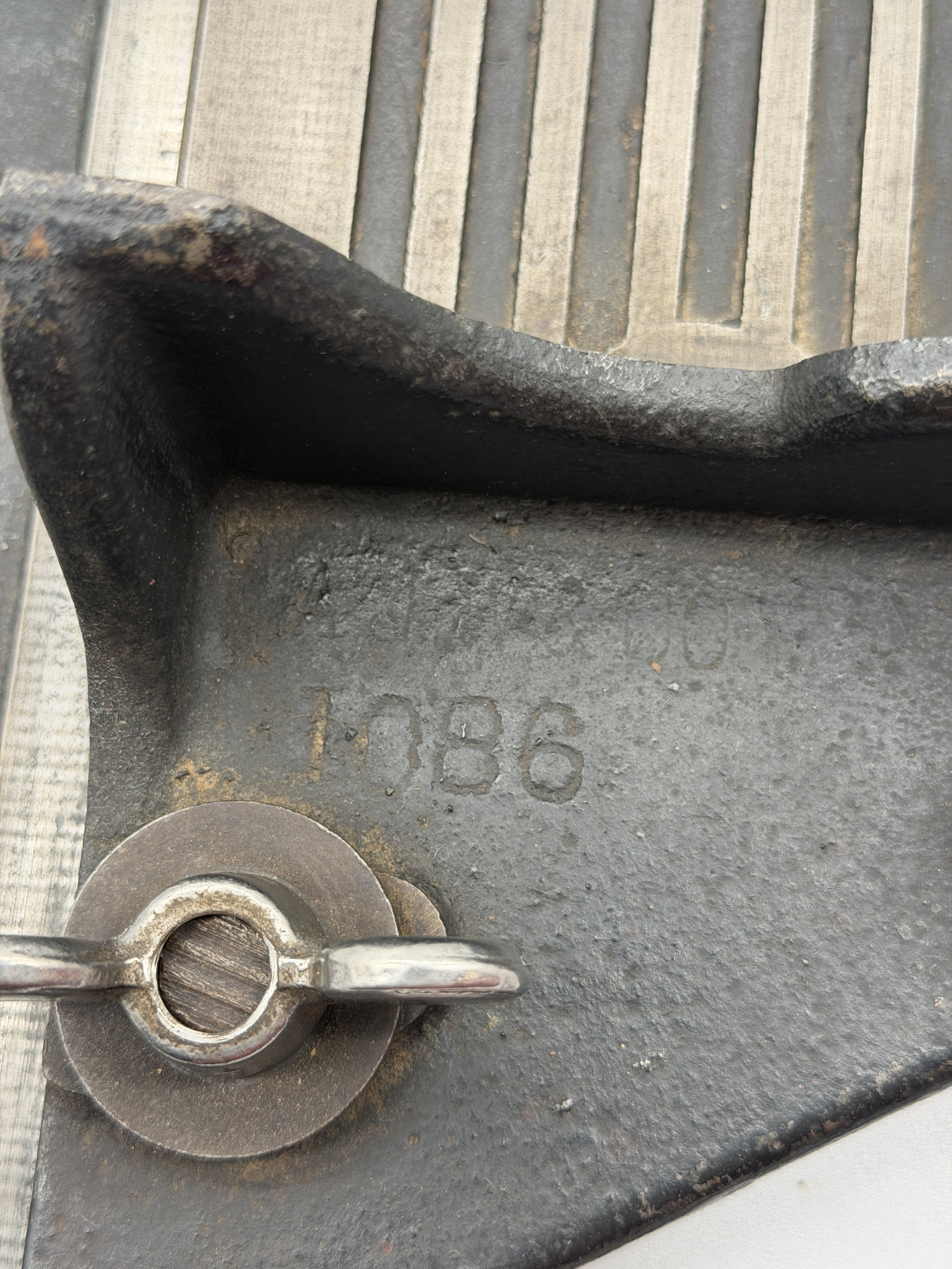
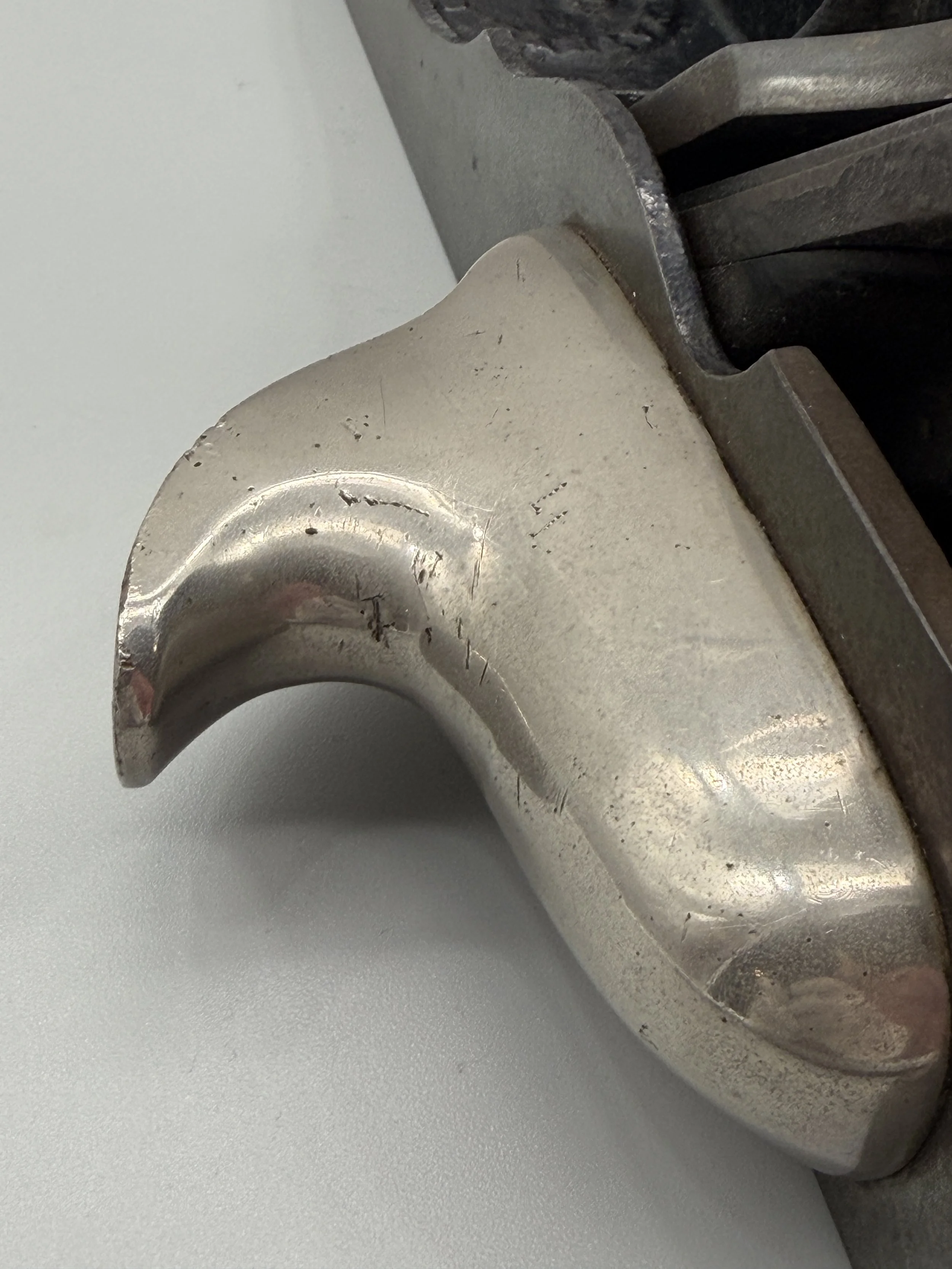
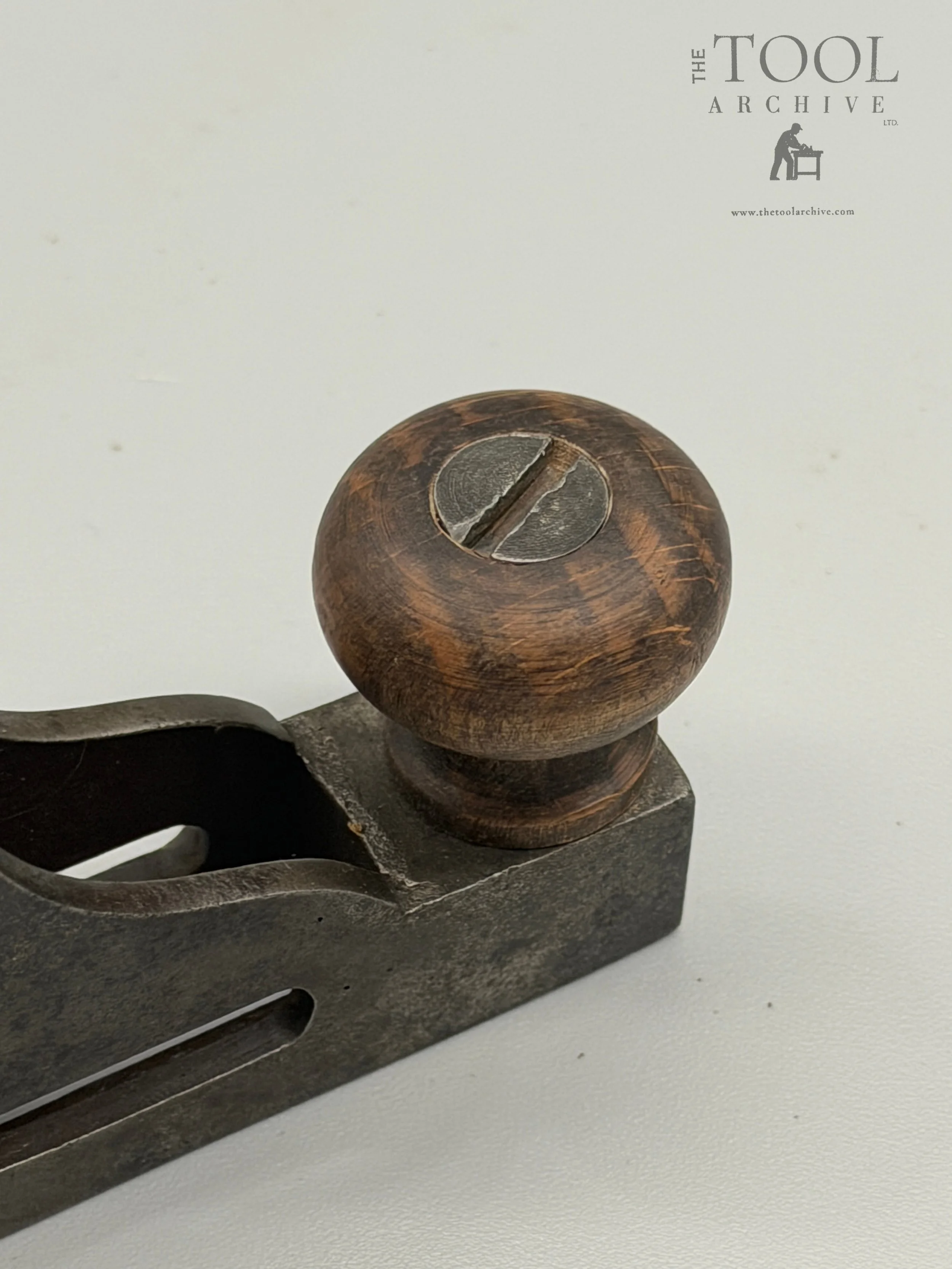
Marked with 7/20/86 patent date on one cheek for WIlliam Stranahan of Minneapolis. Traces of nickel plating and light wear on the knob.
This plane has to be way up high on the list of quirky-cool, single-purpose planes that most people (even many “plane people”) have never heard of. Patented on July 20, 1886, William G. Stranahan of Minneapolis called this a “blind-nailing plane.” The goal is to bury the head of a nail under the wood so the nail is hidden. When this plane was invented, a specialized chisel was the main other tool used for the job, but was slow. This plane mechanized the process with a cutter that swings down and forward, raising a shaving that stays attached on the far end. The builder would then drive a nail in the divot and hide it by flipping the shaving back down and gluing it in place. Not unlike those massive chunks of dirt we dig up when trying to hit golf balls and then stomp back down to fill the hole.
Resembles the examples in Patented & Transitional Planes in America Vol II (Roger Smith), page 118 but the arm protrudes to the rear rather than the front and matches the original patent drawing, so likely an early version. See last photo (#14) for book excerpt.
Marked with 7/20/86 patent date on one cheek for WIlliam Stranahan of Minneapolis. Traces of nickel plating and light wear on the knob.