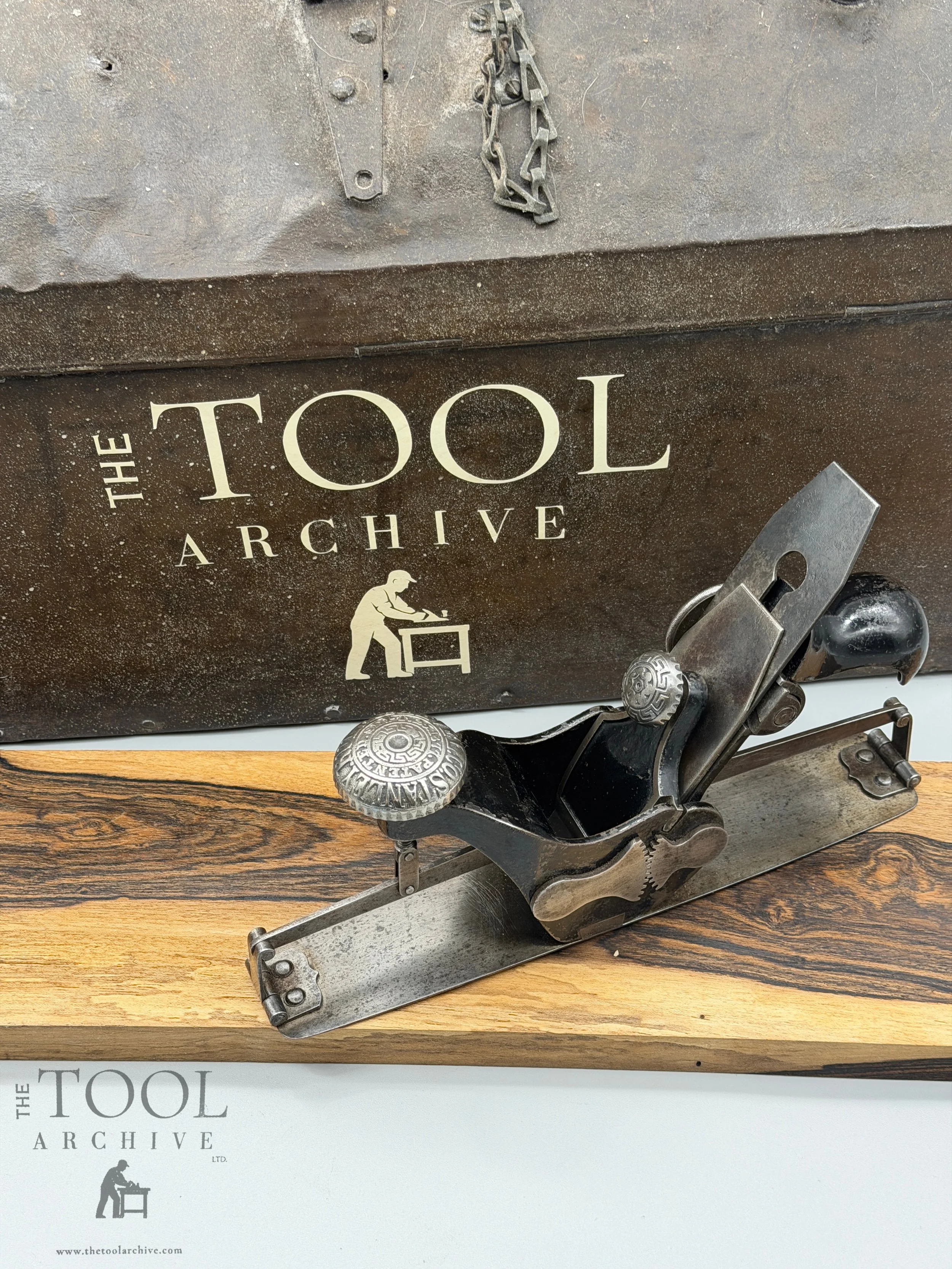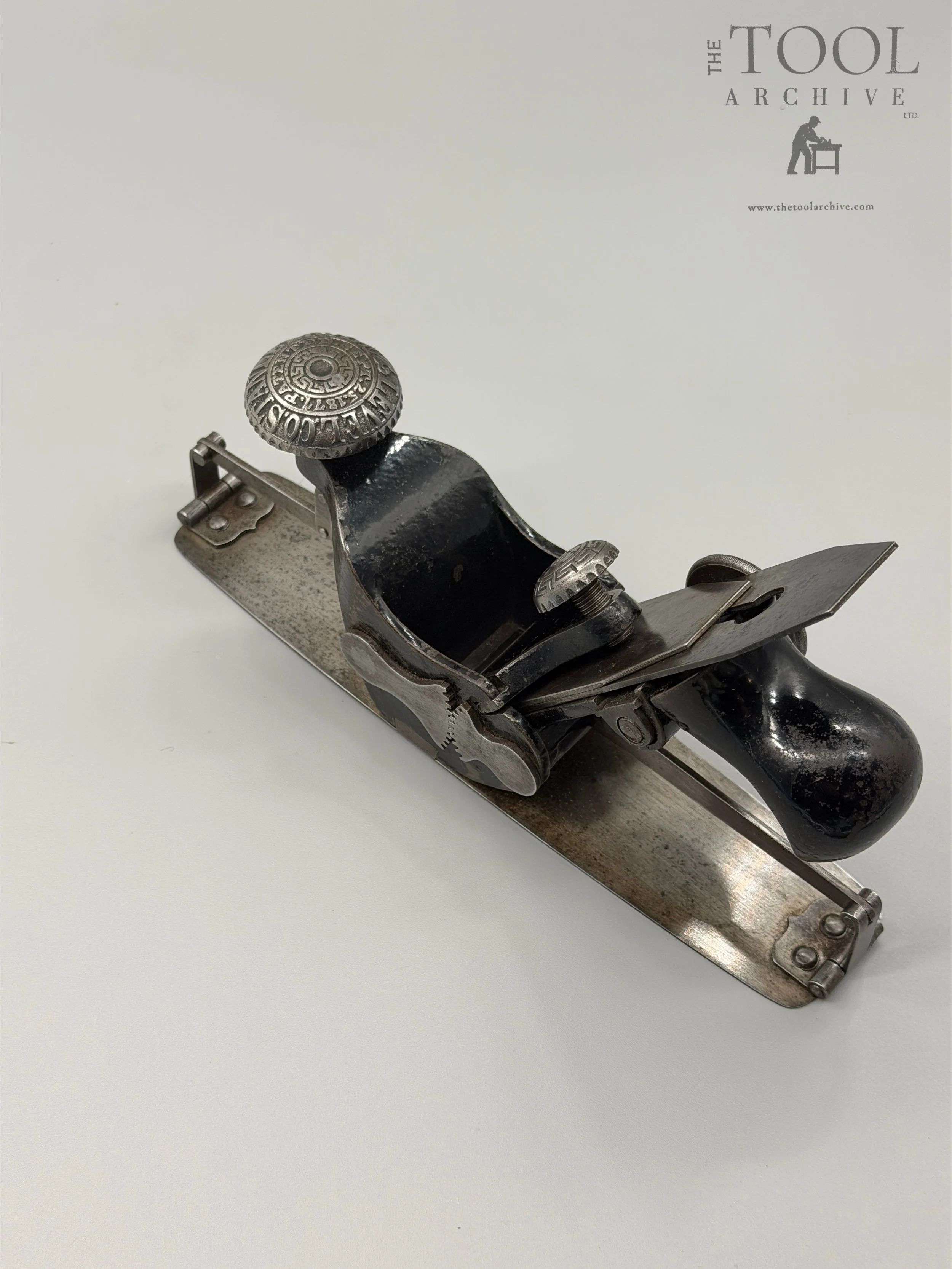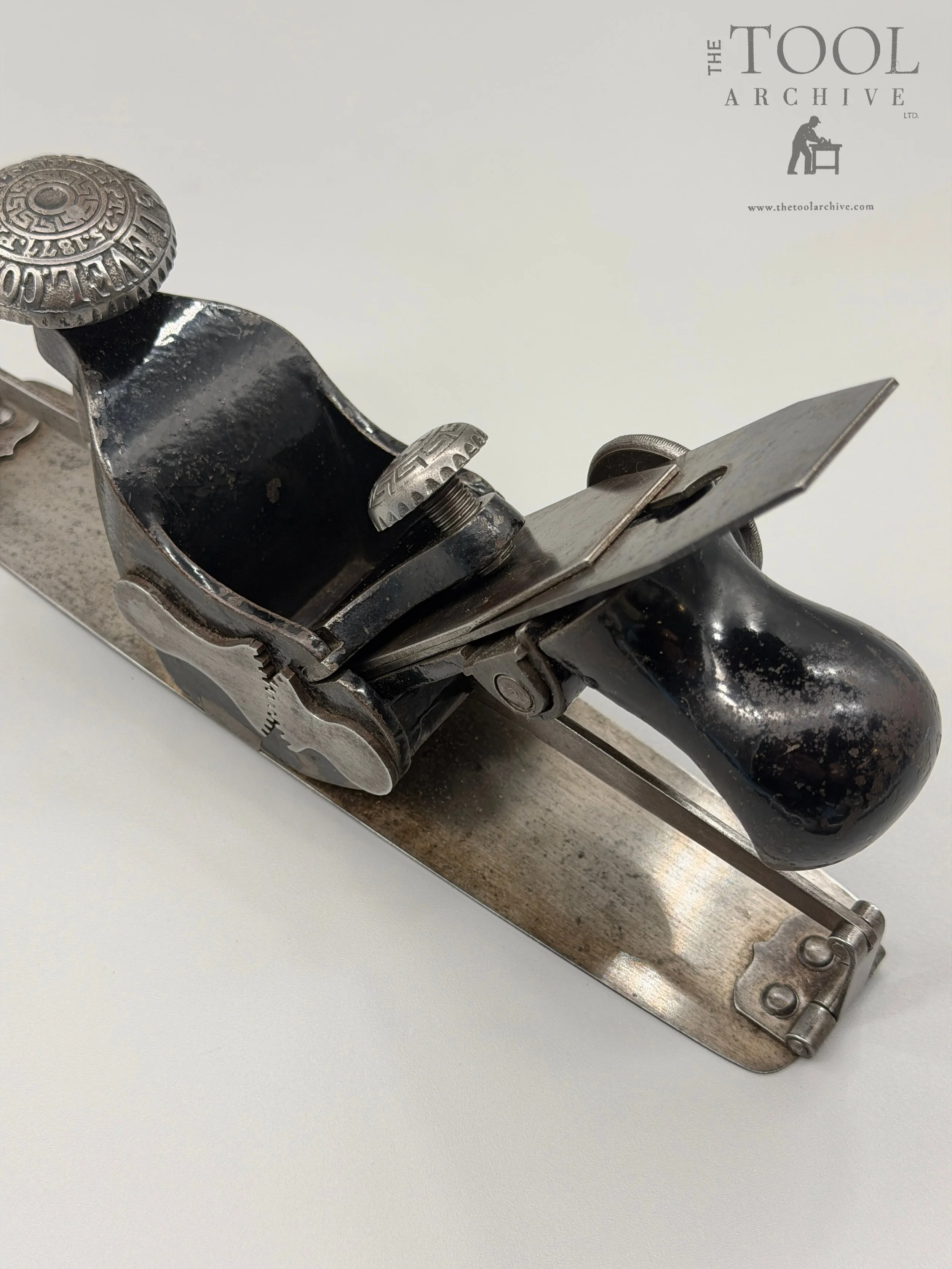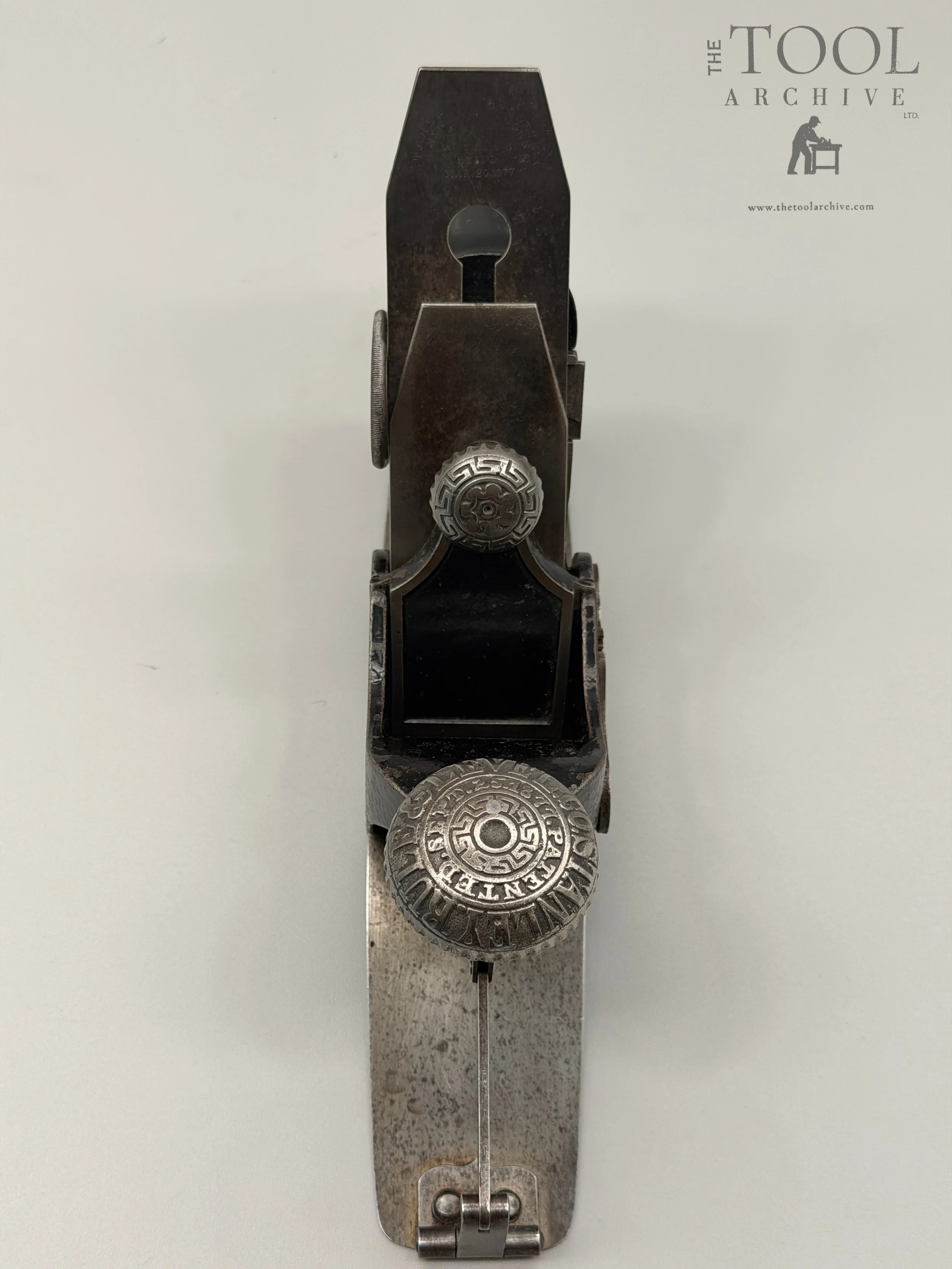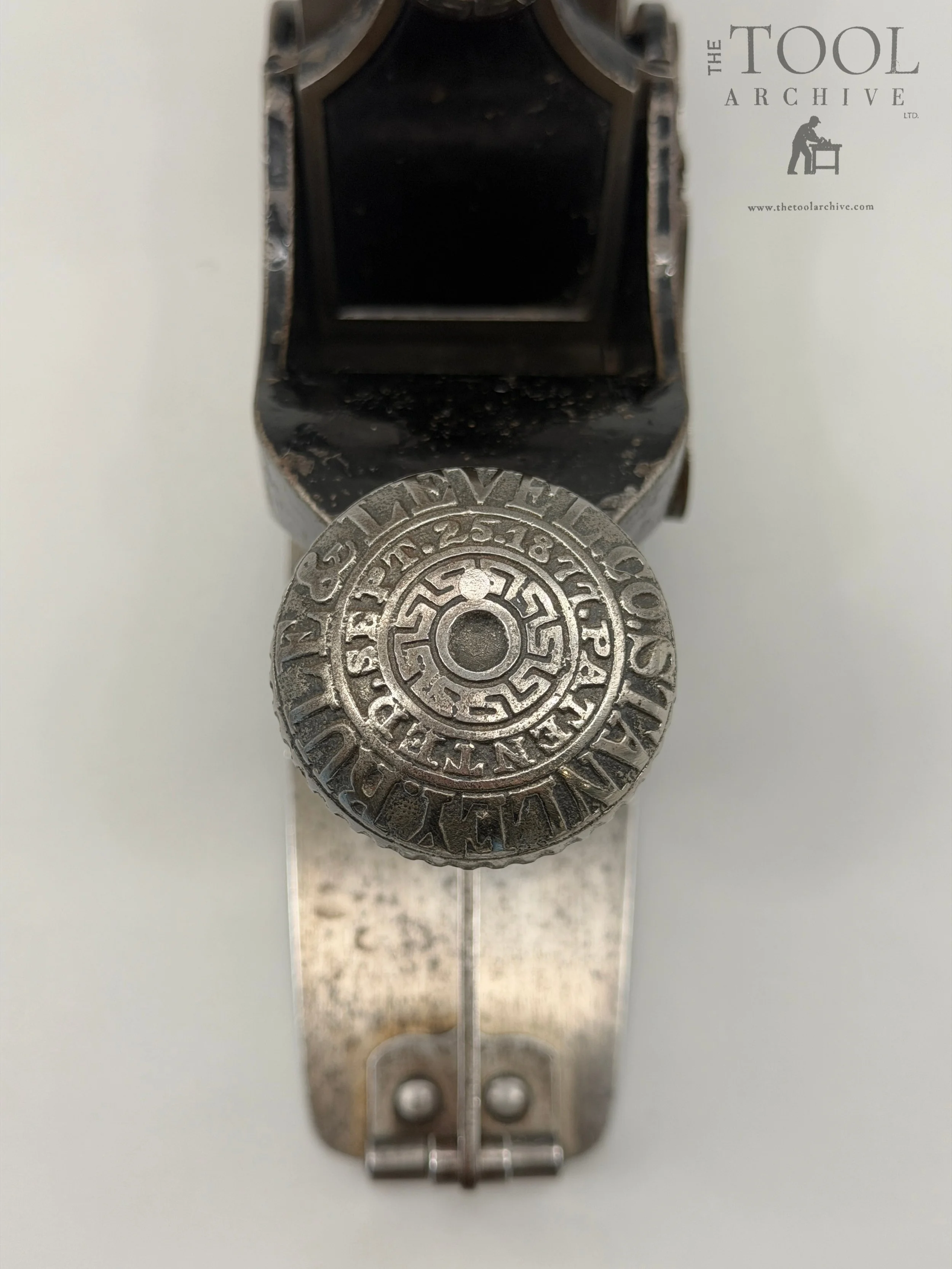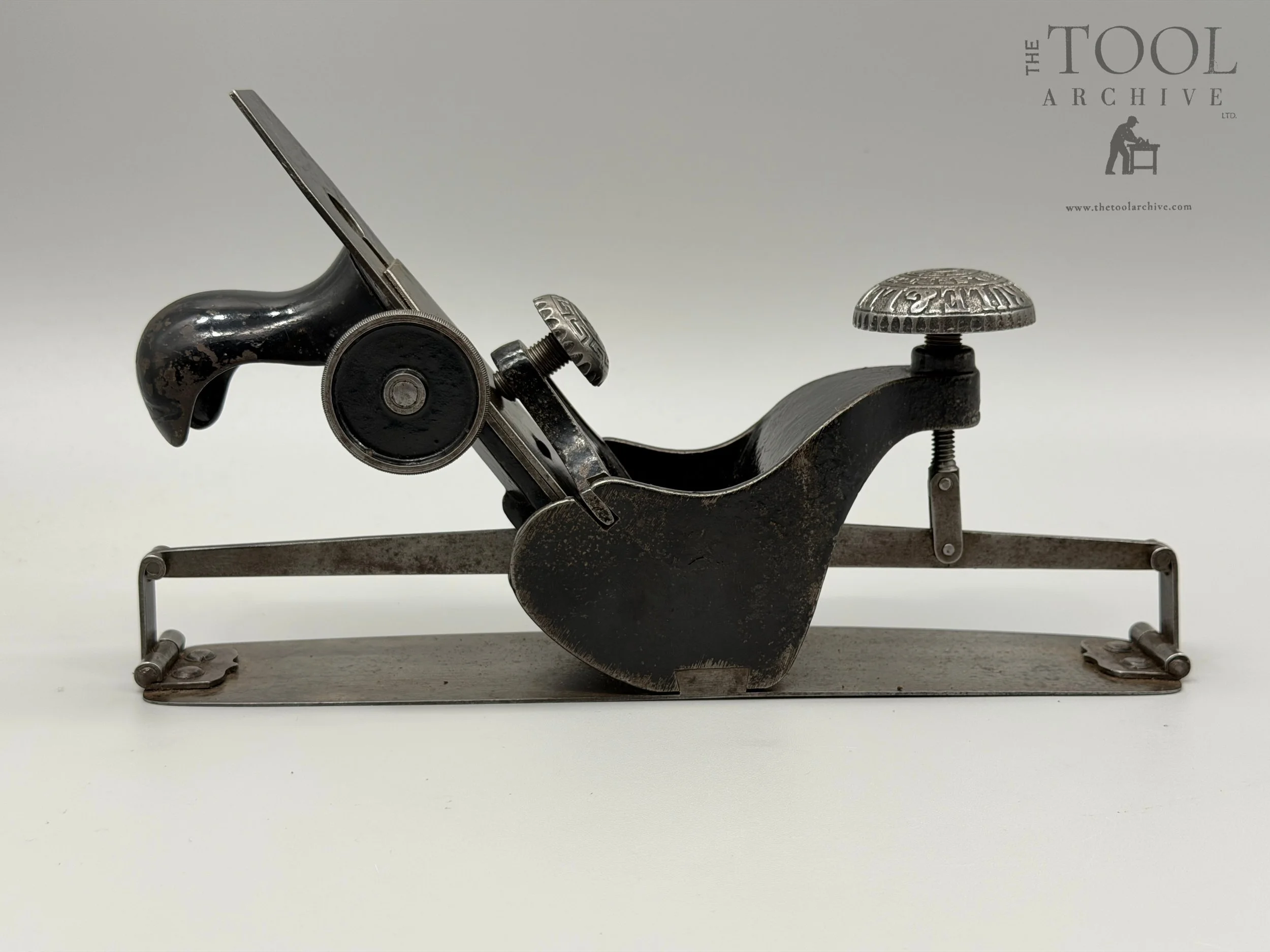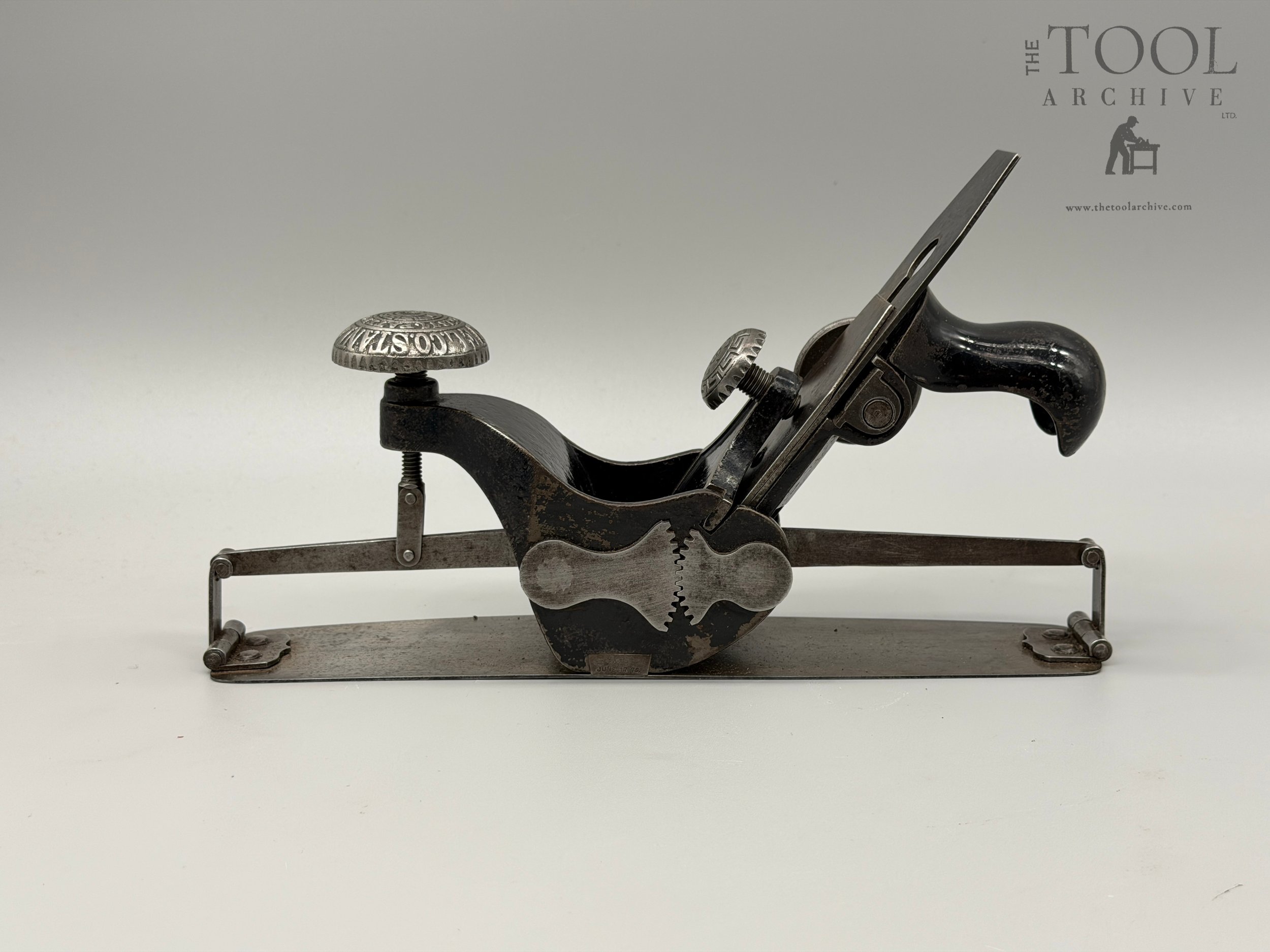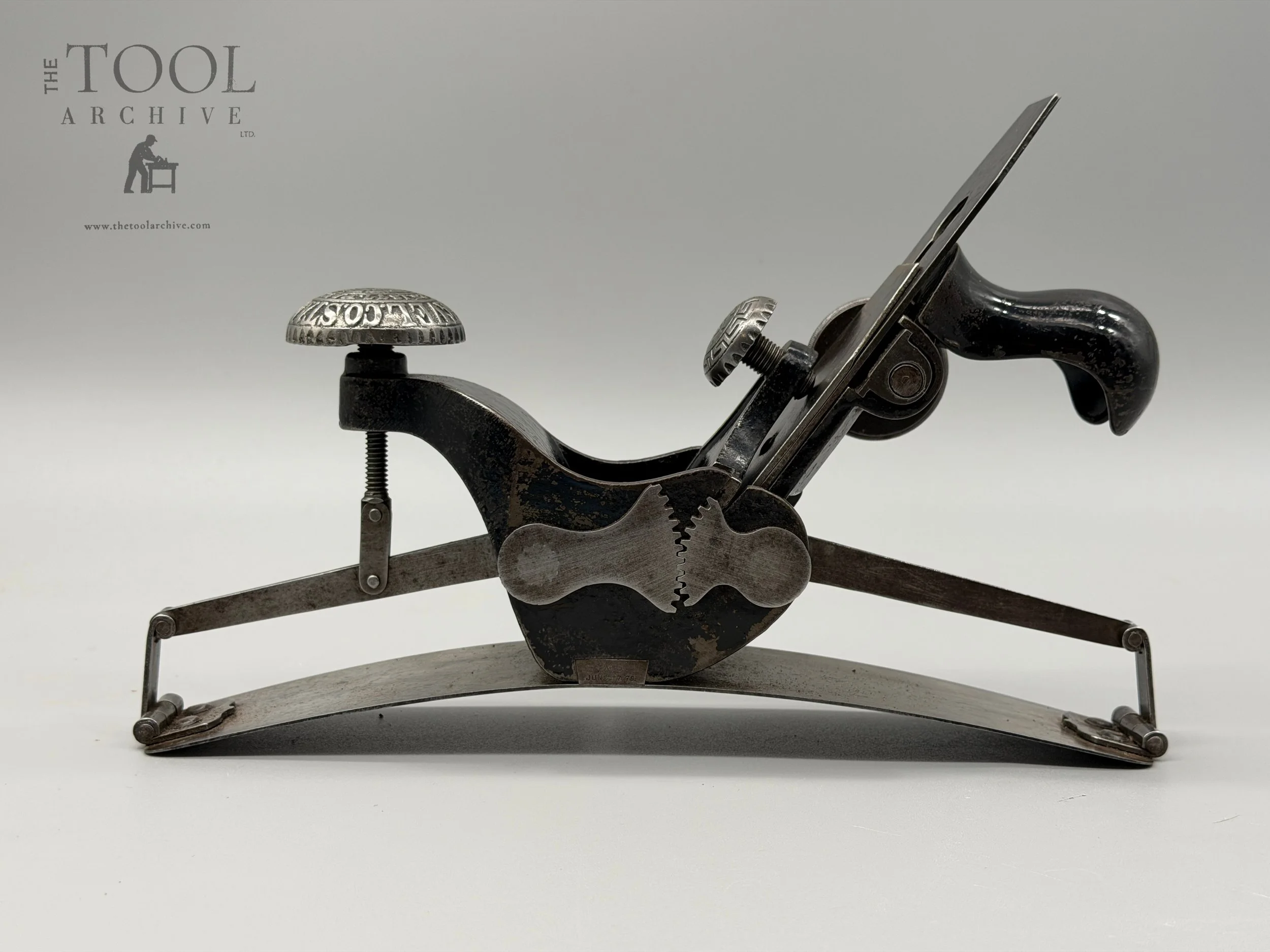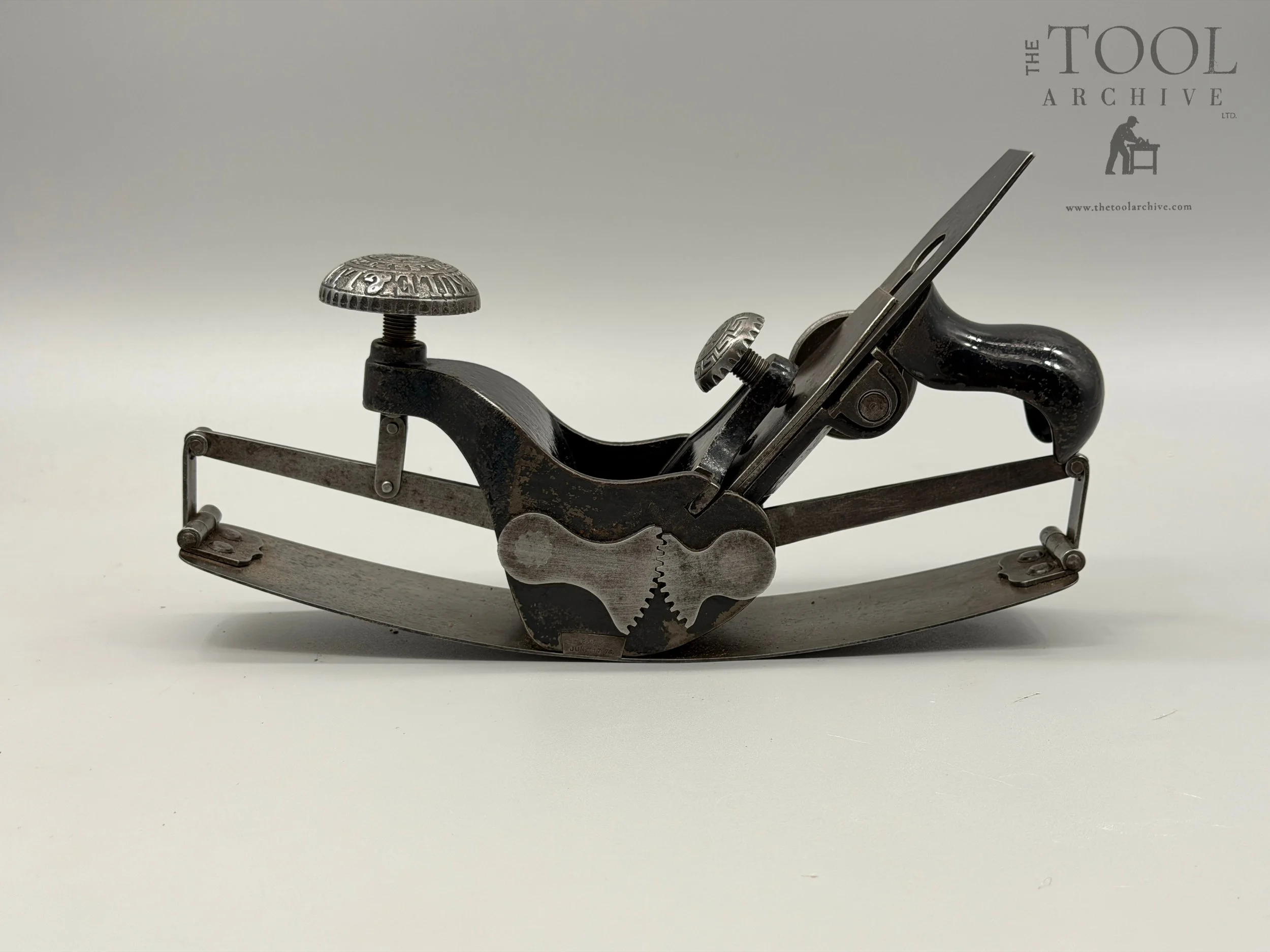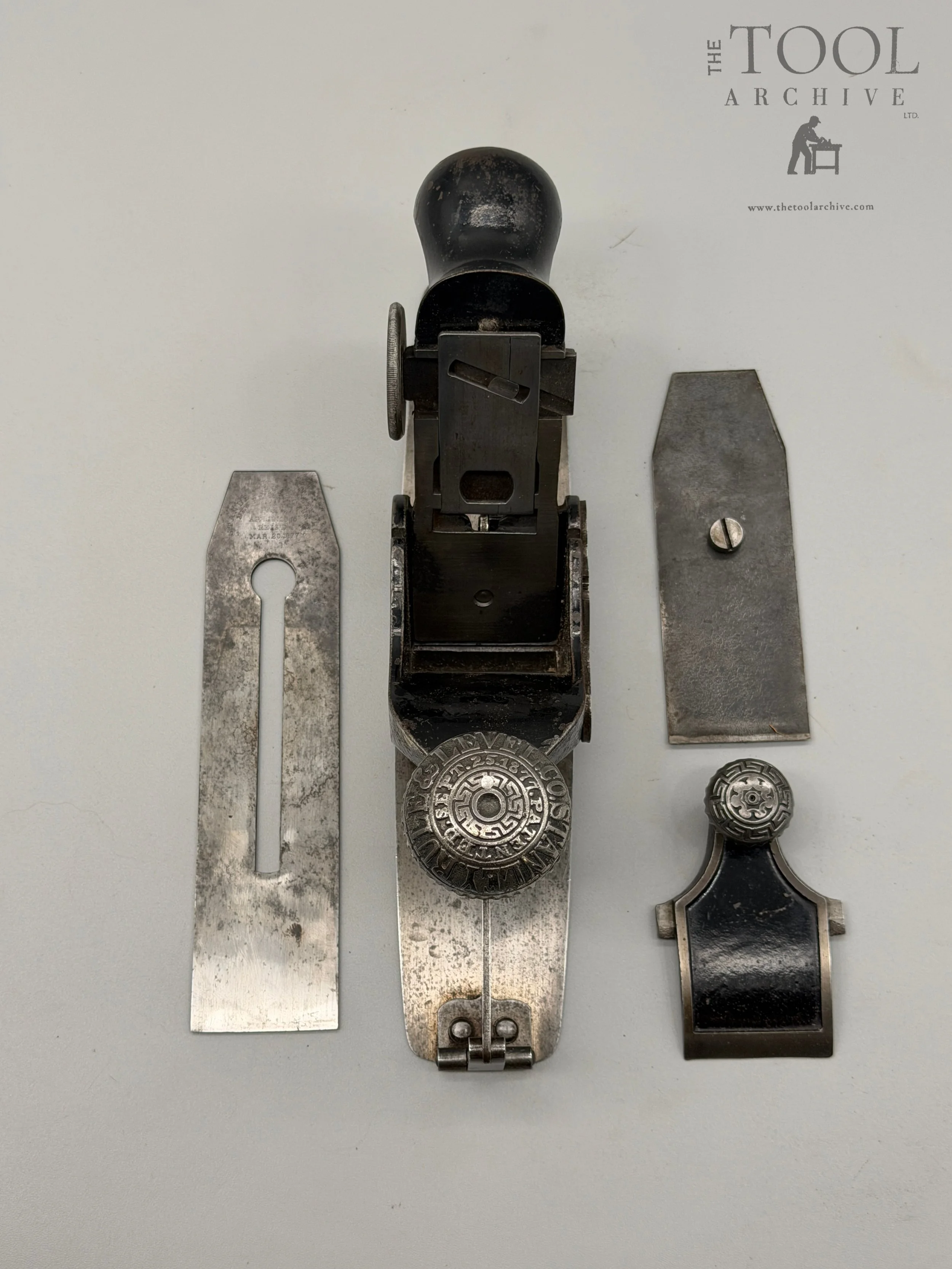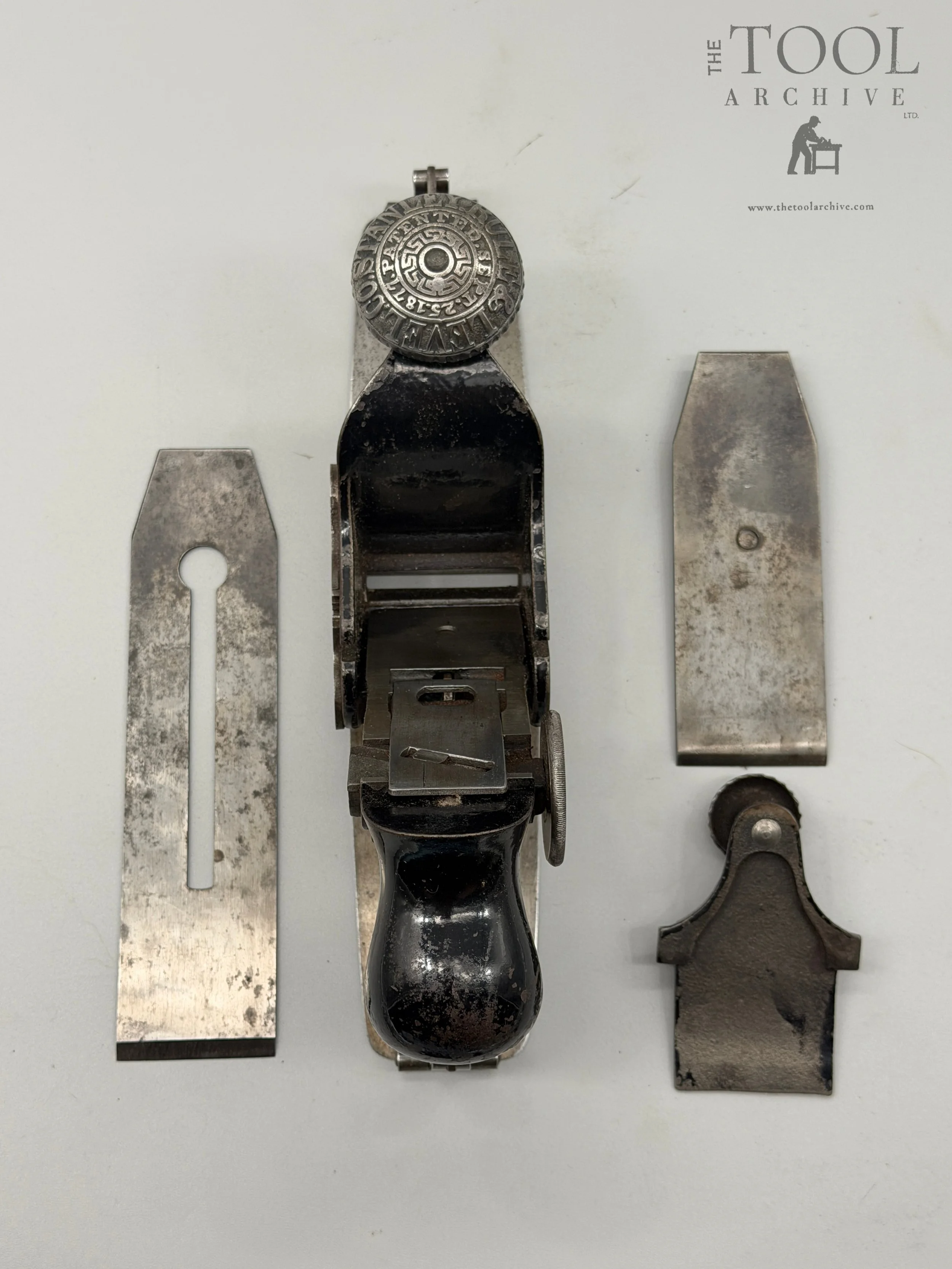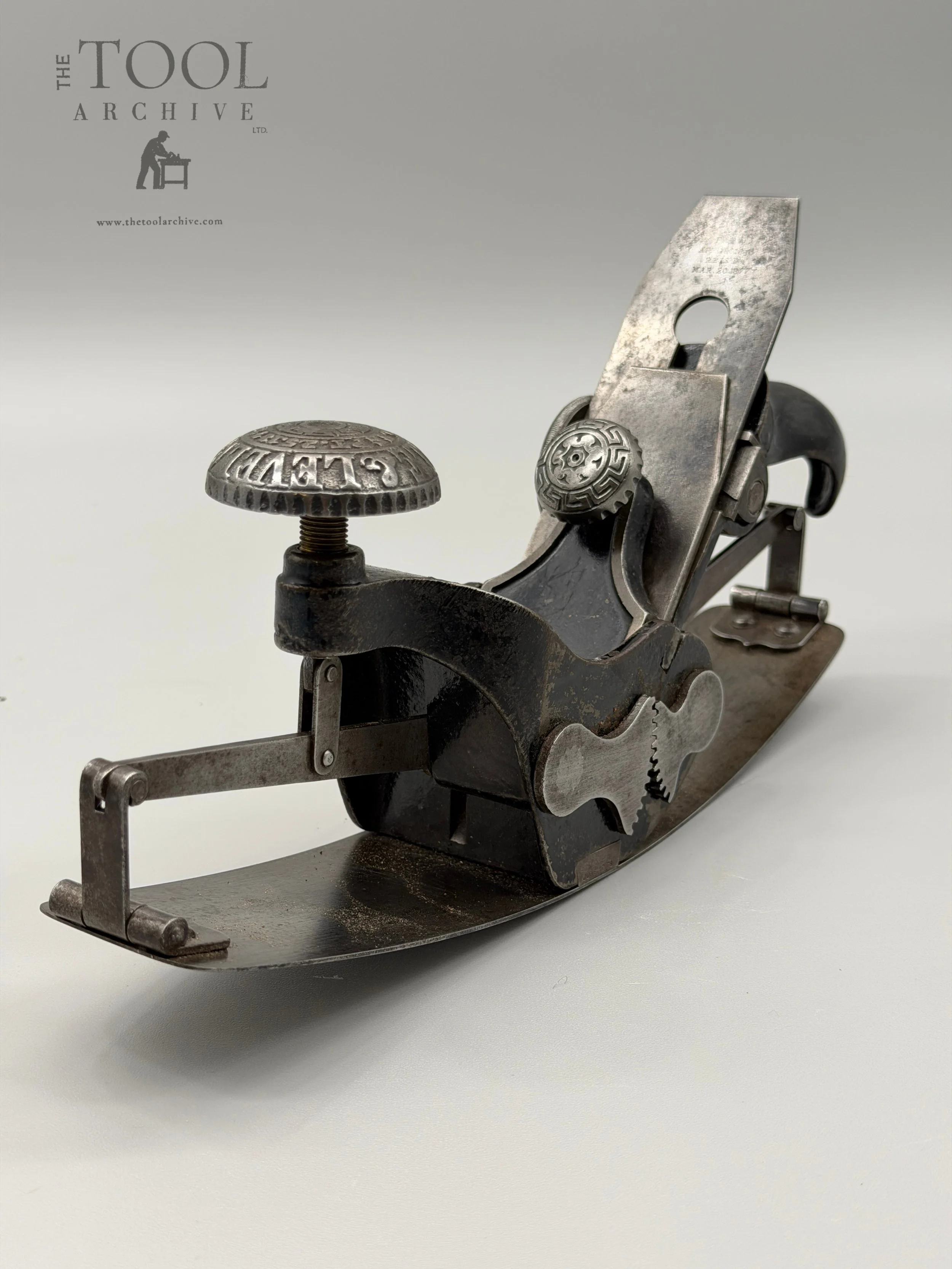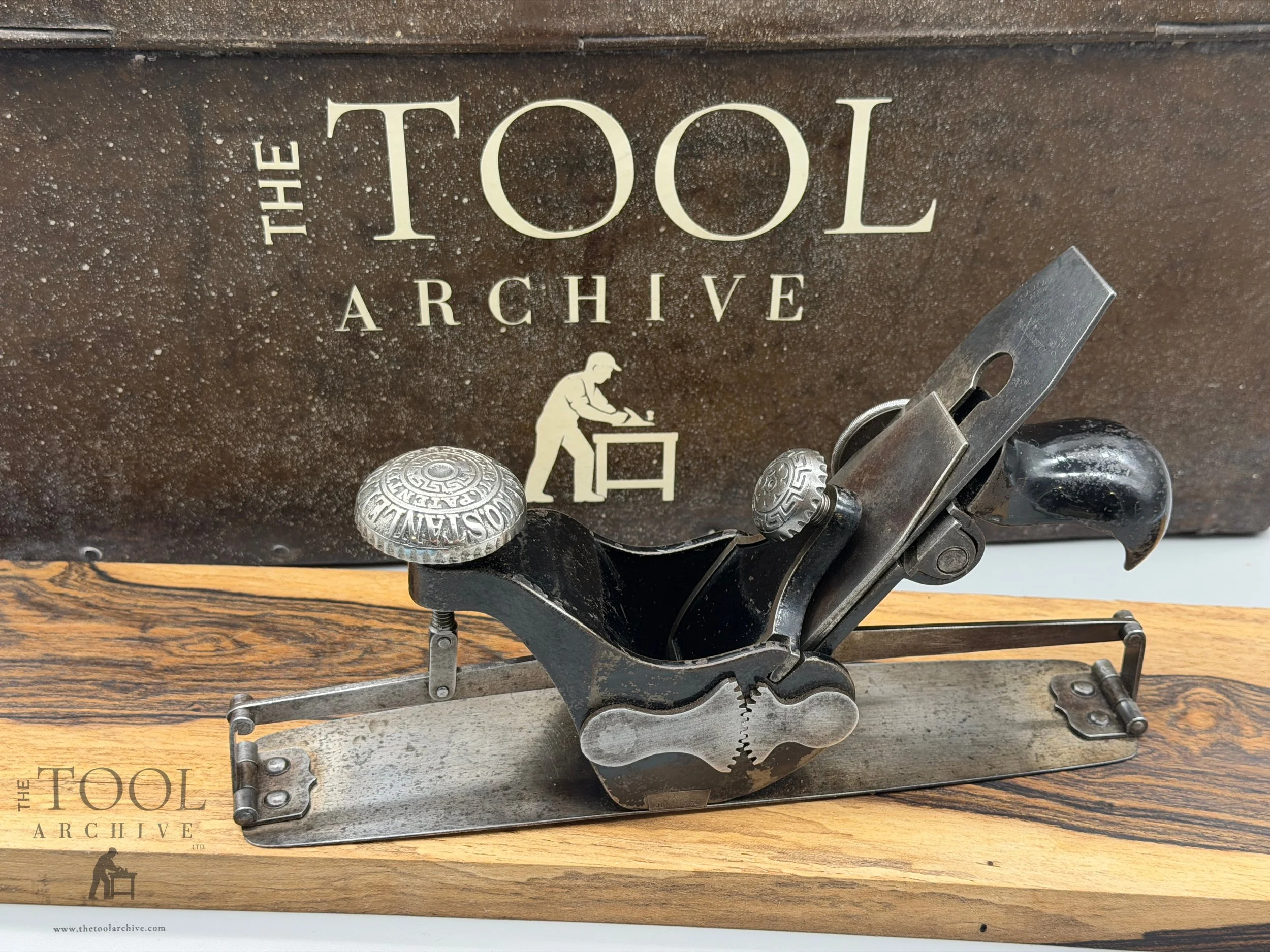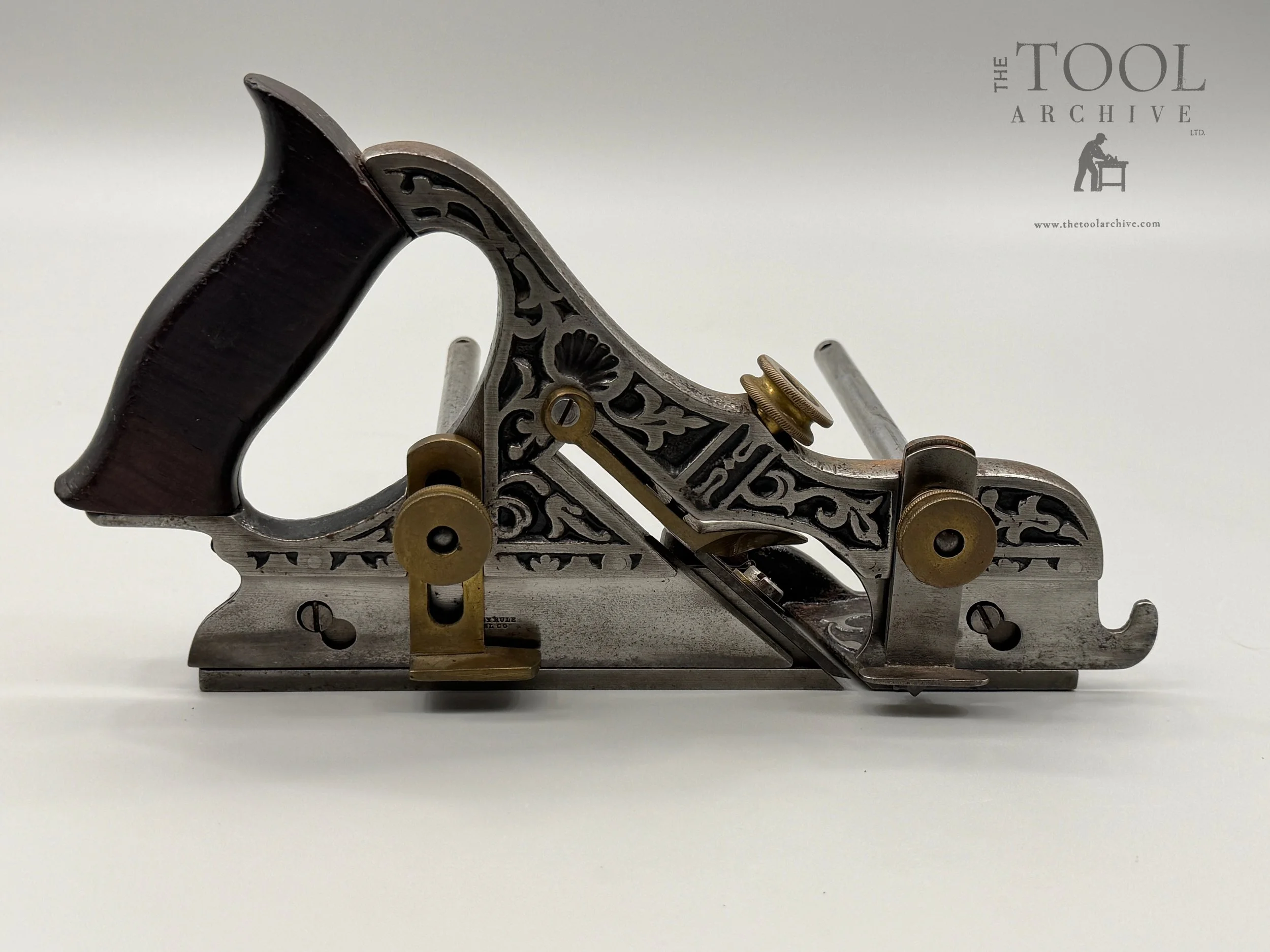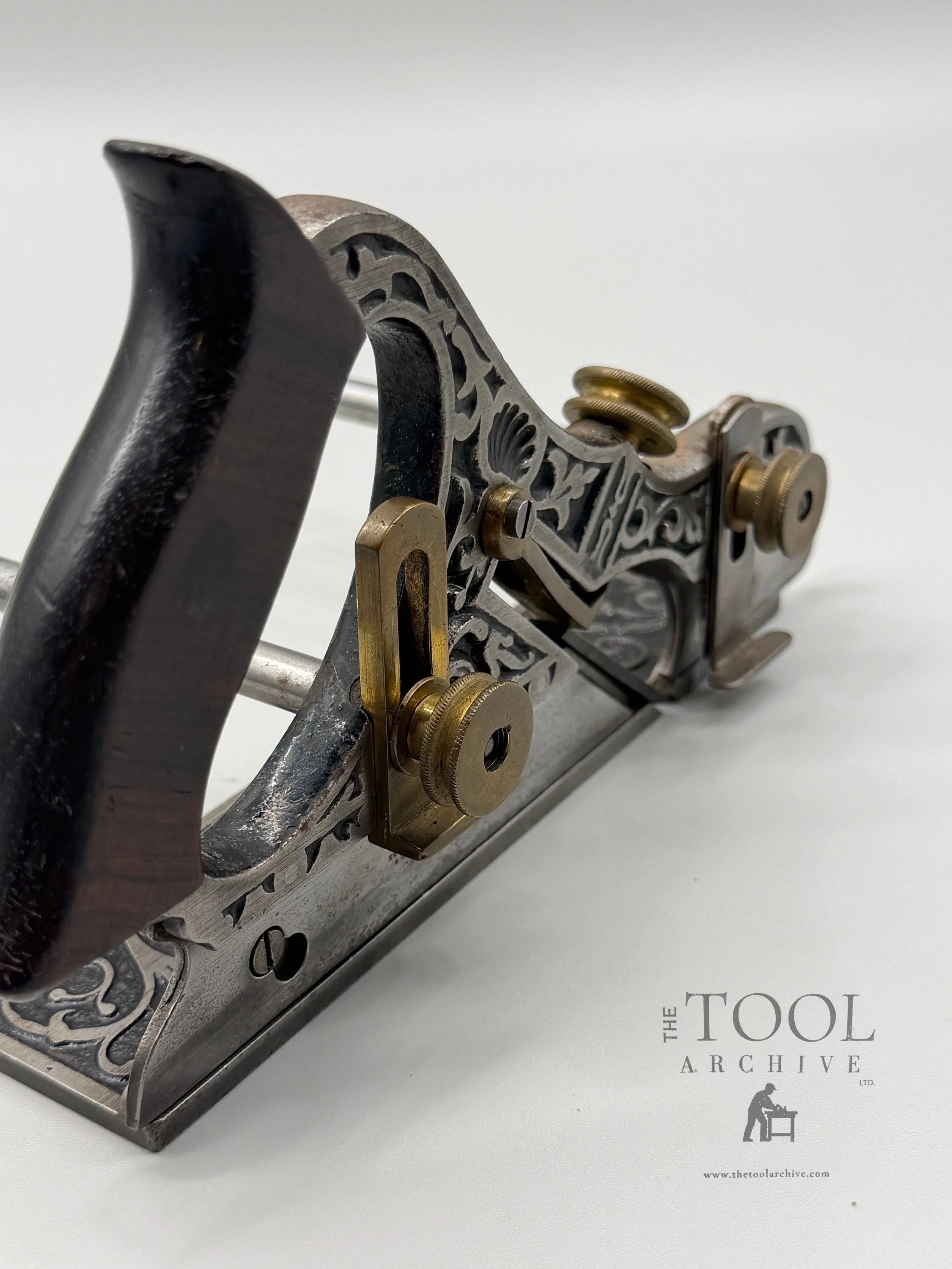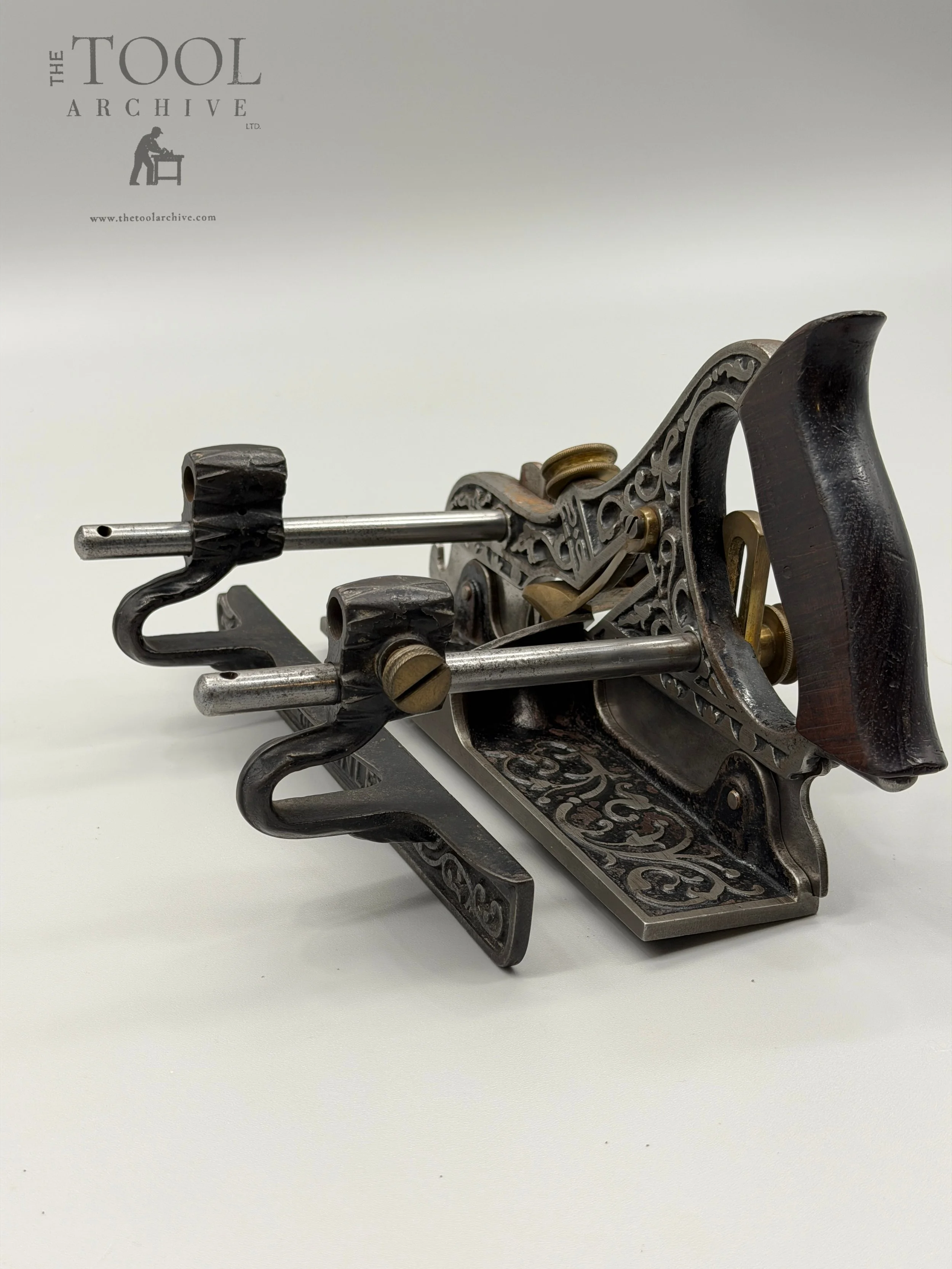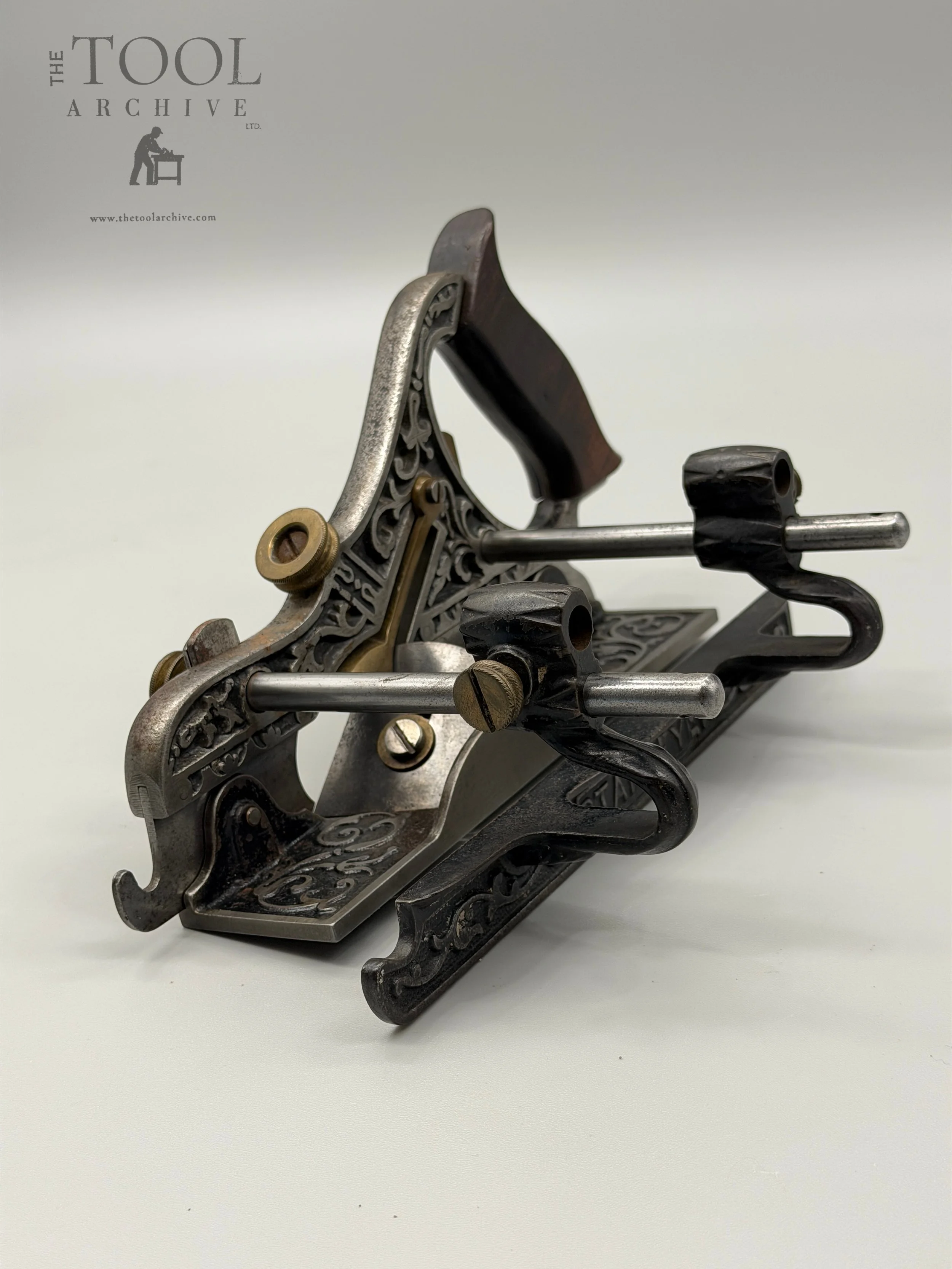
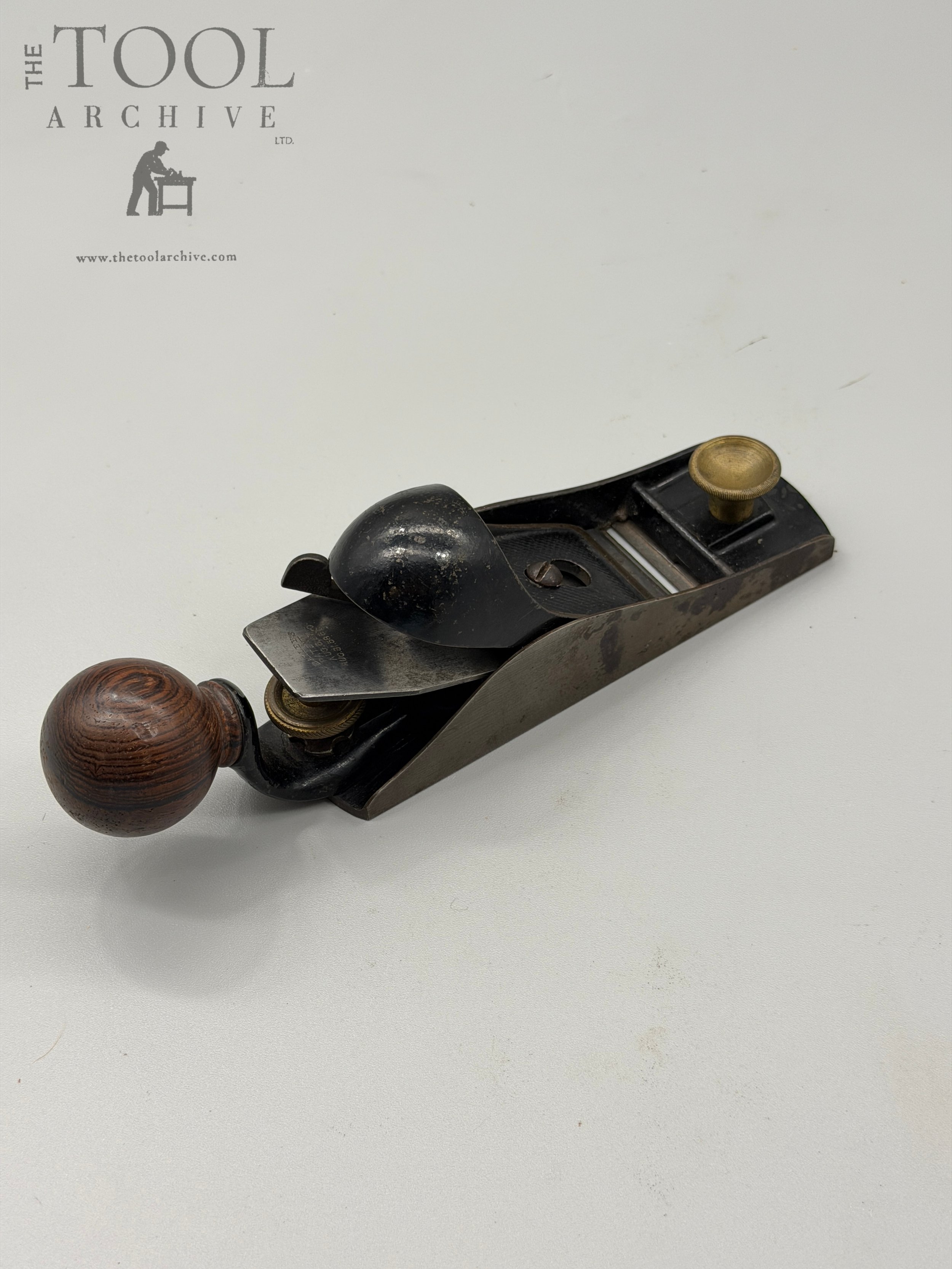
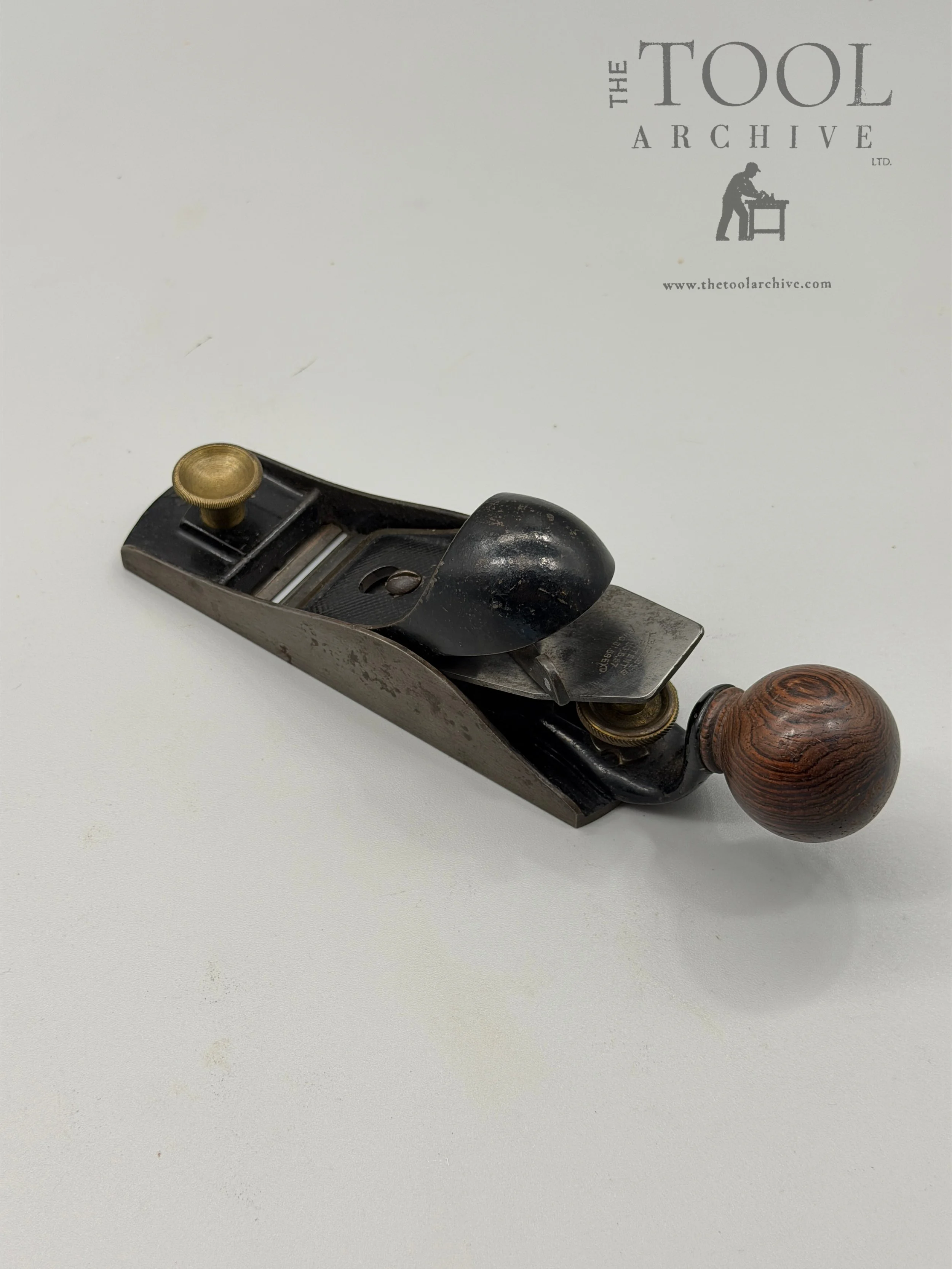
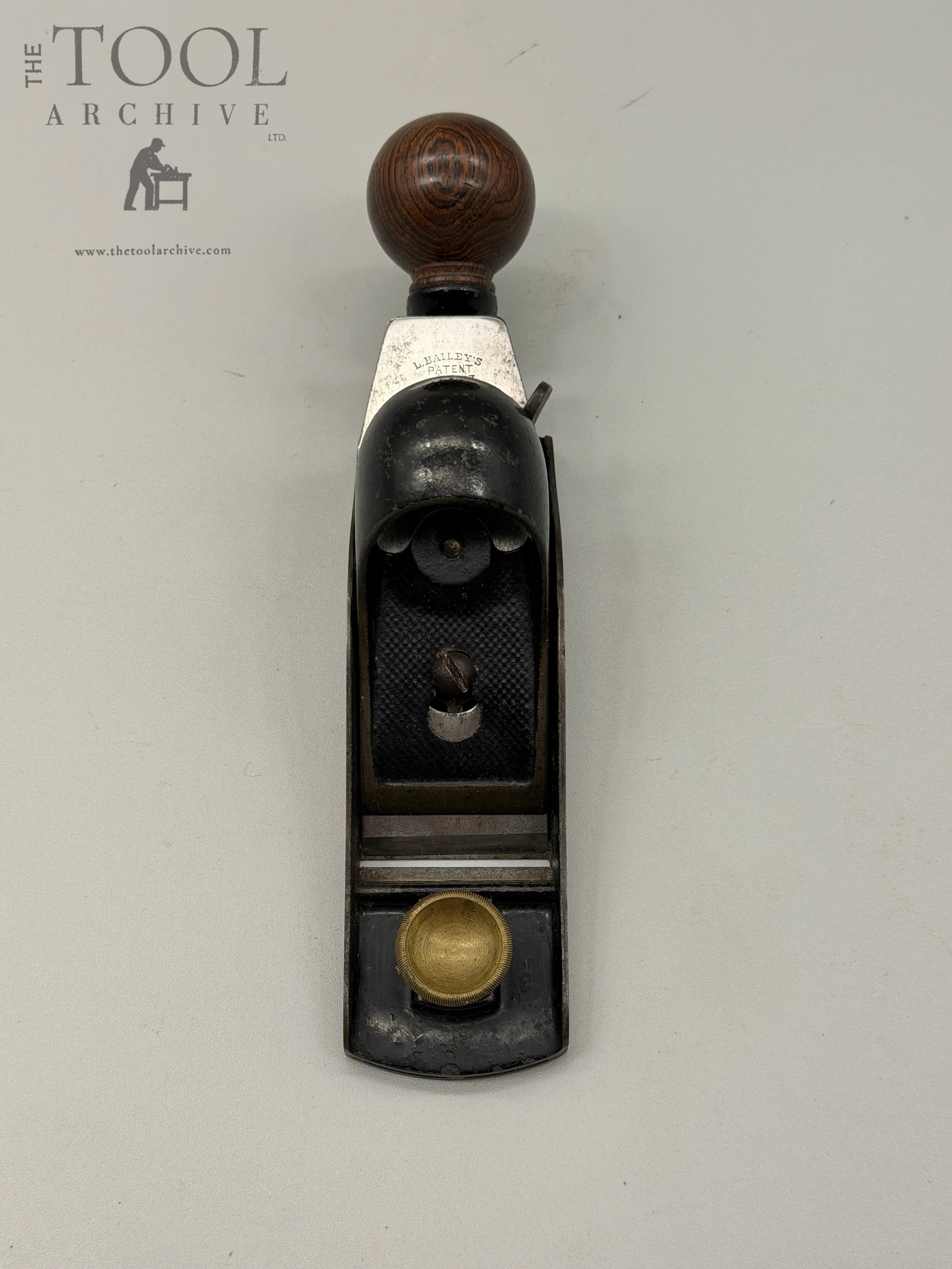
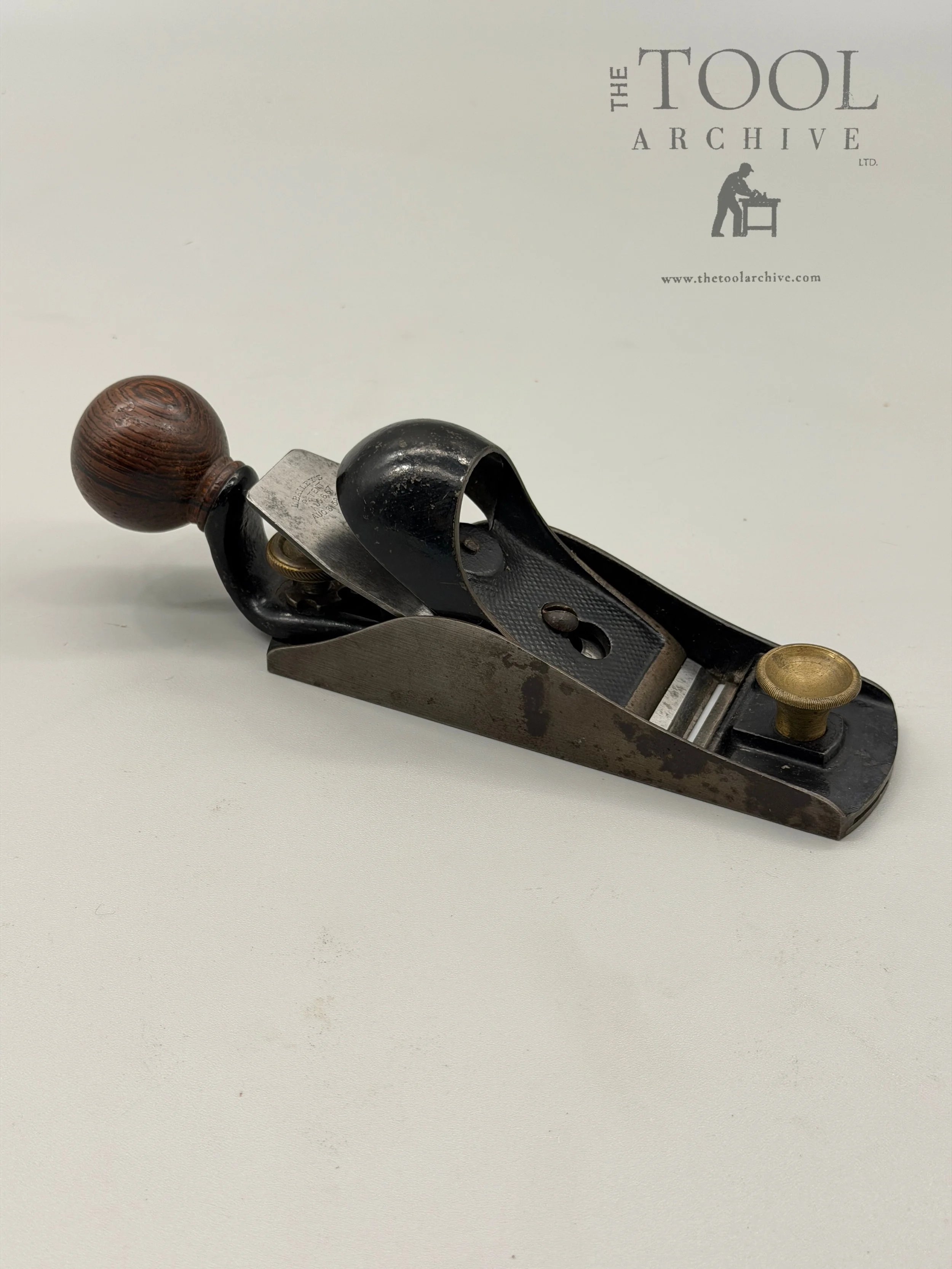
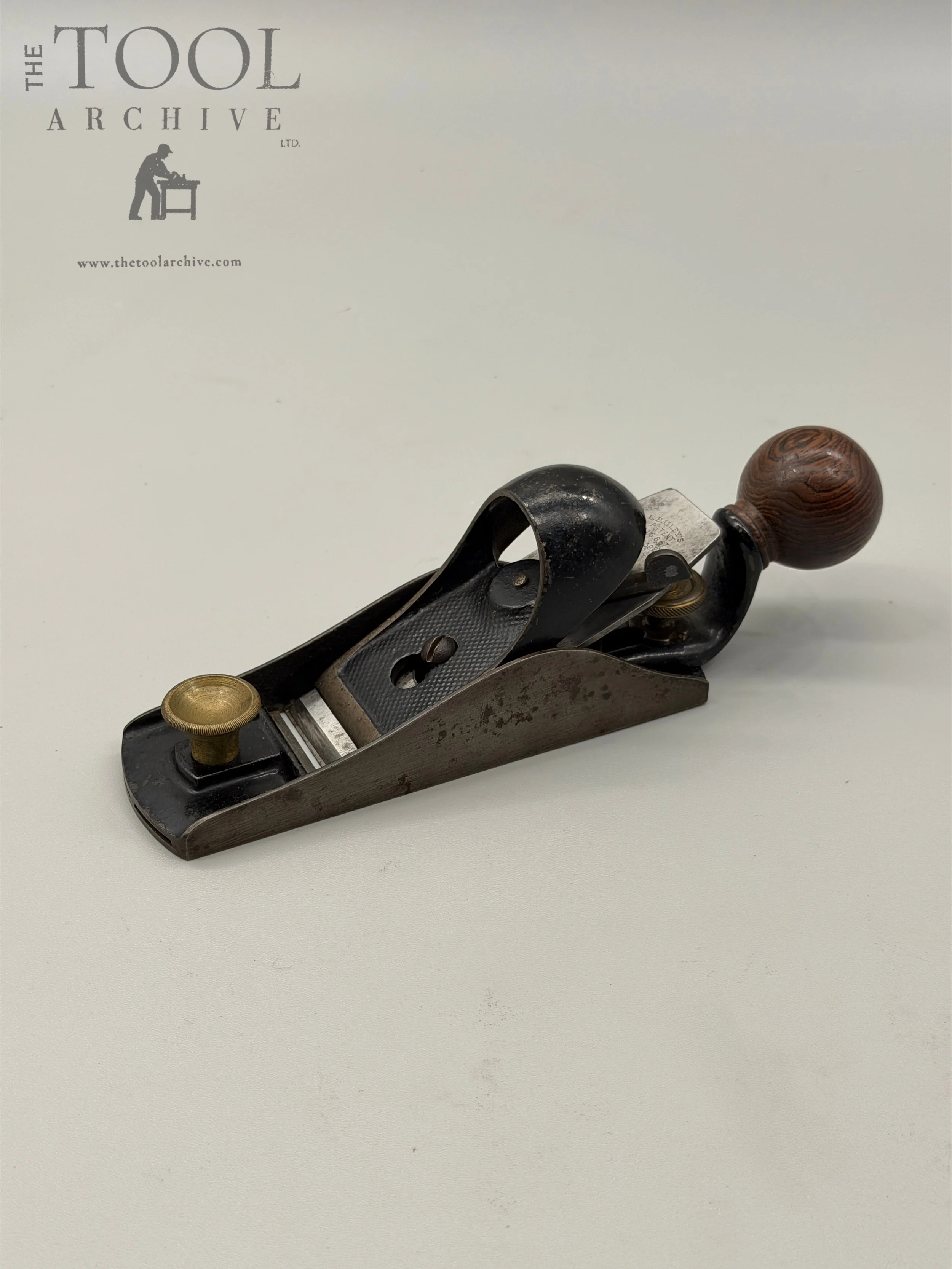
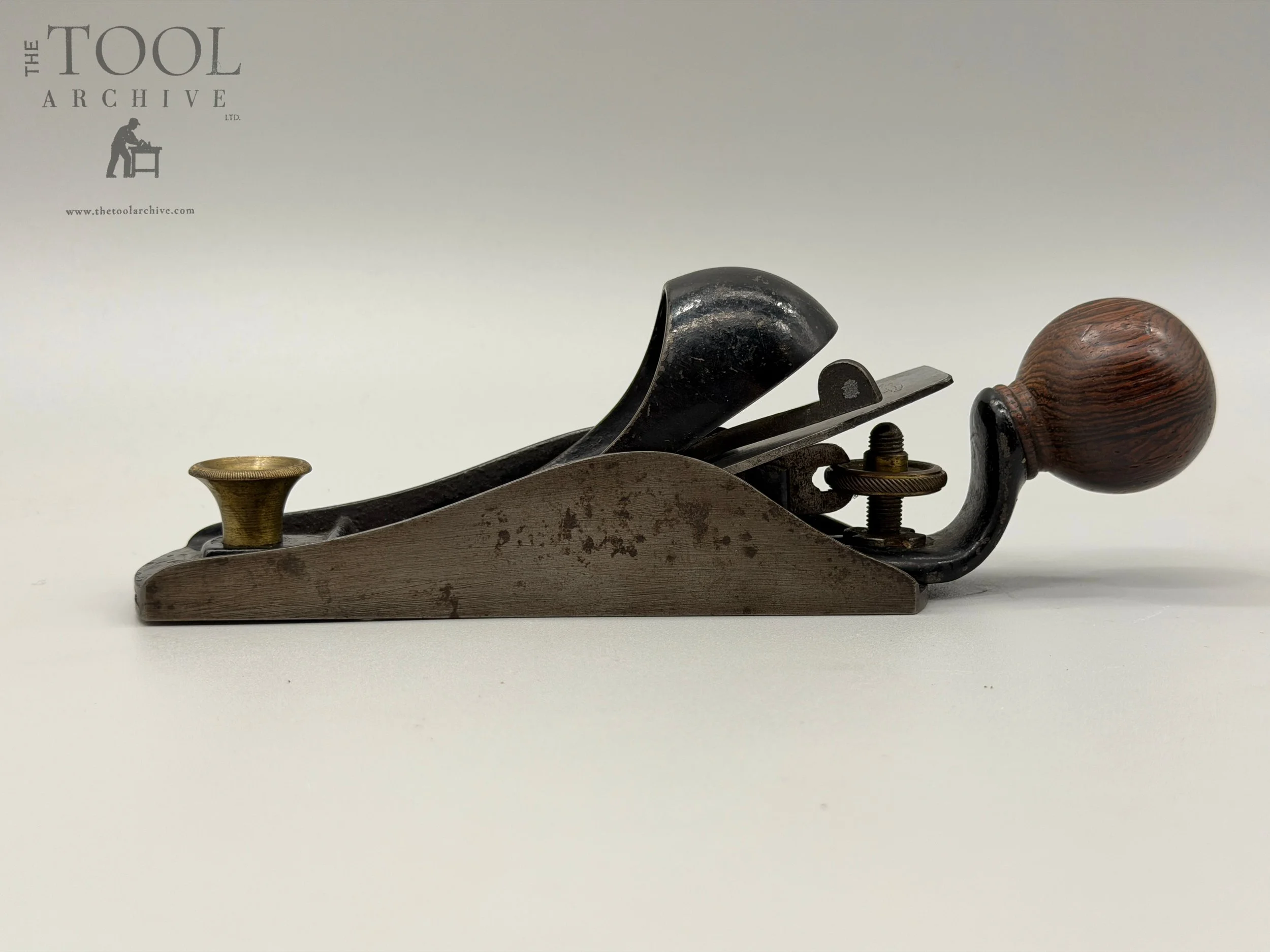
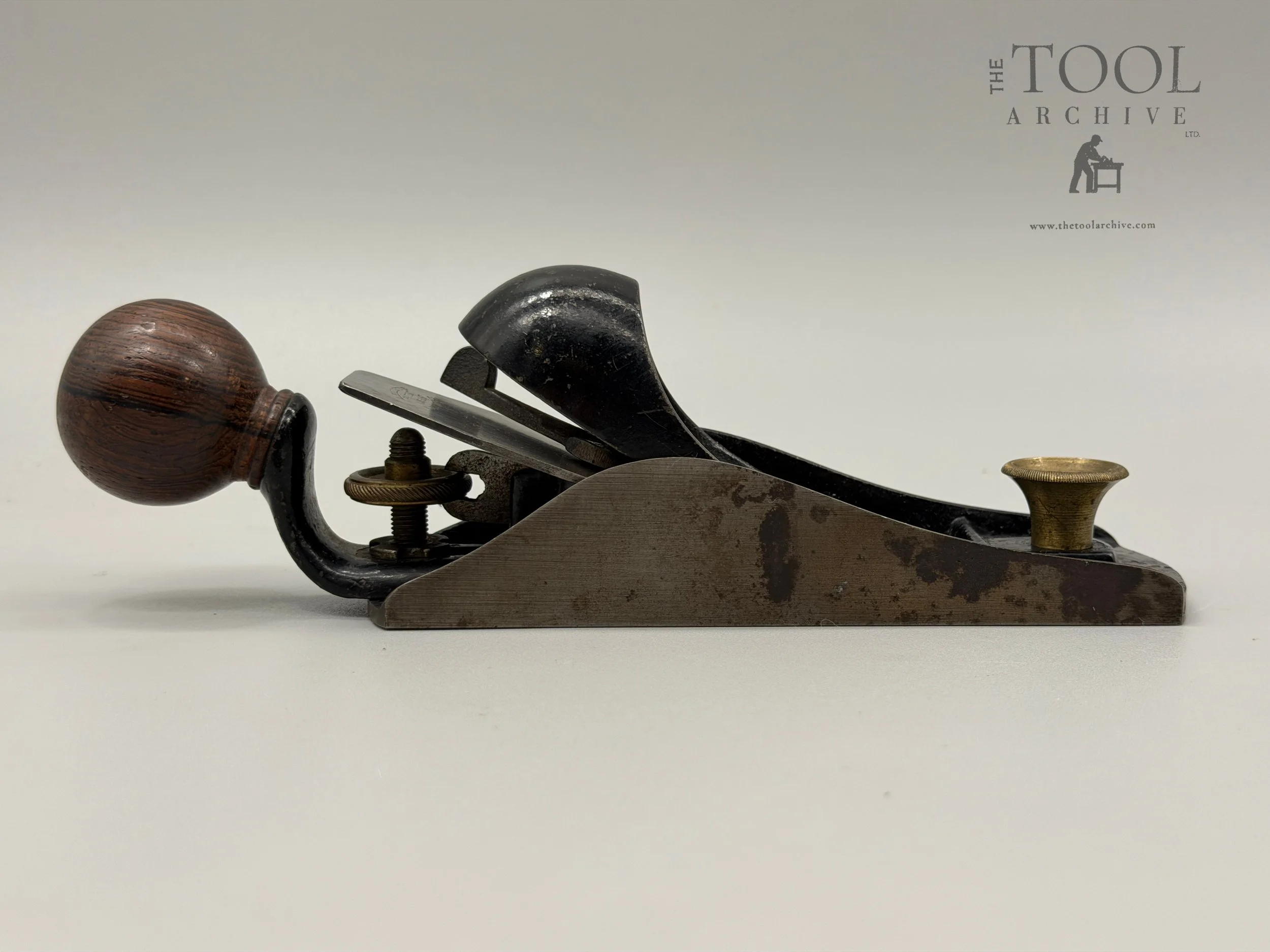
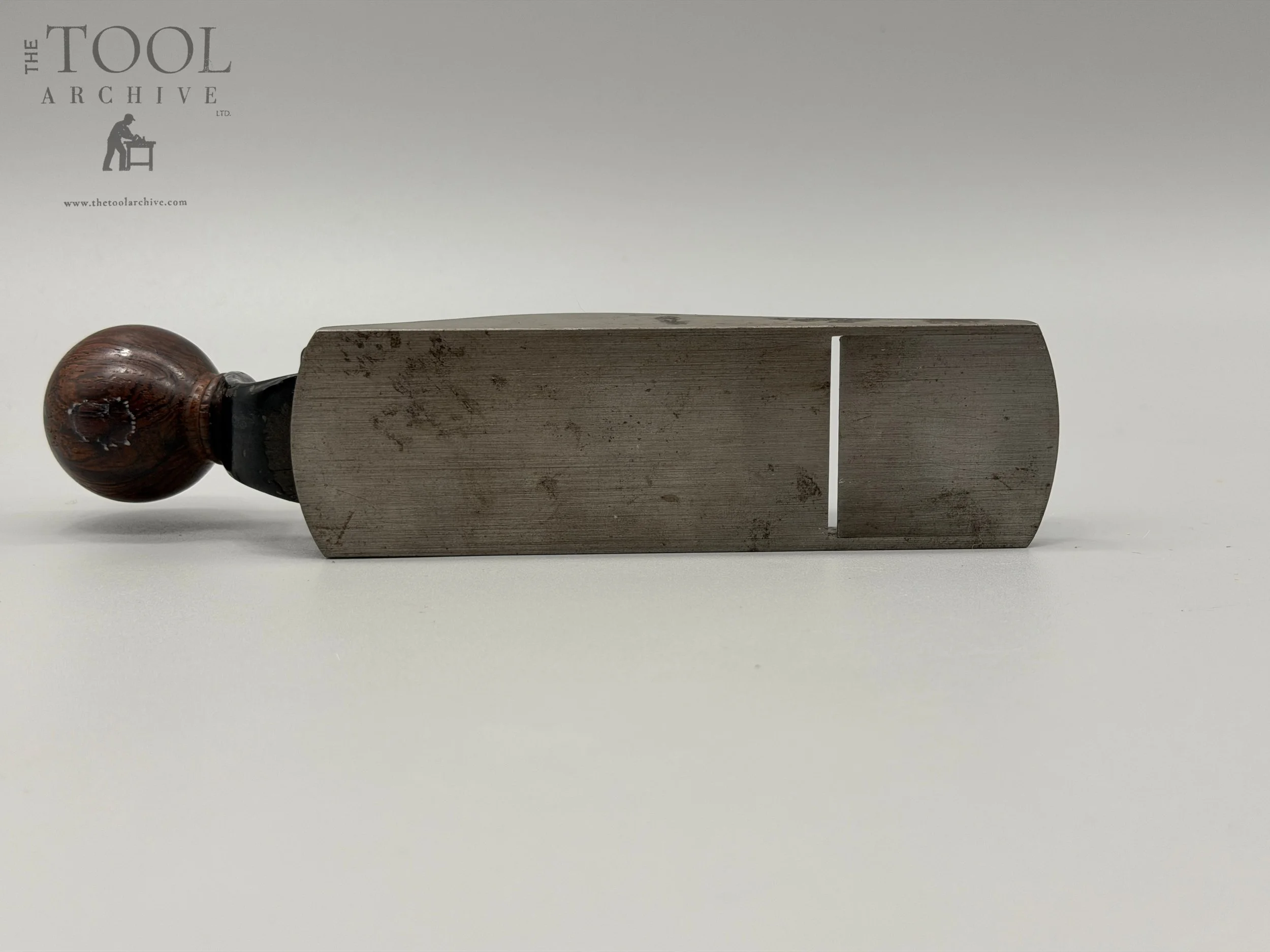
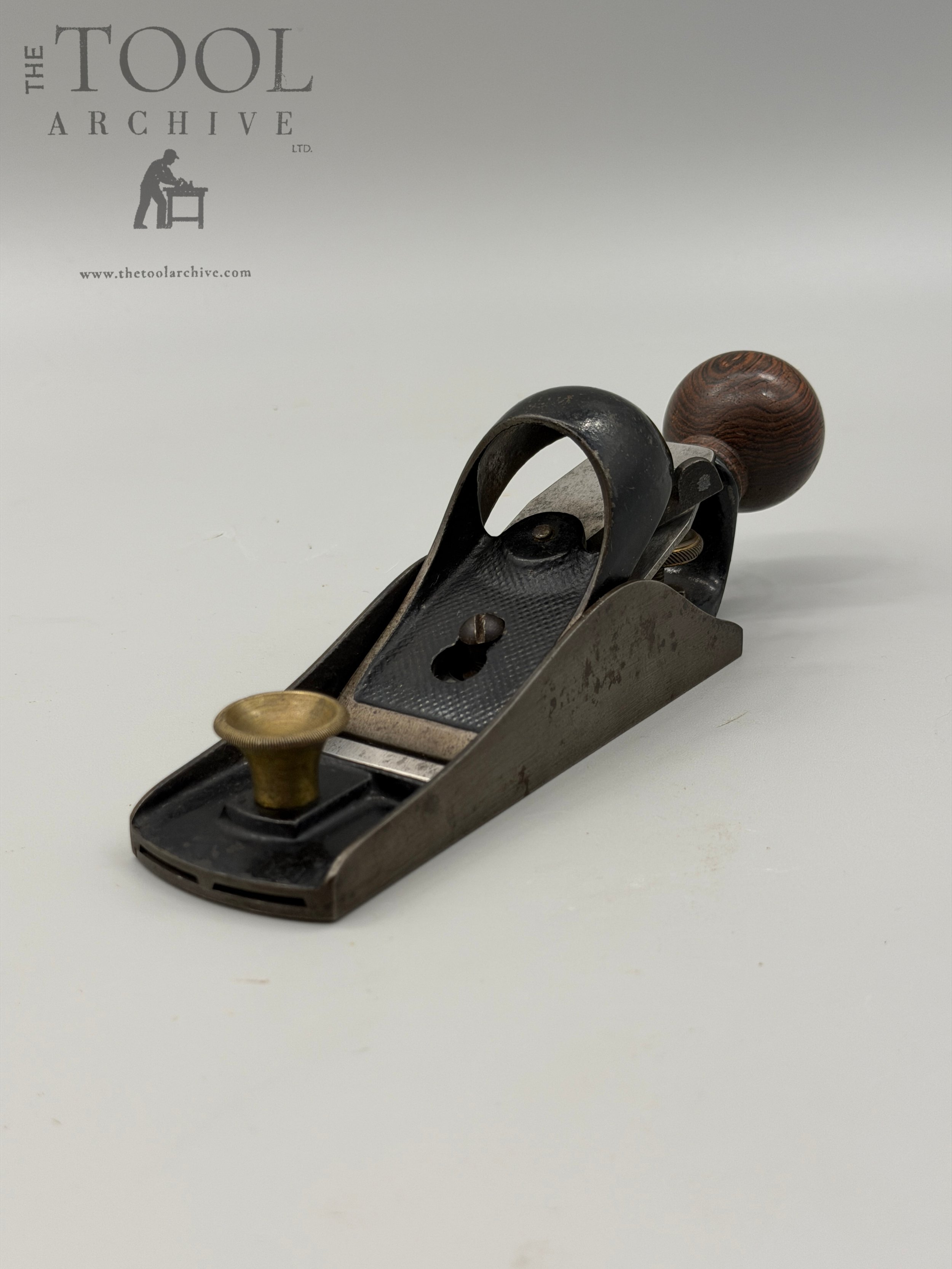
Stanley No. 9-3/4 Tail-Block Plane
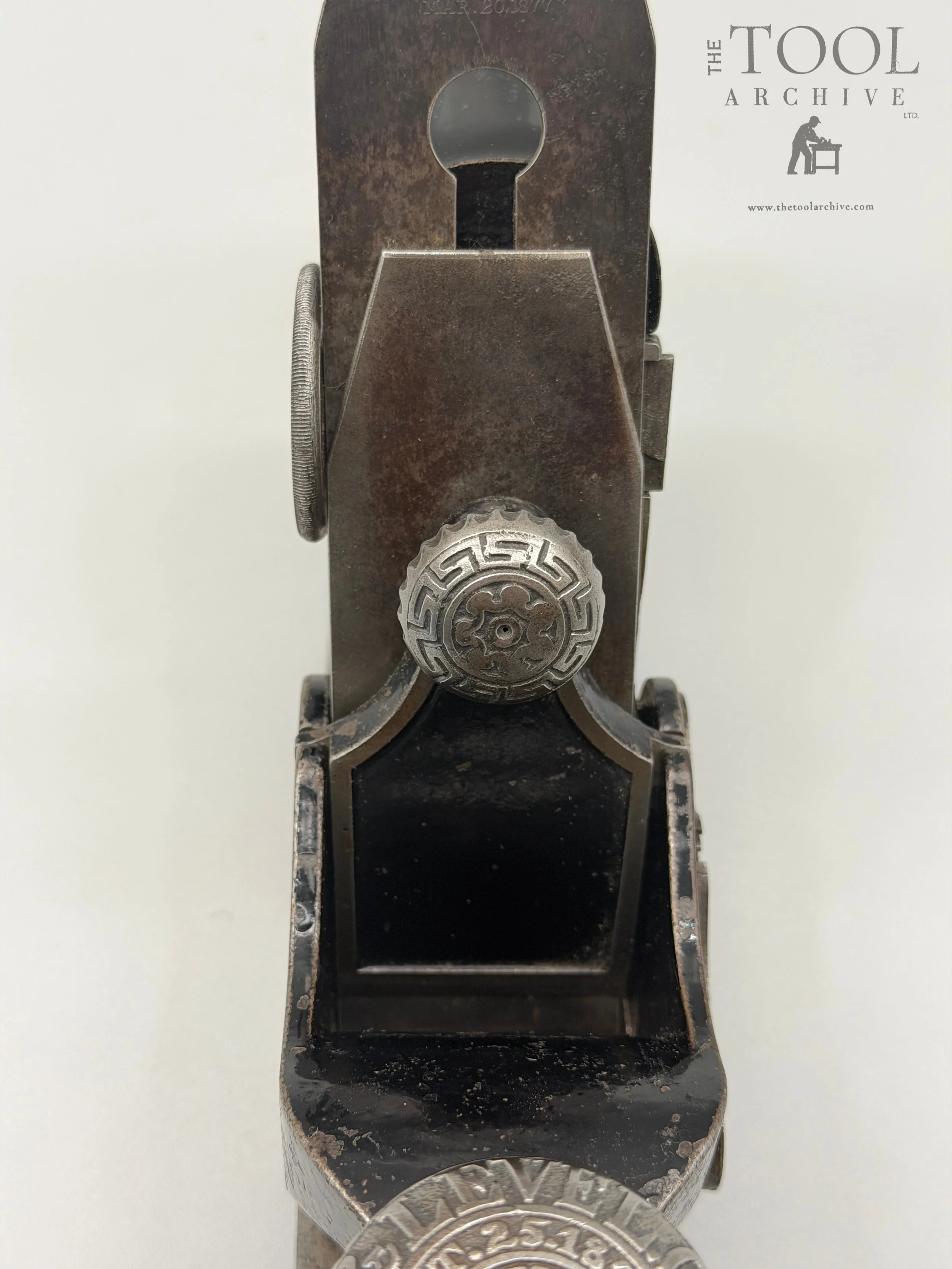
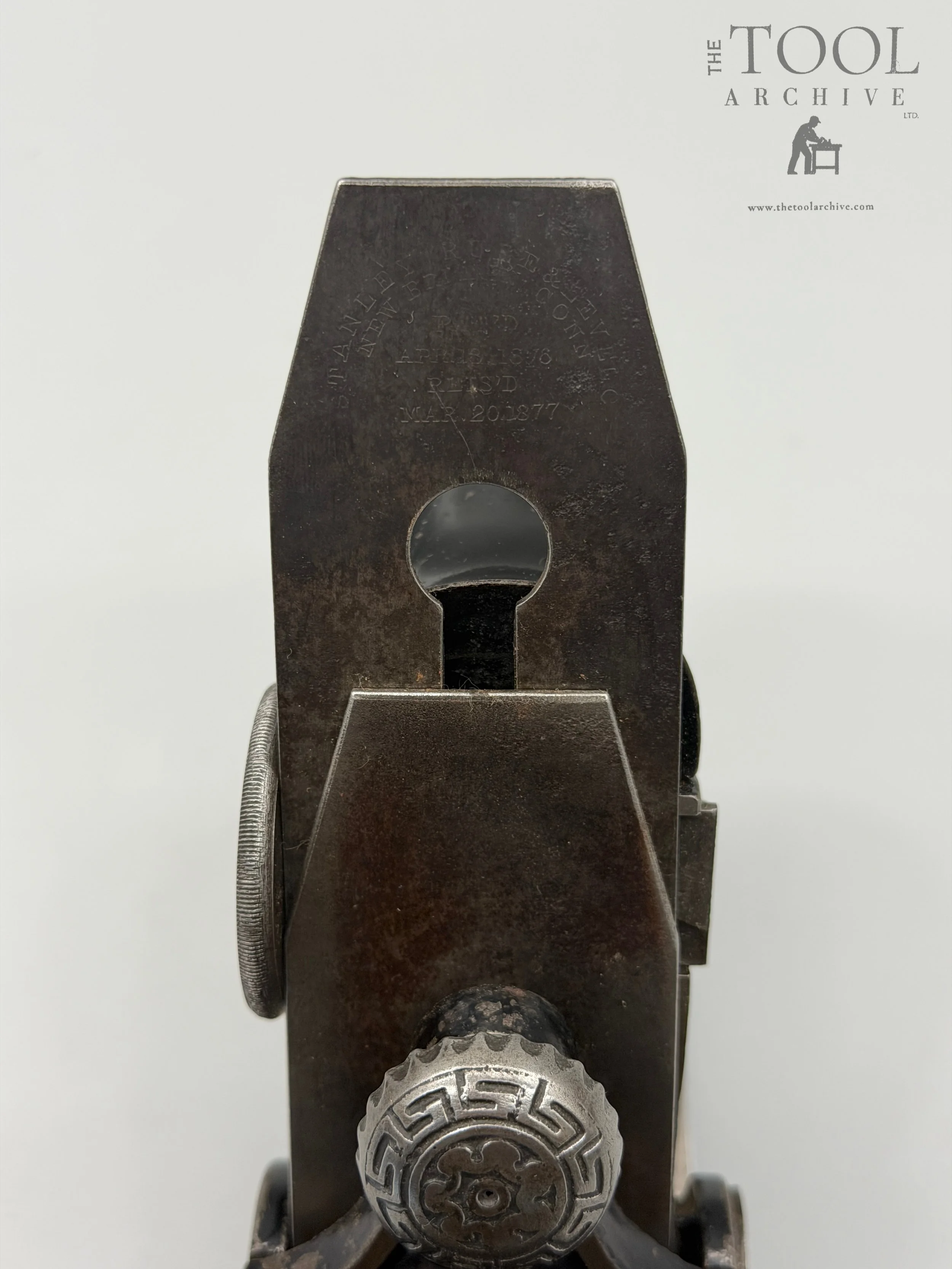
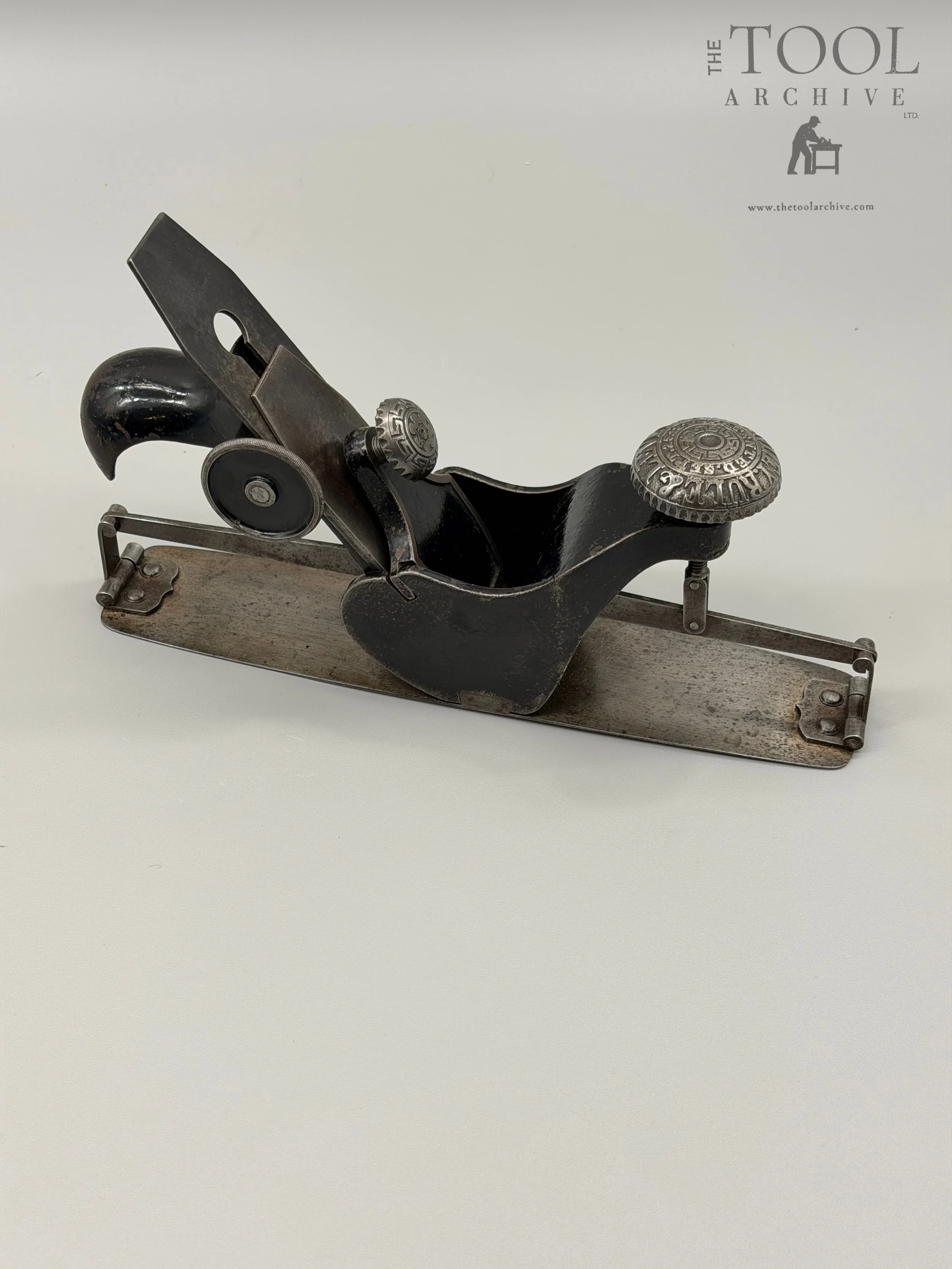
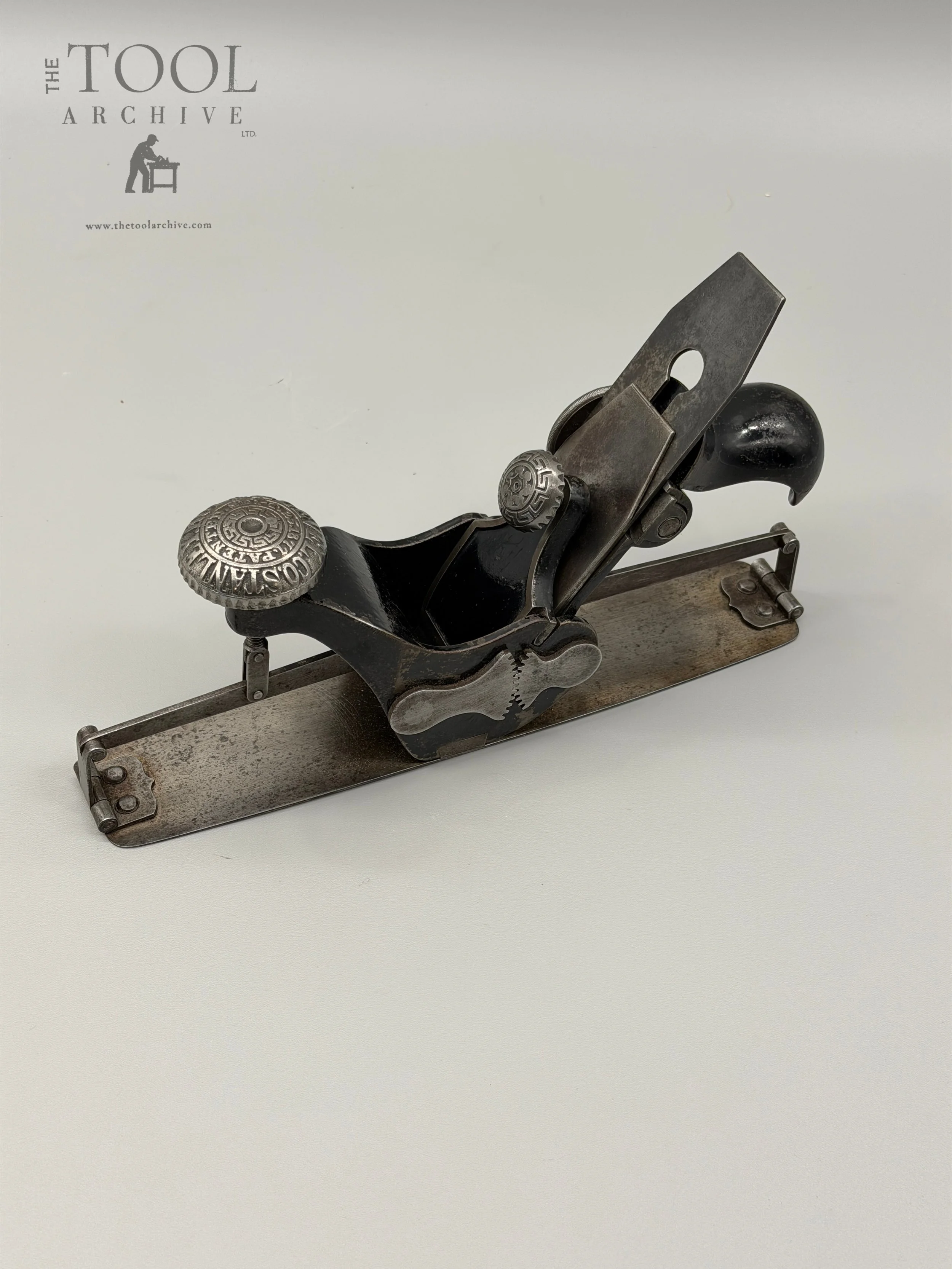
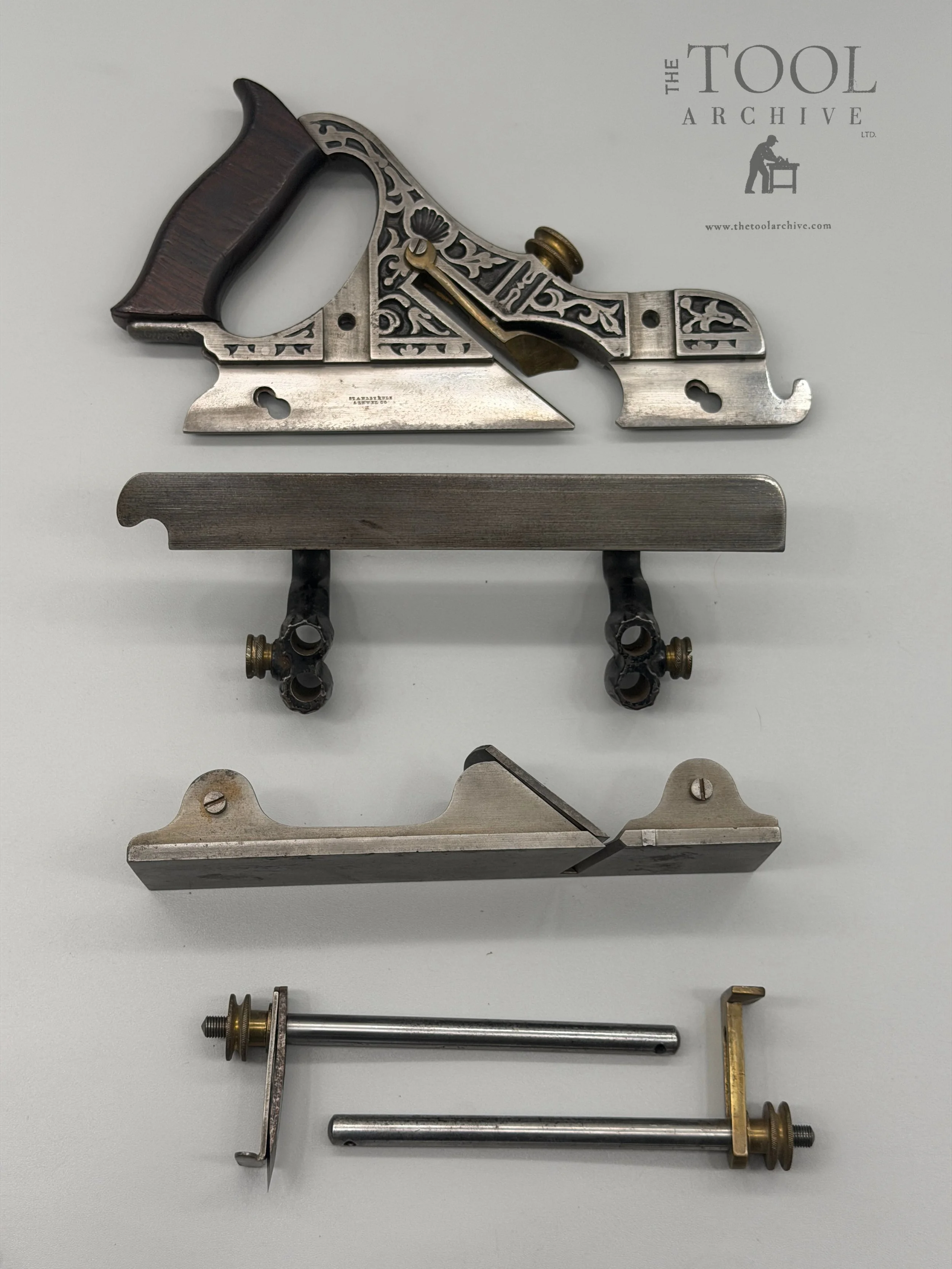
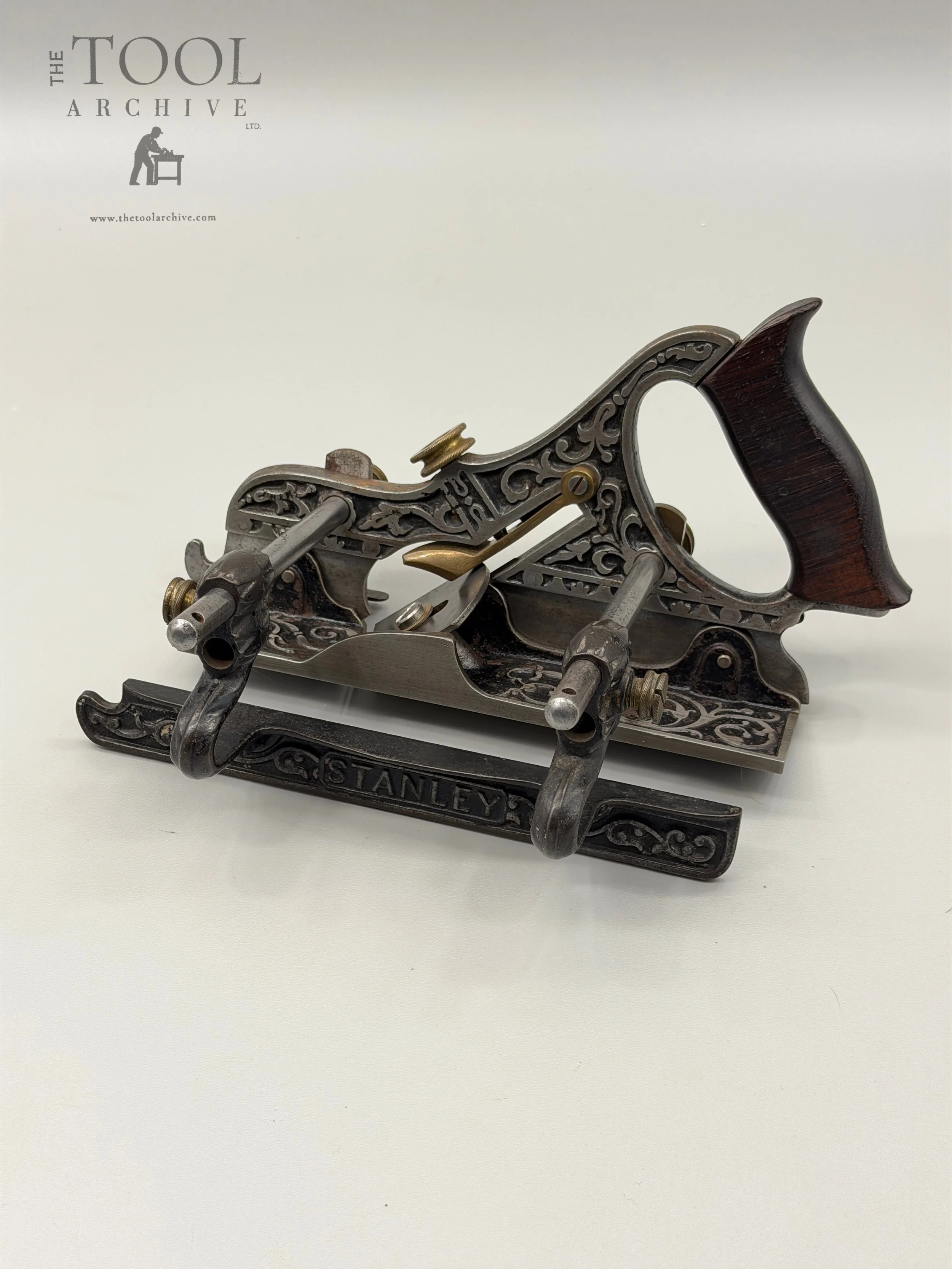
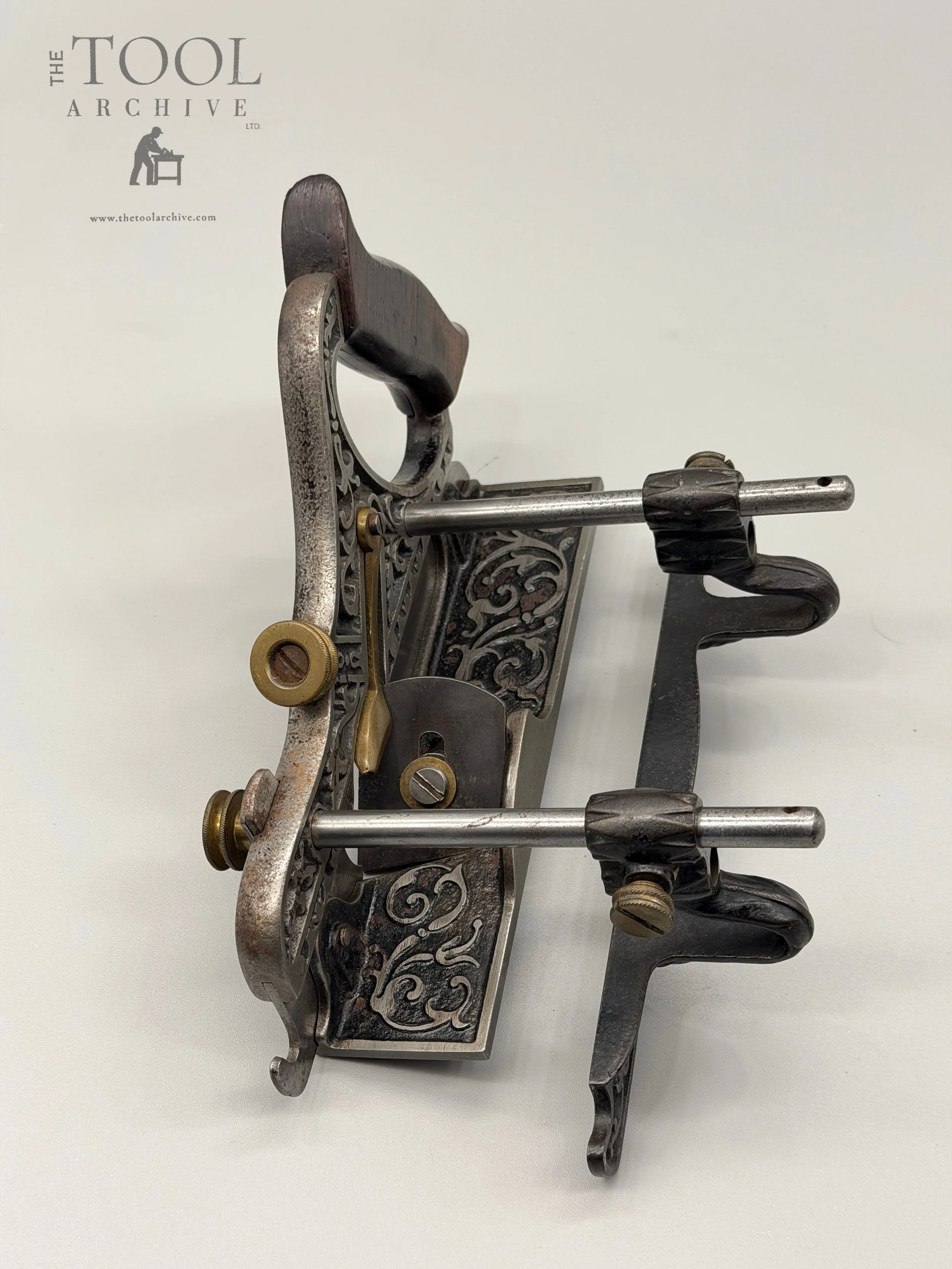
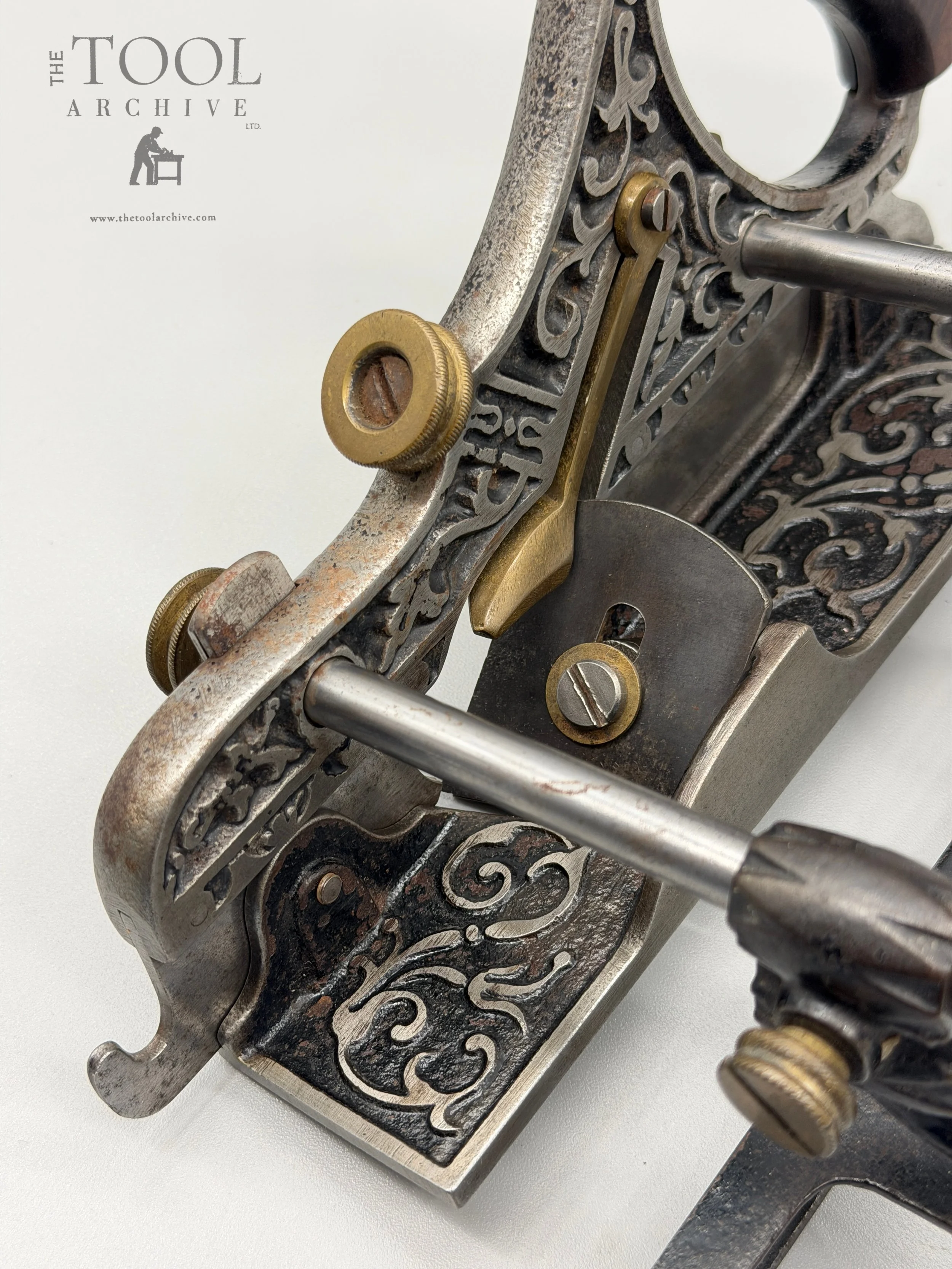
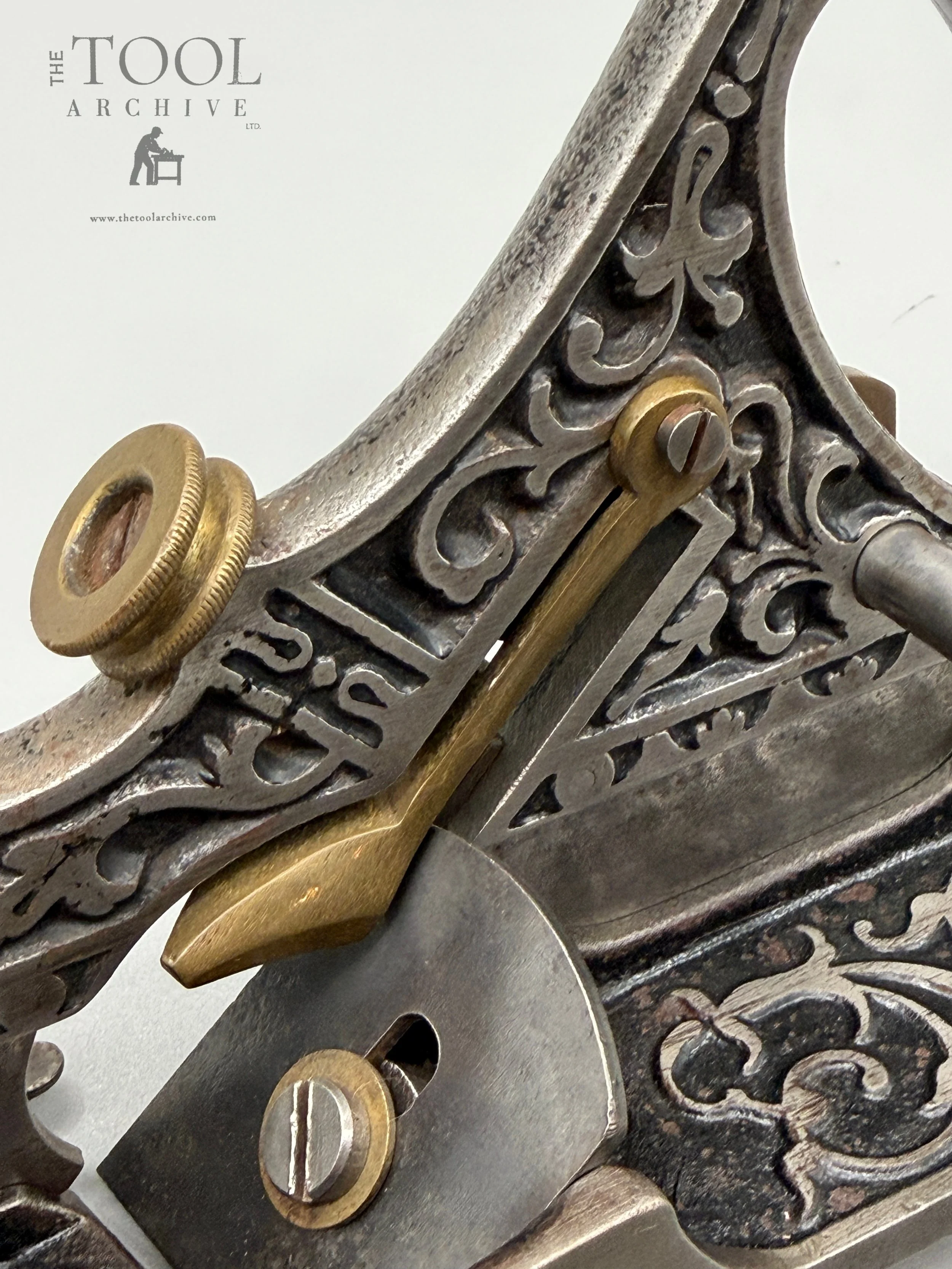
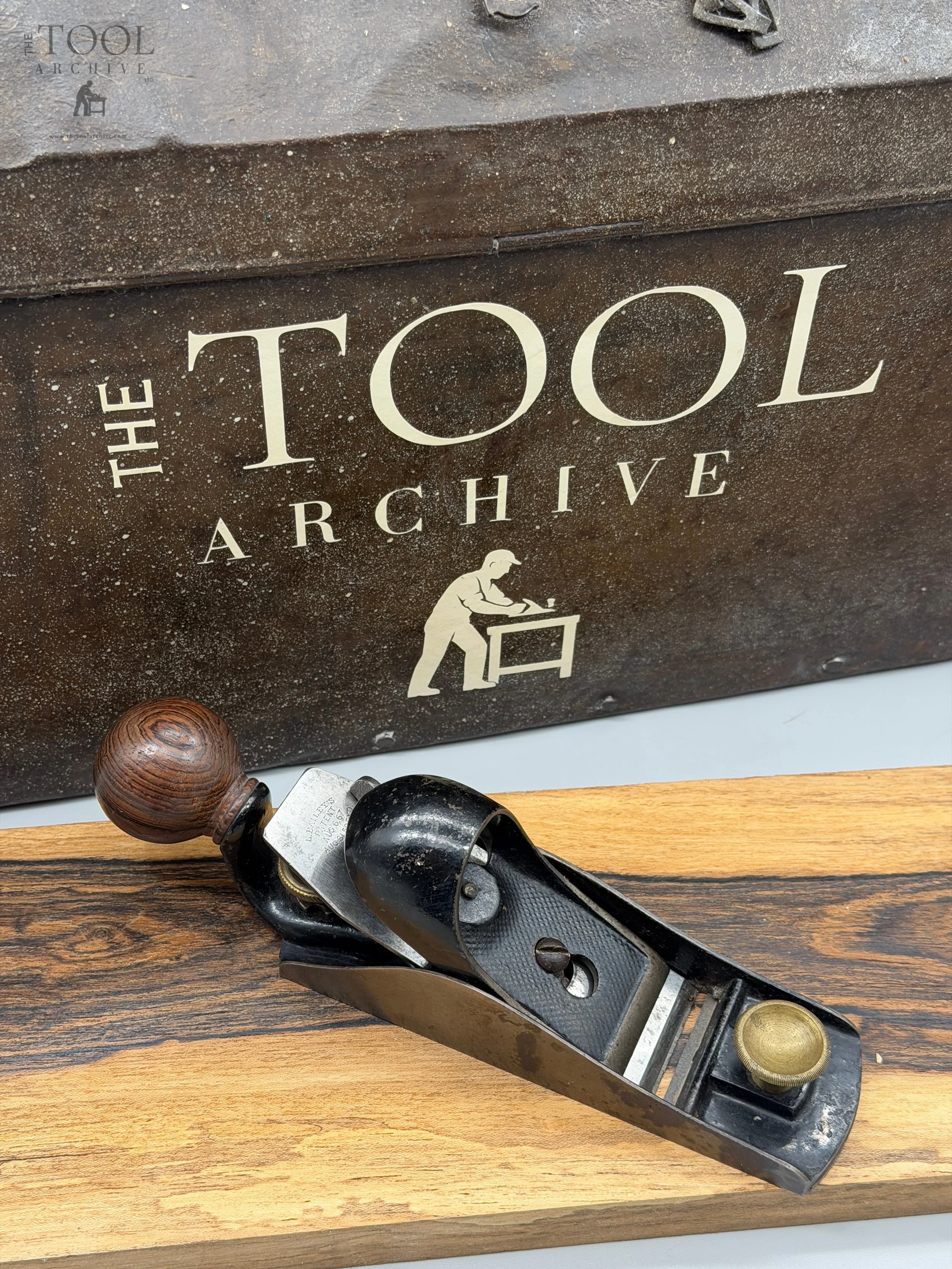
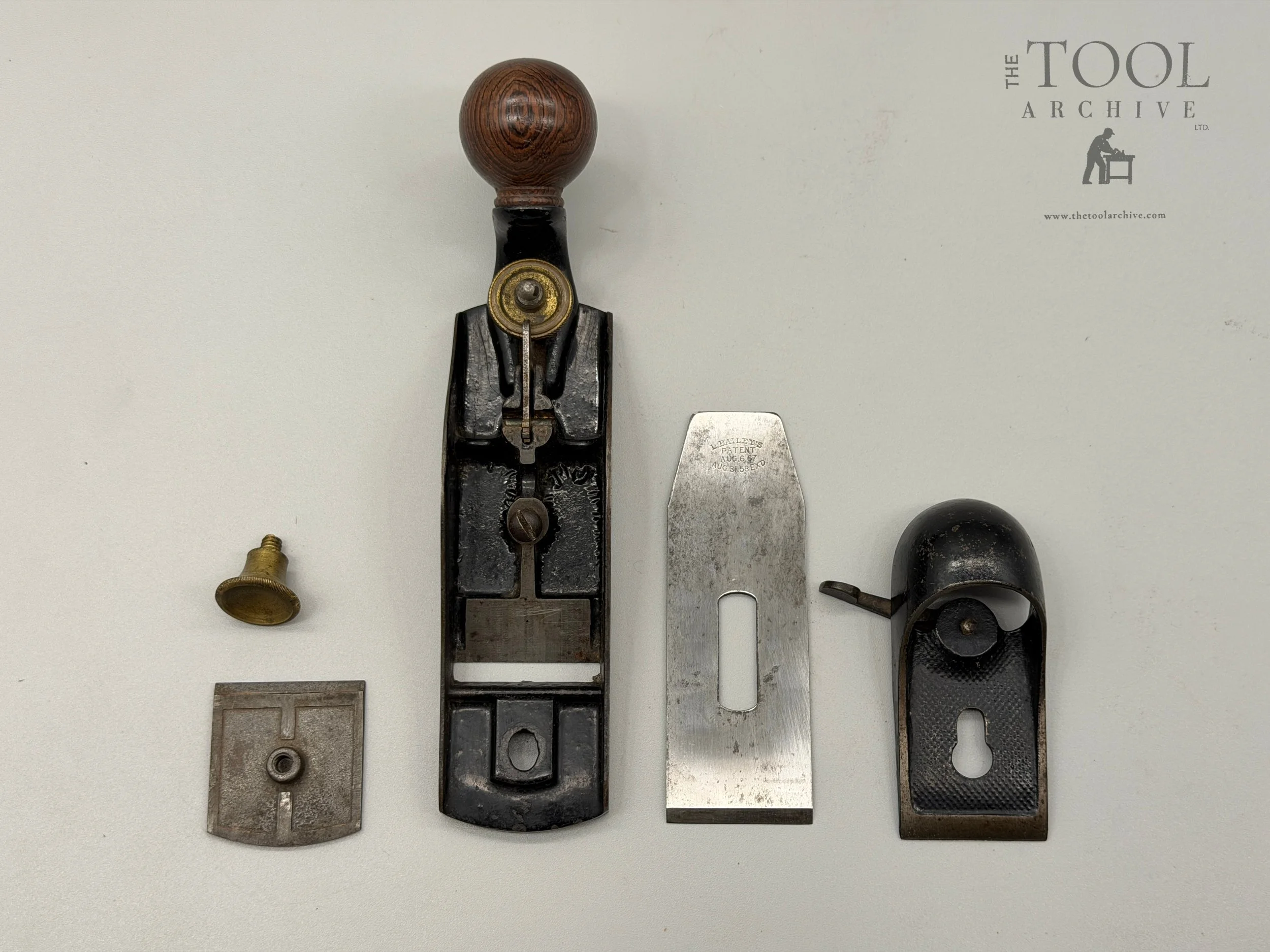
The No. 9-3/4 was essentially Stanley's No. 9-1/2 adjustable-mouth block plane with the addition of the removable rear handle, and early examples are considerably scarcer than their tailless relatives.
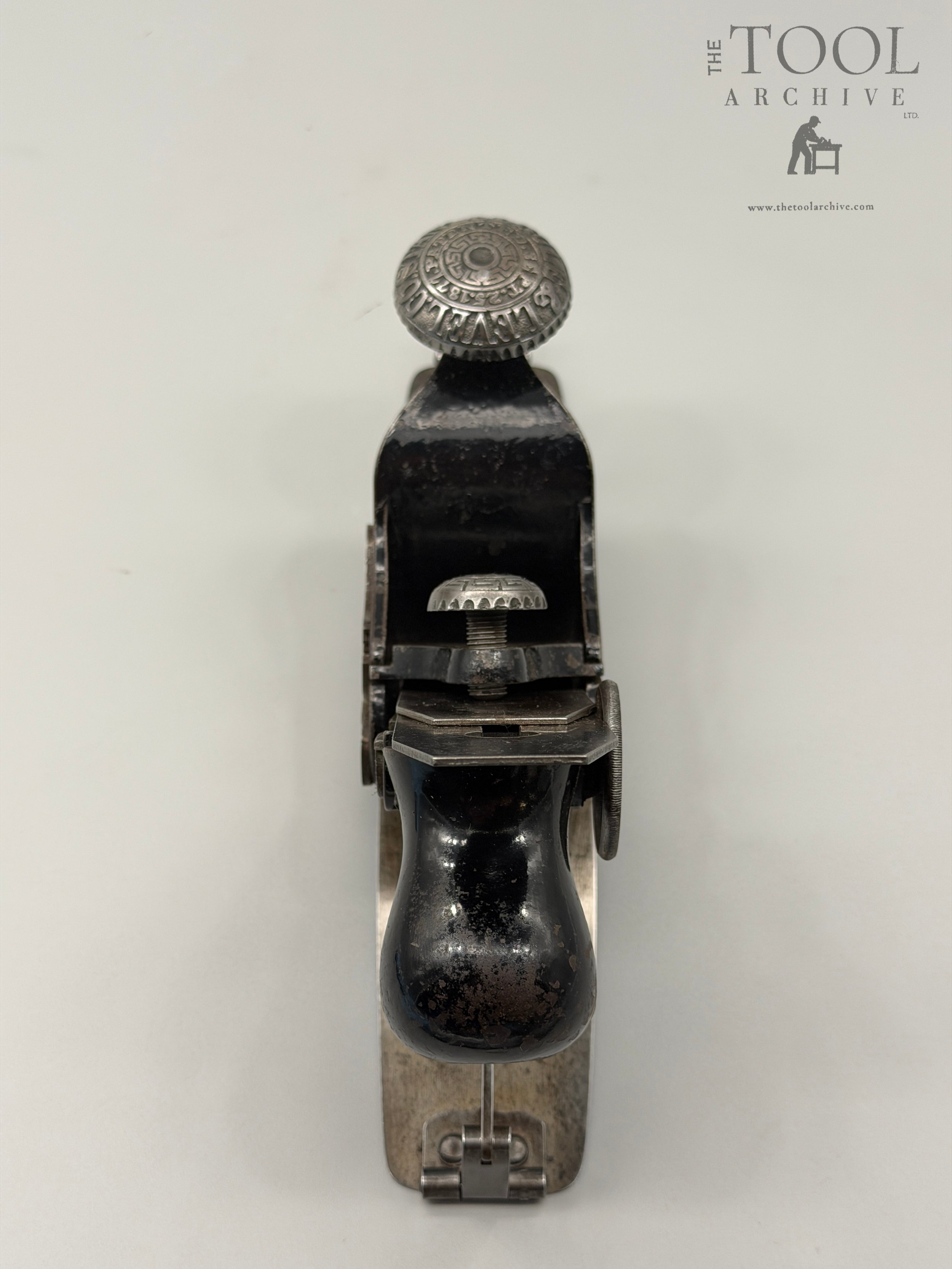
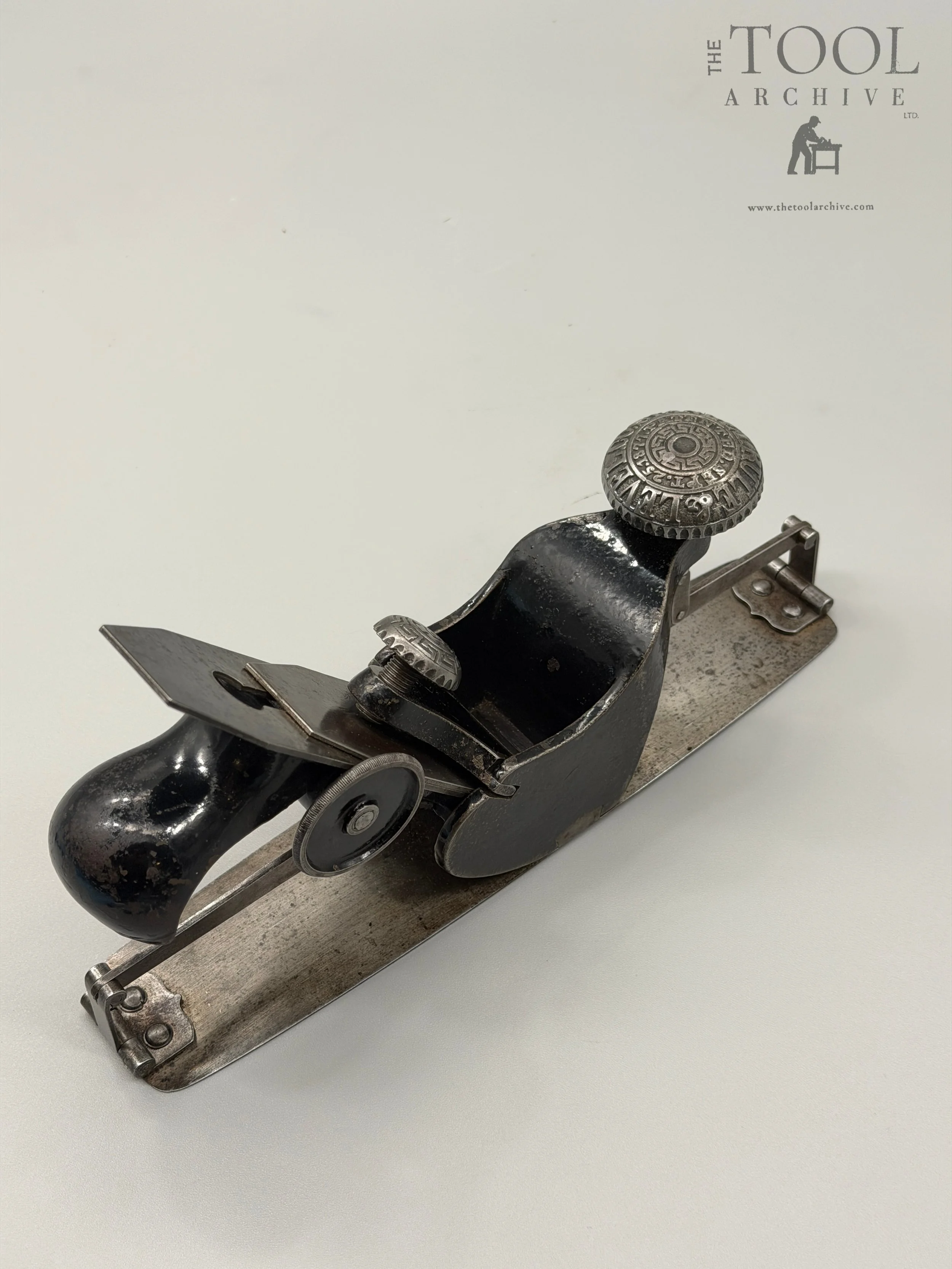
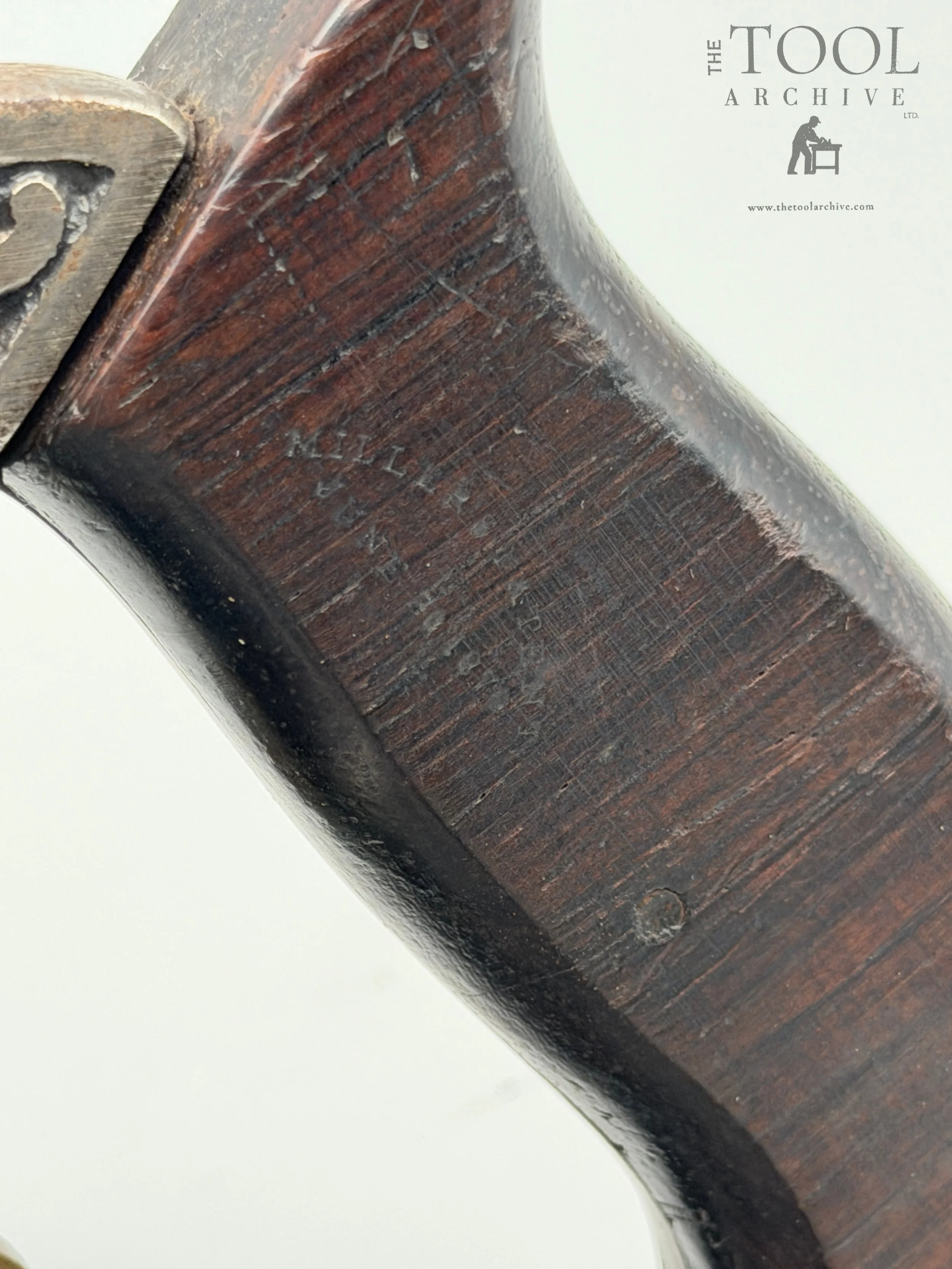
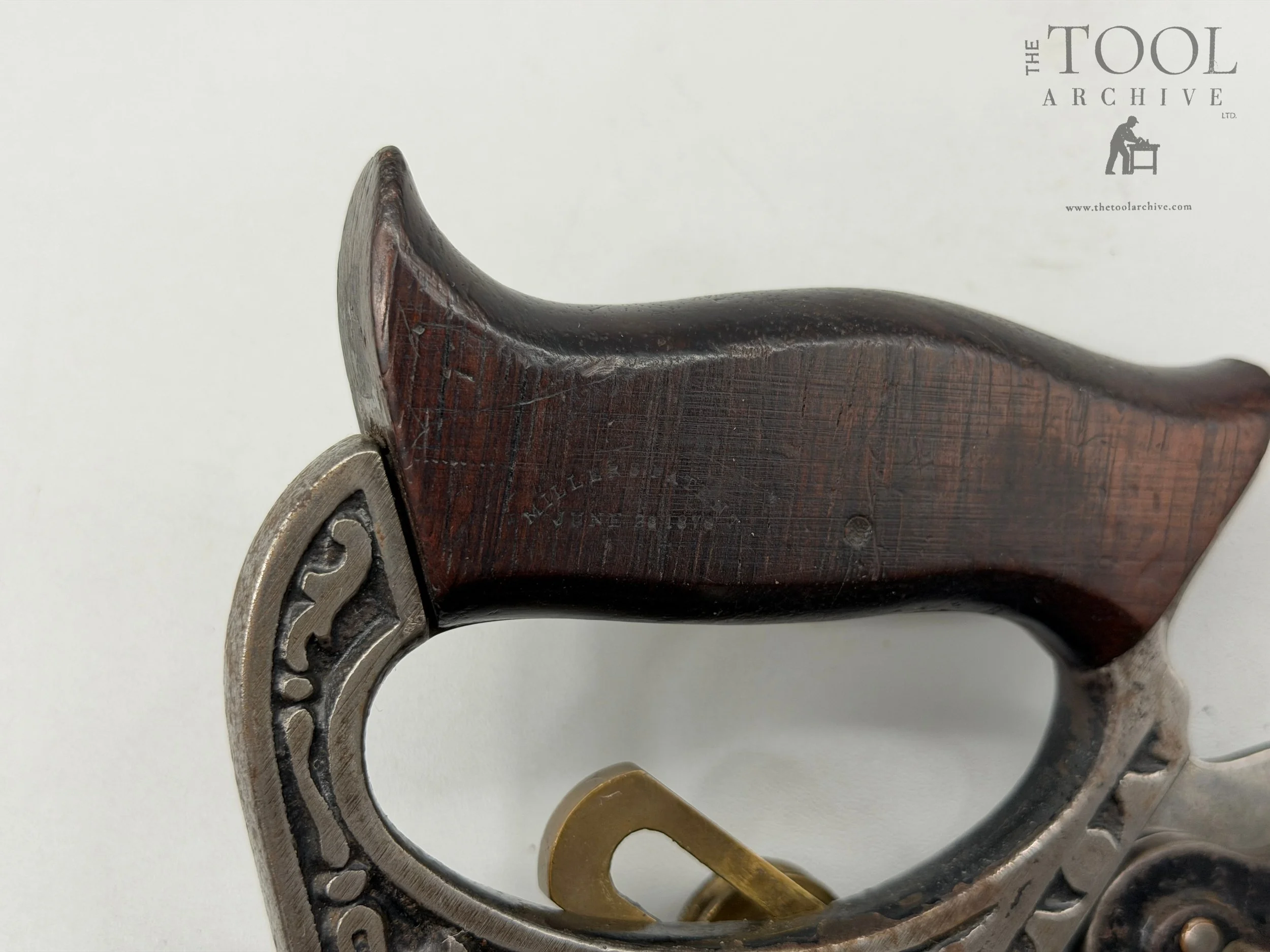
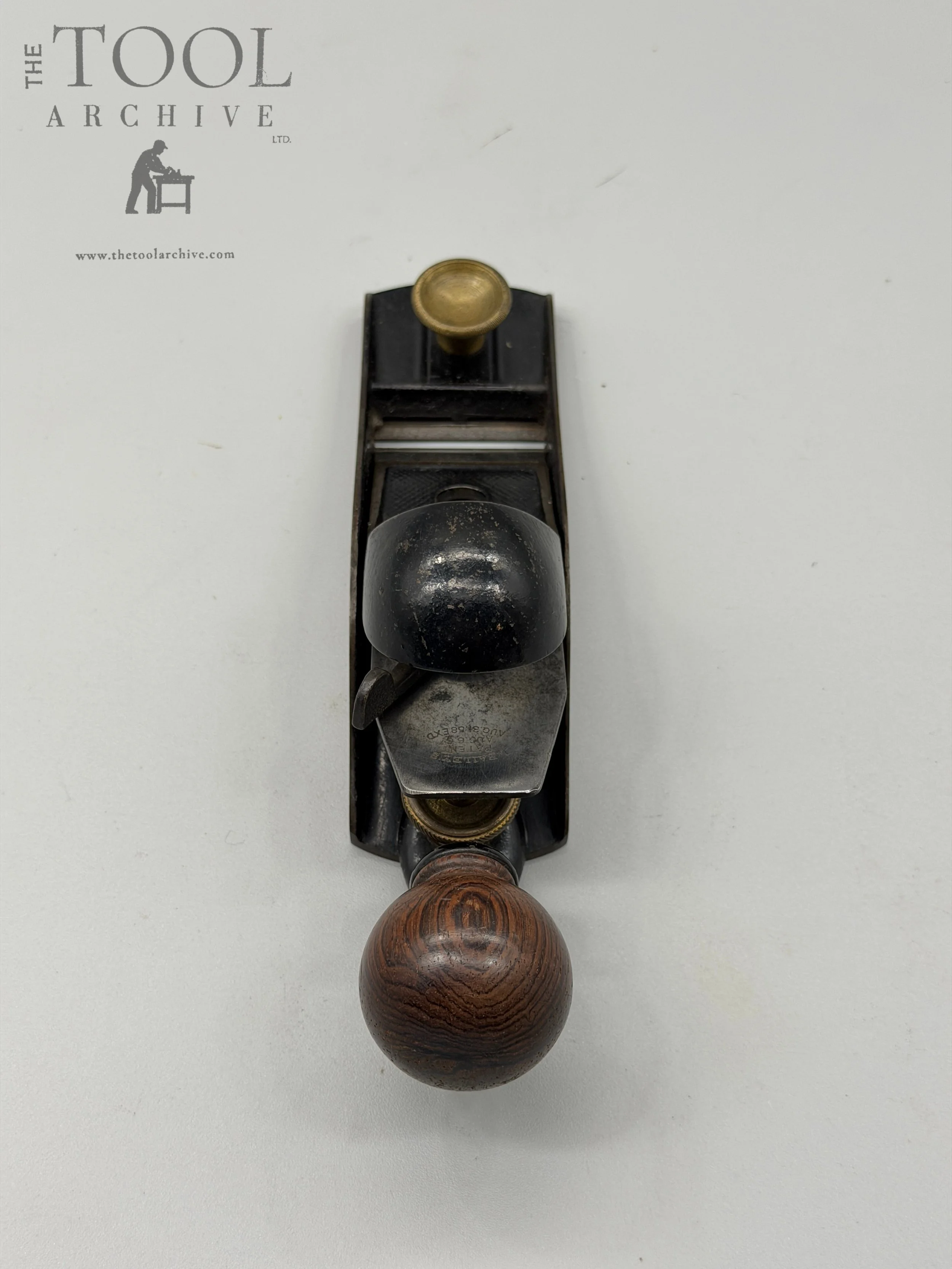
About the tail. At some point Stanley looked at a perfectly respectable little block plane and apparently thought, you know what this needs? More plane. So they bolted an iron appendage onto its backside, stuck a rosewood ball on the end, and sent it out into the world with a tail. Not a tote. That would be normal. A tail.
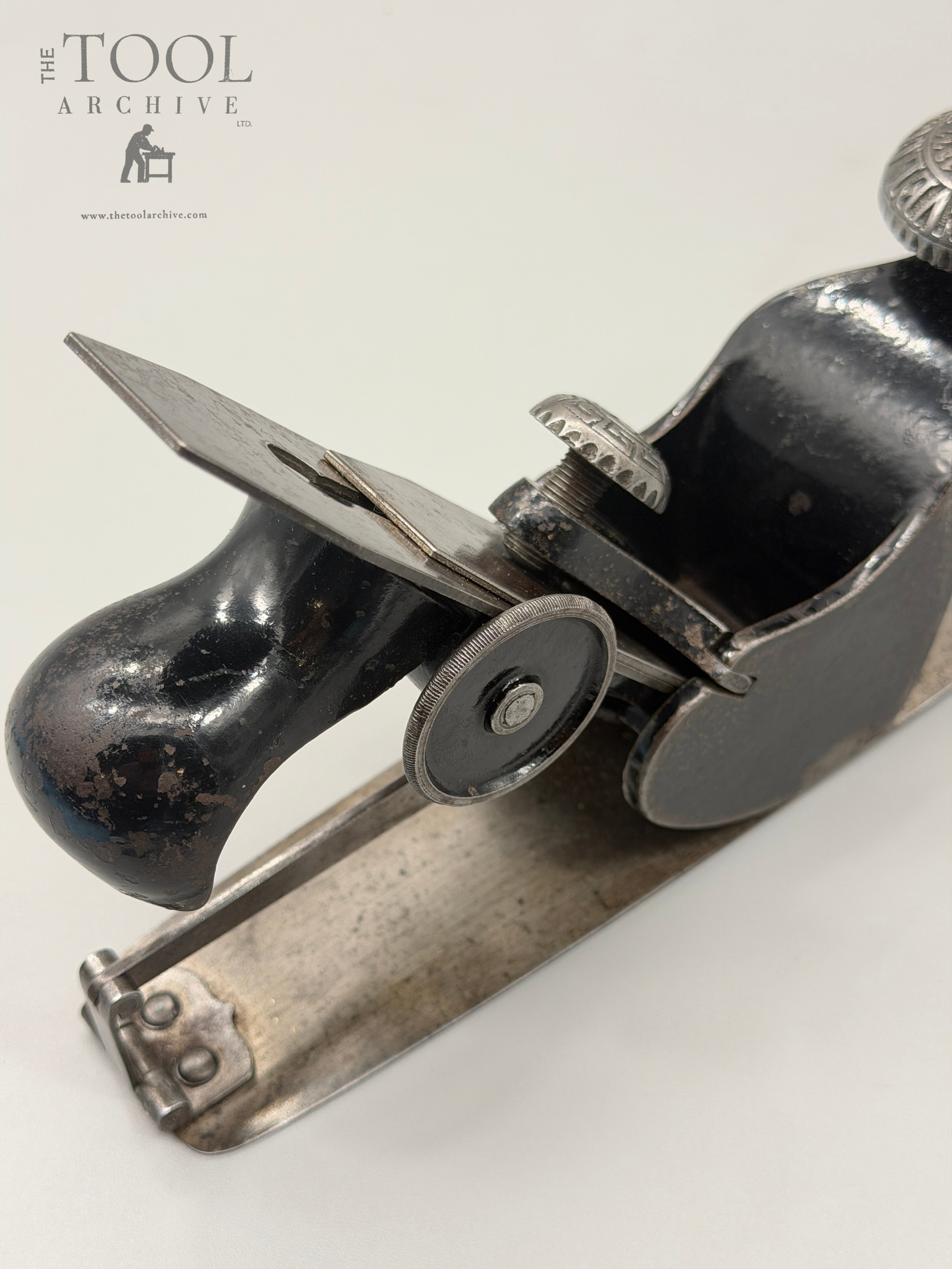
The tail did have a legitimate purpose, though: it gave the user a rear grip on a plane normally operated in the palm, and it can be removed if you prefer your block planes to observe conventional anatomical boundaries.
But why would you?
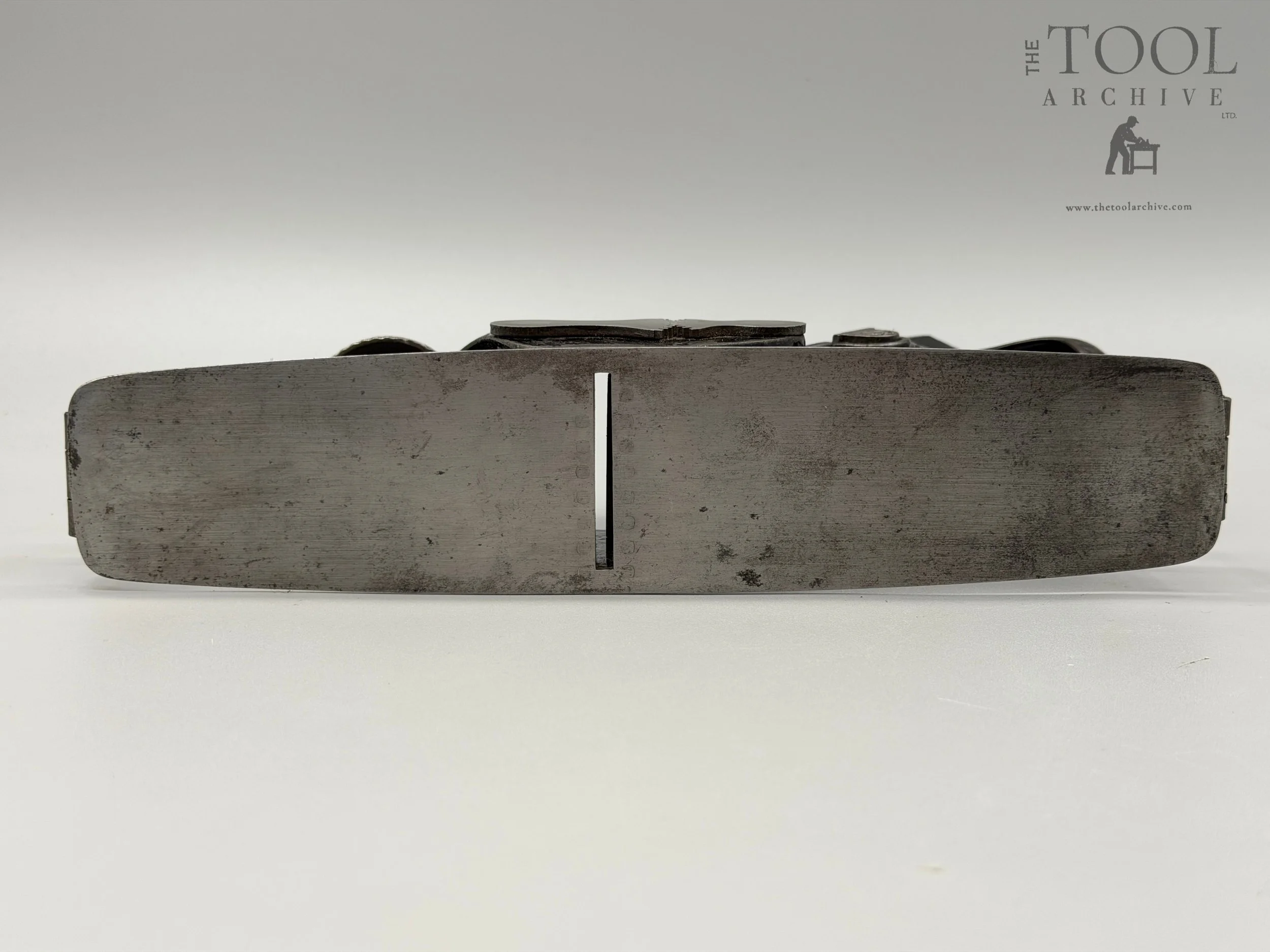
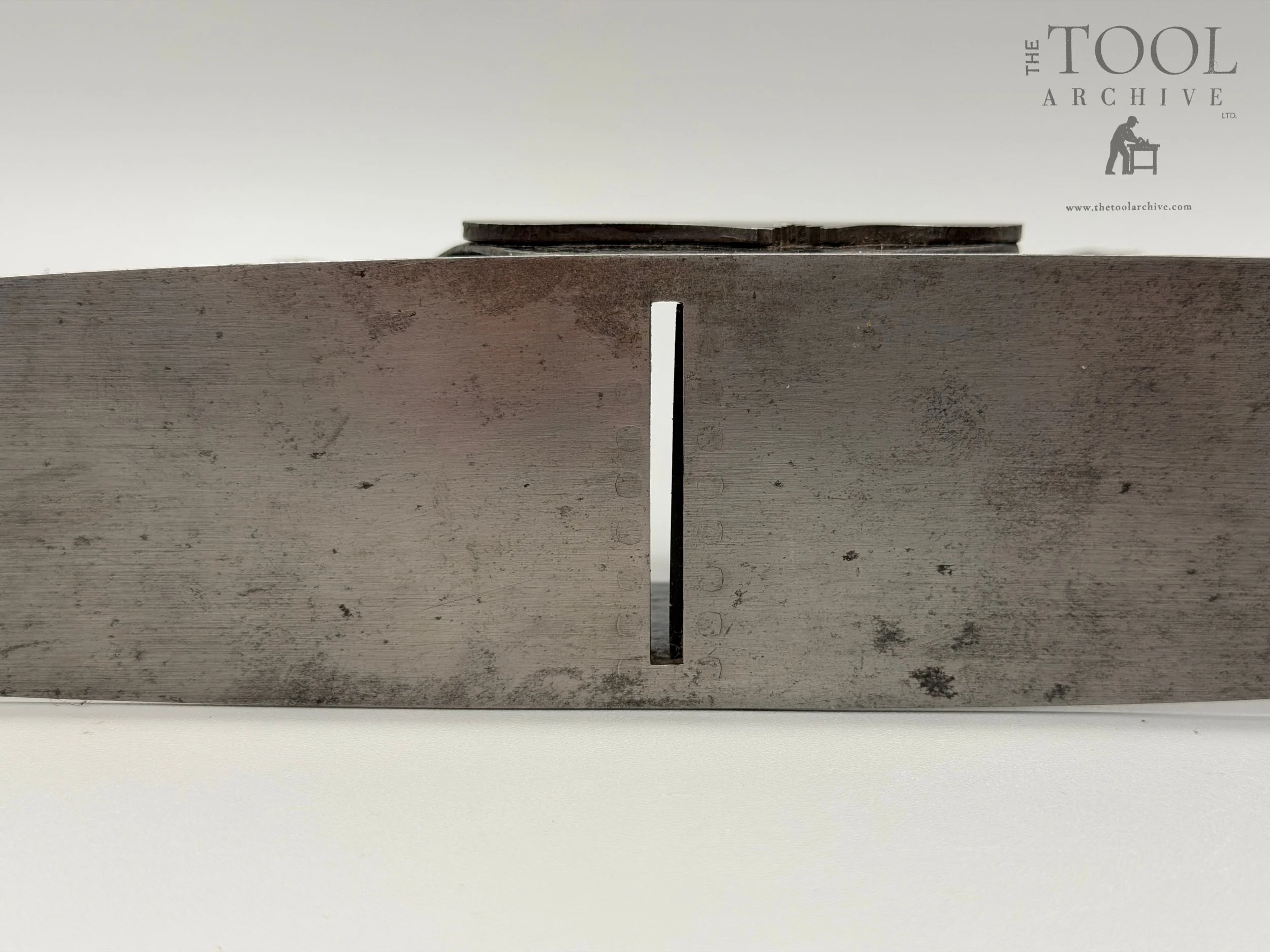
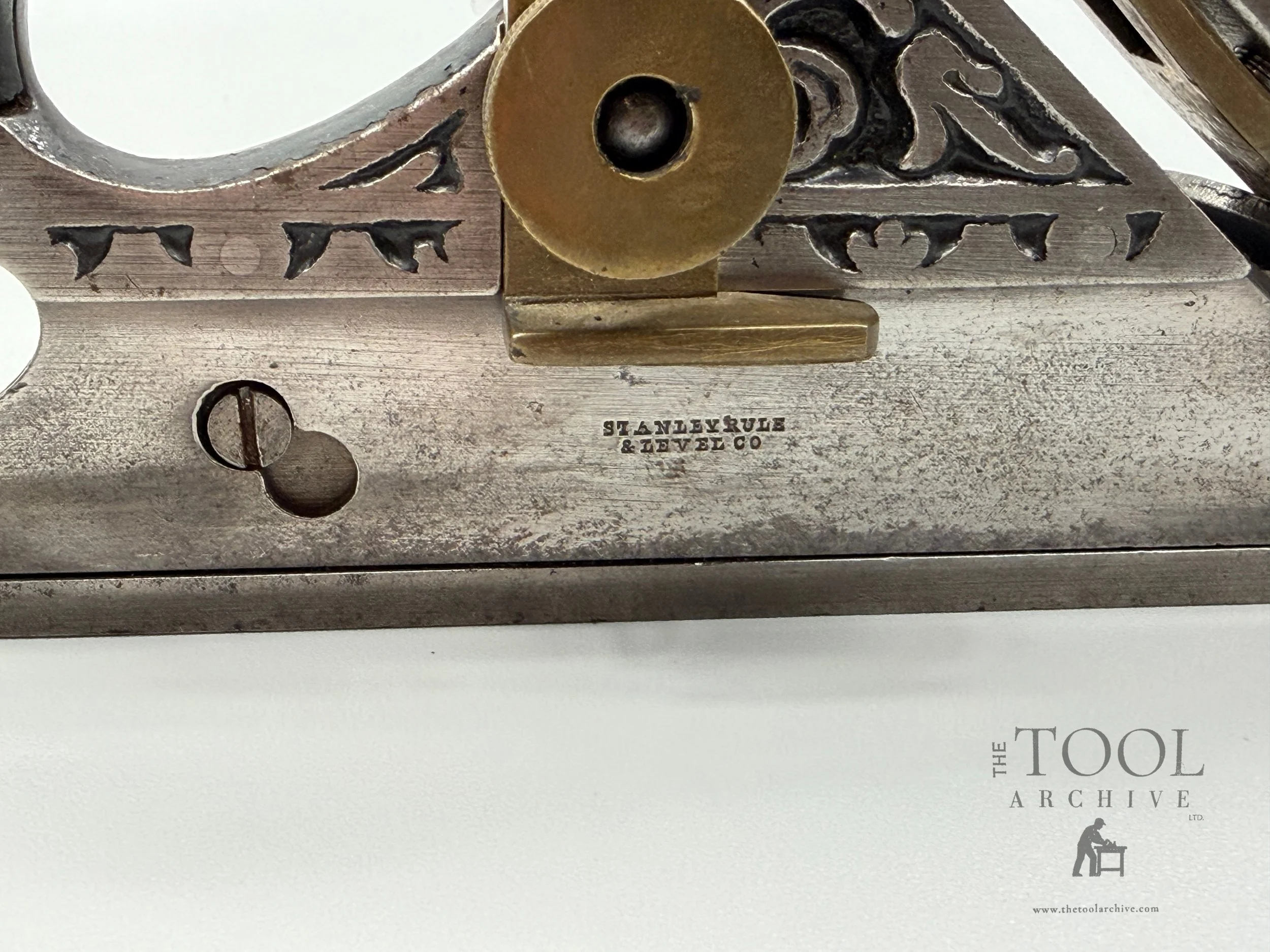
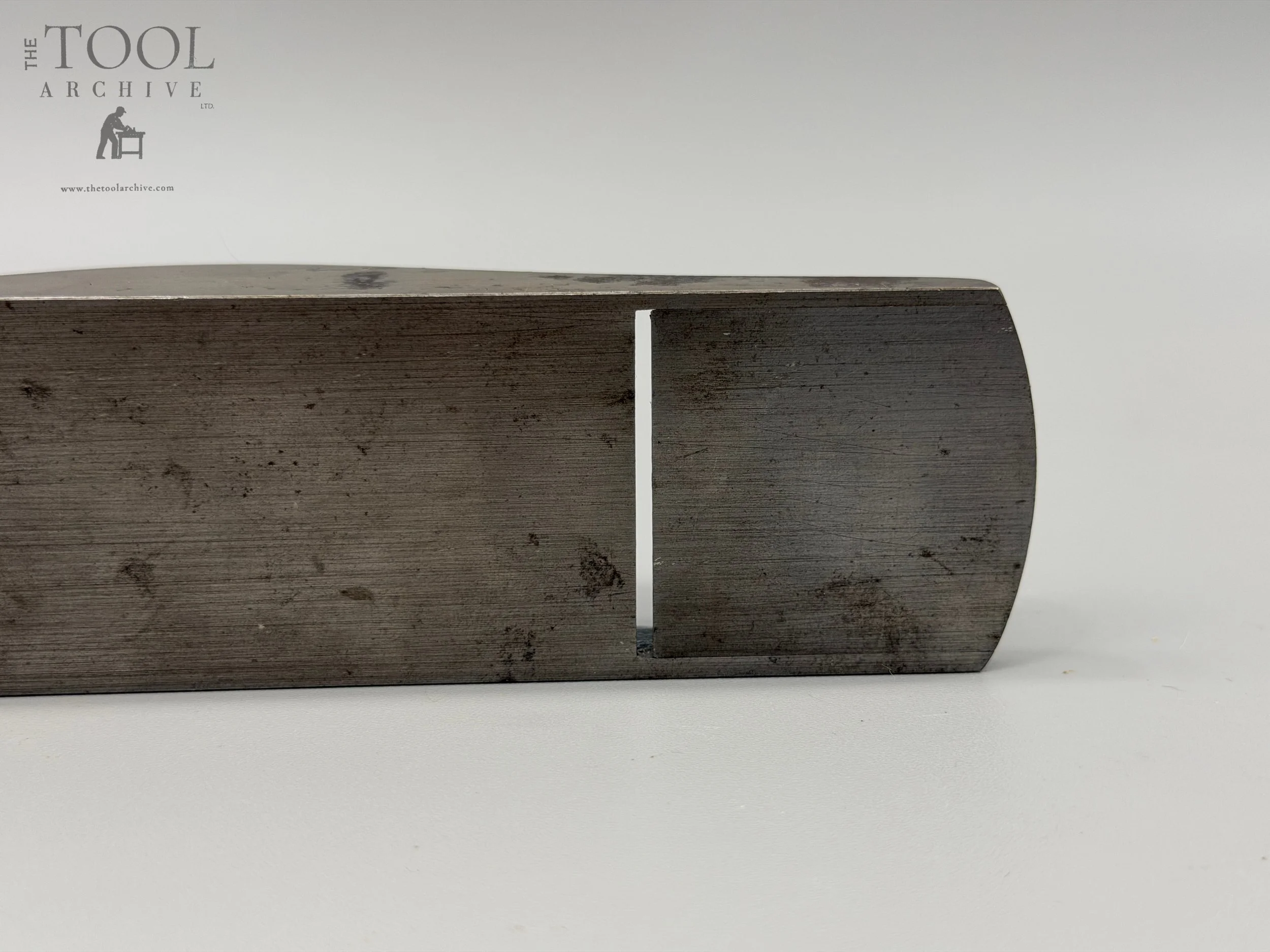
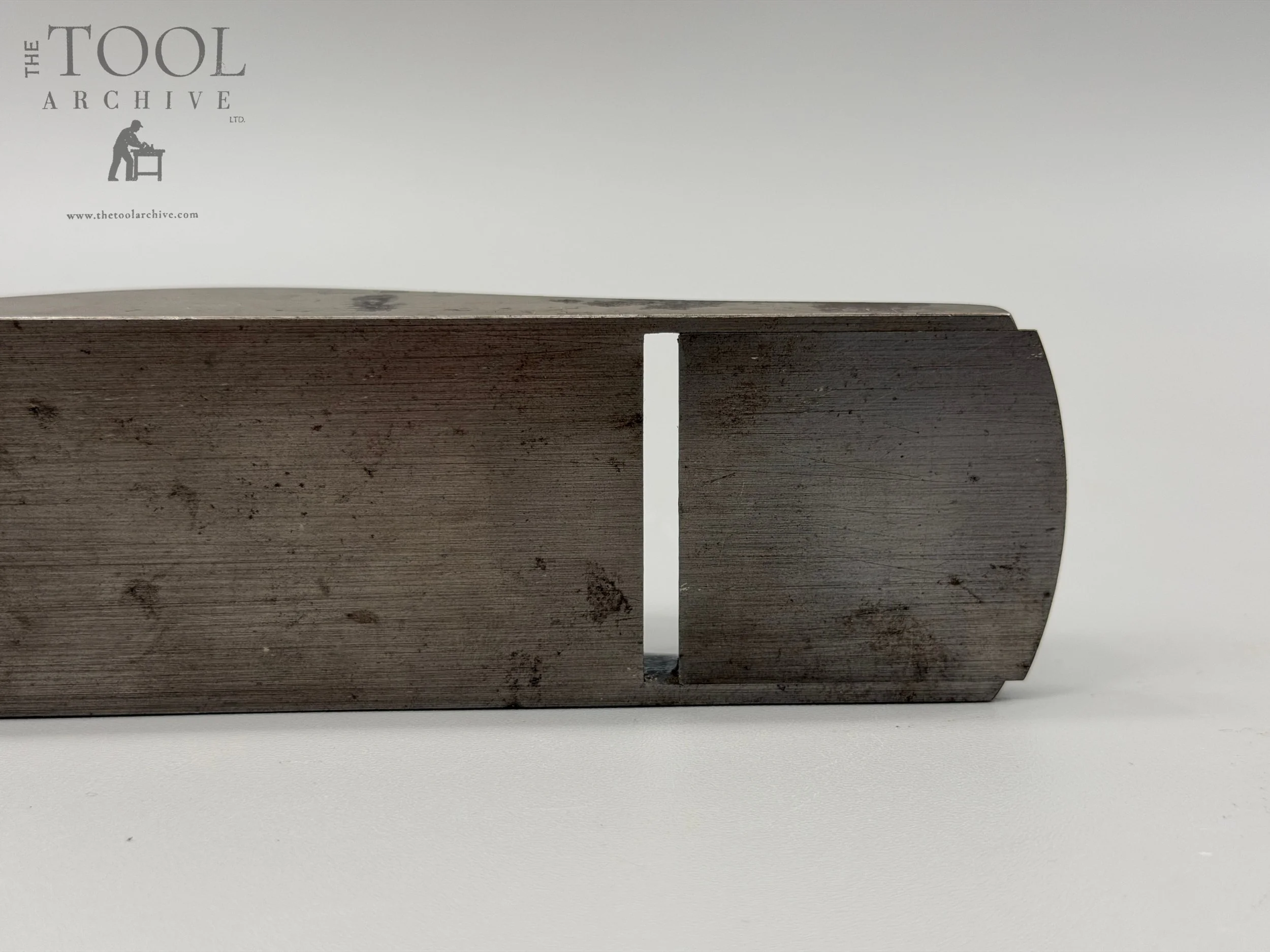
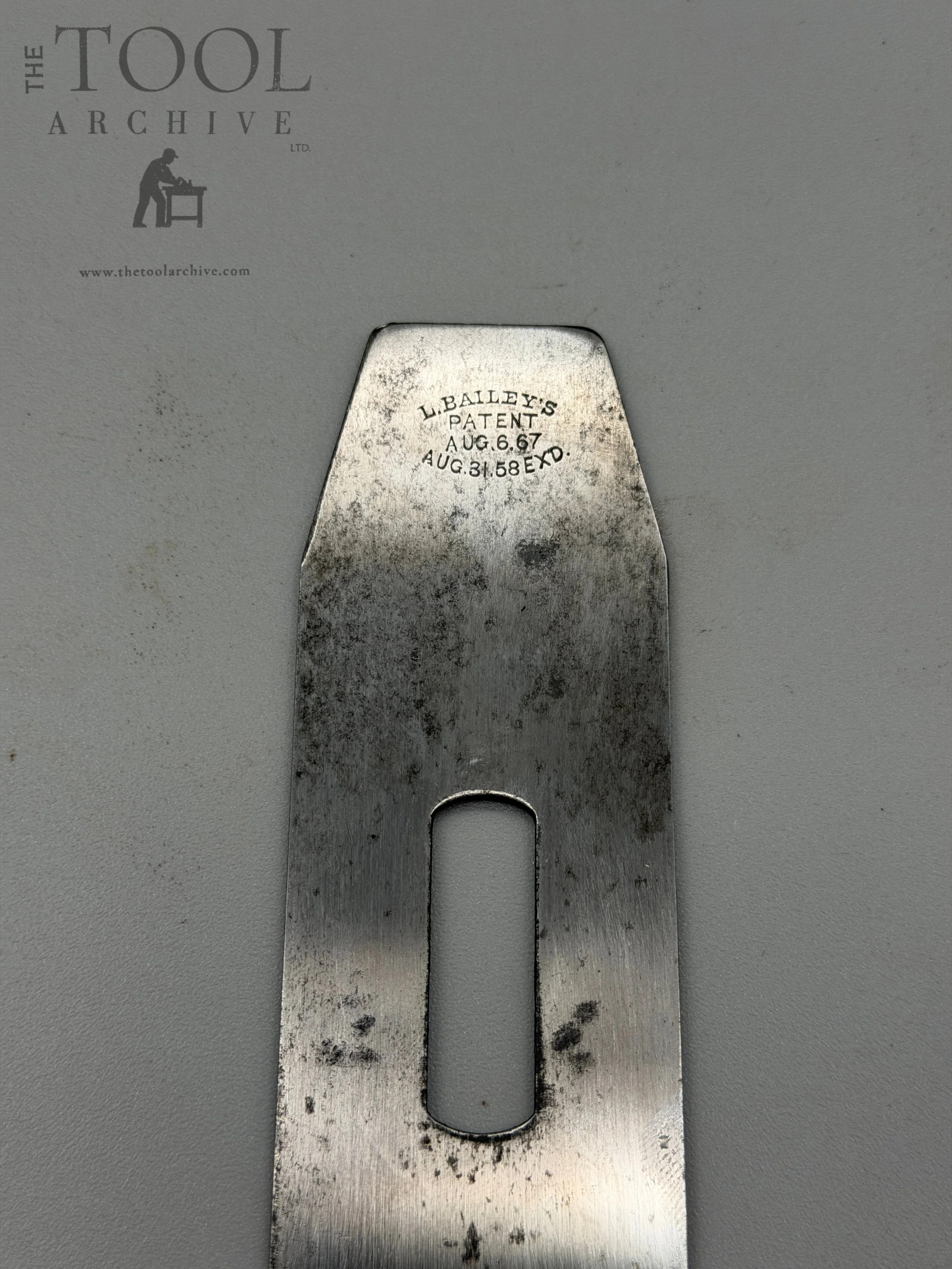
It appears to be a Type 8 (Walter), which, if correct, would make it the last pre-lateral type before Staley added the lateral adjuster on Type 8A. Regardless, it is an exceptionally nice example—complete, undamaged, with about 95% of its original black japanning remaining . So while we have spent most of this description questioning the wisdom of giving a block plane a tail, we should probably mention that this is a genuinely scarce, 100+year-old Stanley in remarkable condition.
Ships to you carefully packed and insured just in case.