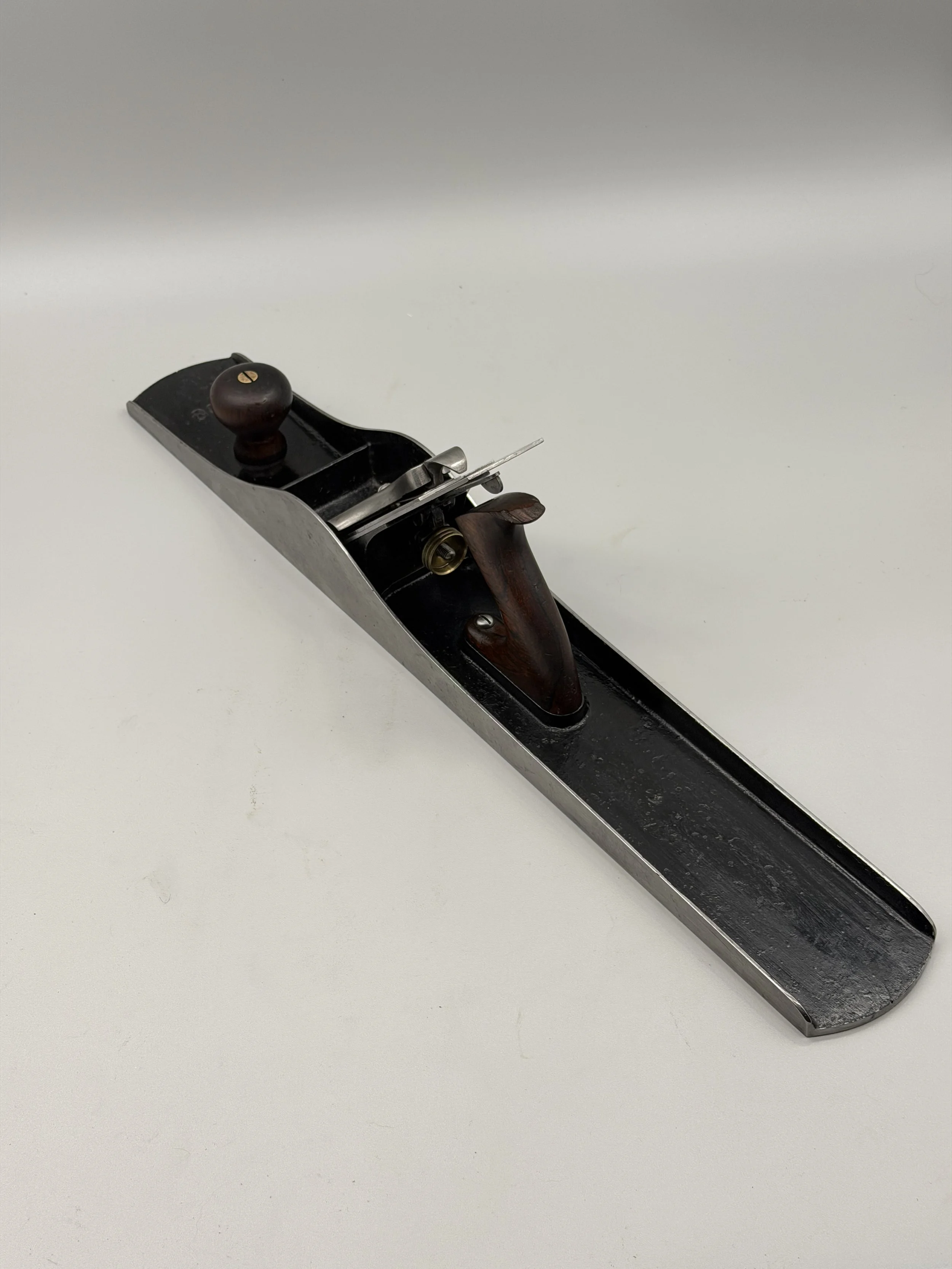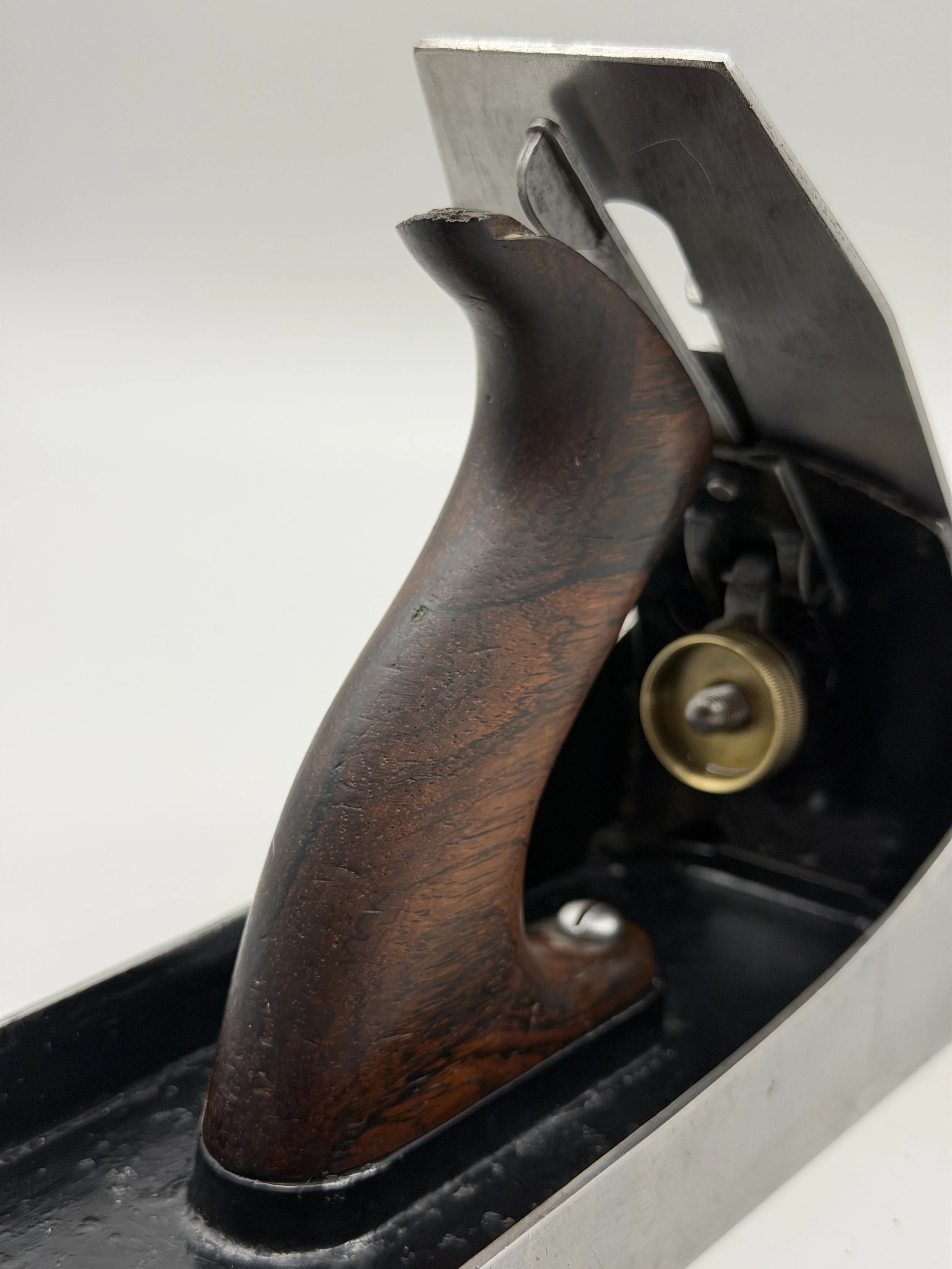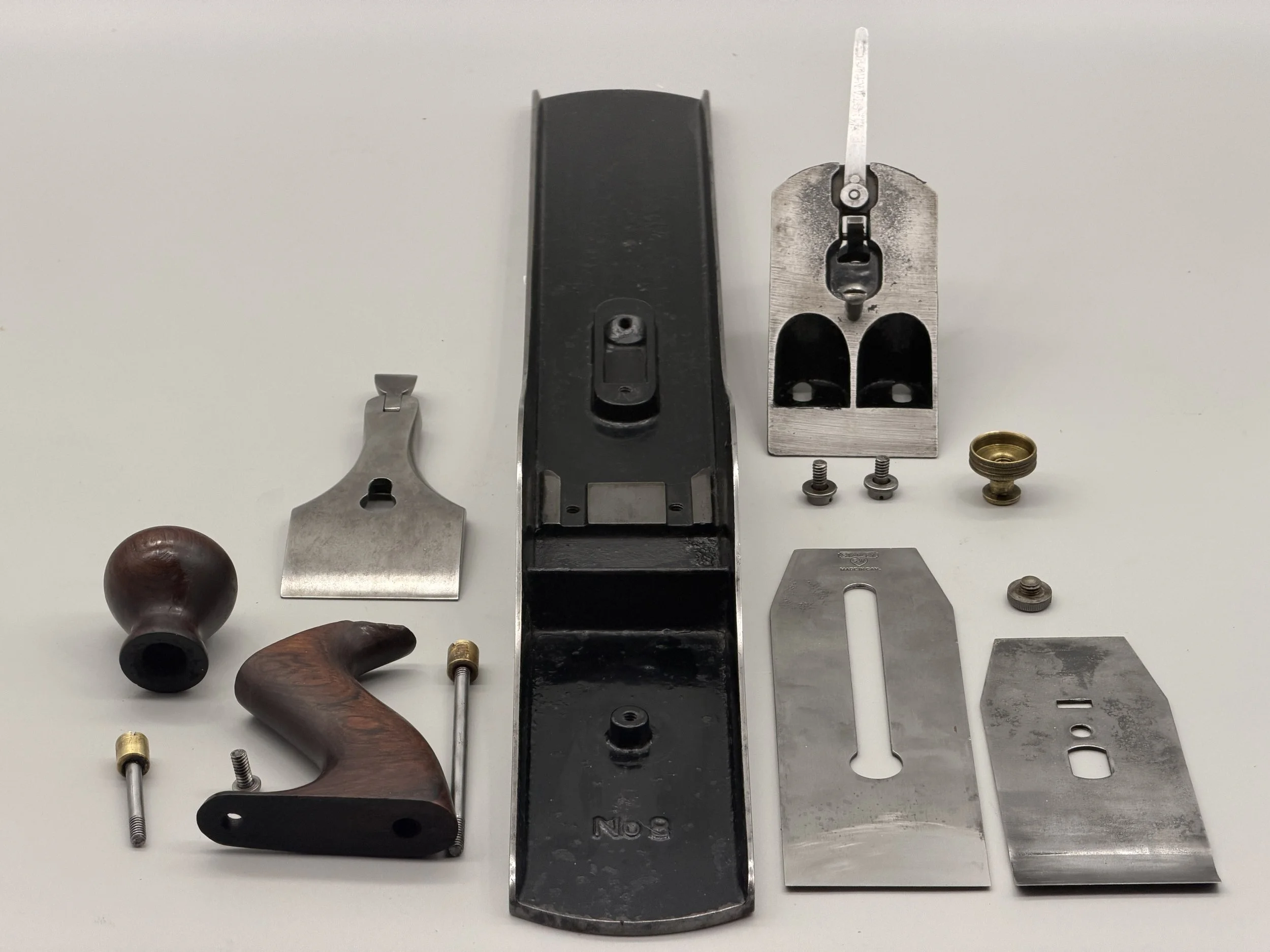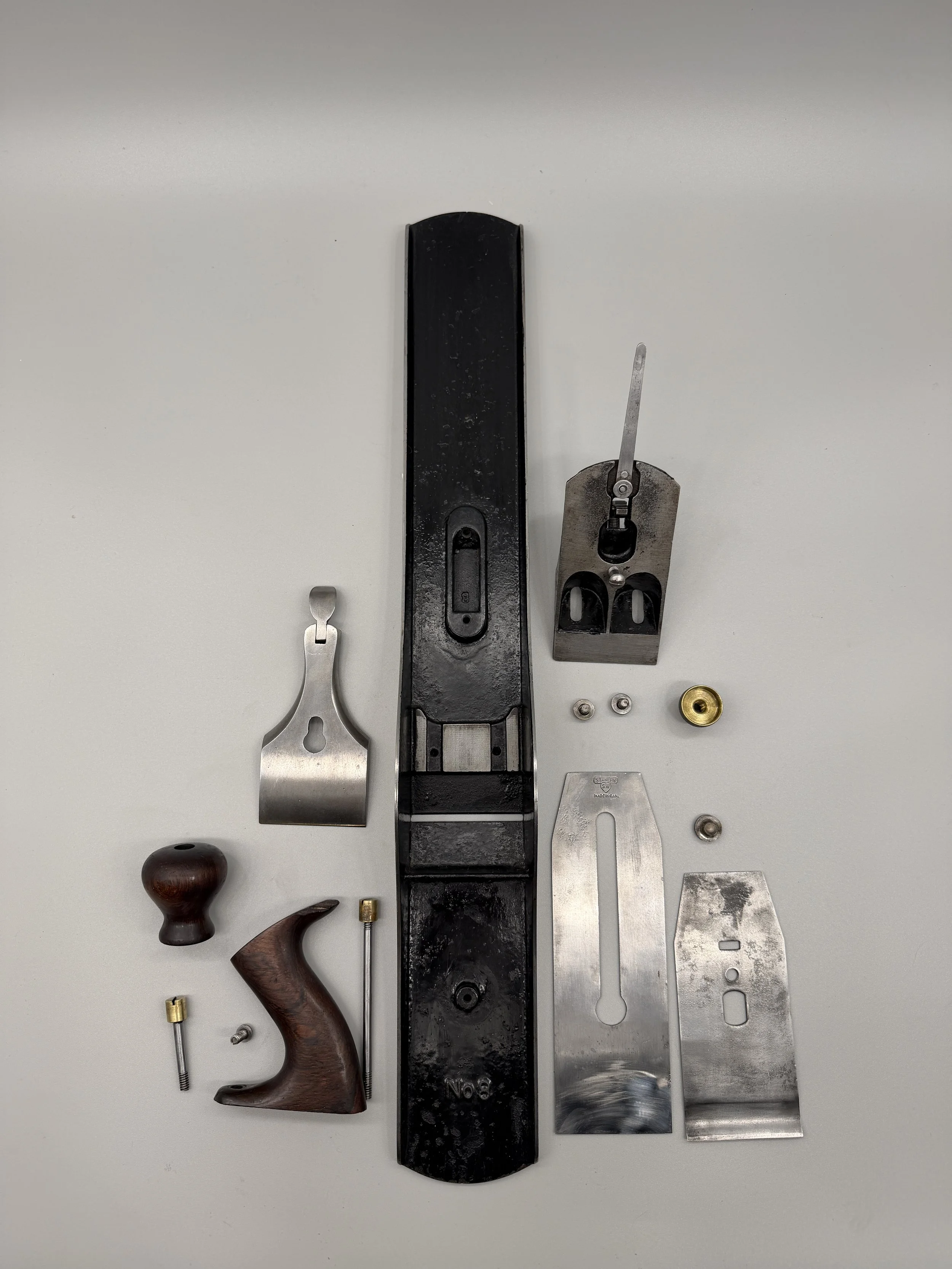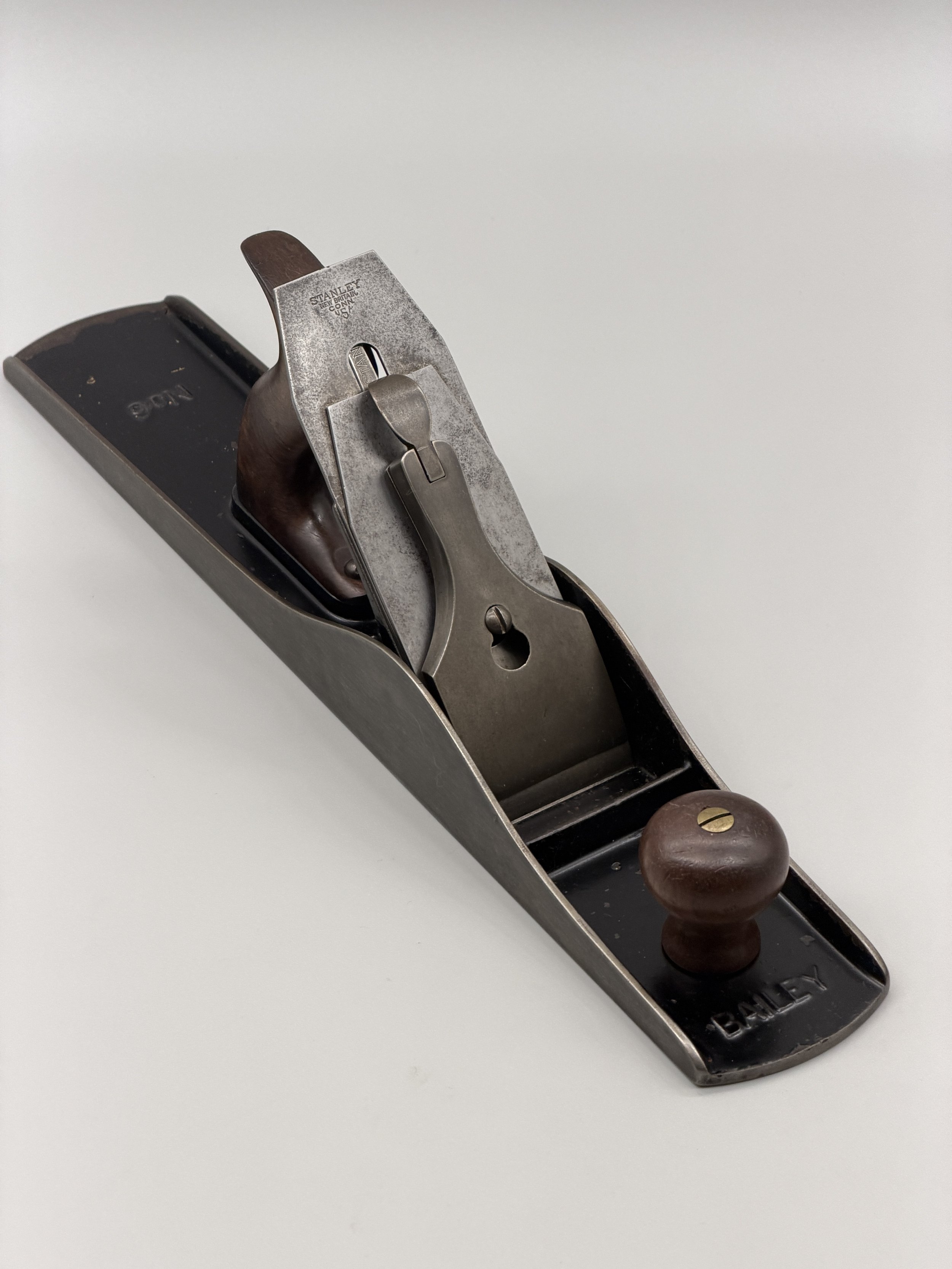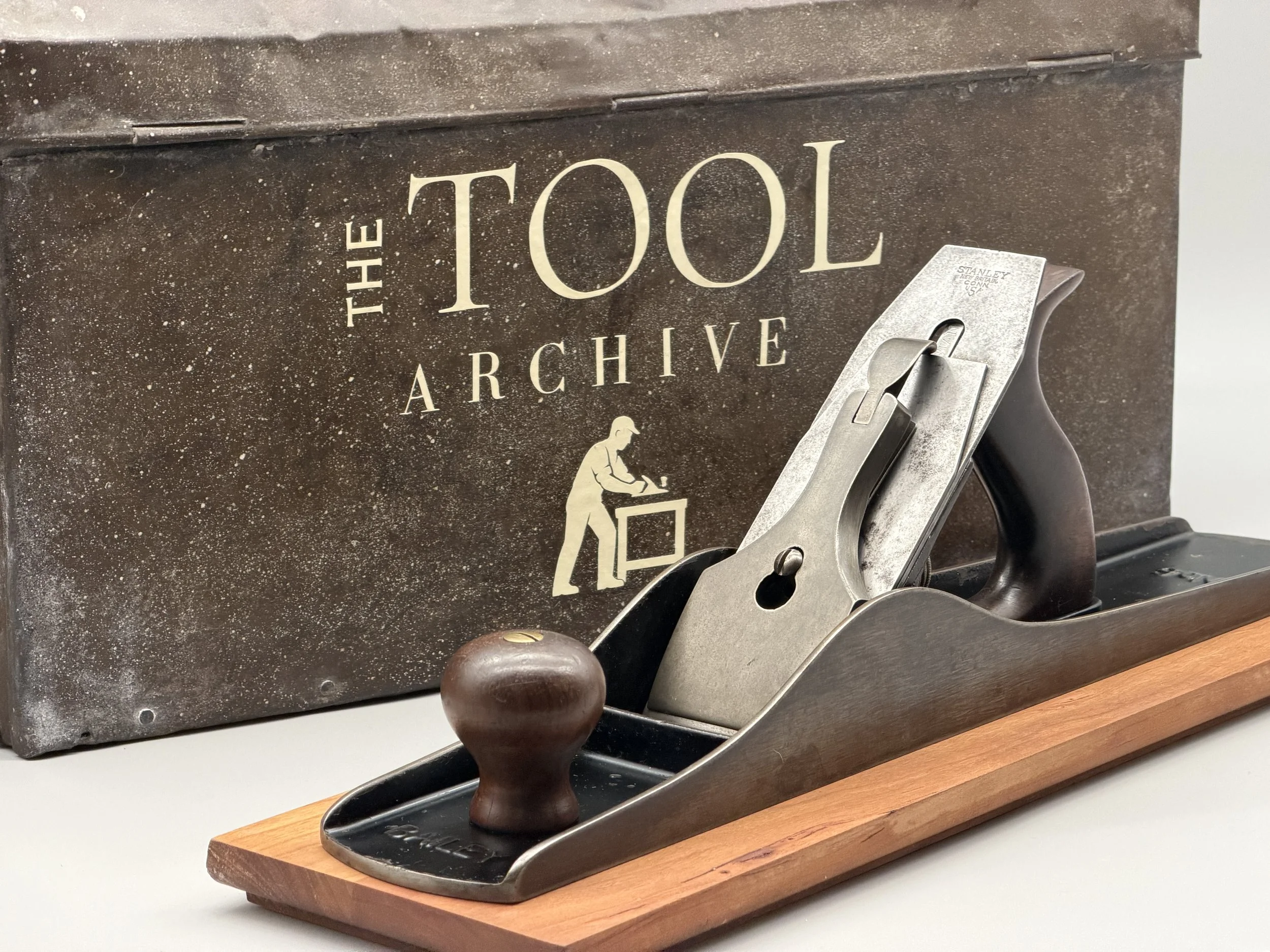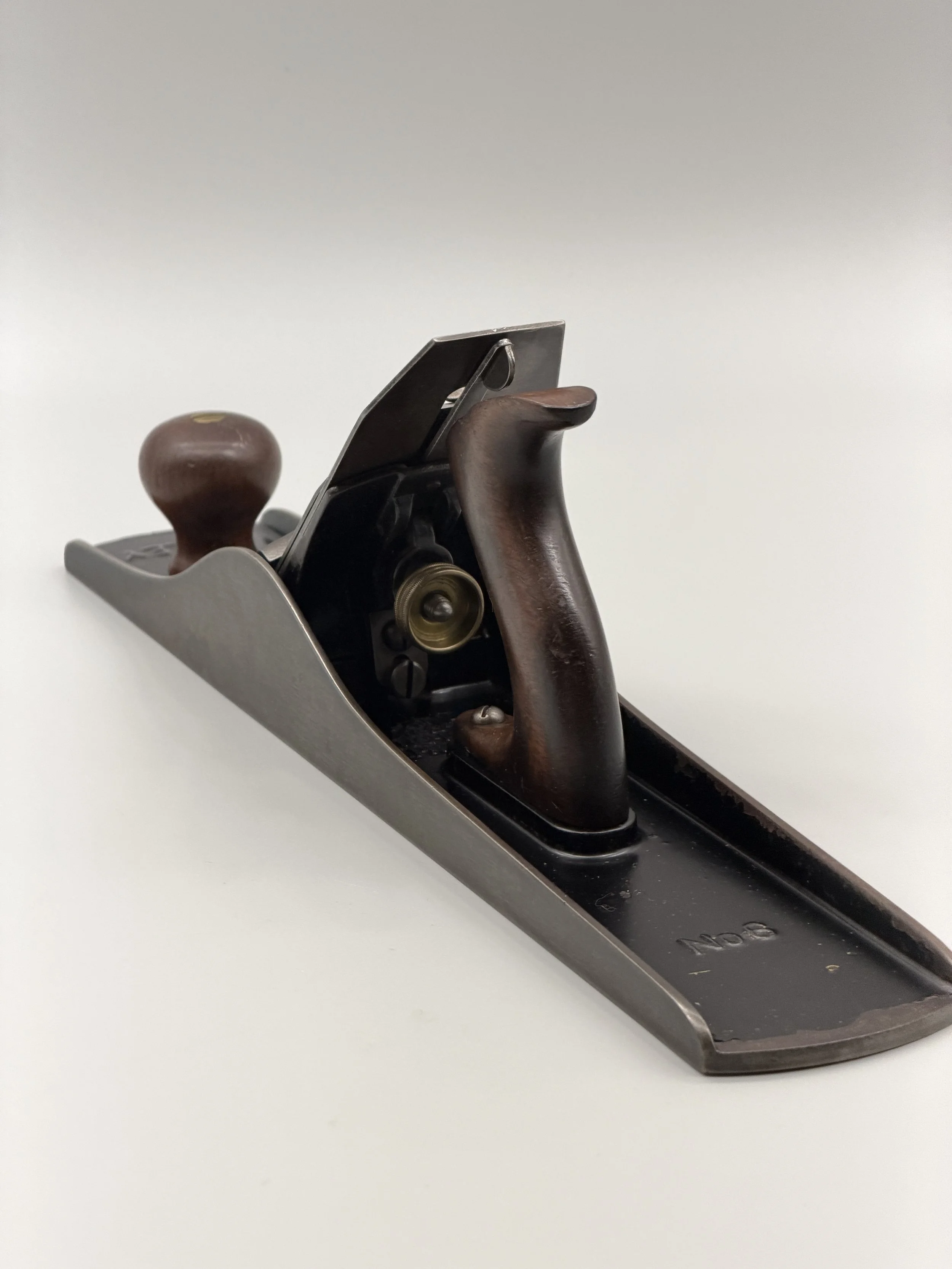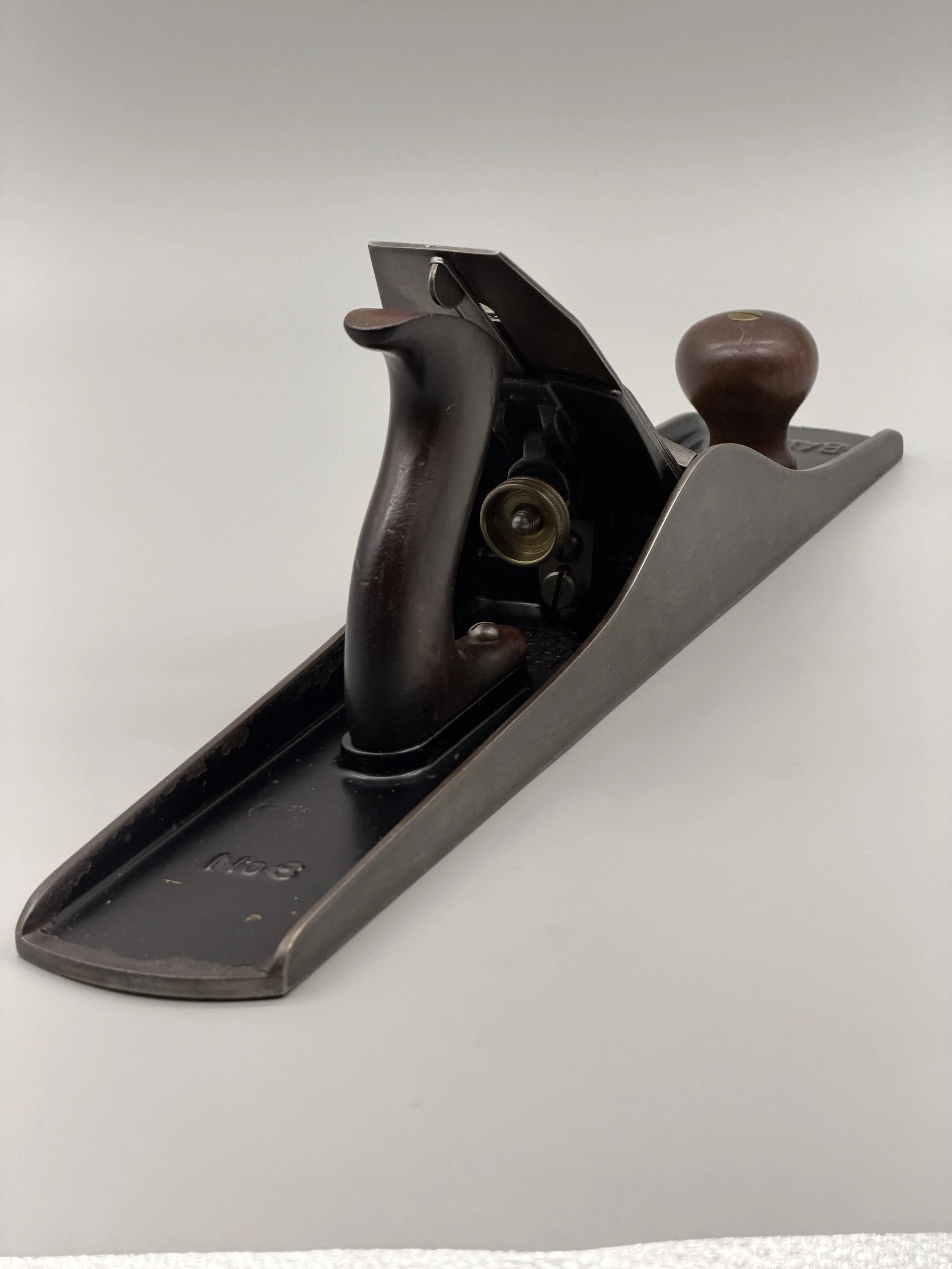
Stanley’s aluminum series of planes is one of the most intriguing in the seemingly endless catalog of the tool giant’s products. The goal when Stanley developed the aluminum planes was to reduce weight and, so the thinking went, reduce the woodworker’s fatigue from planing for extended periods of time. Sort of makes sense, and why not? So Stanley pioneered a cutting-edge manufacturing process that could take any regular-sized roll of aluminum foil (brand apparently did not matter), six empty 12 oz. beer cans (again, brand not relevant), and a cheap anodized aluminum carabiner and transform those raw materials into an aluminum block plane. The process evidently involved intense compression followed by decompression, elongation, curing, and final milling. Imagine that! You stick some random aluminum crap into a machine, and out pops an aluminum No. 18 block plane body, light as a feather. Elegant. Graceful.
Of course, nothing we just said is true. At least, we don’t have any reason to think it is true. But, as we like to say, anything’s possible! Dare to dream! We don’t really like saying those things. And now we’ve lost our train of thought. Ah, this plane!
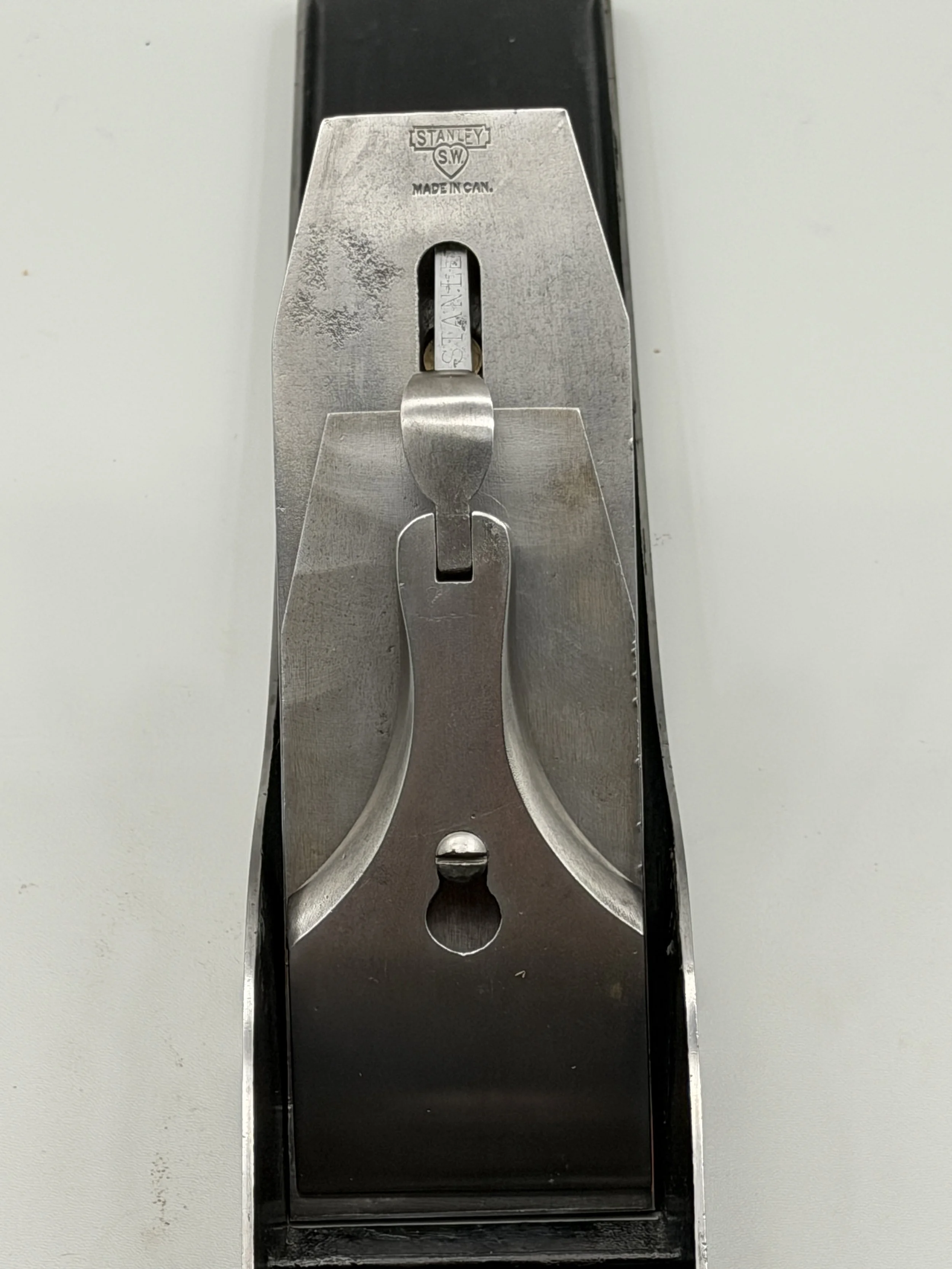
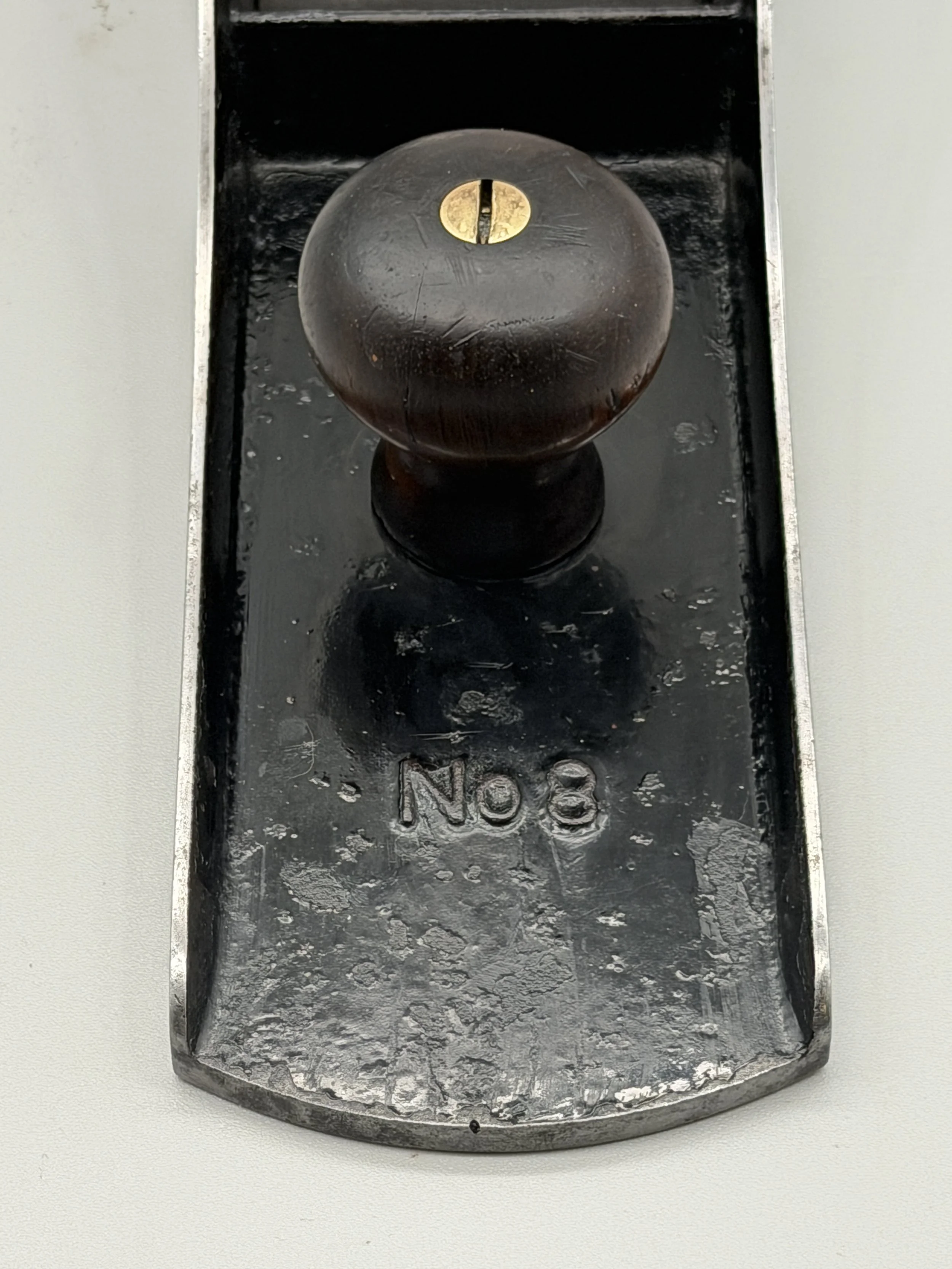
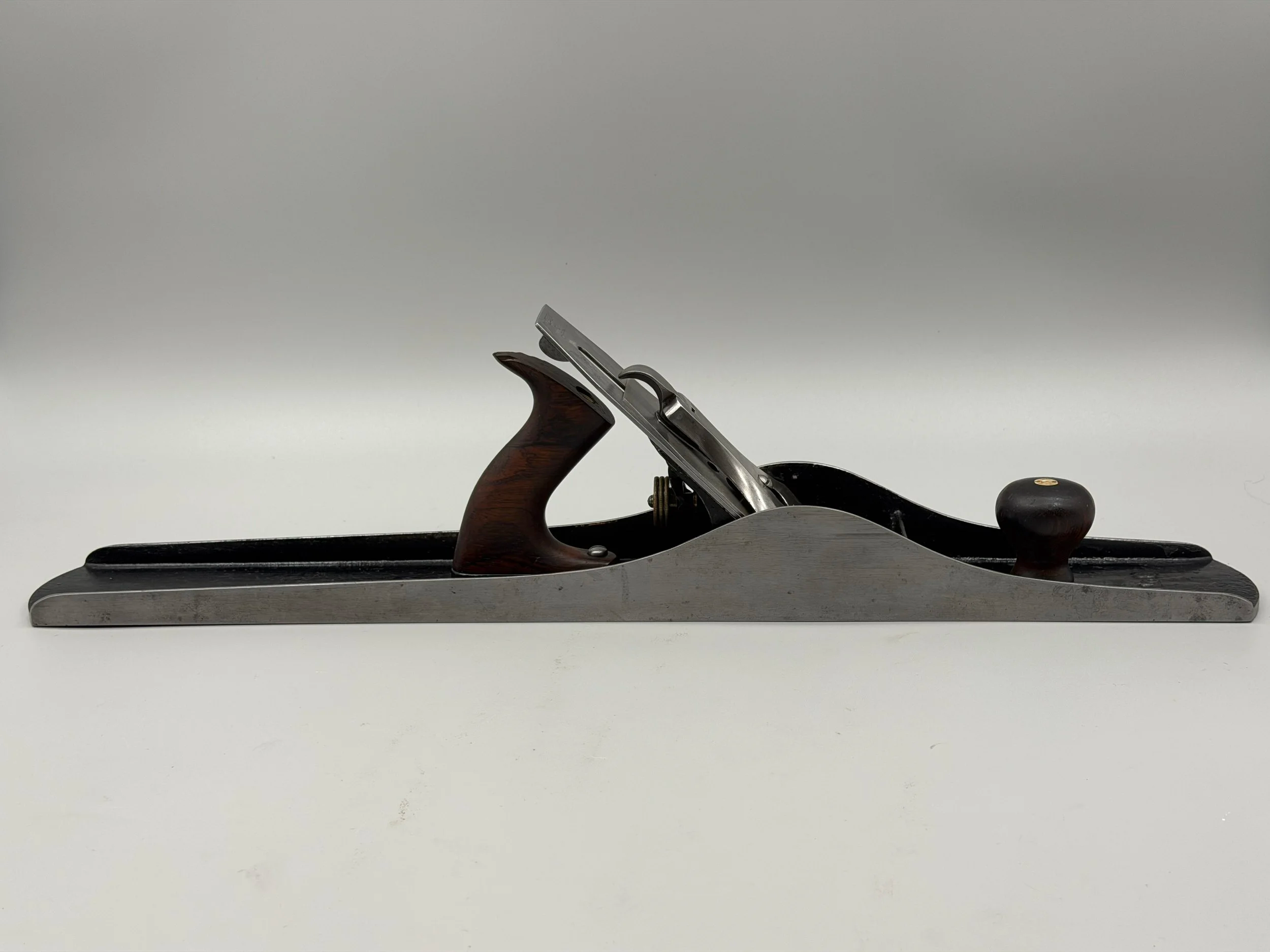
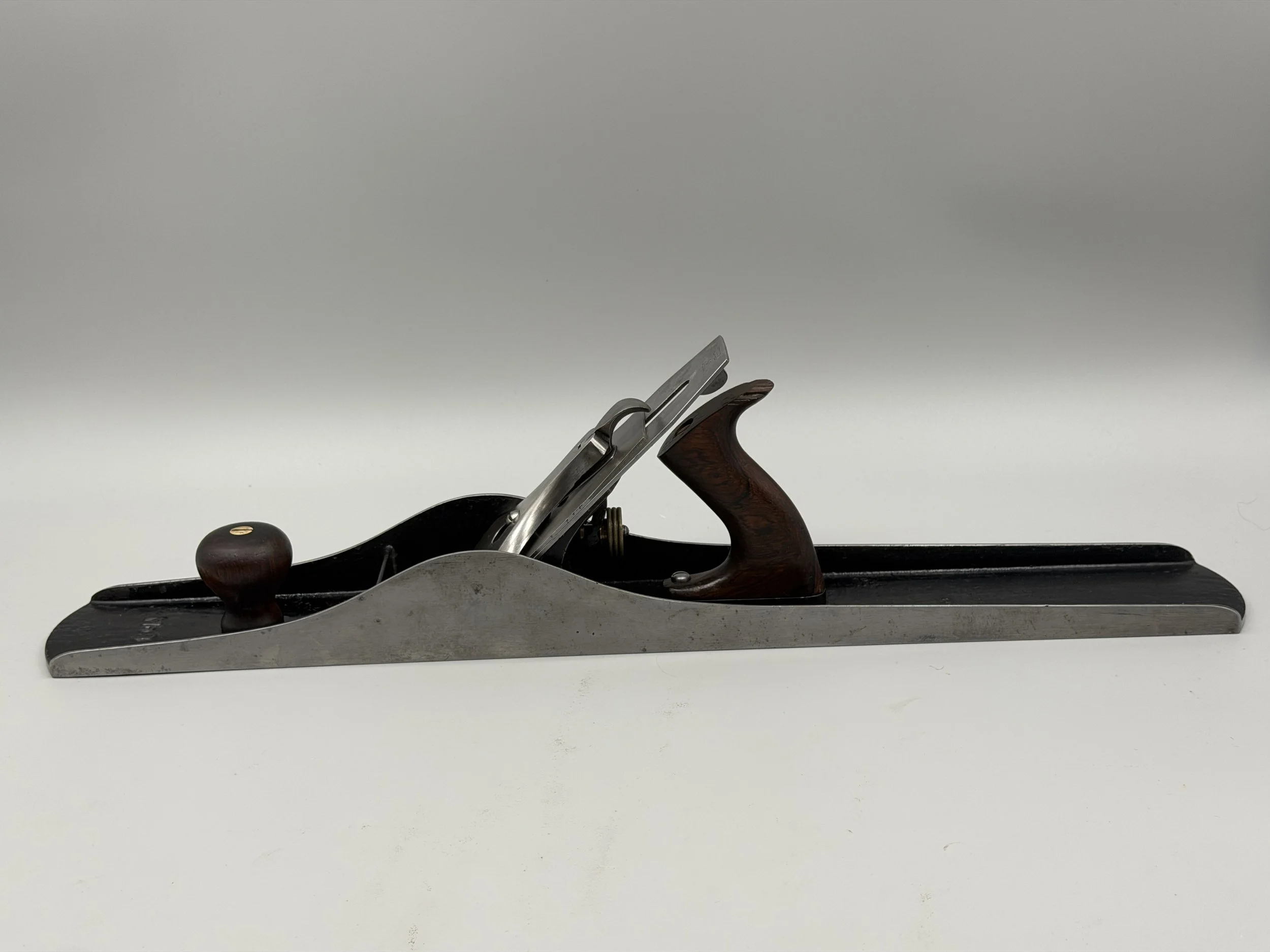
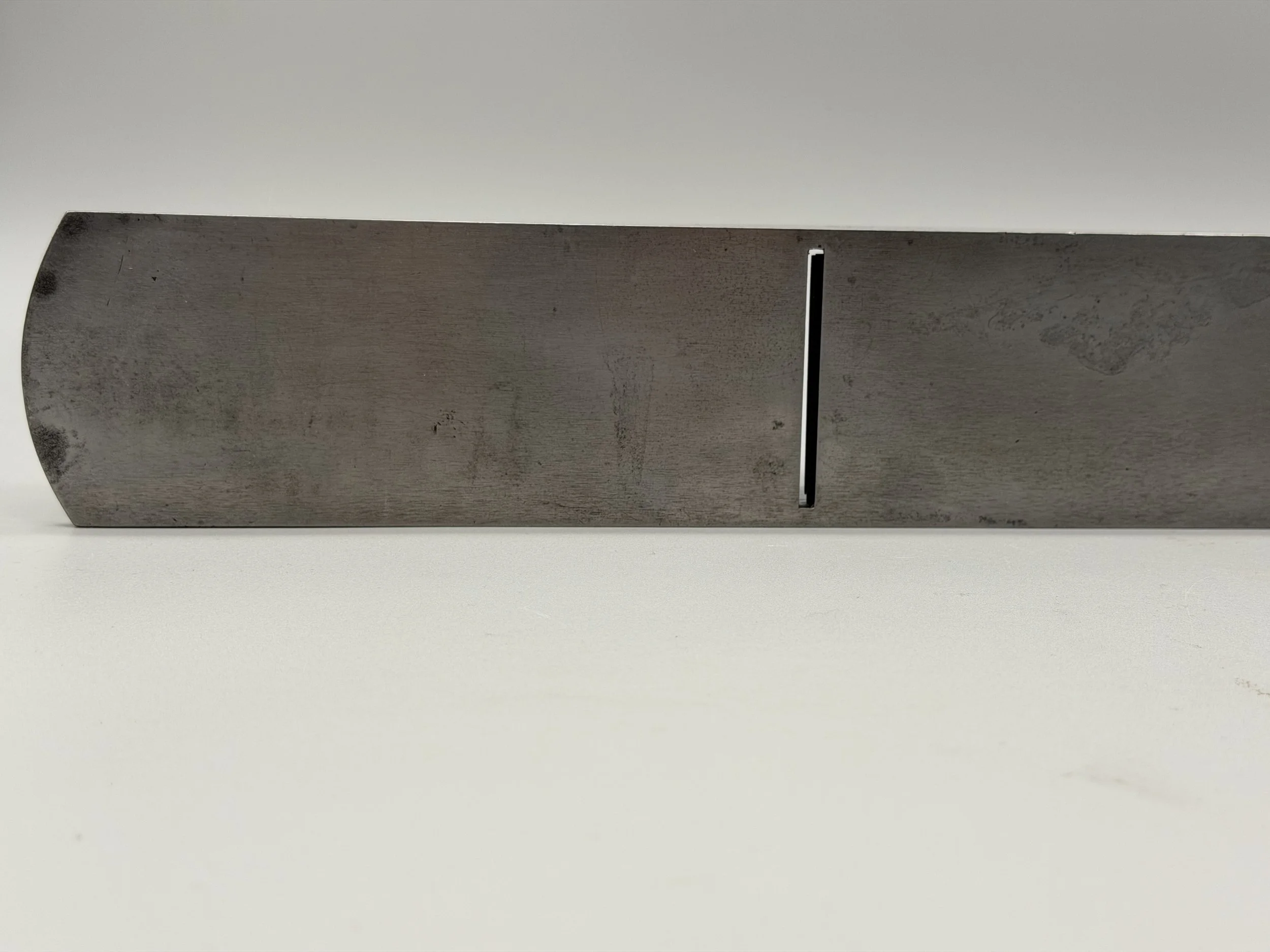
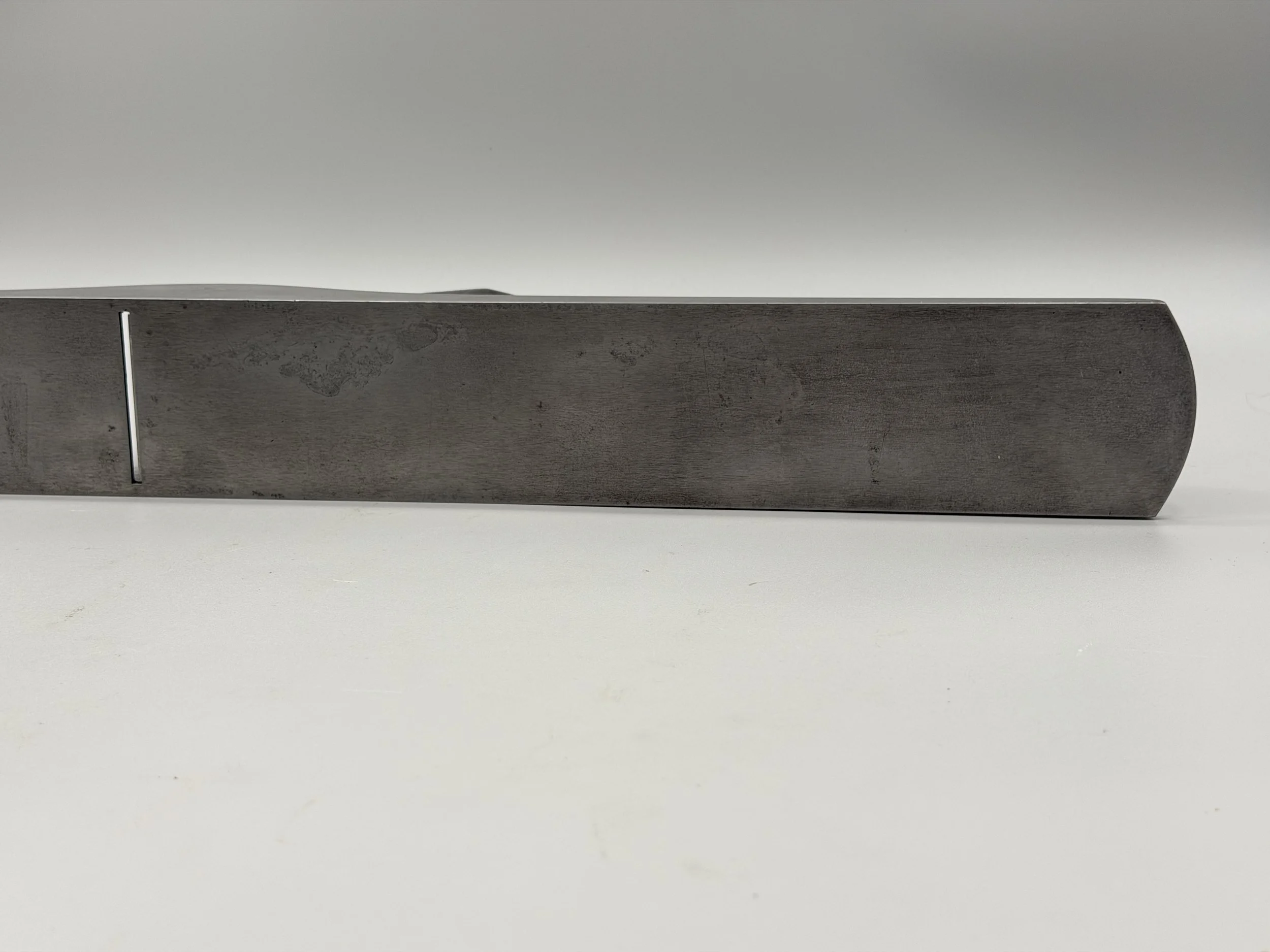
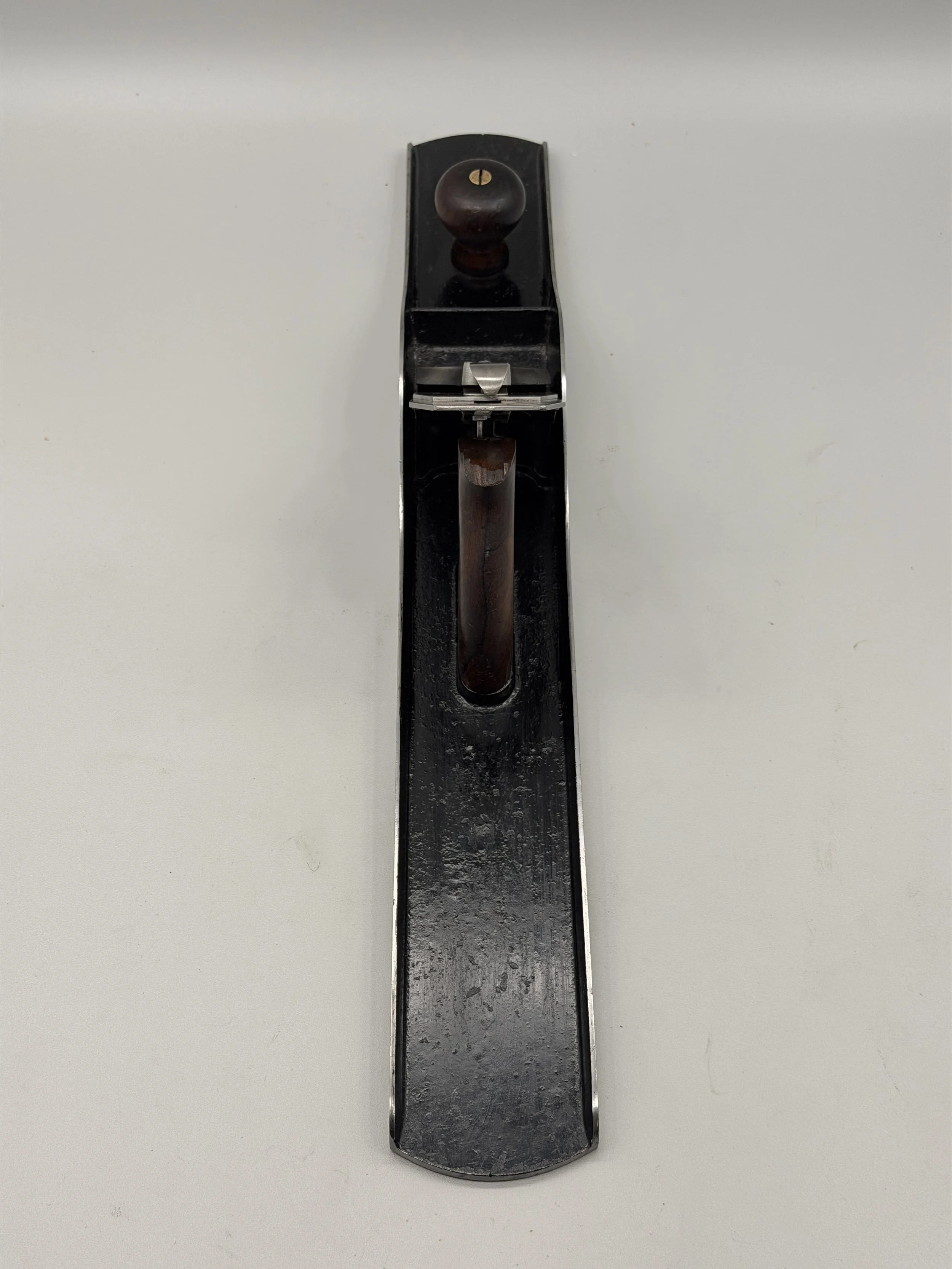
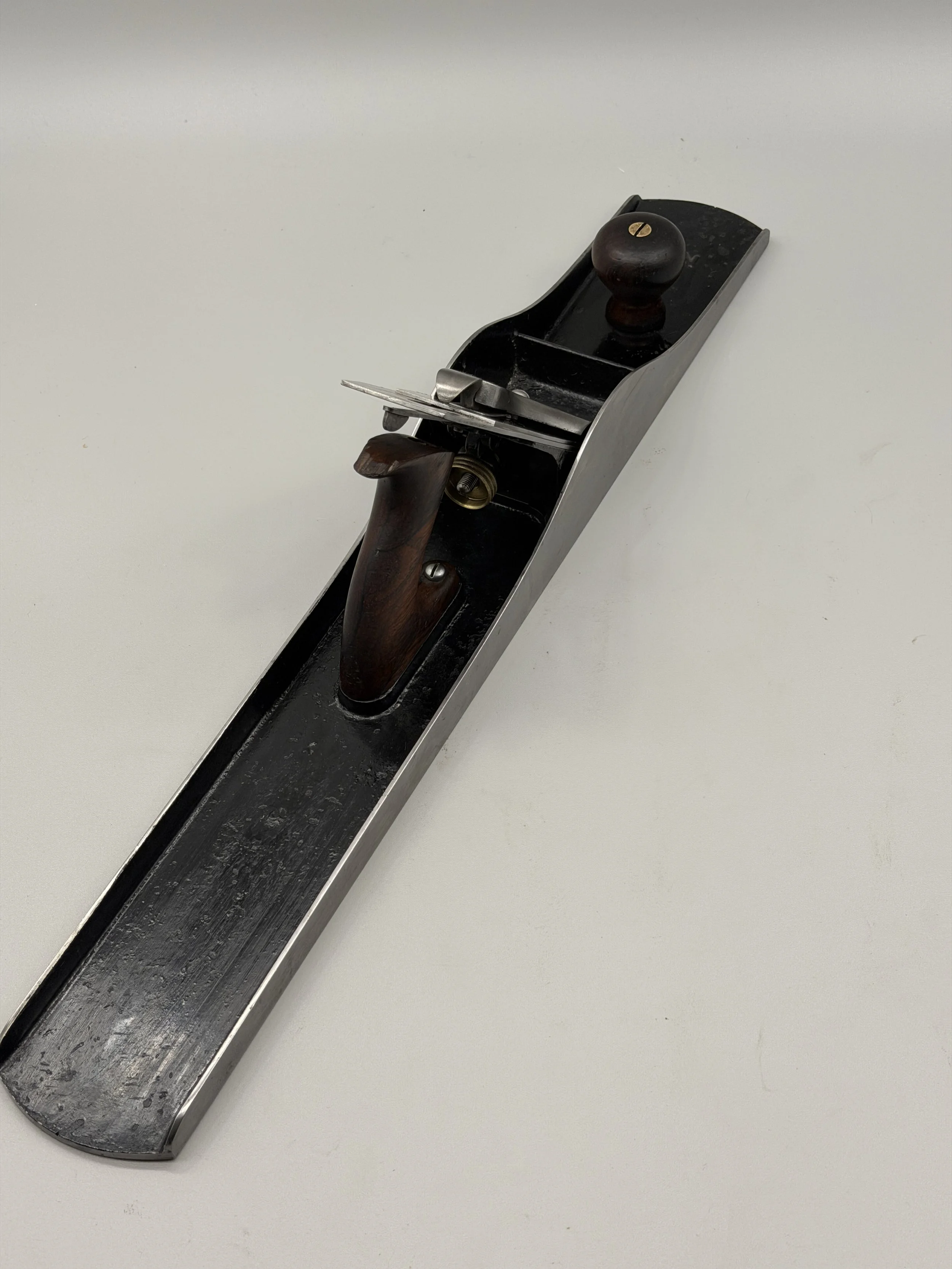
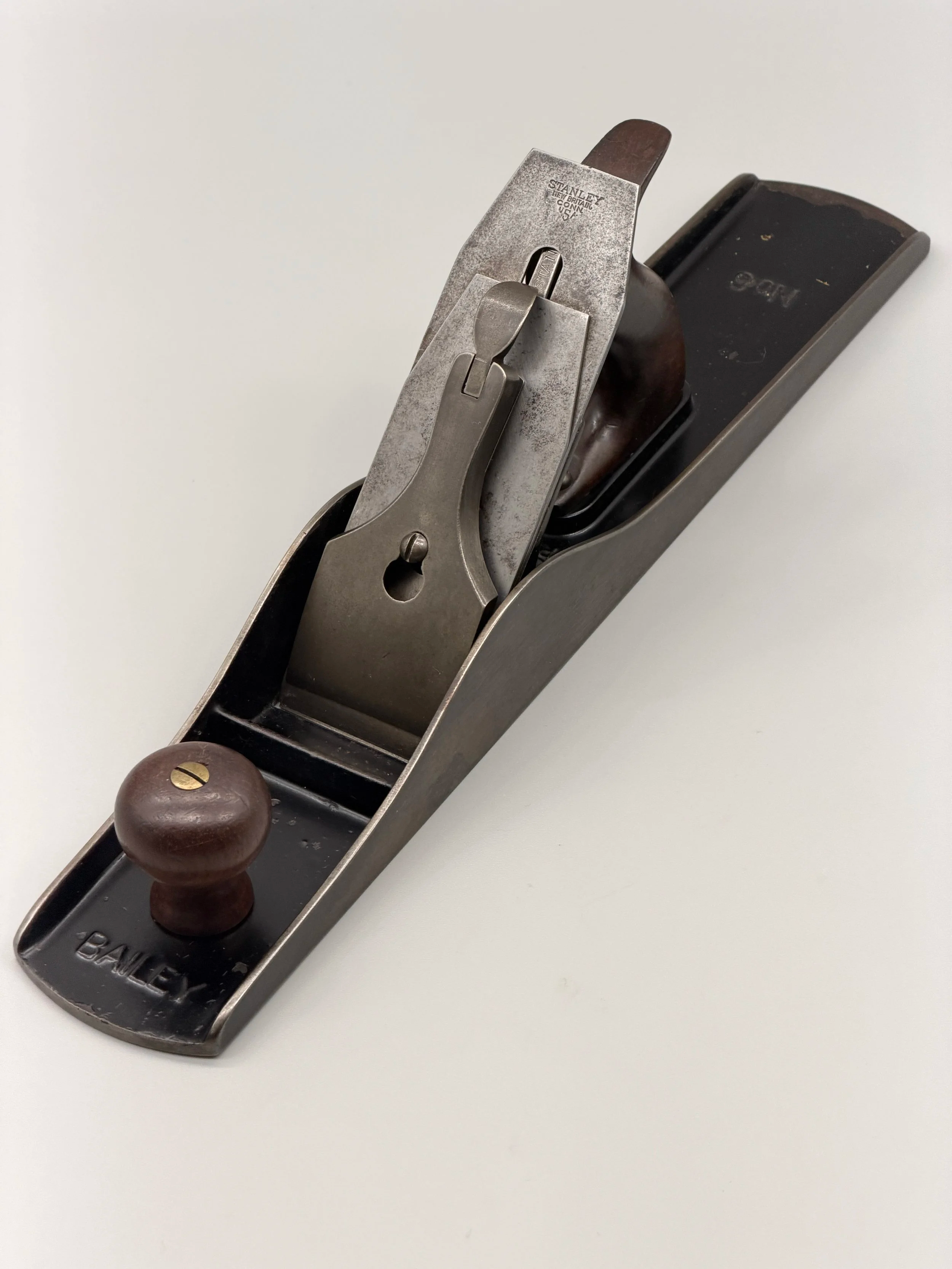
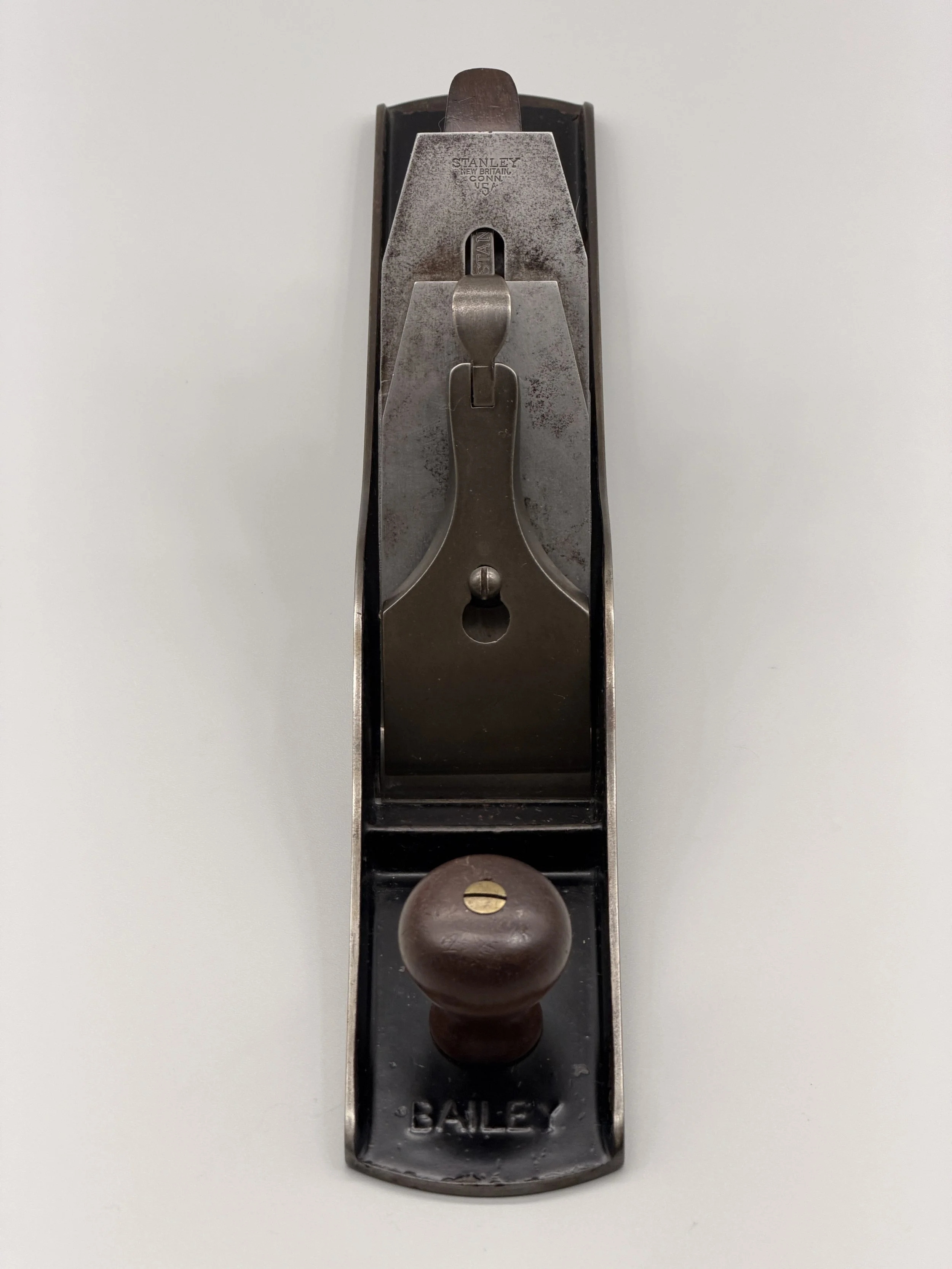
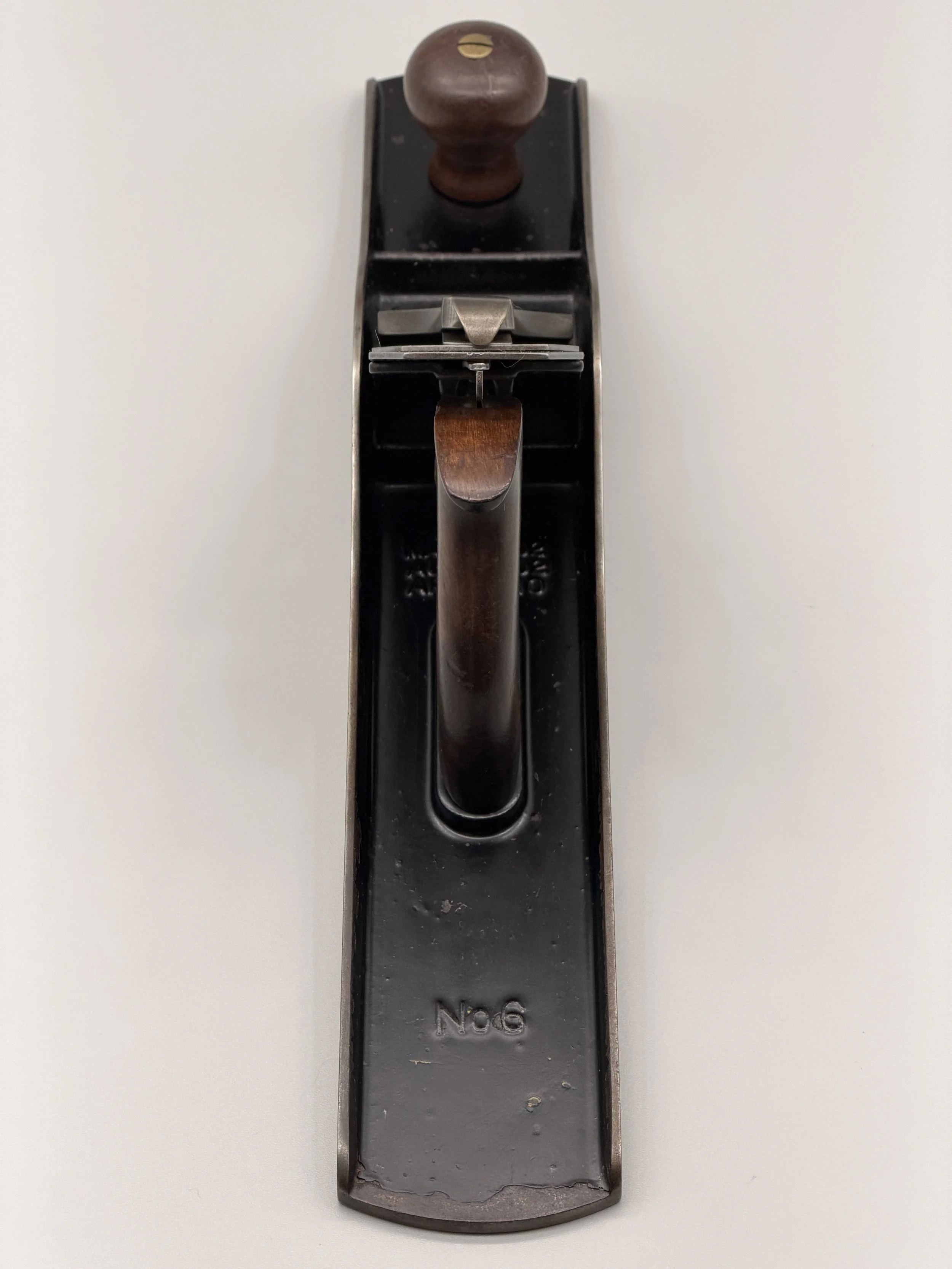
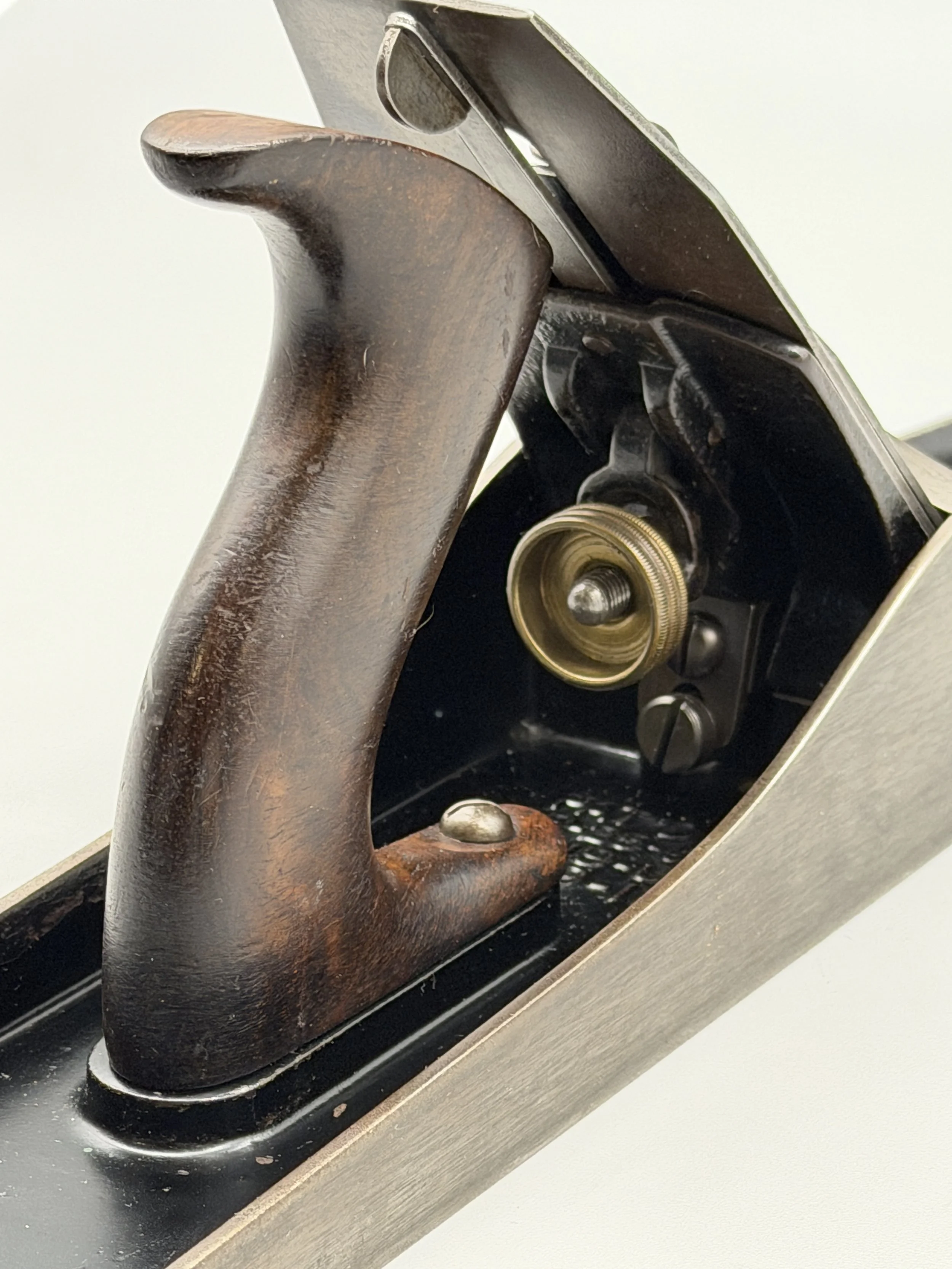
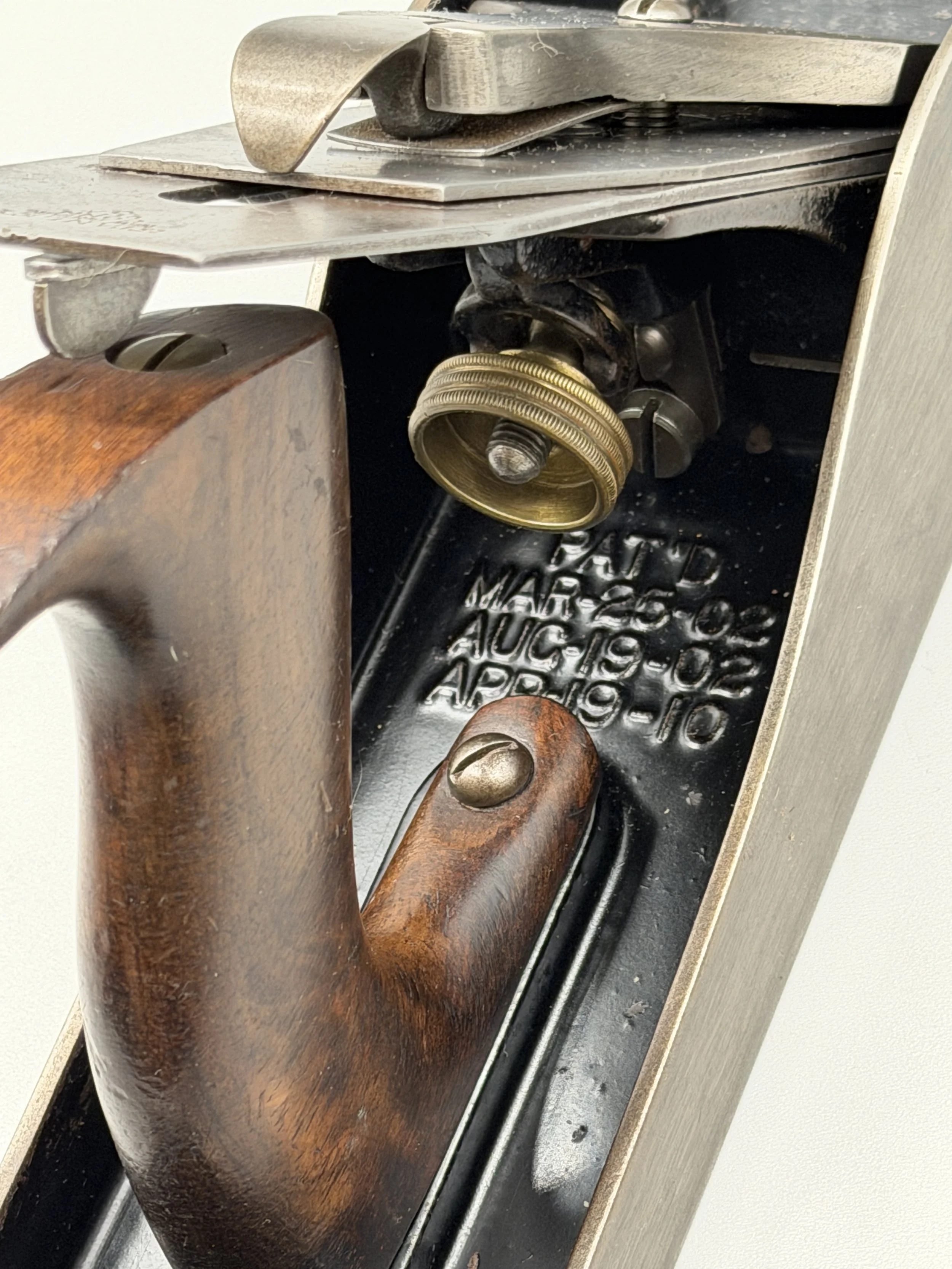
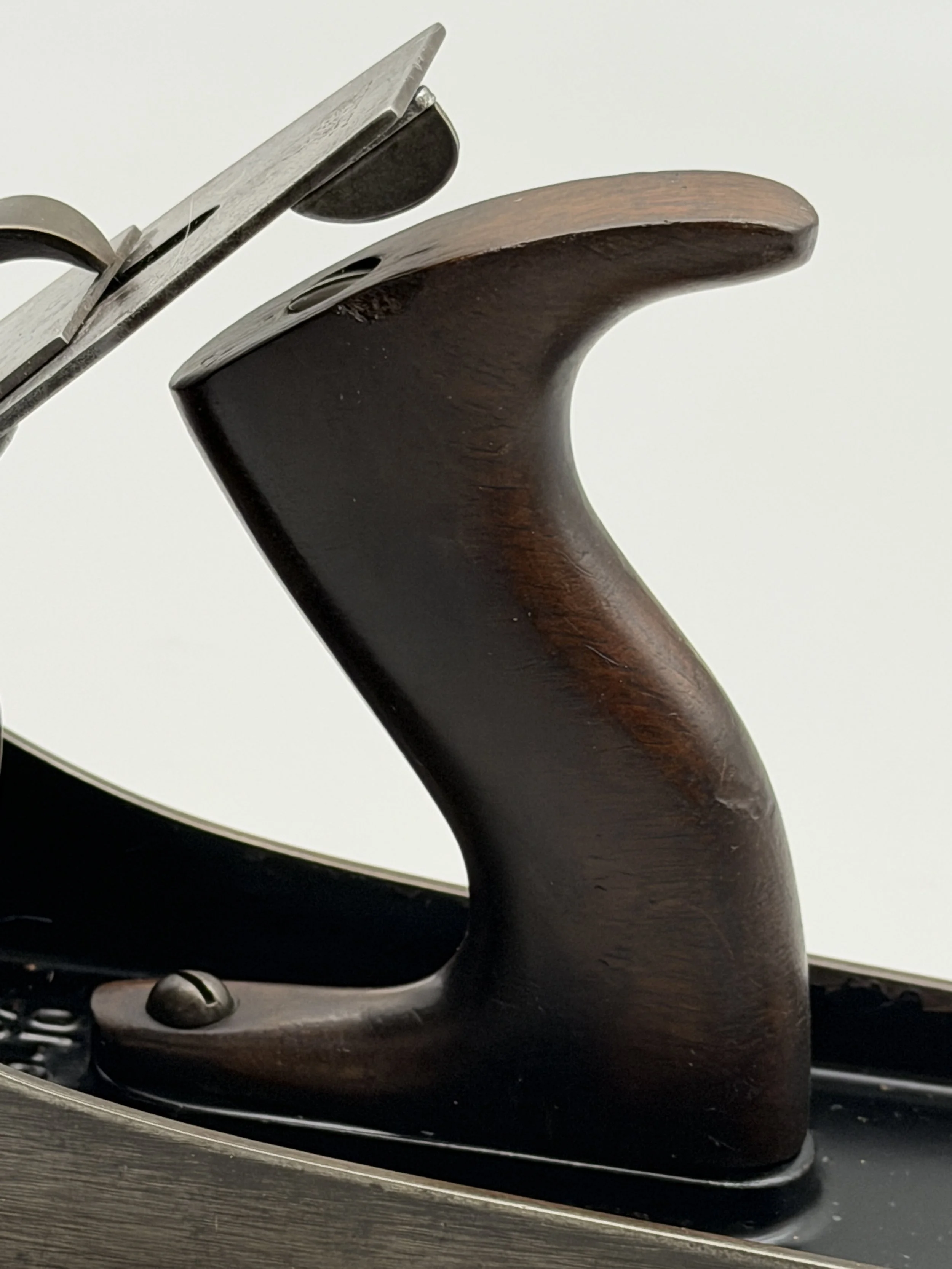
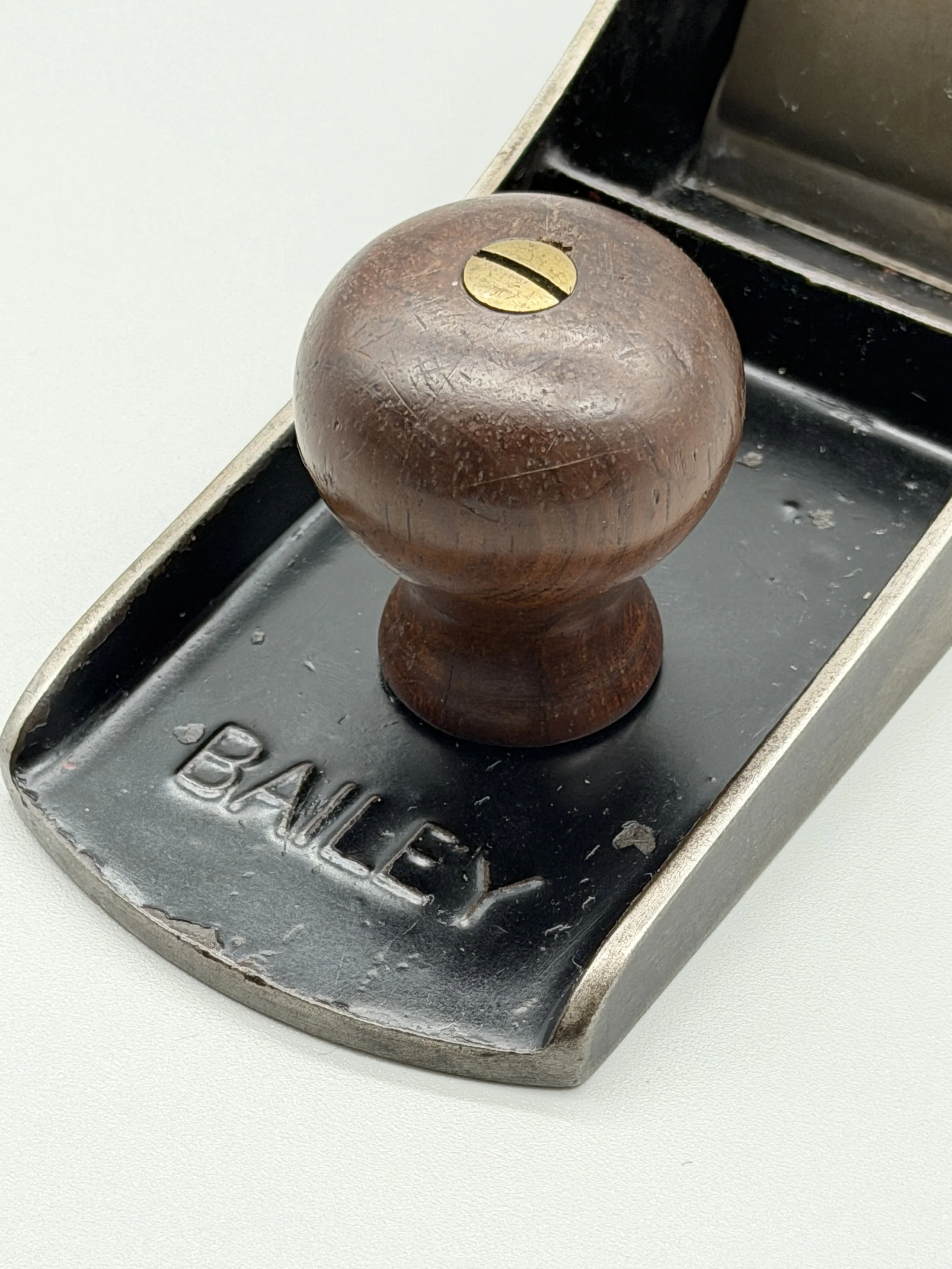
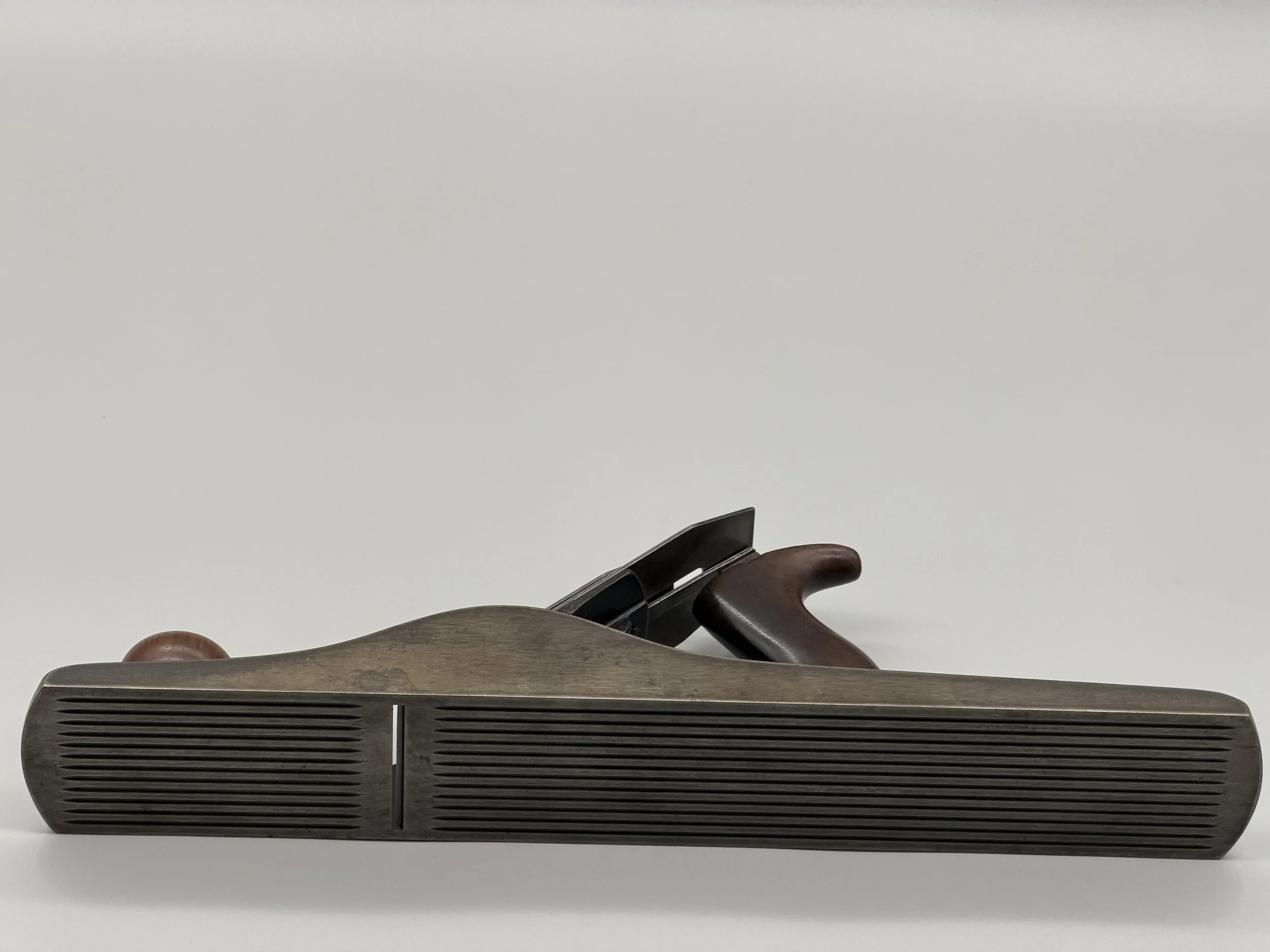
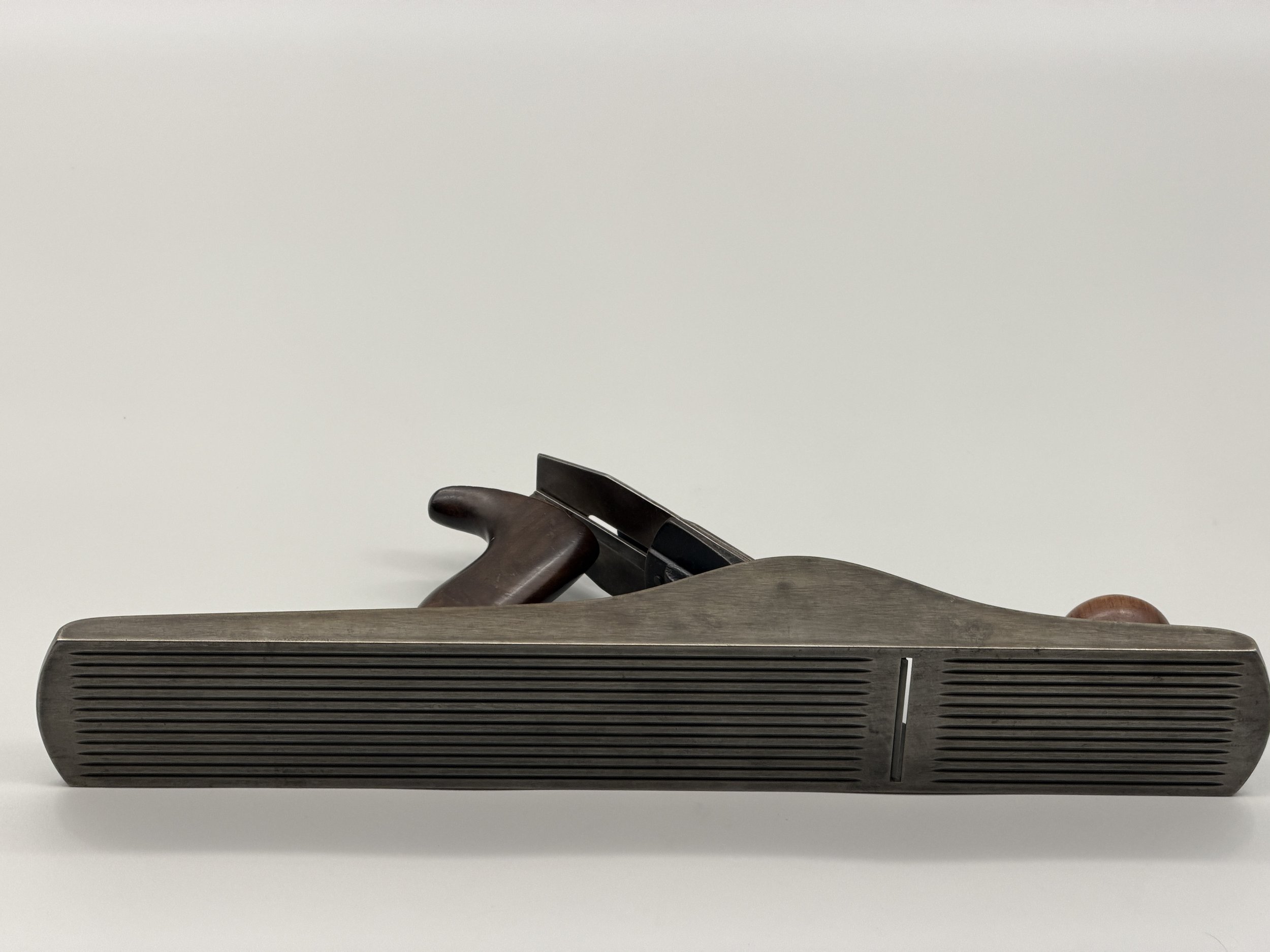
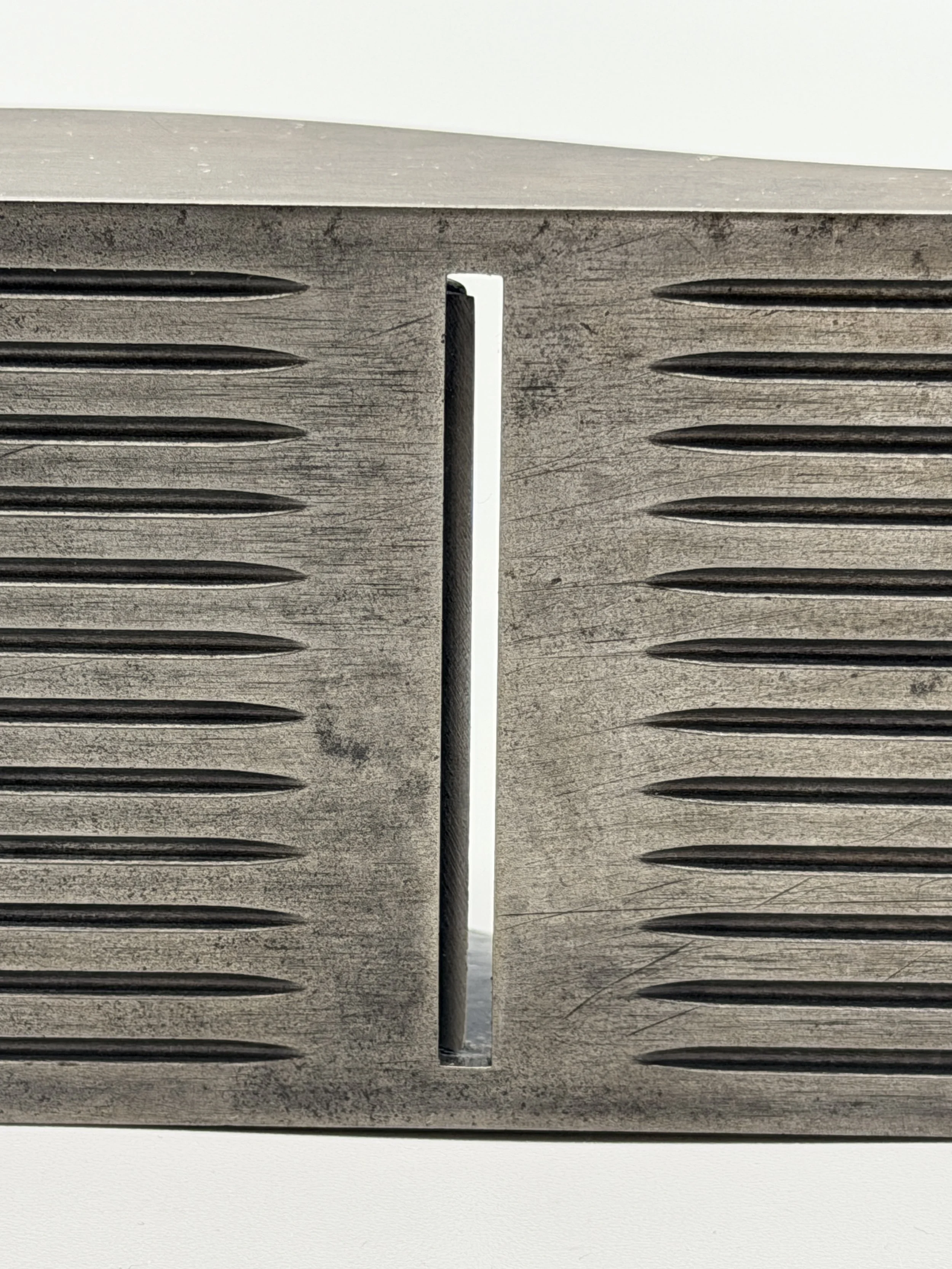
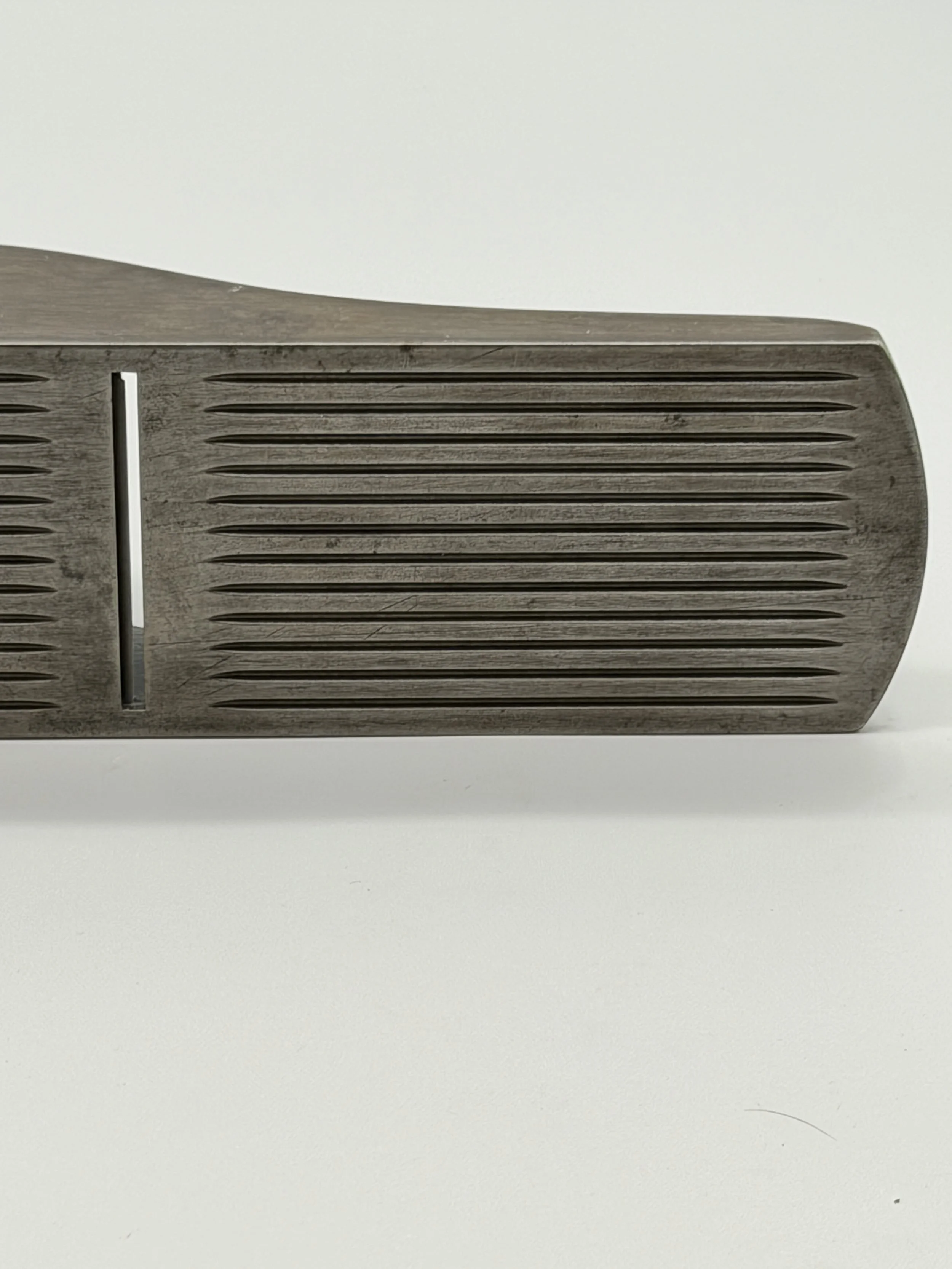
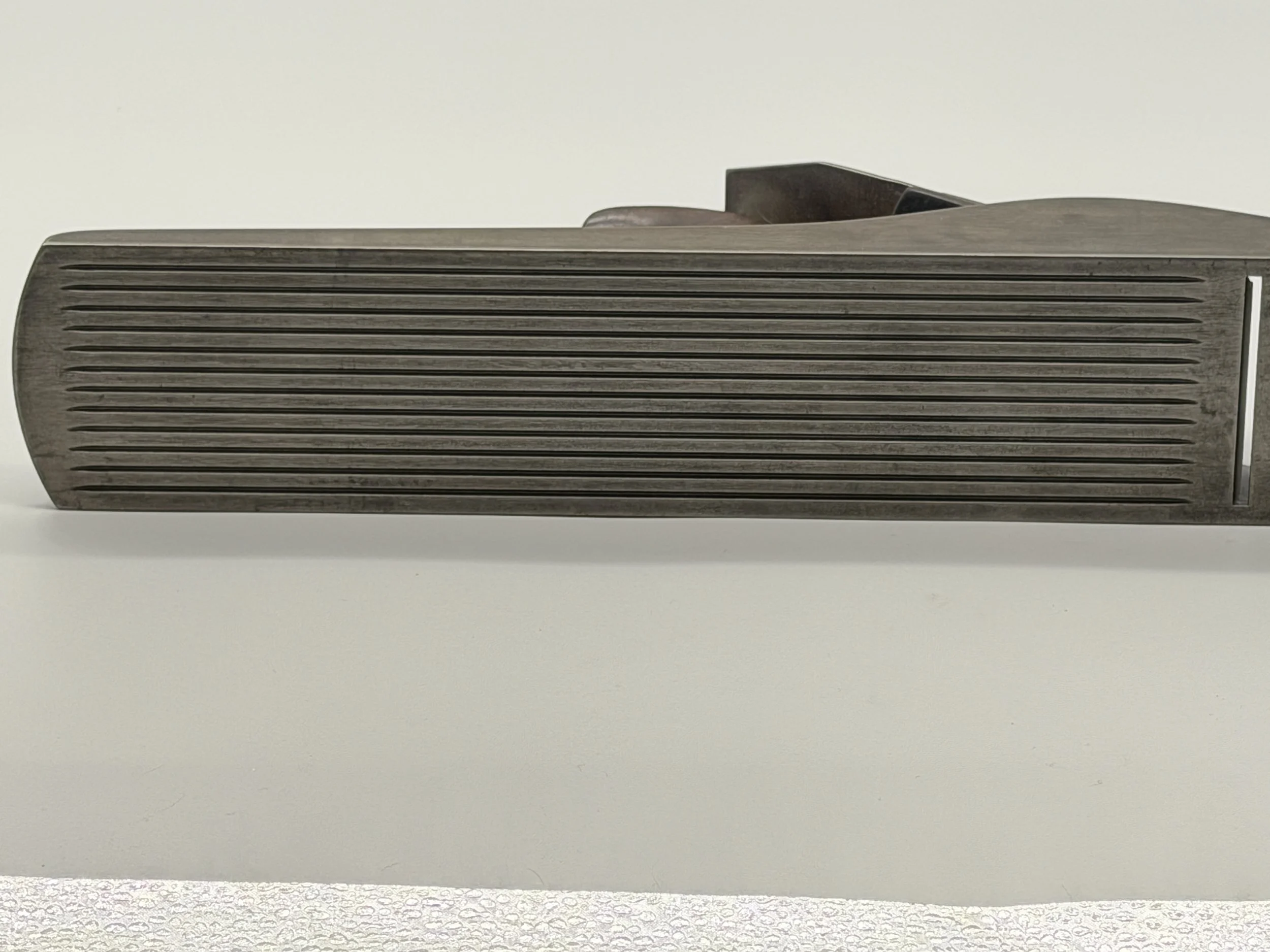
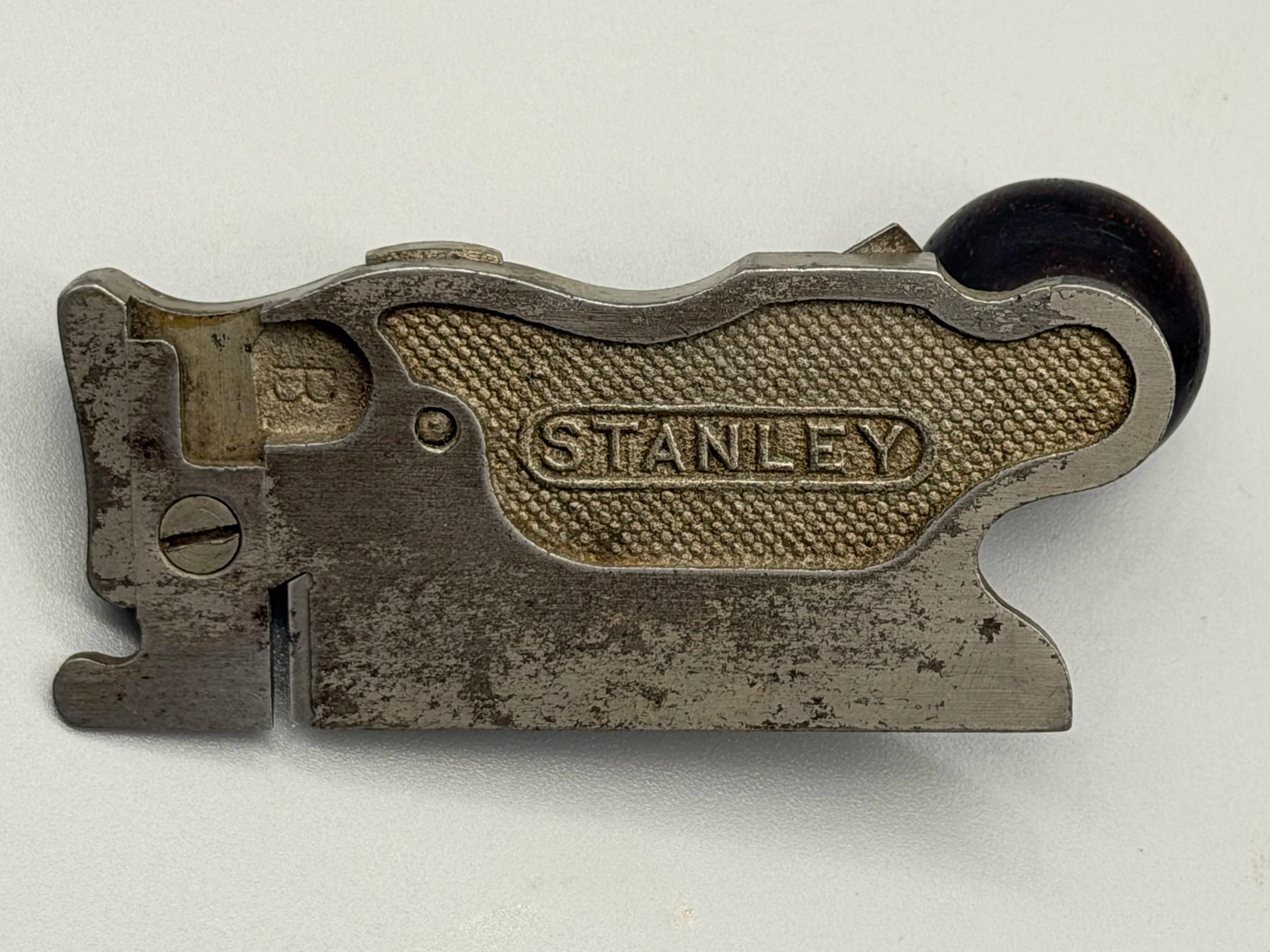
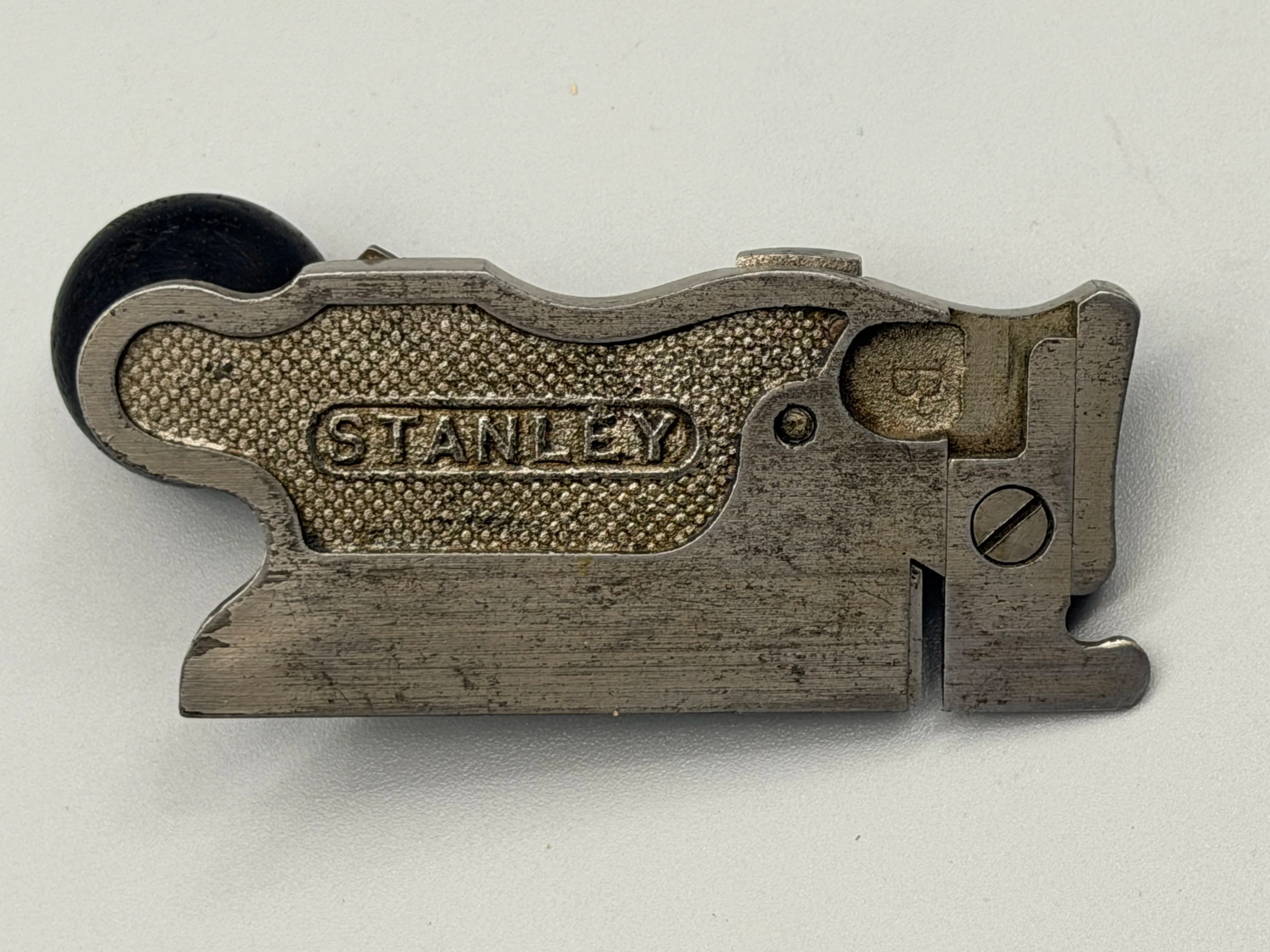
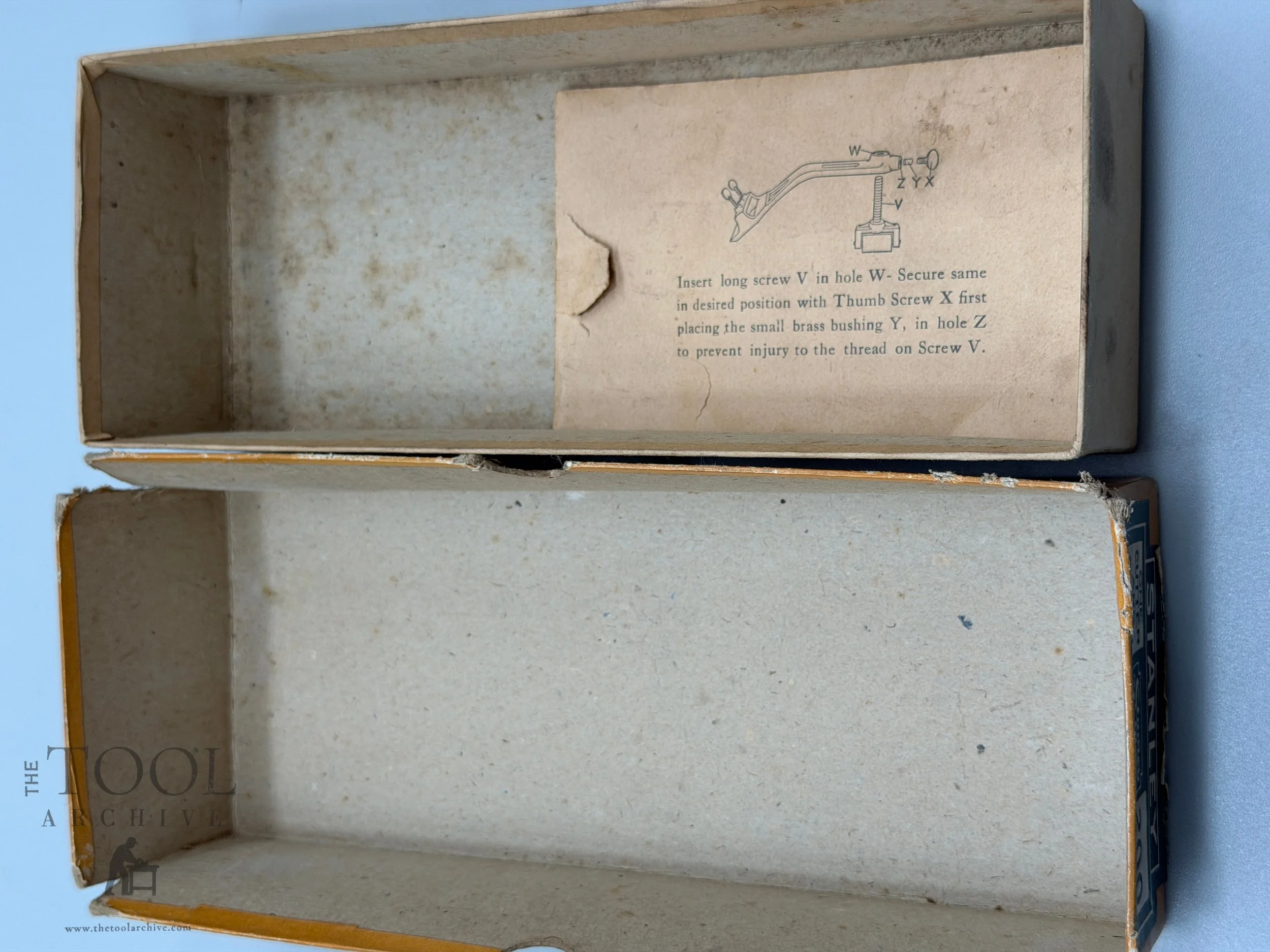
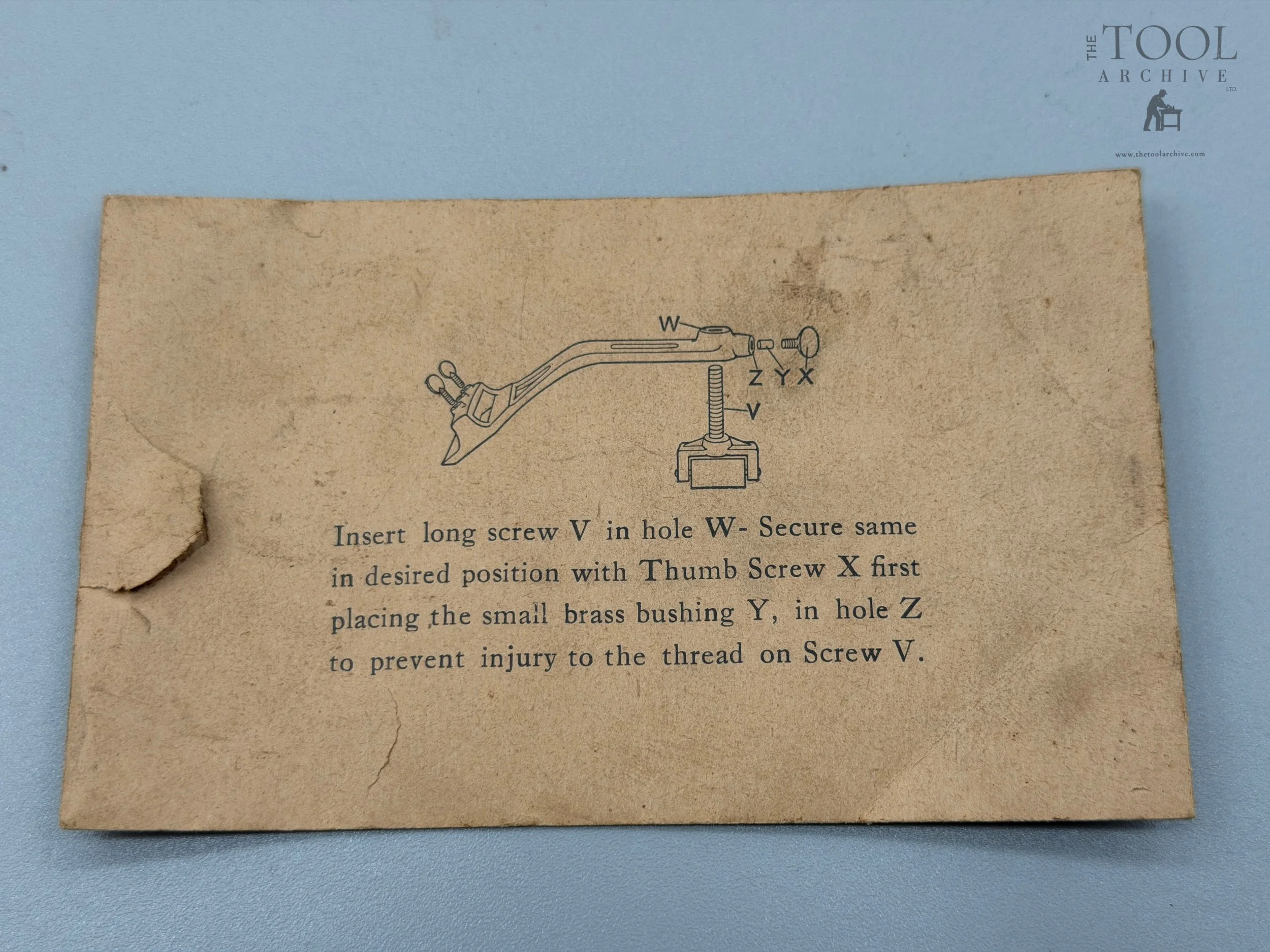
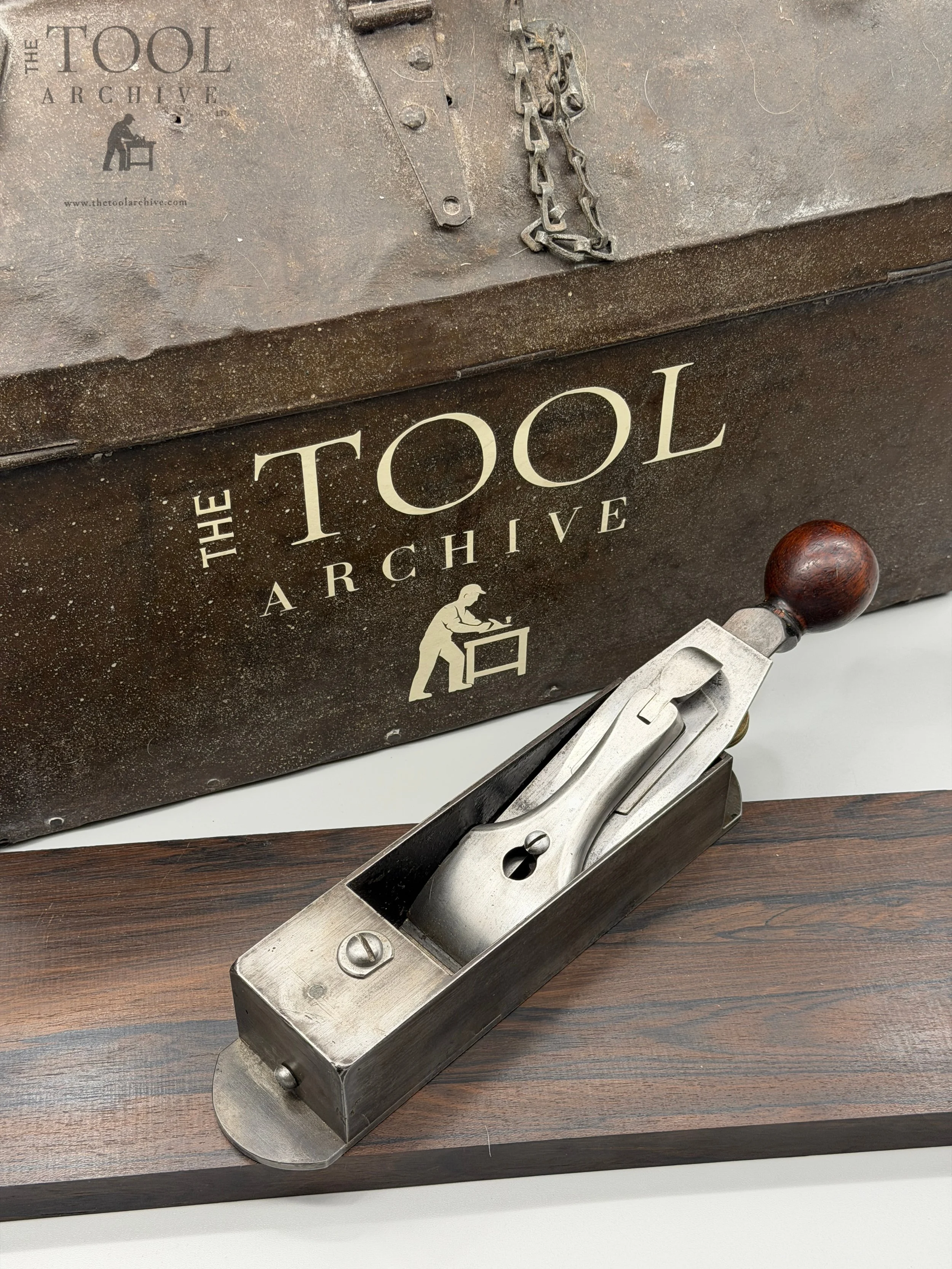
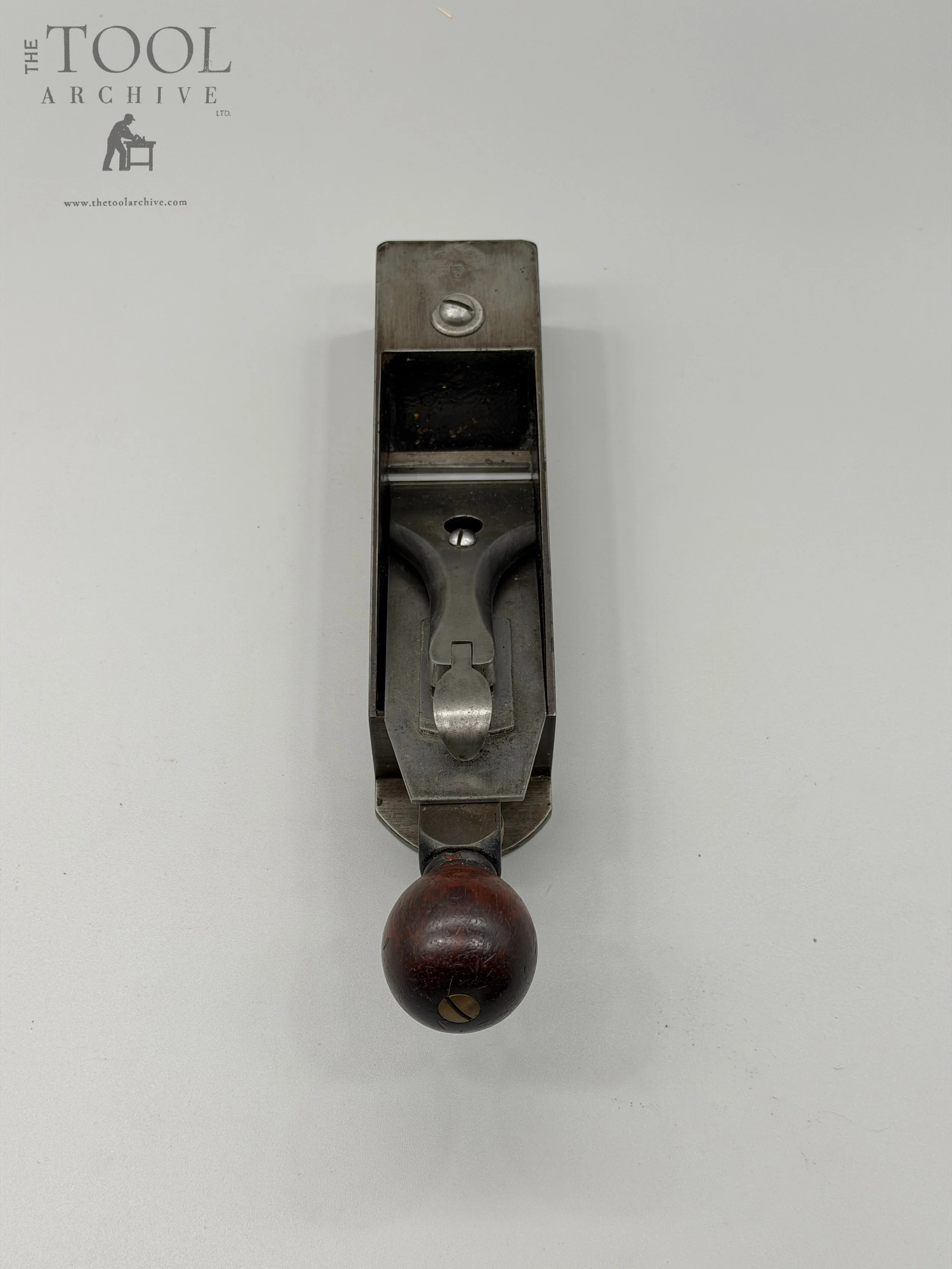
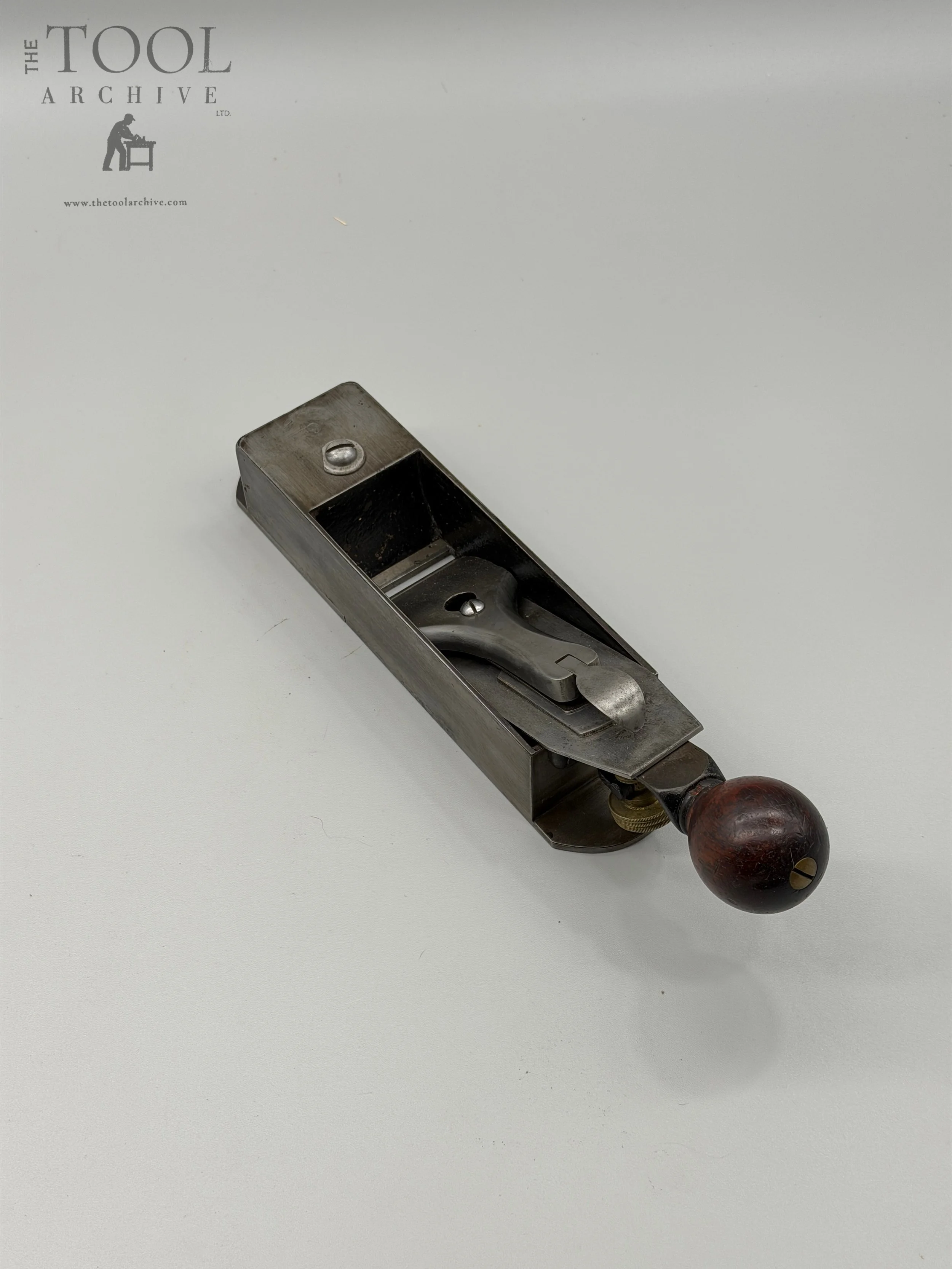
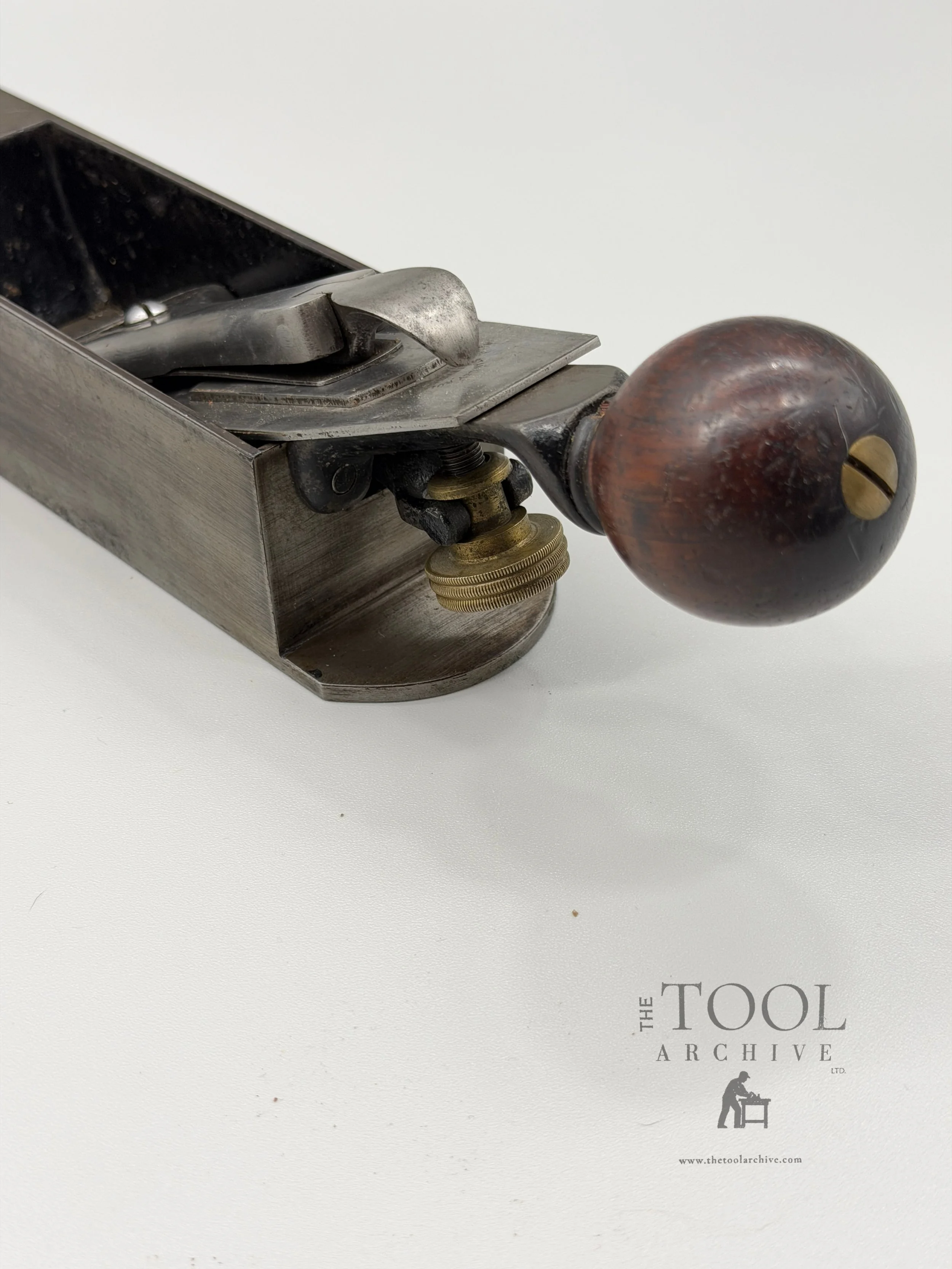
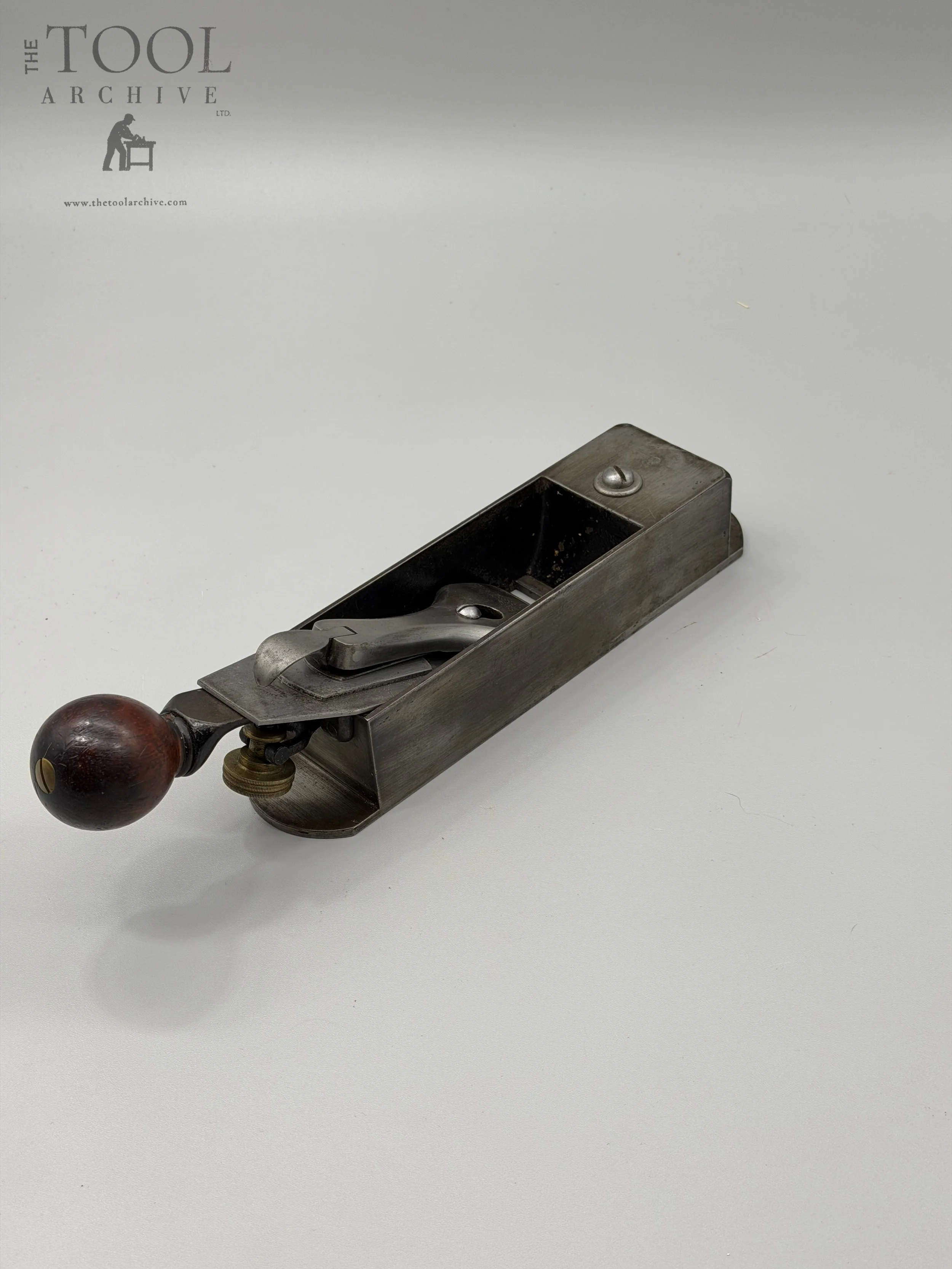
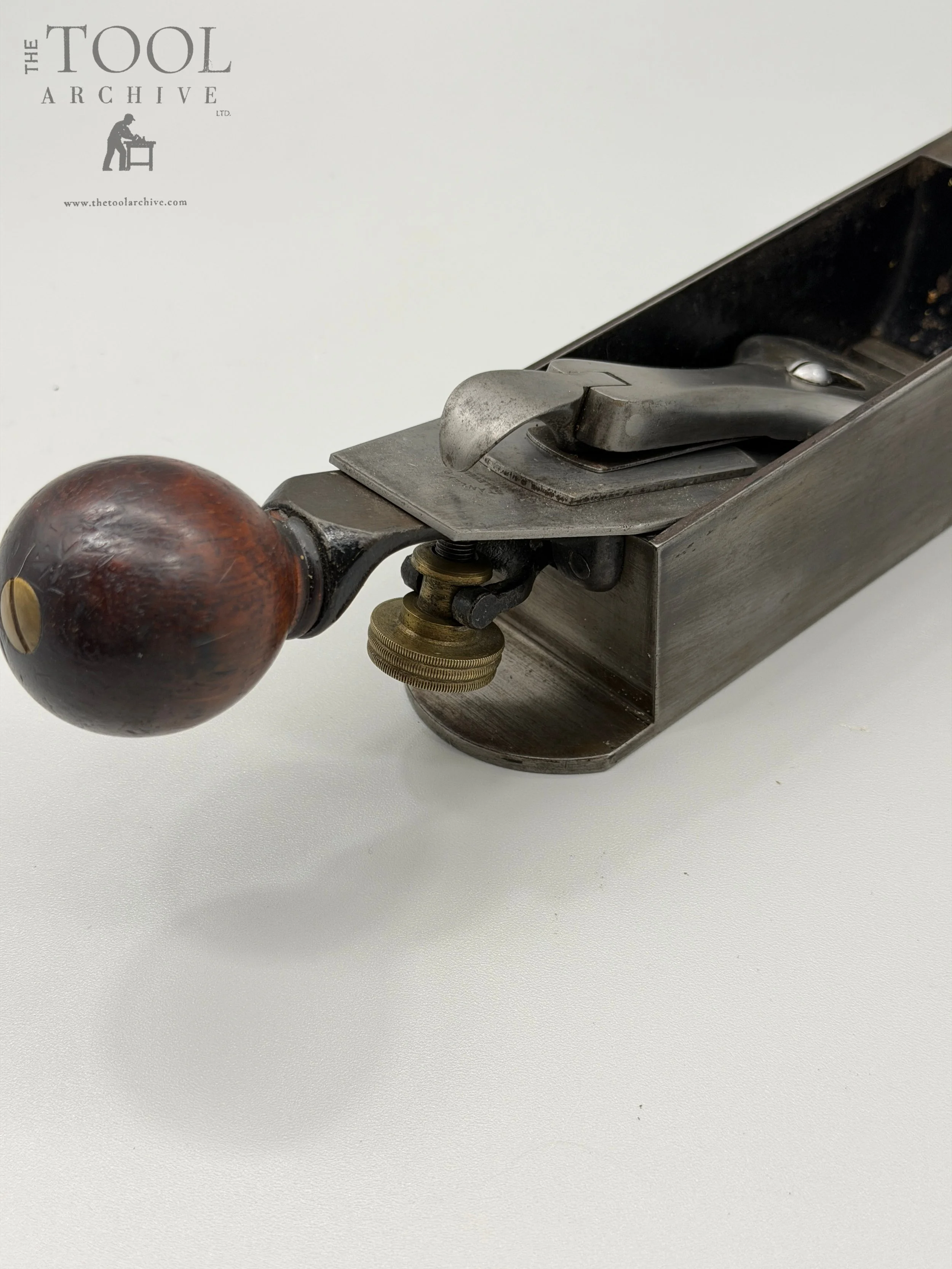
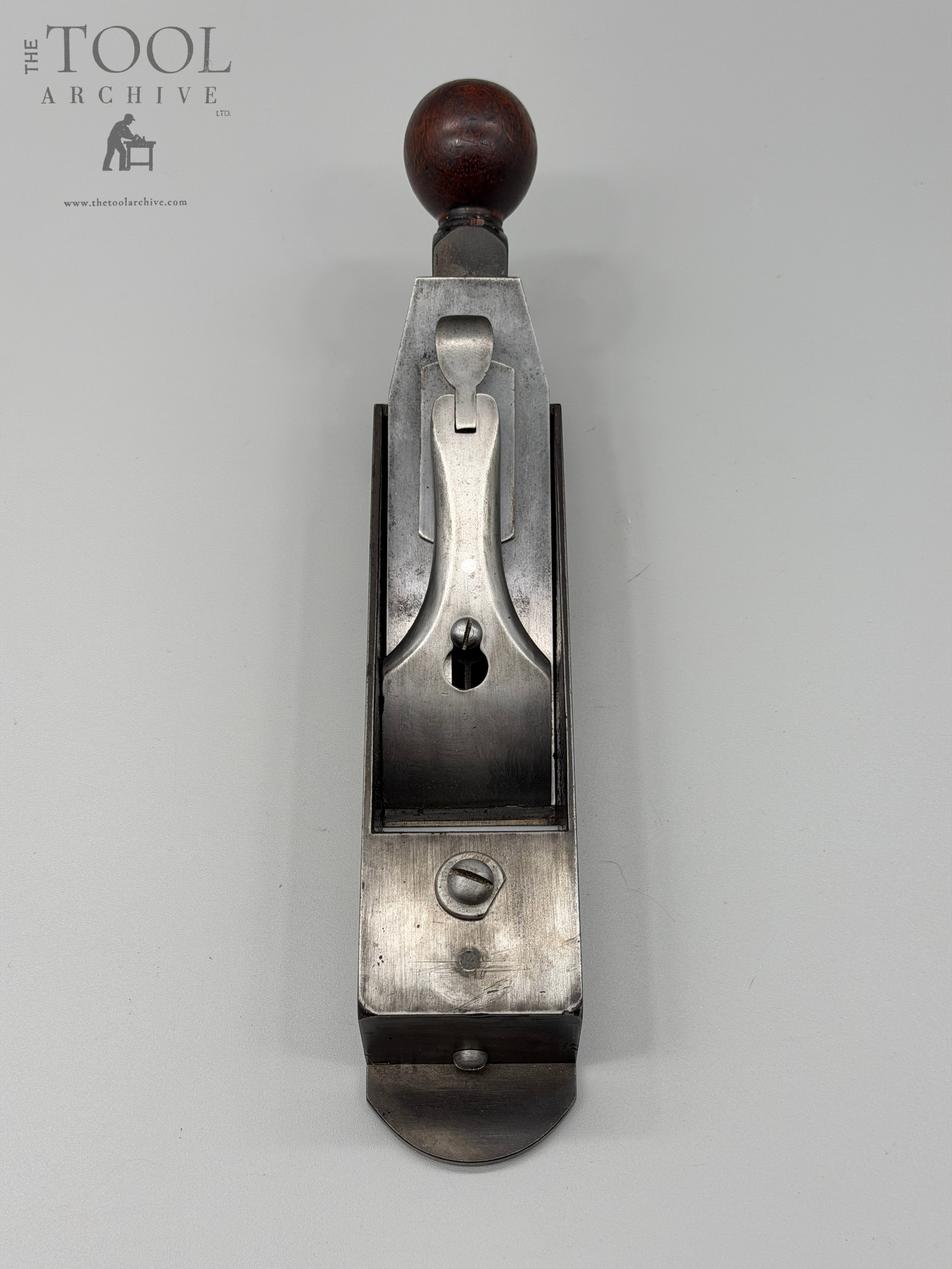
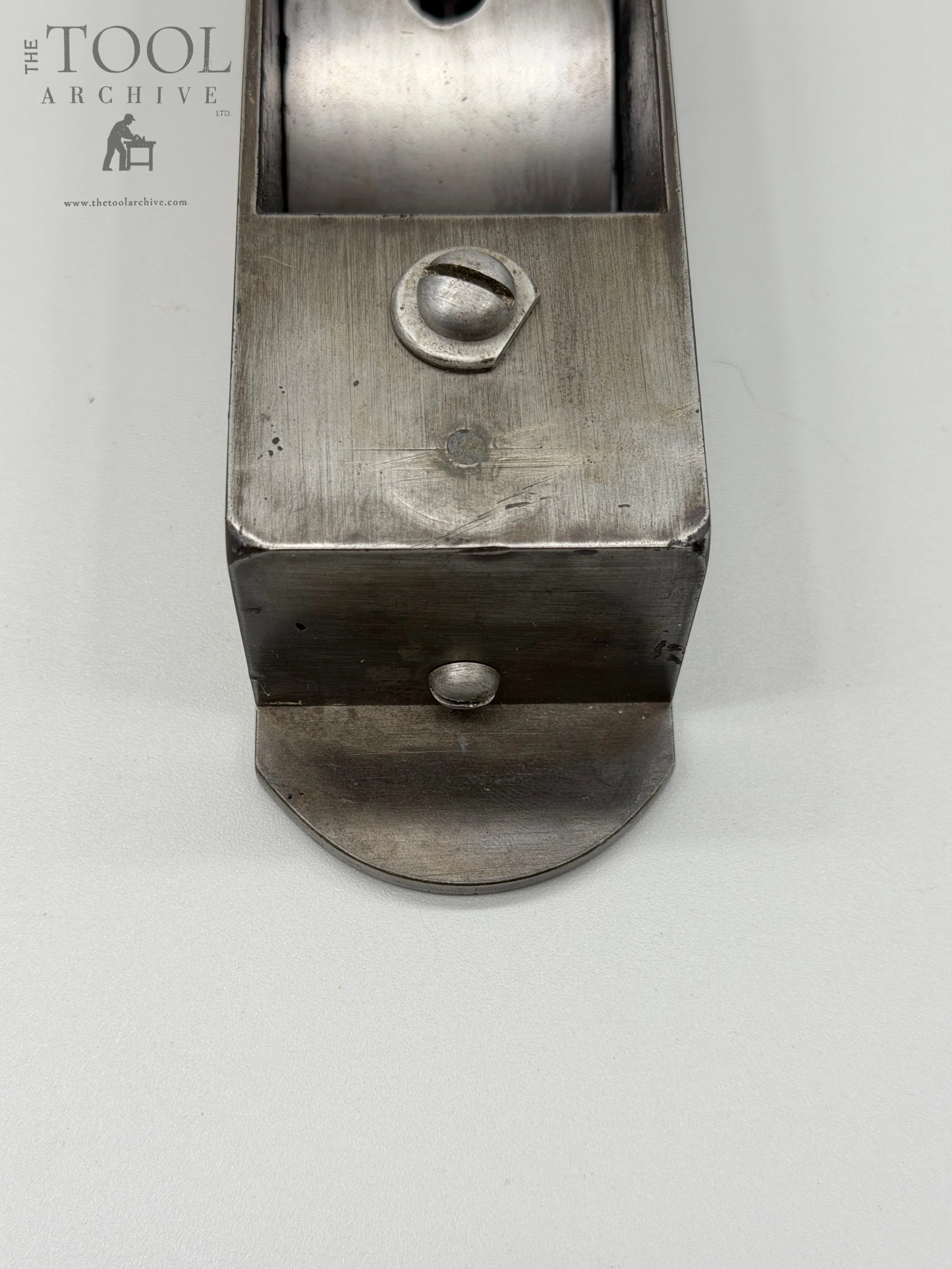
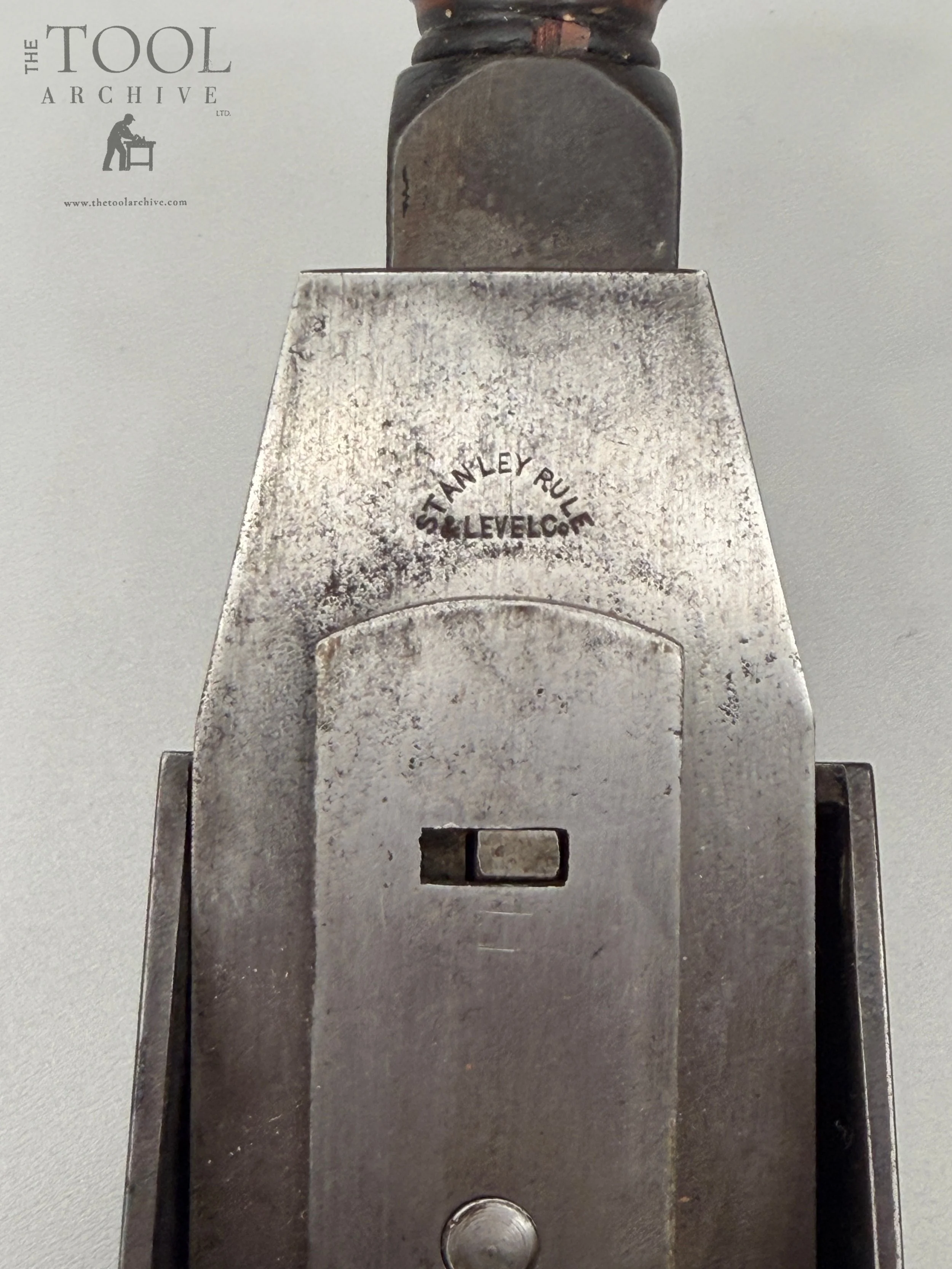
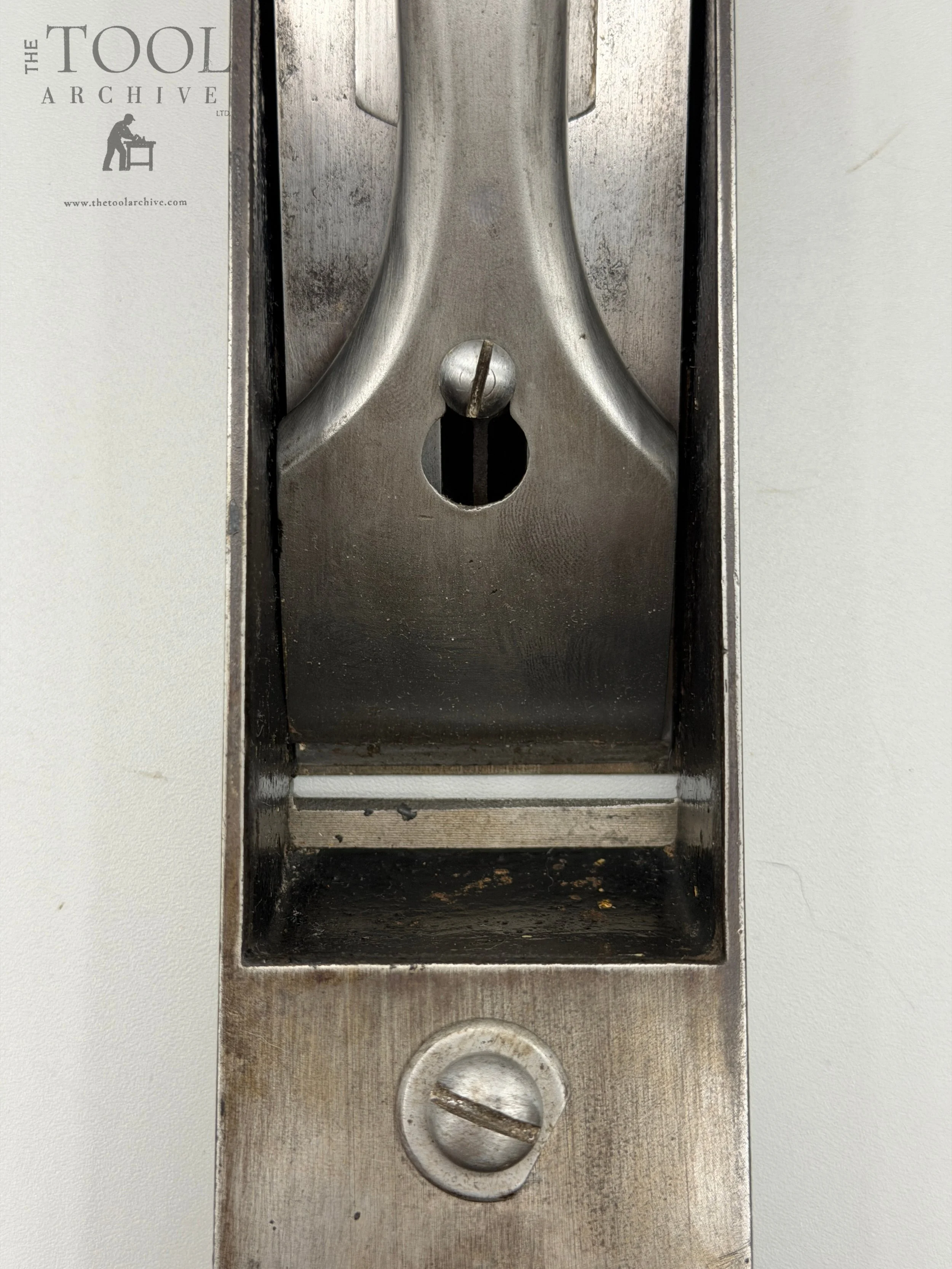
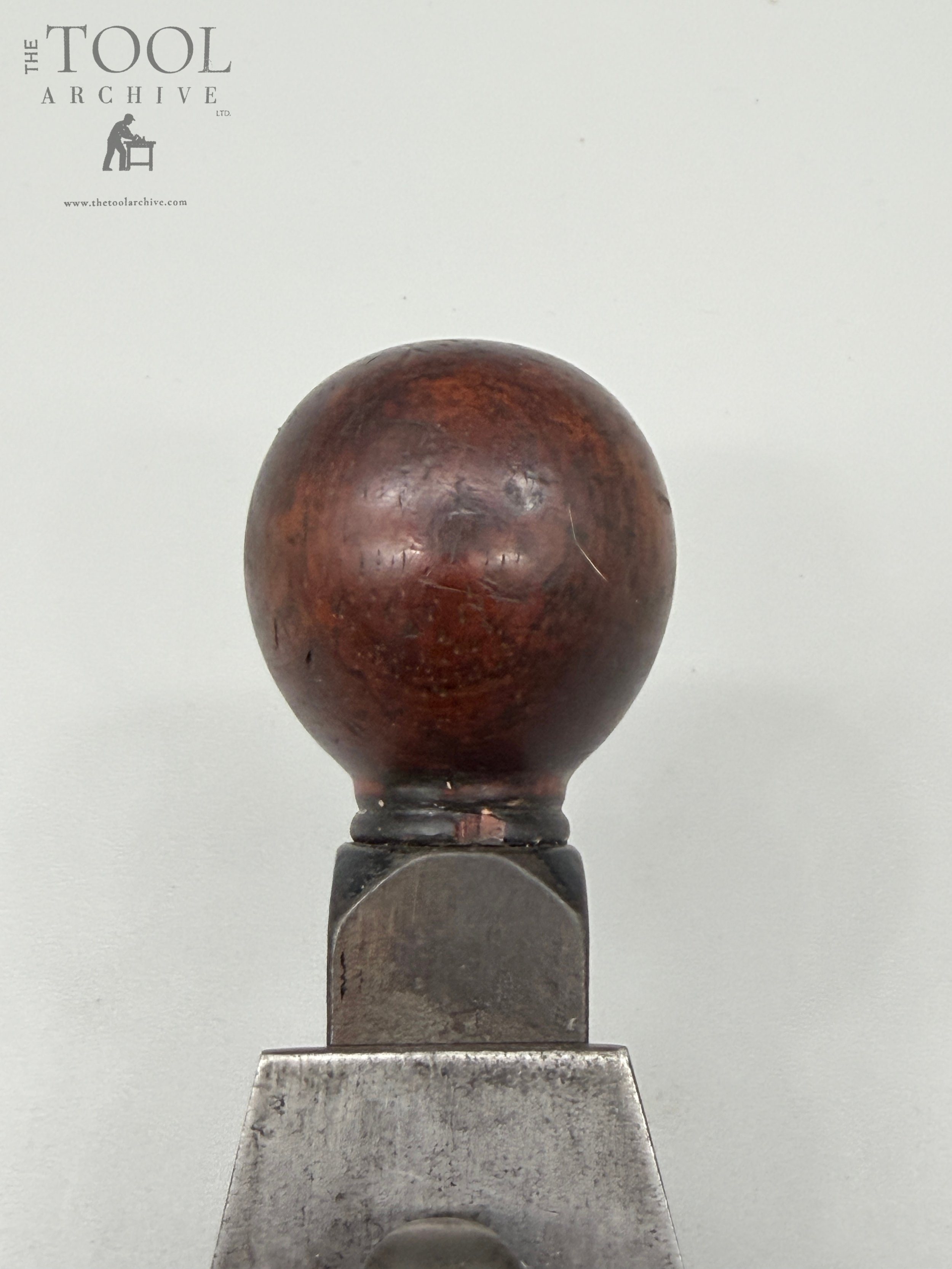
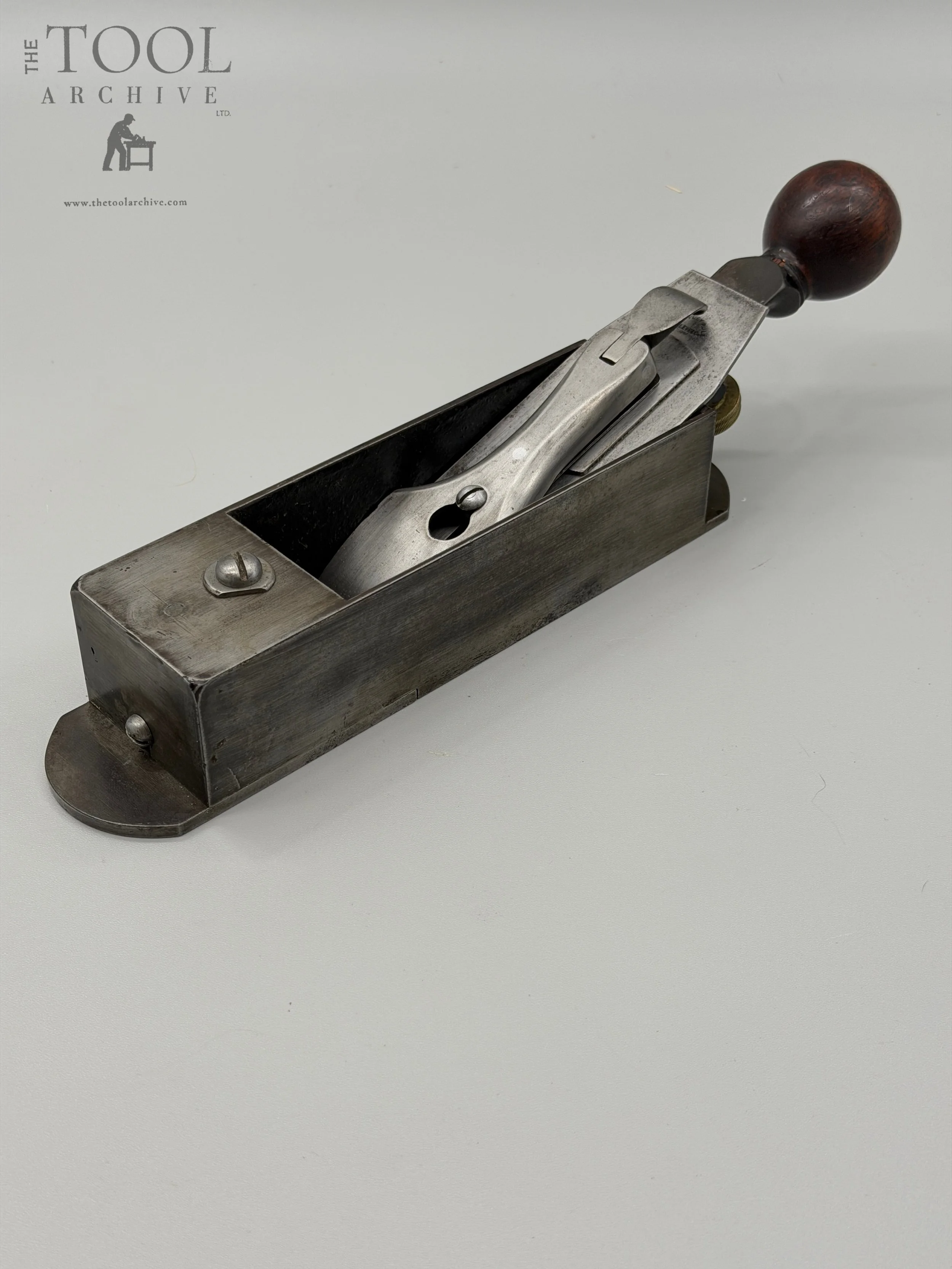
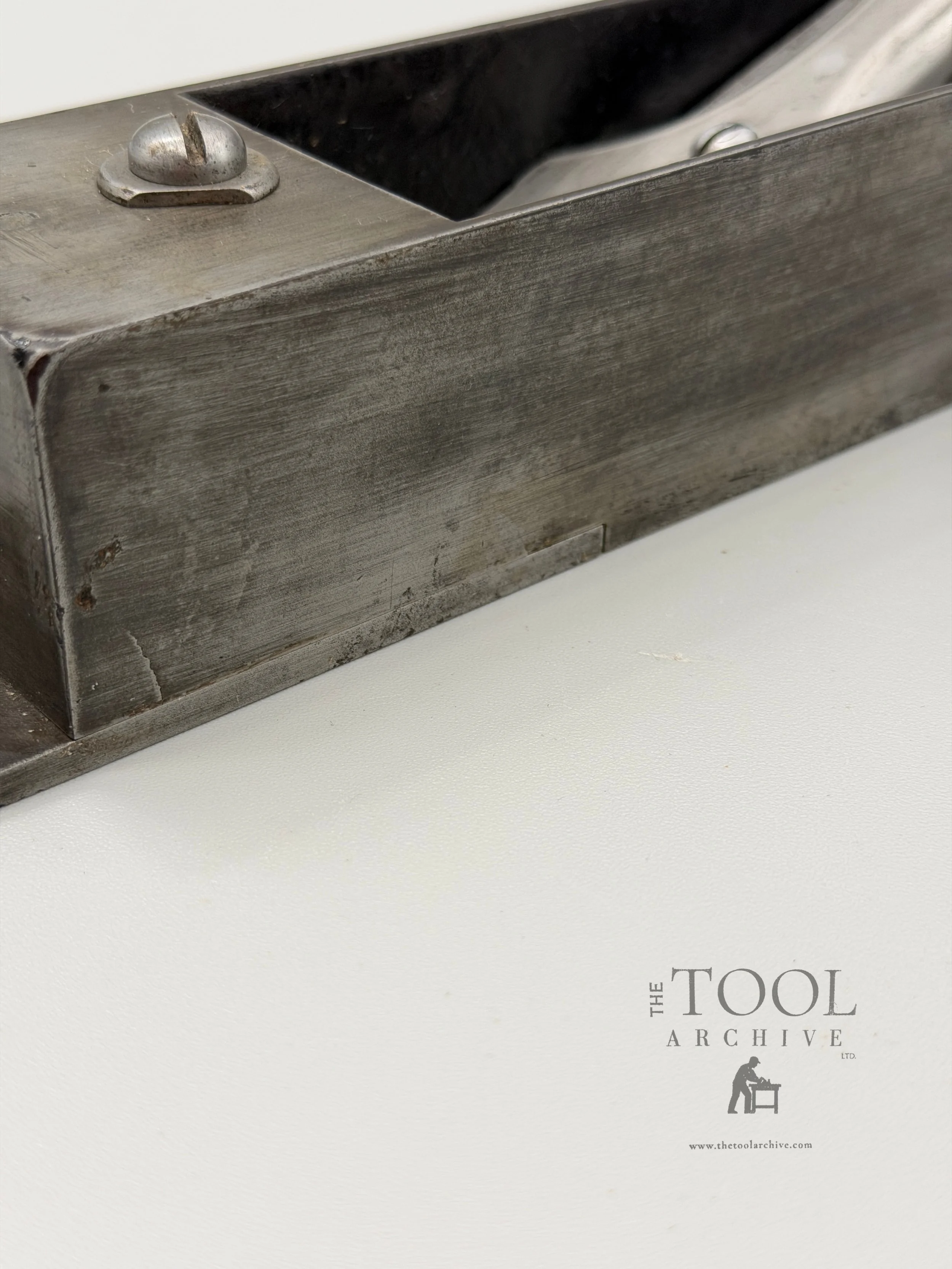
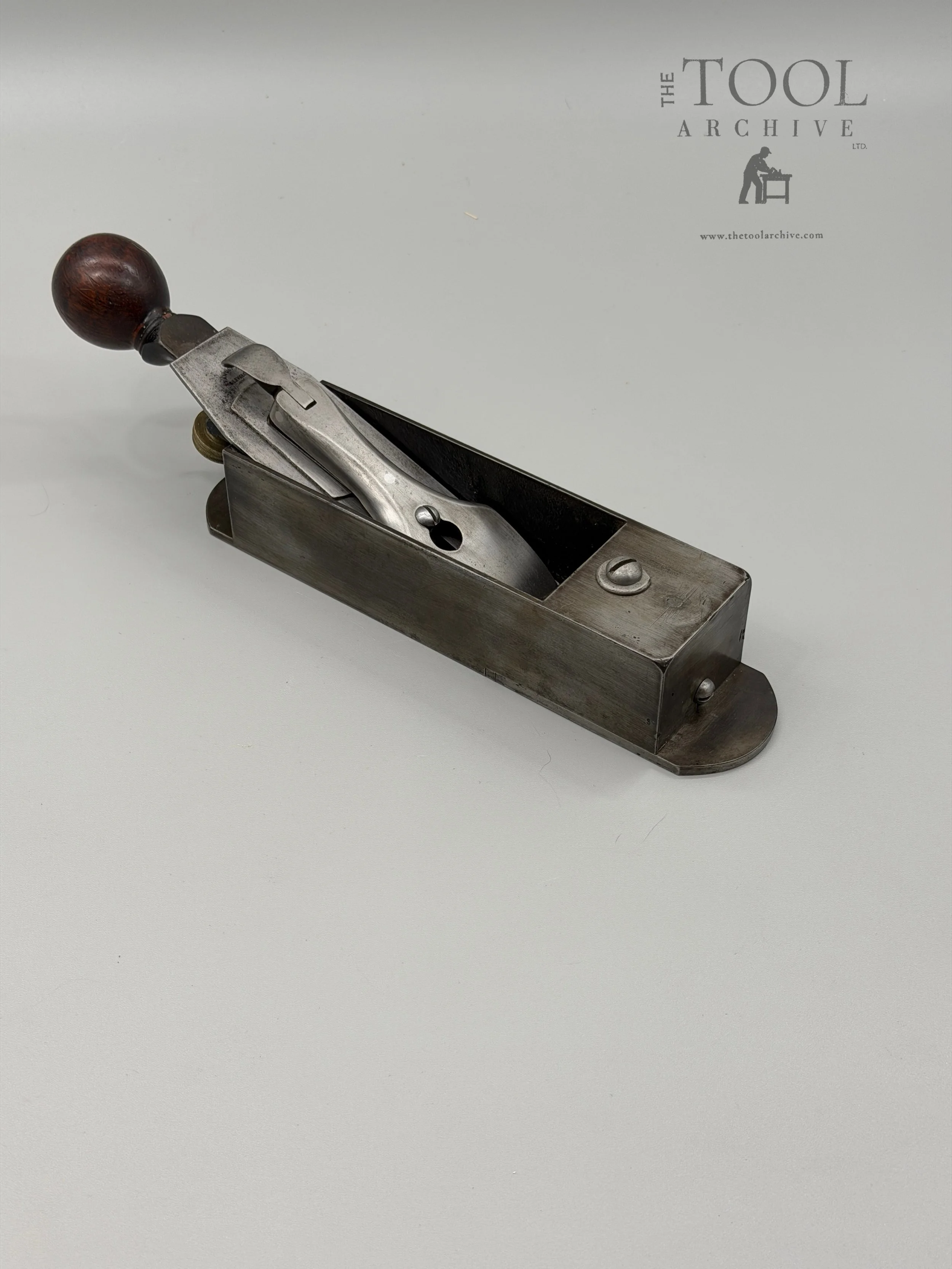
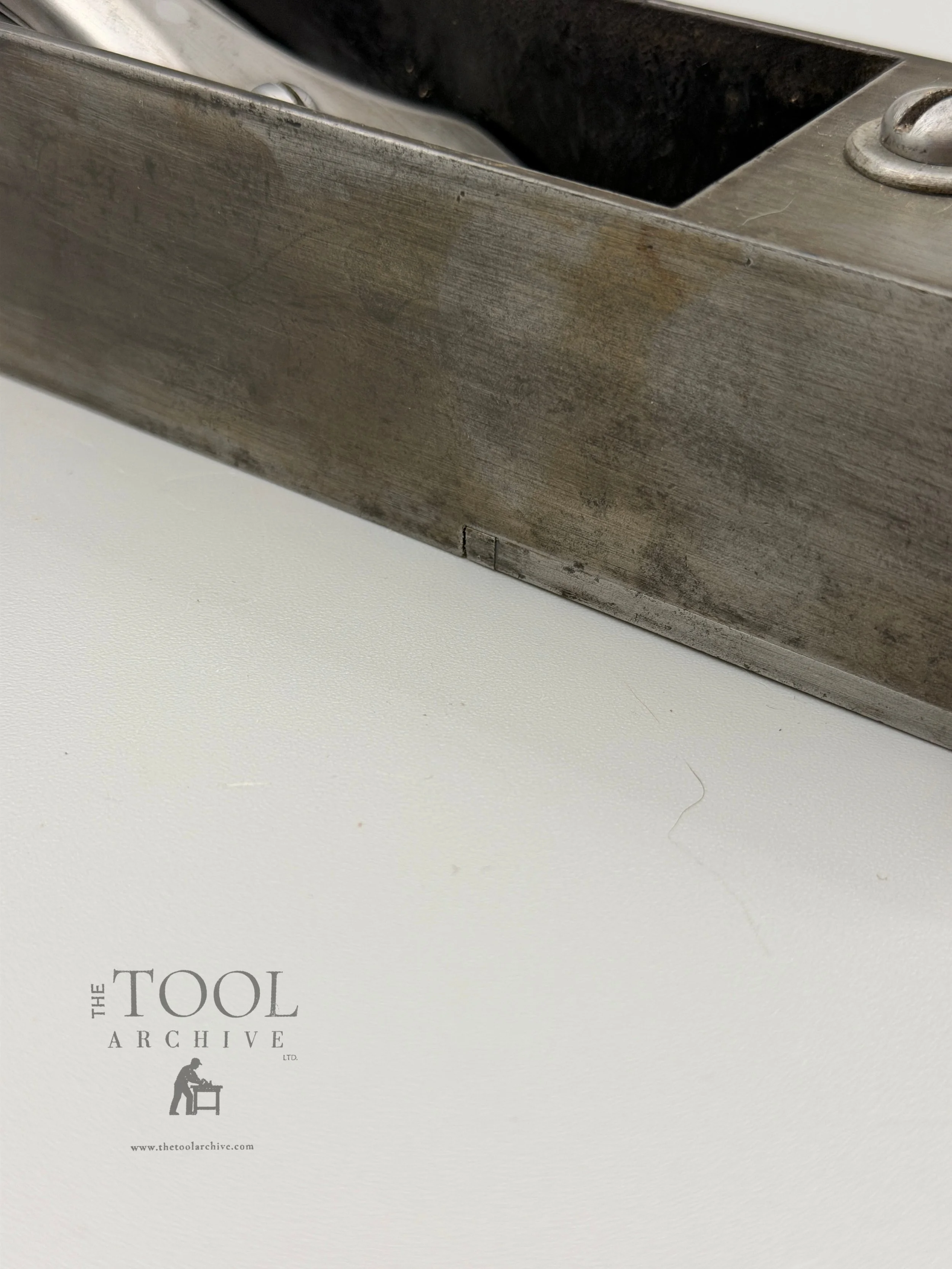
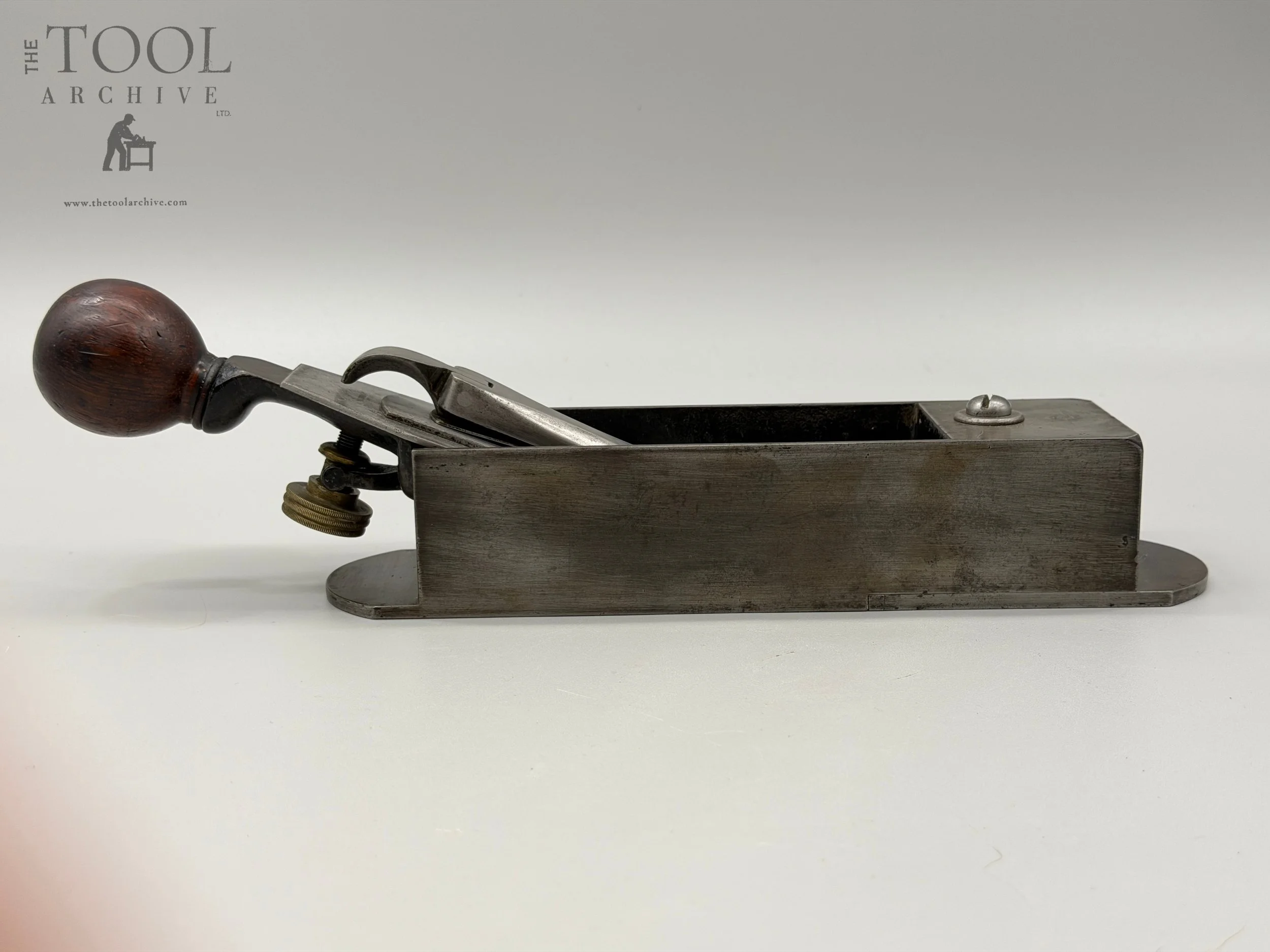
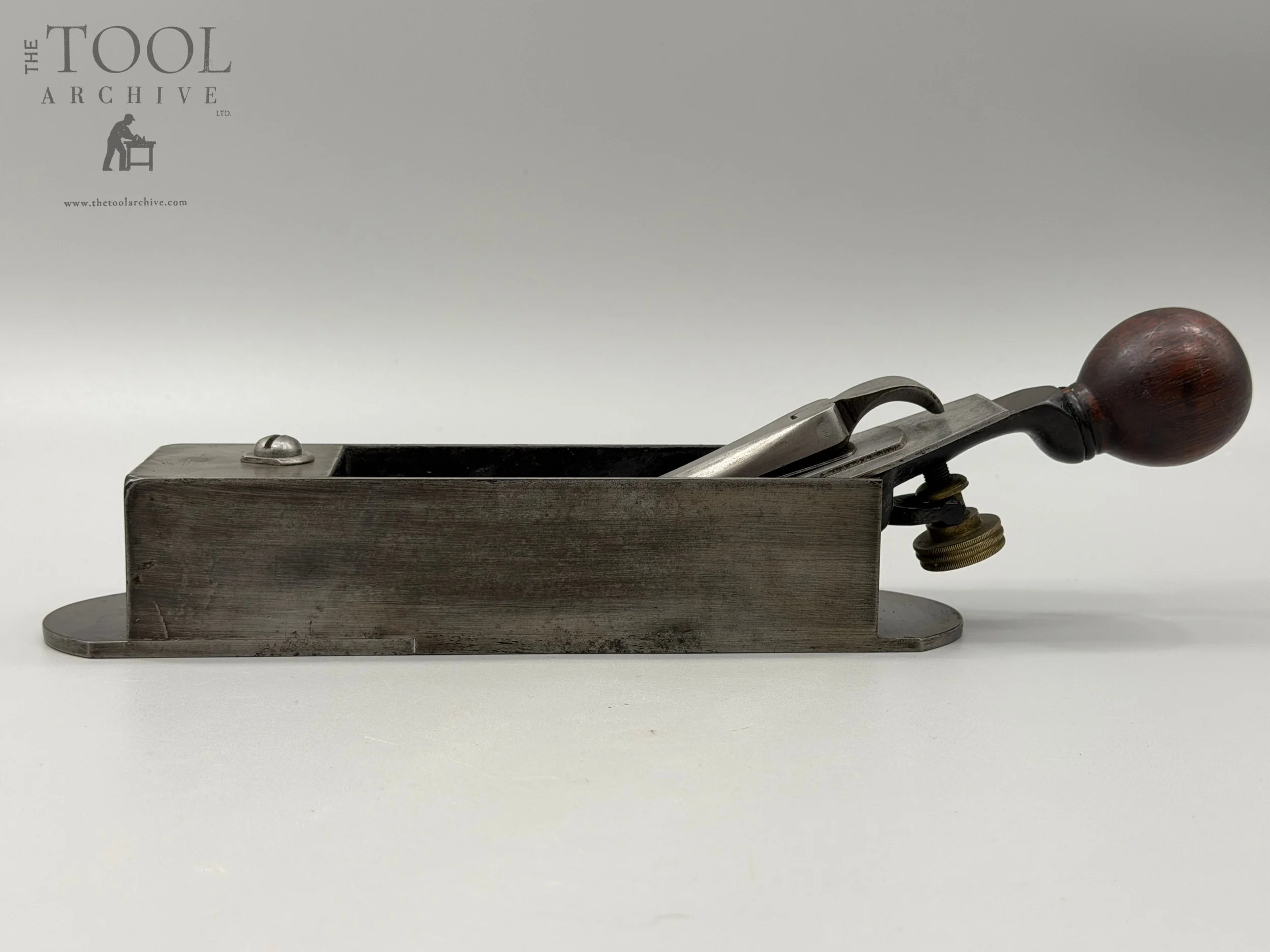
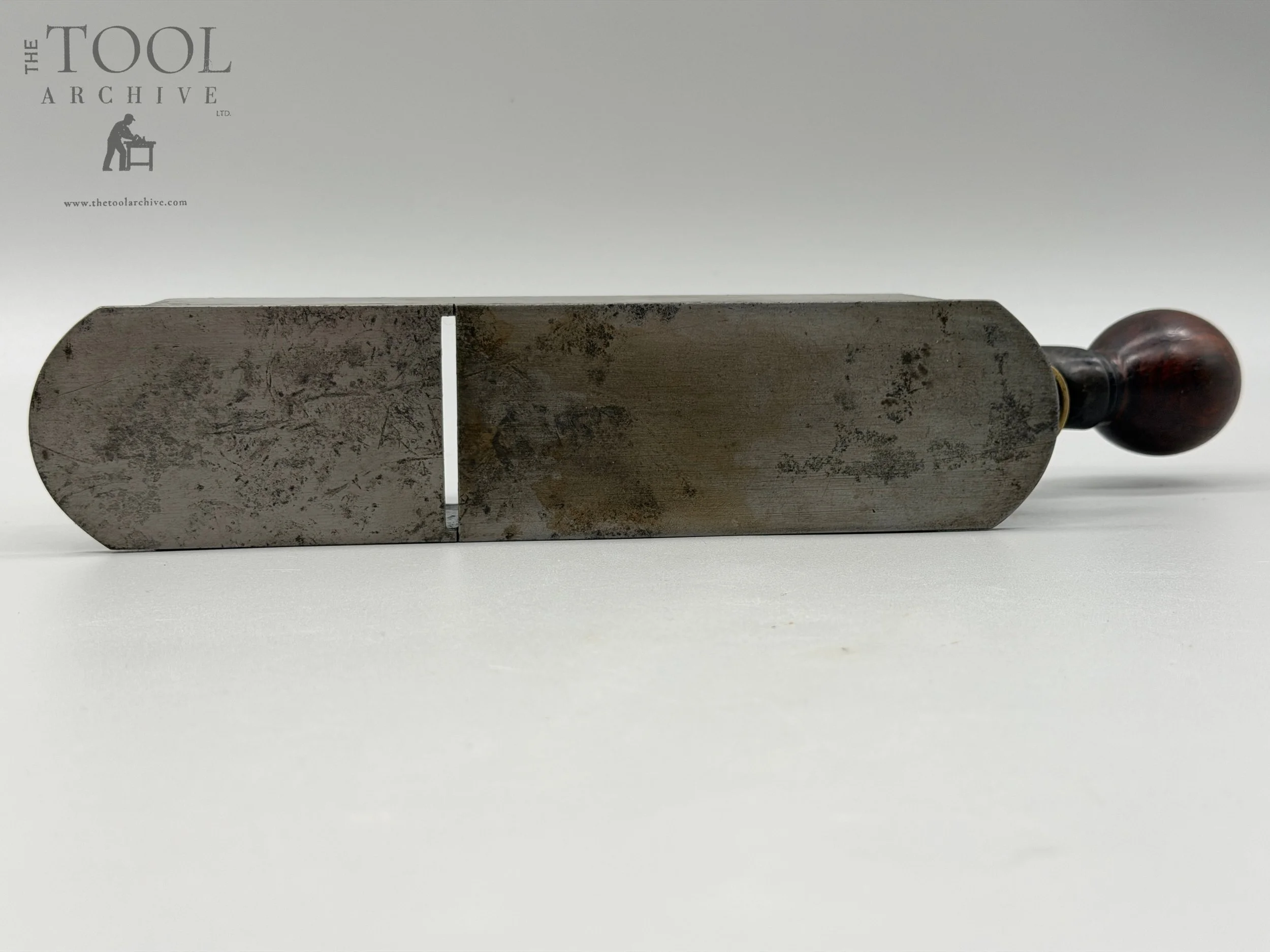
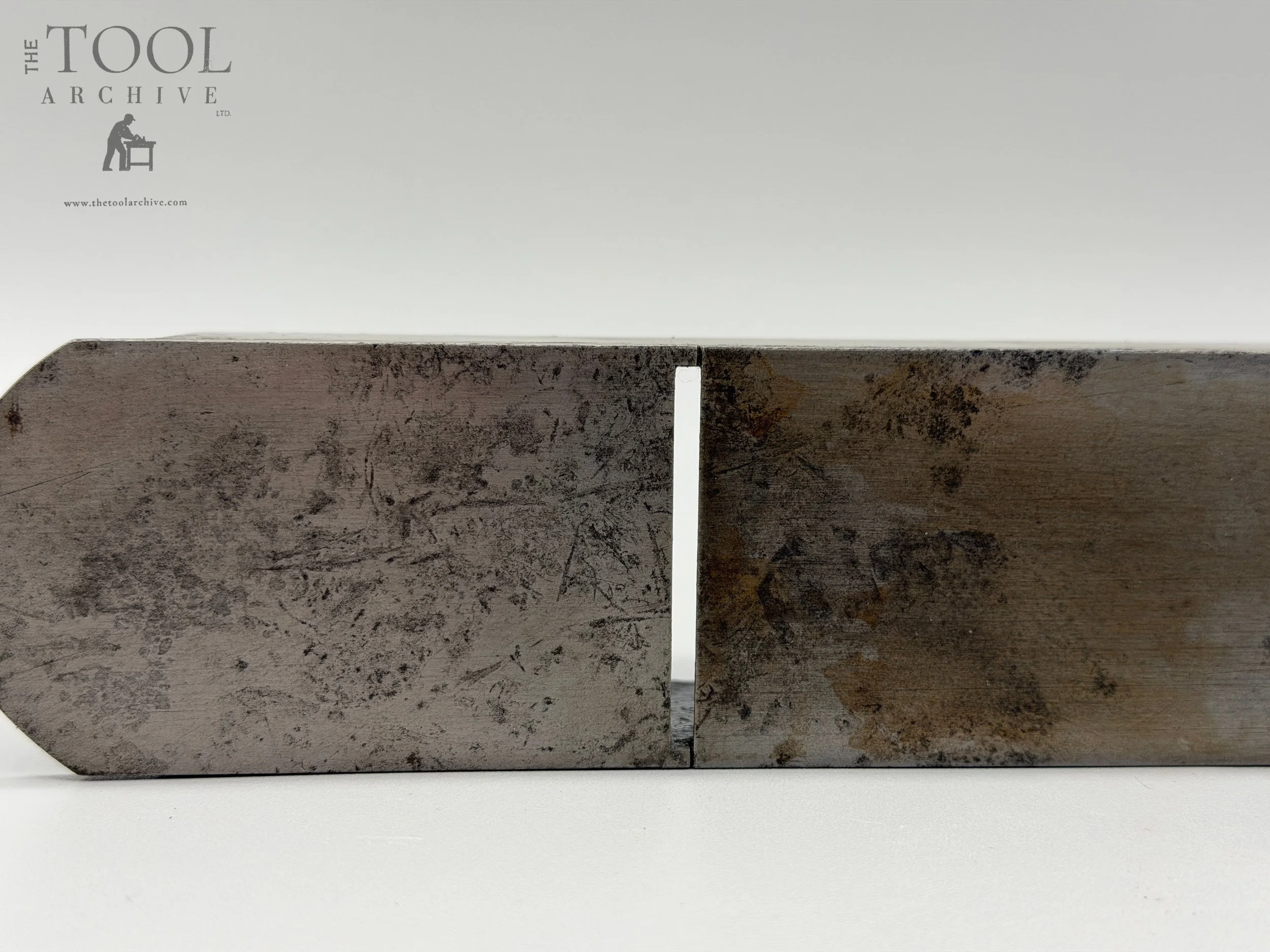
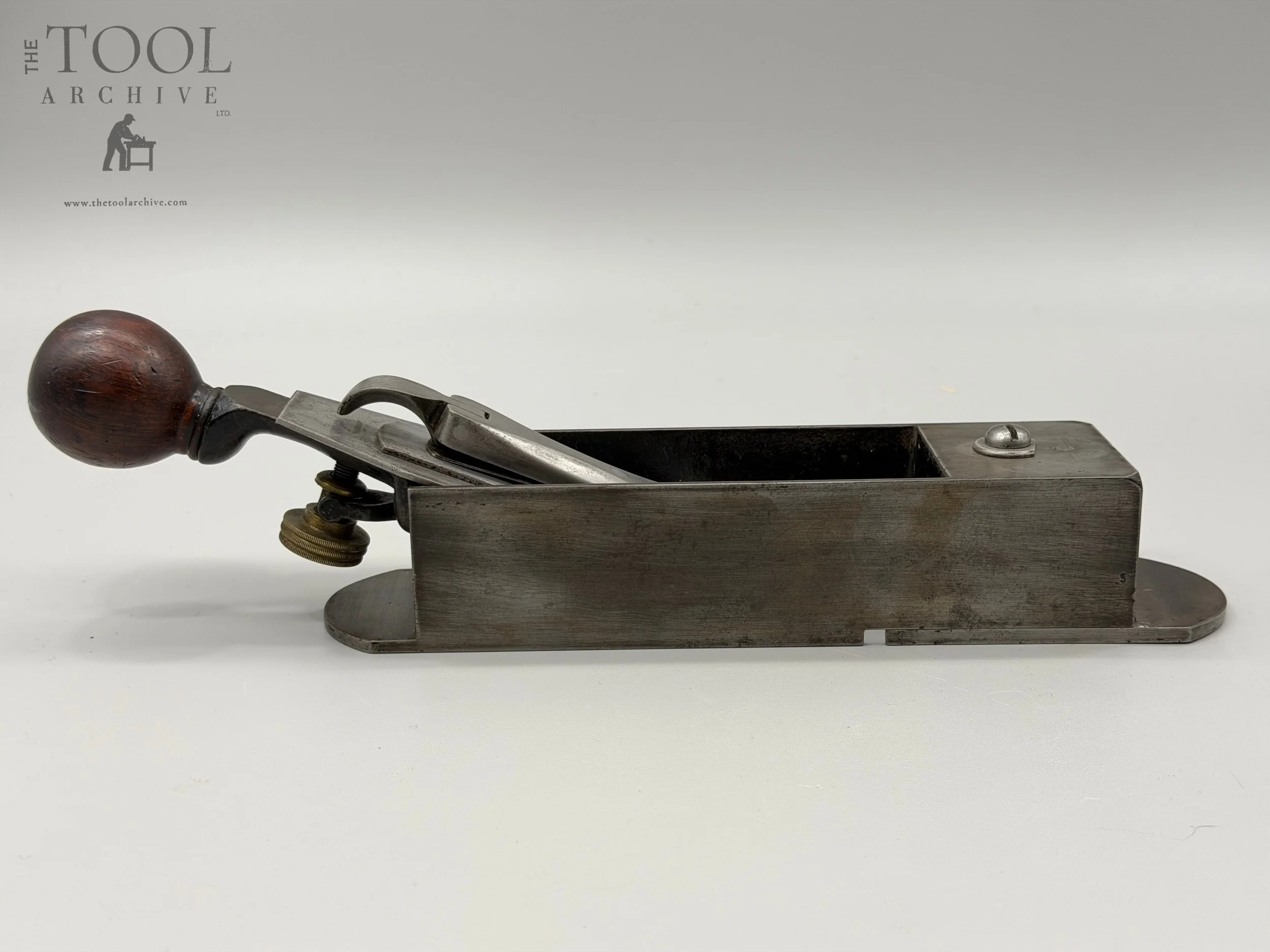
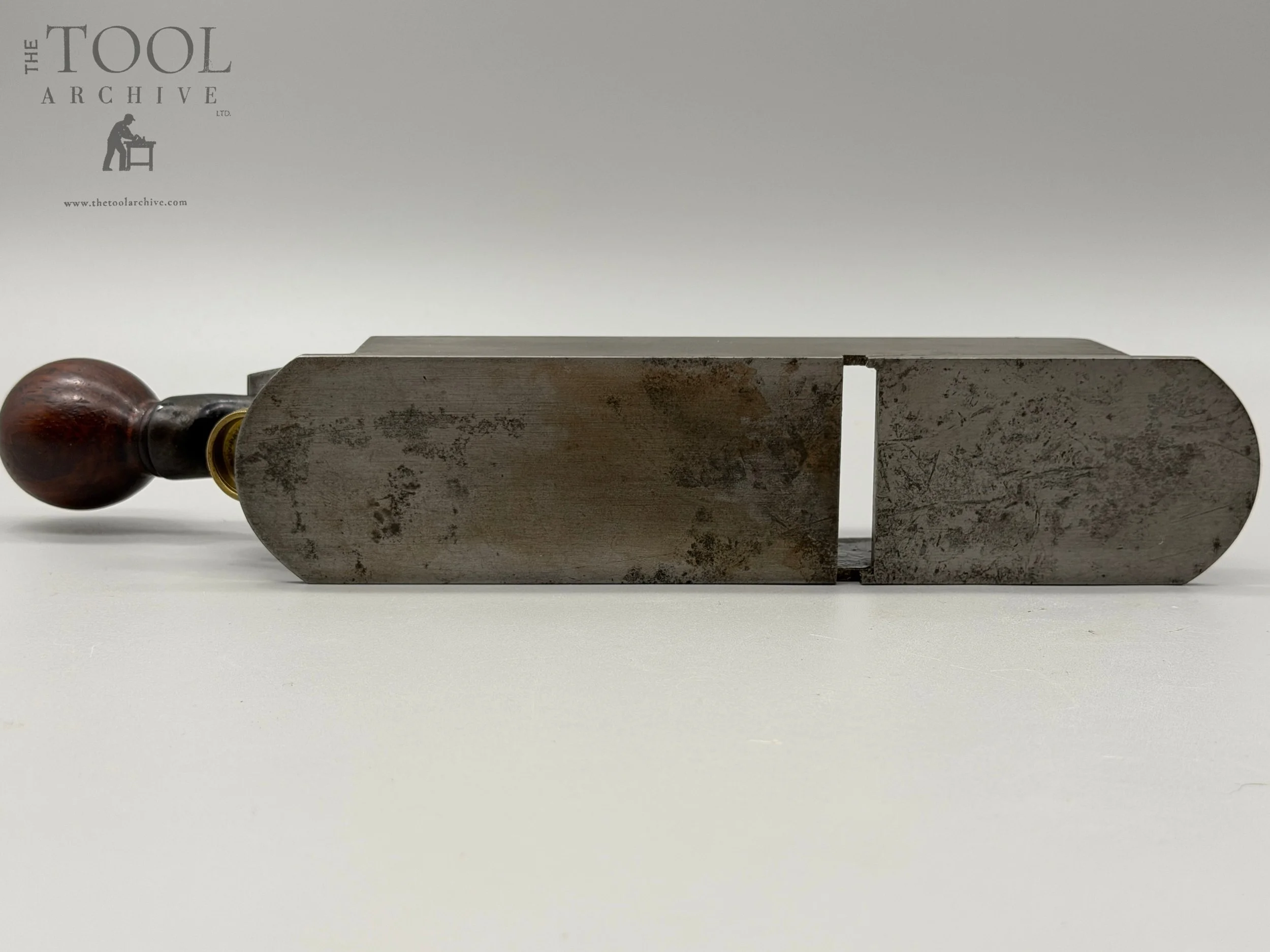
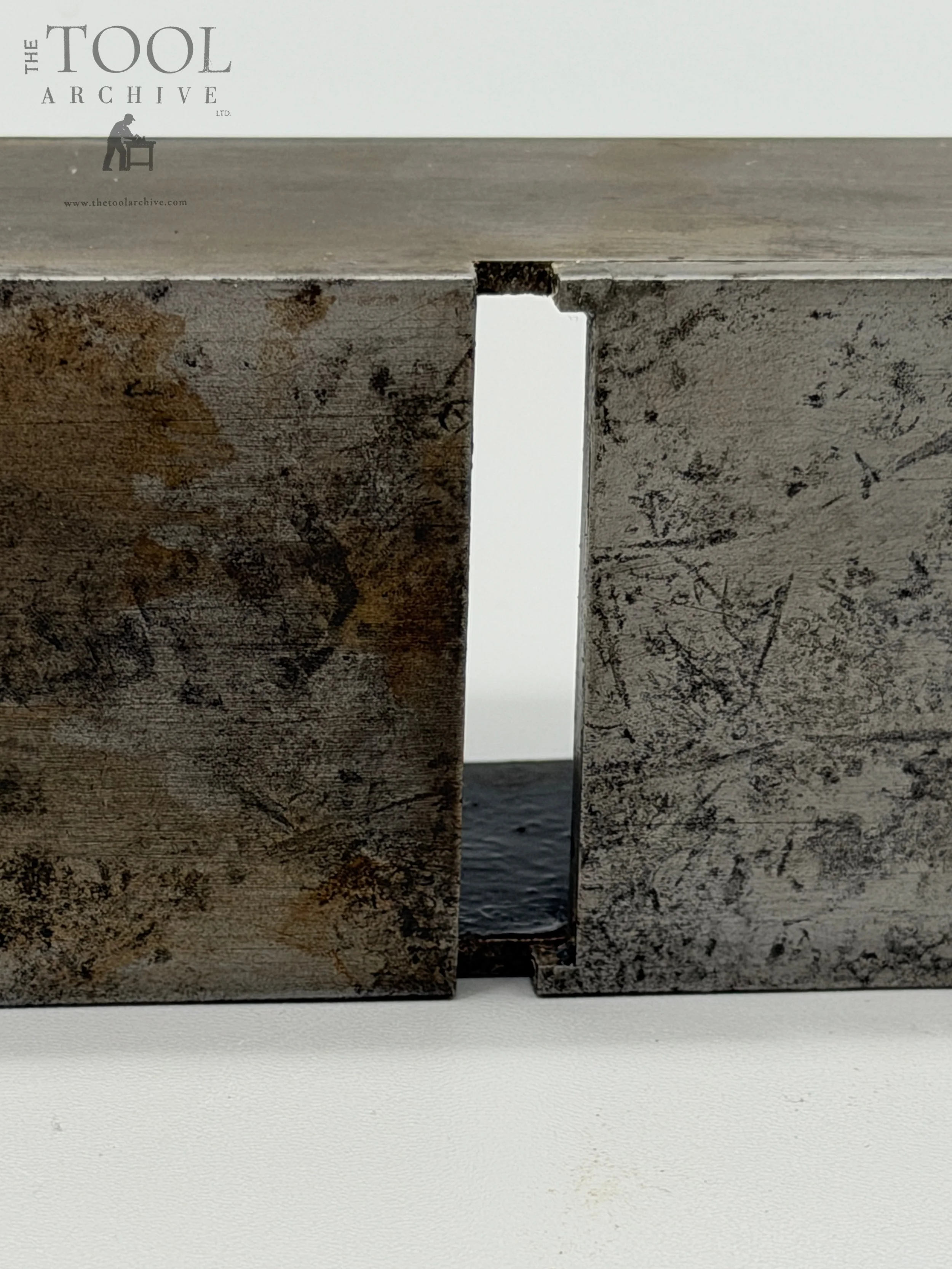
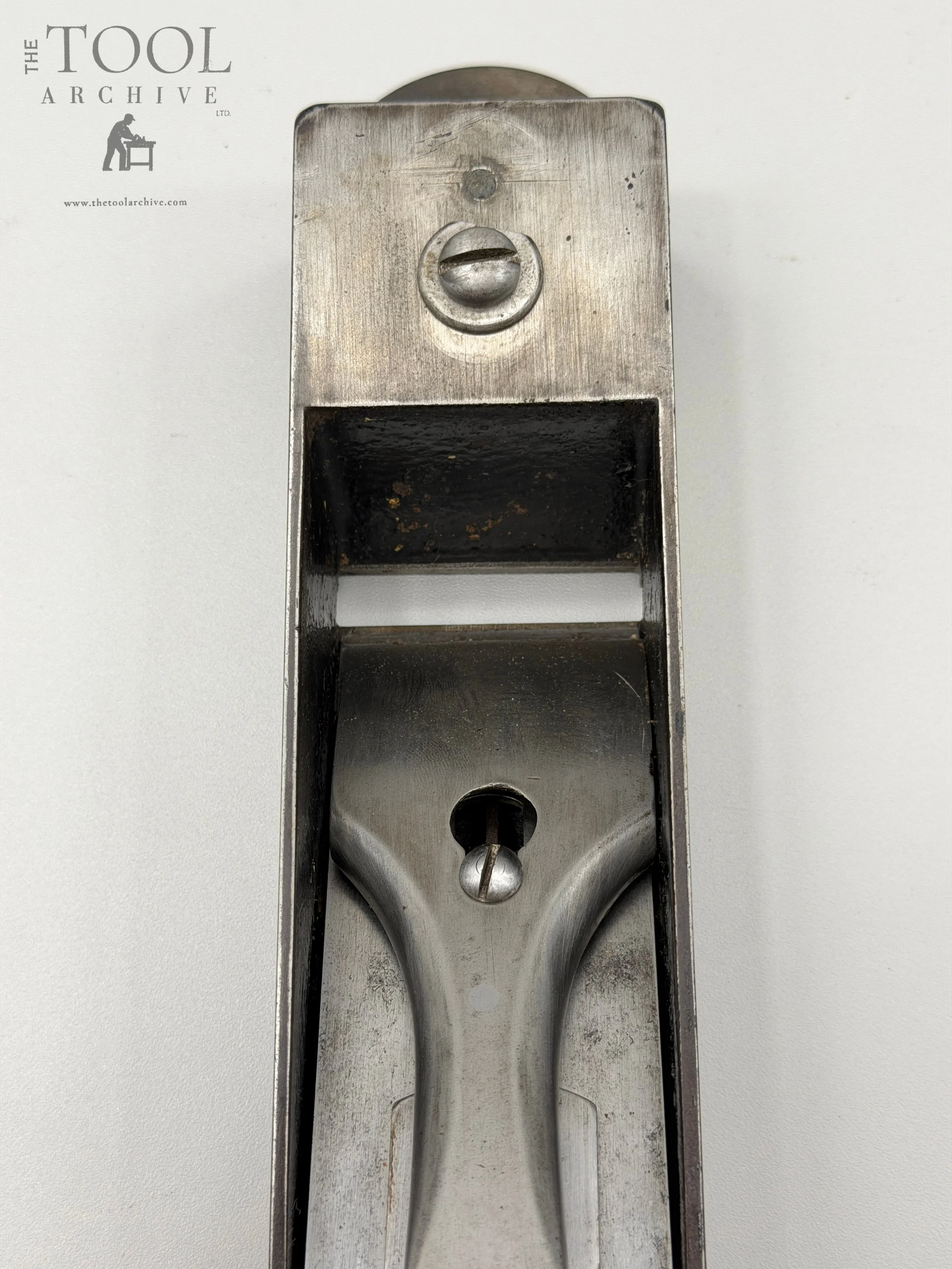
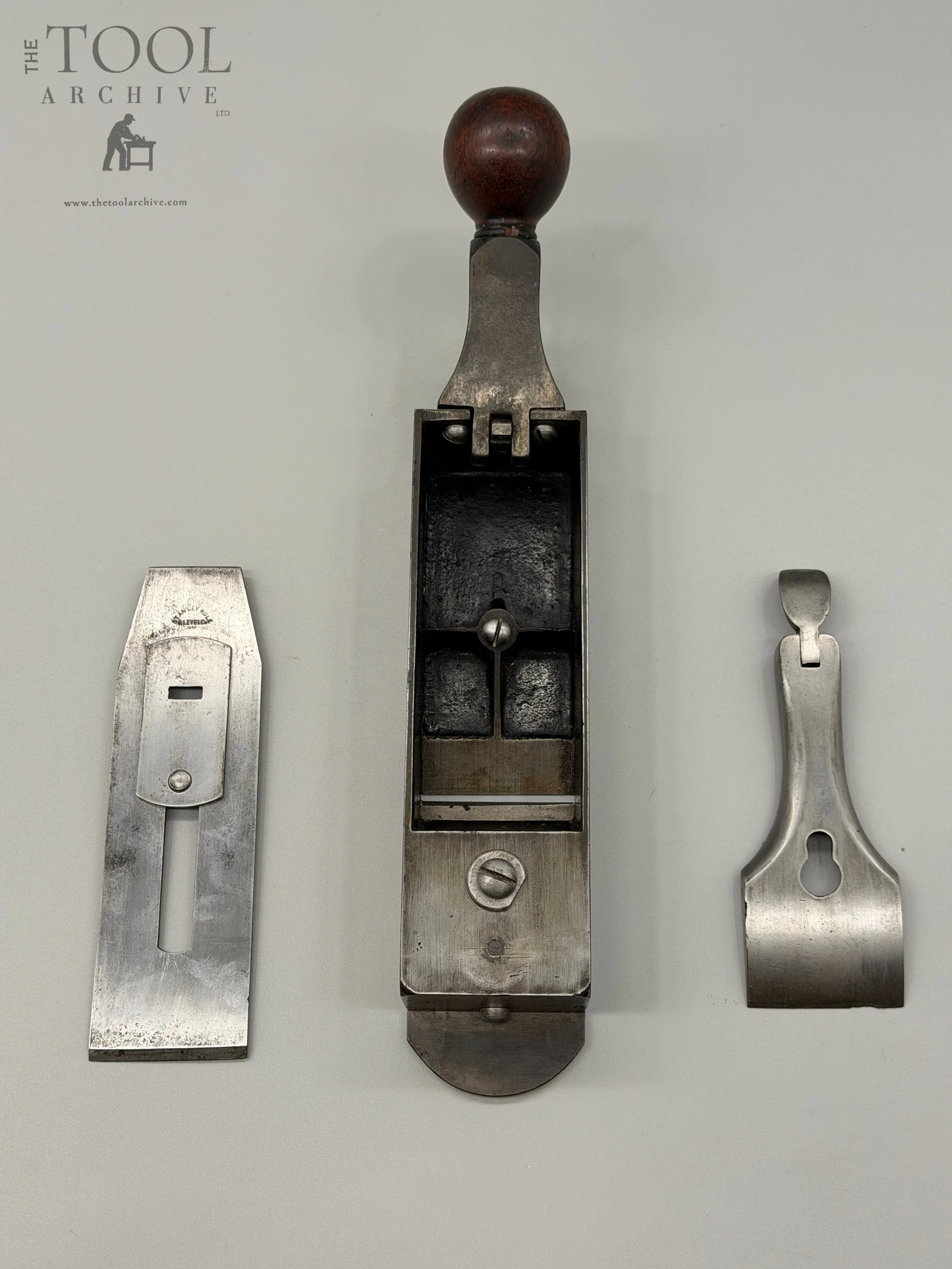
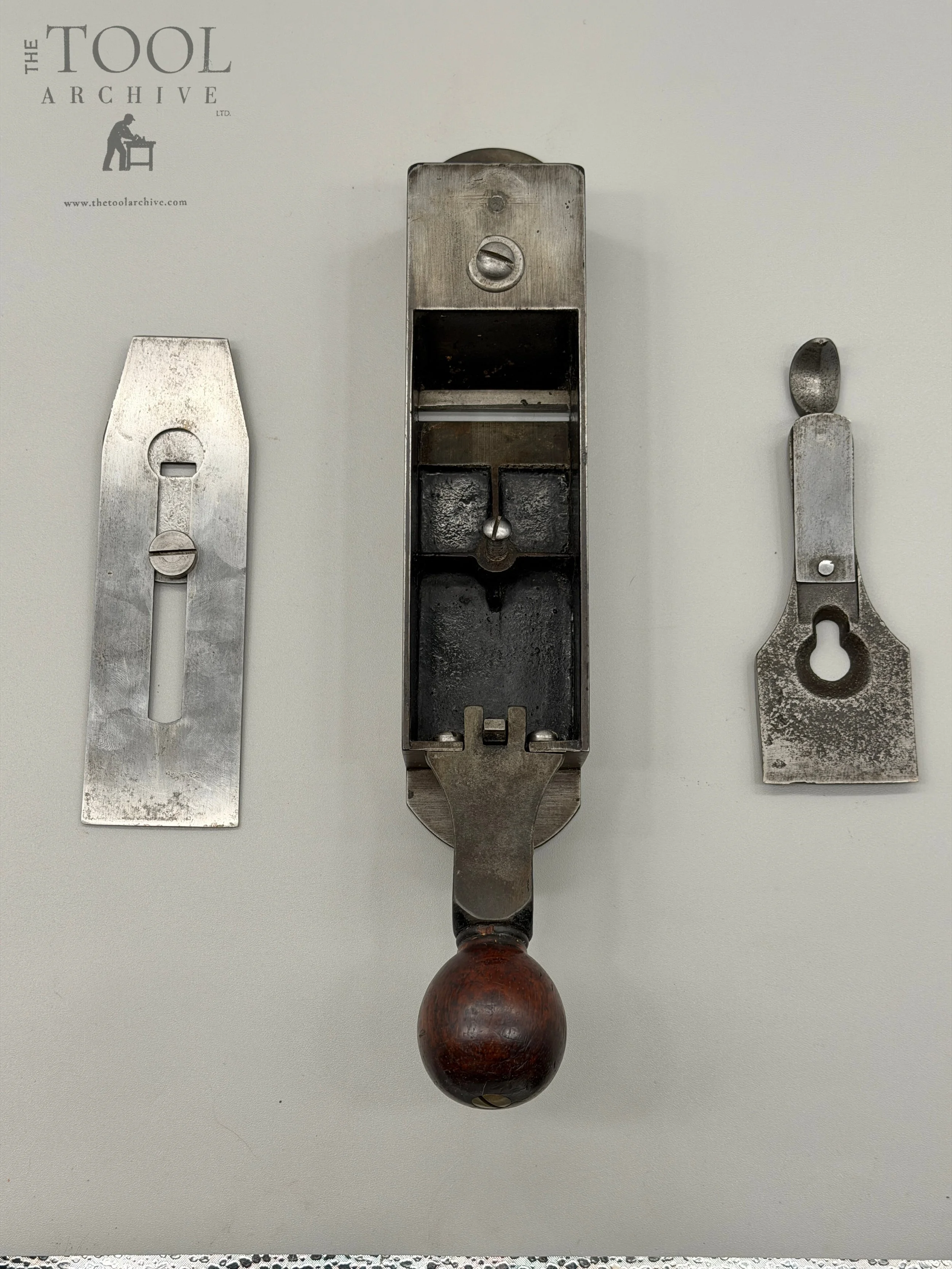
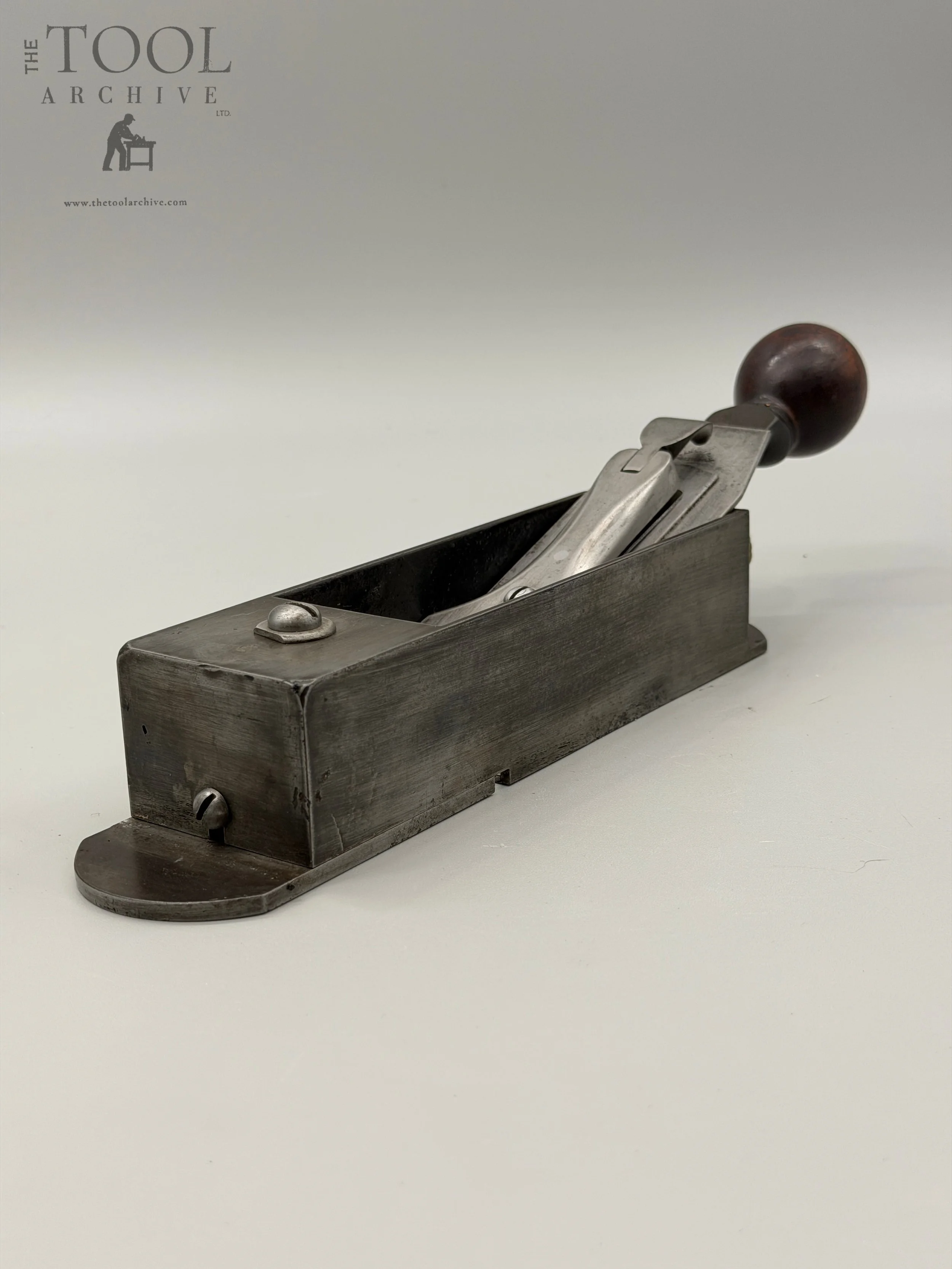
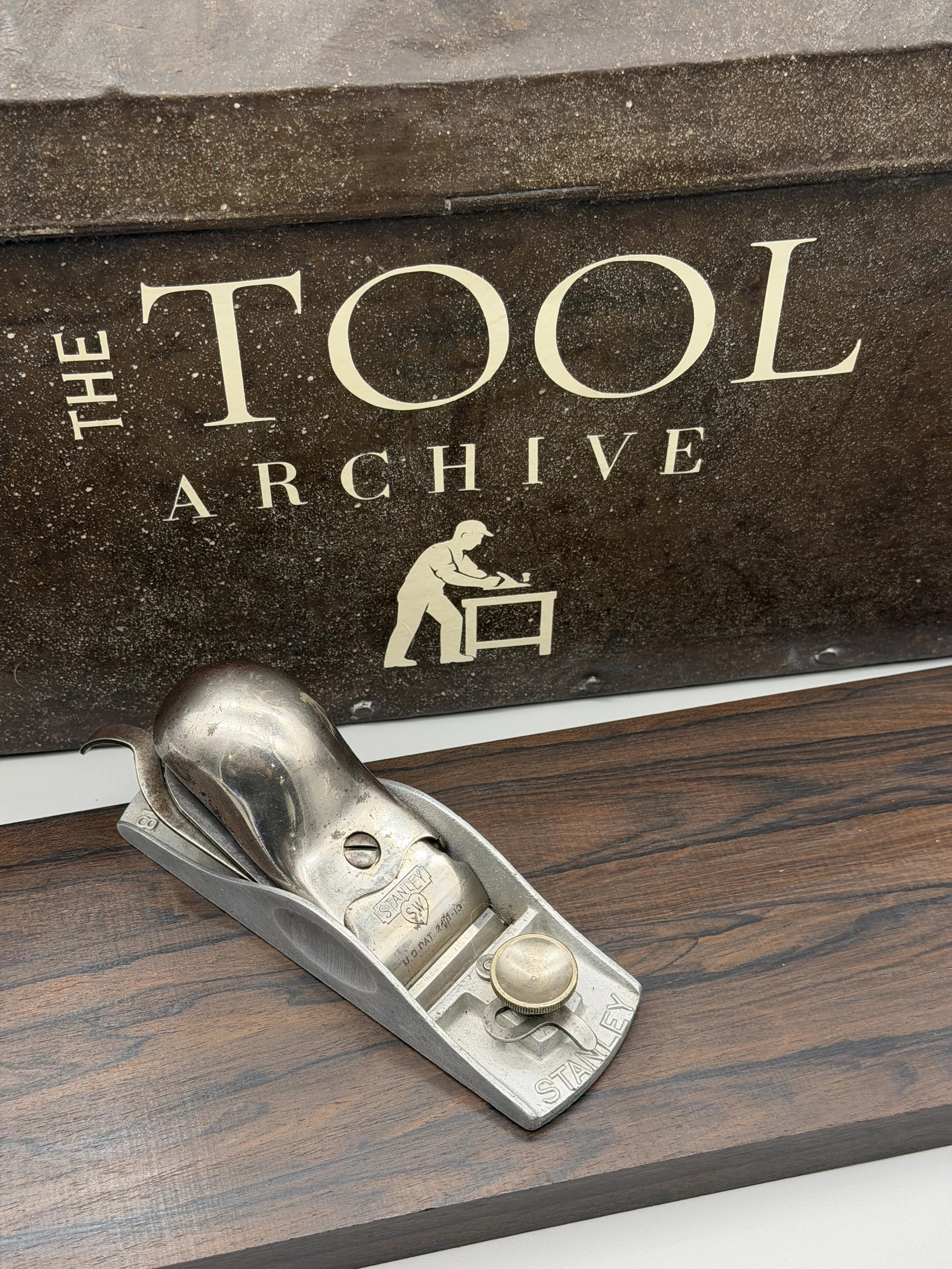
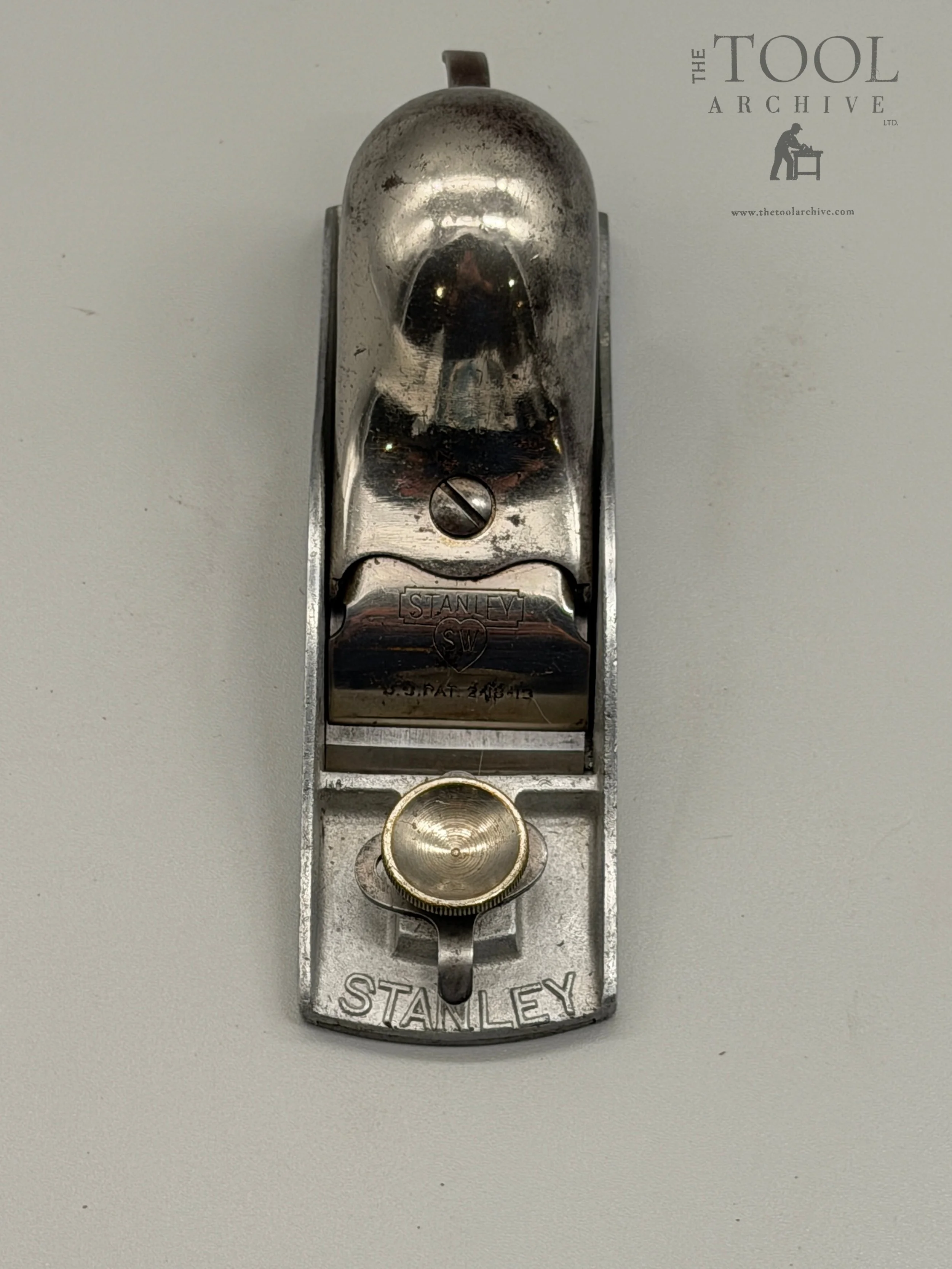
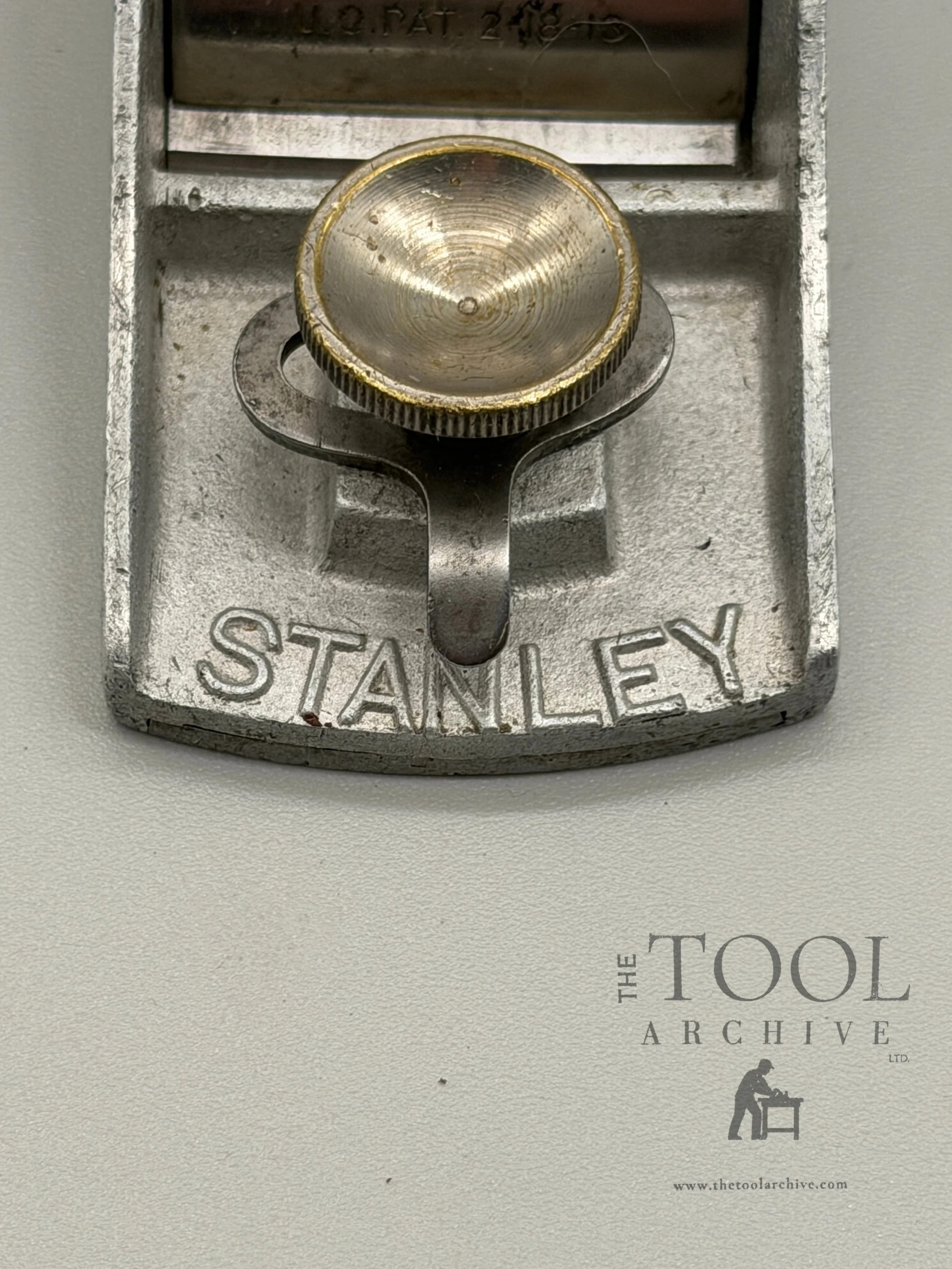
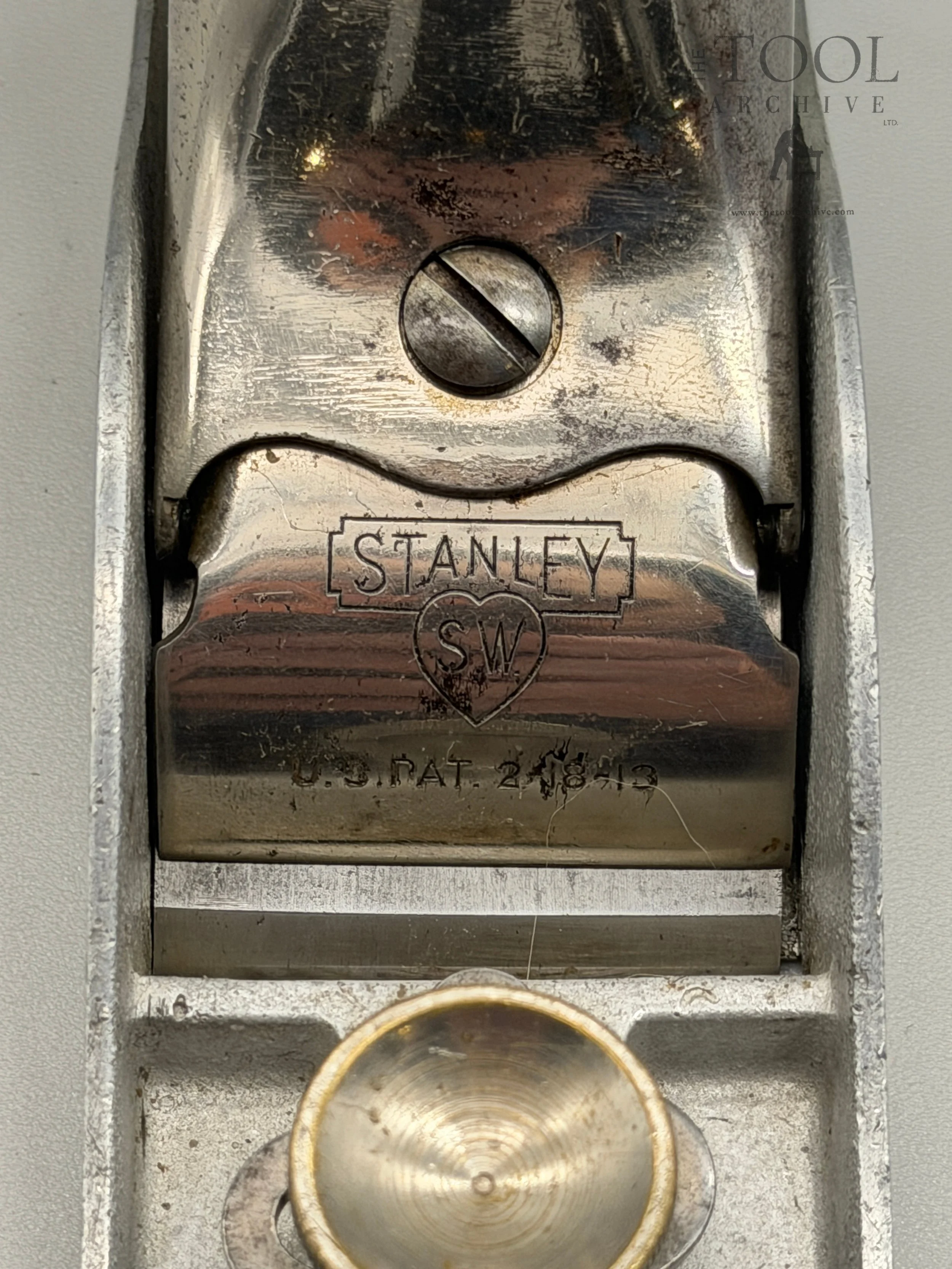
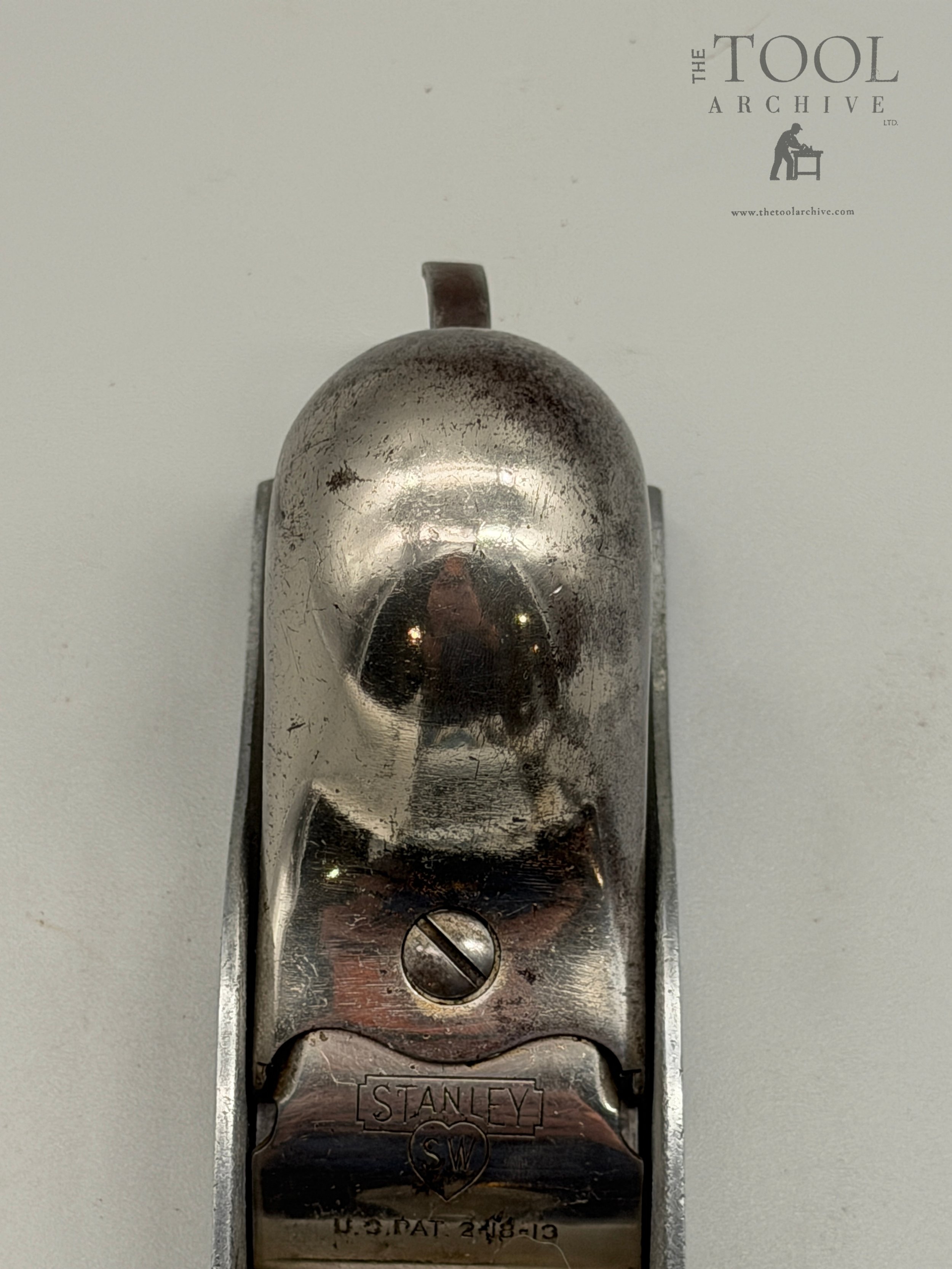
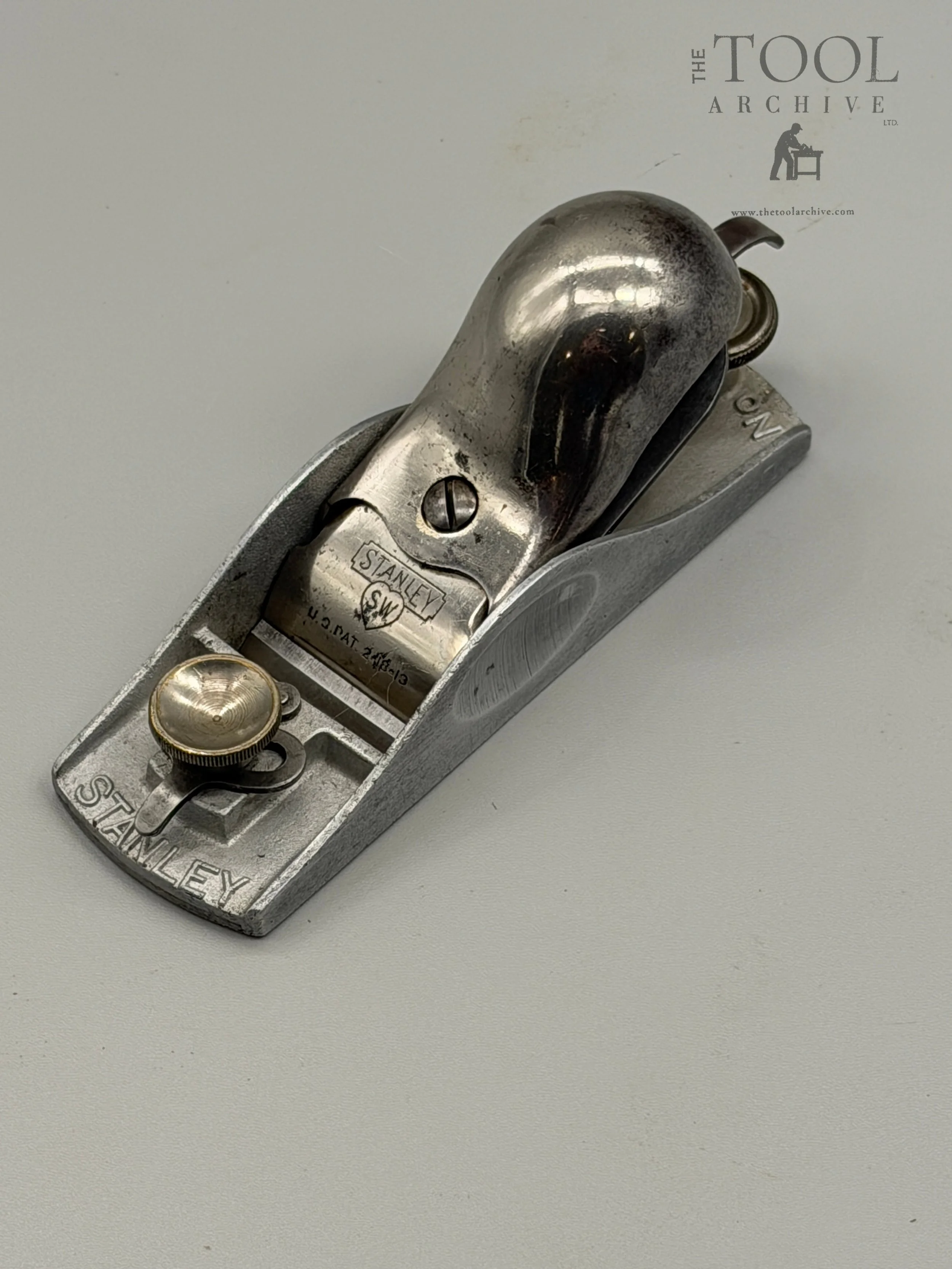
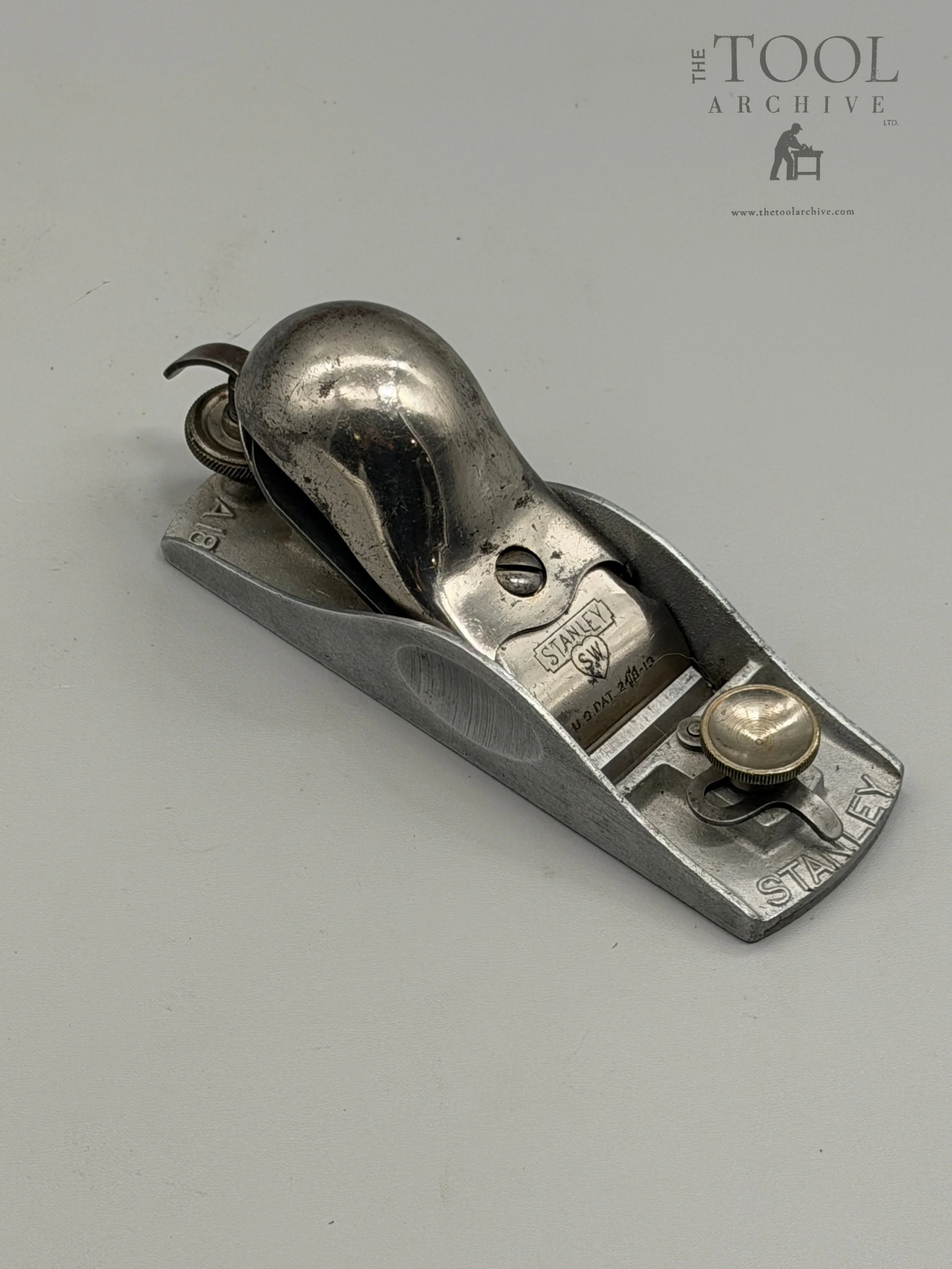
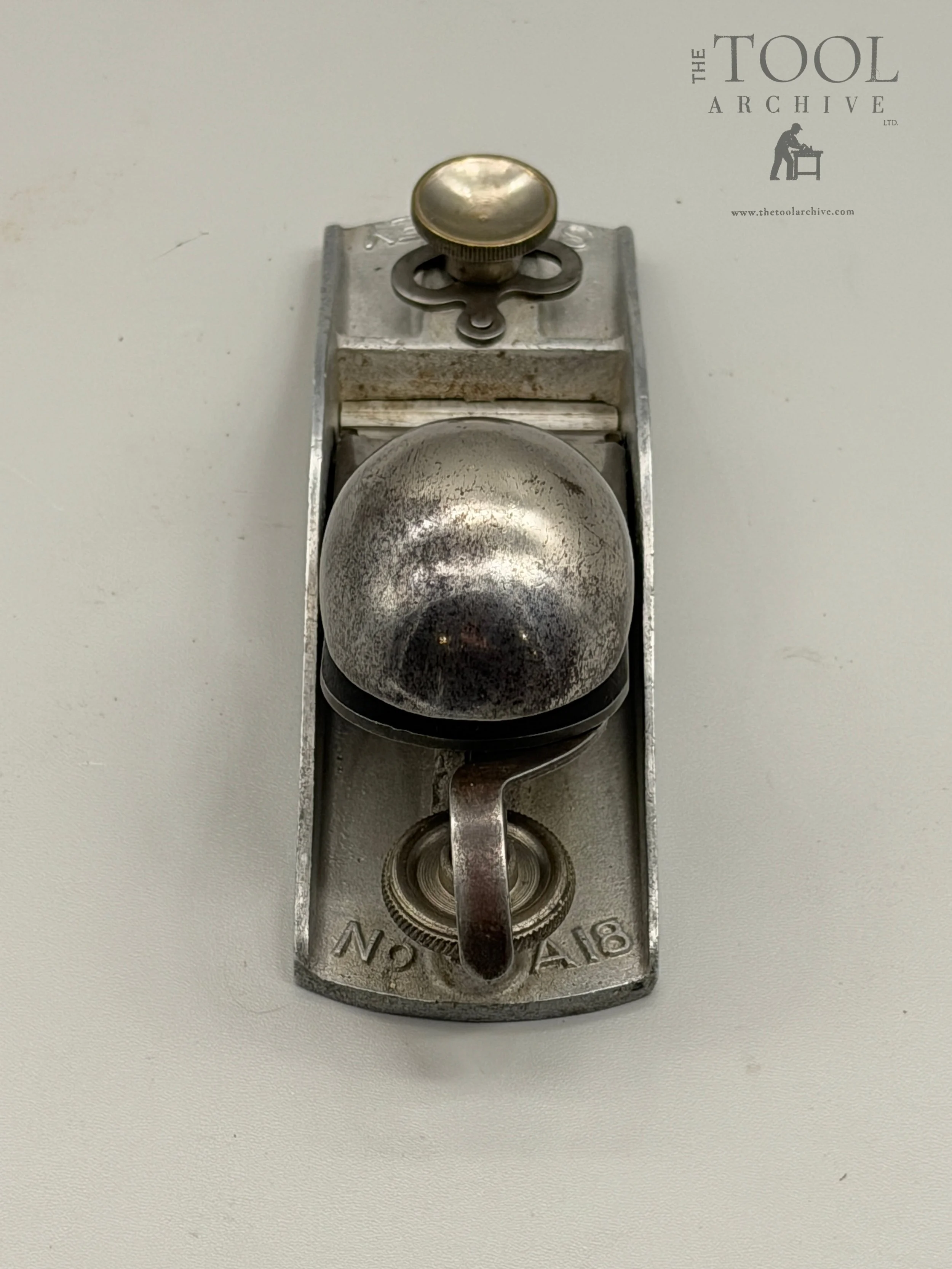
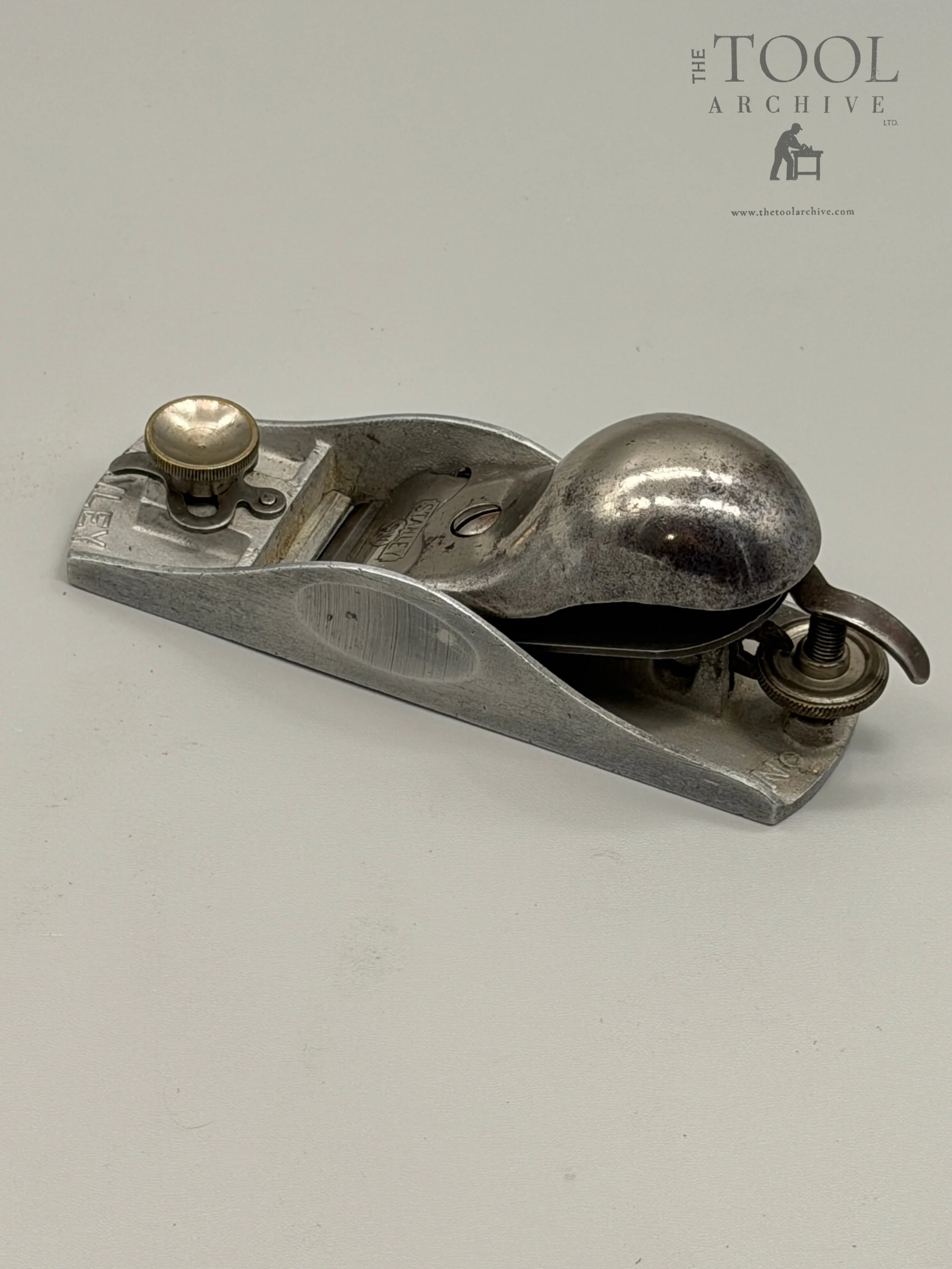
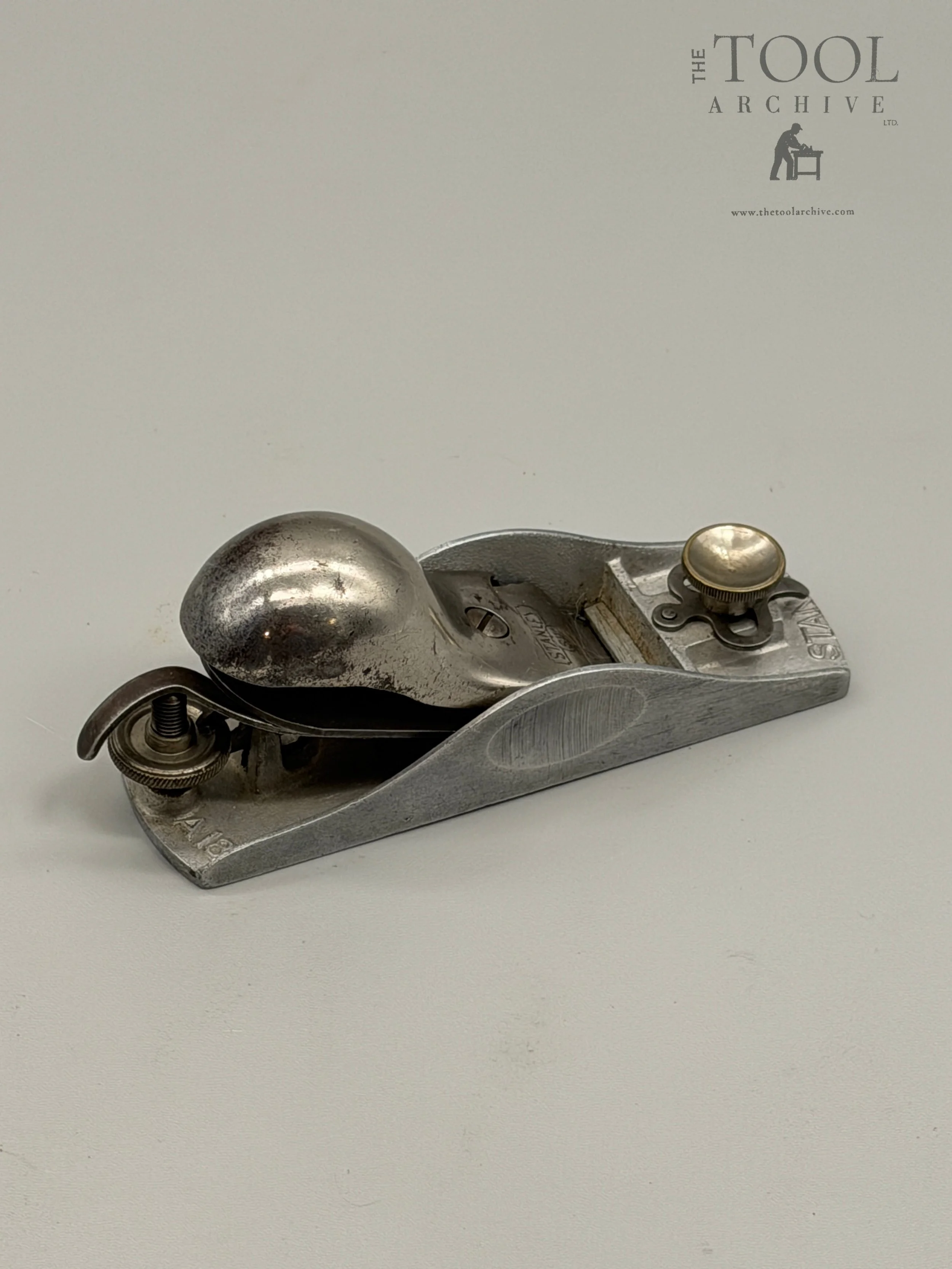
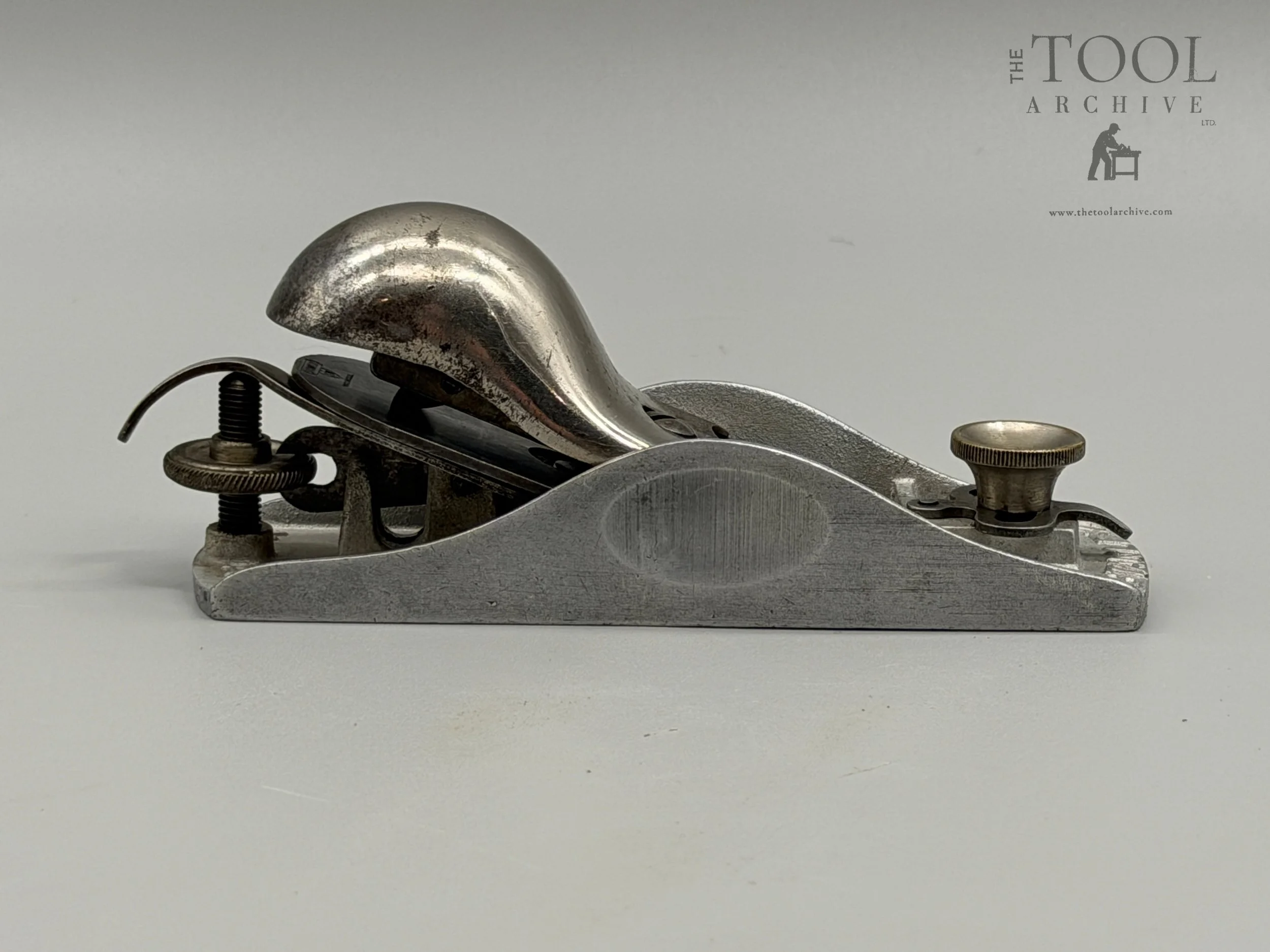
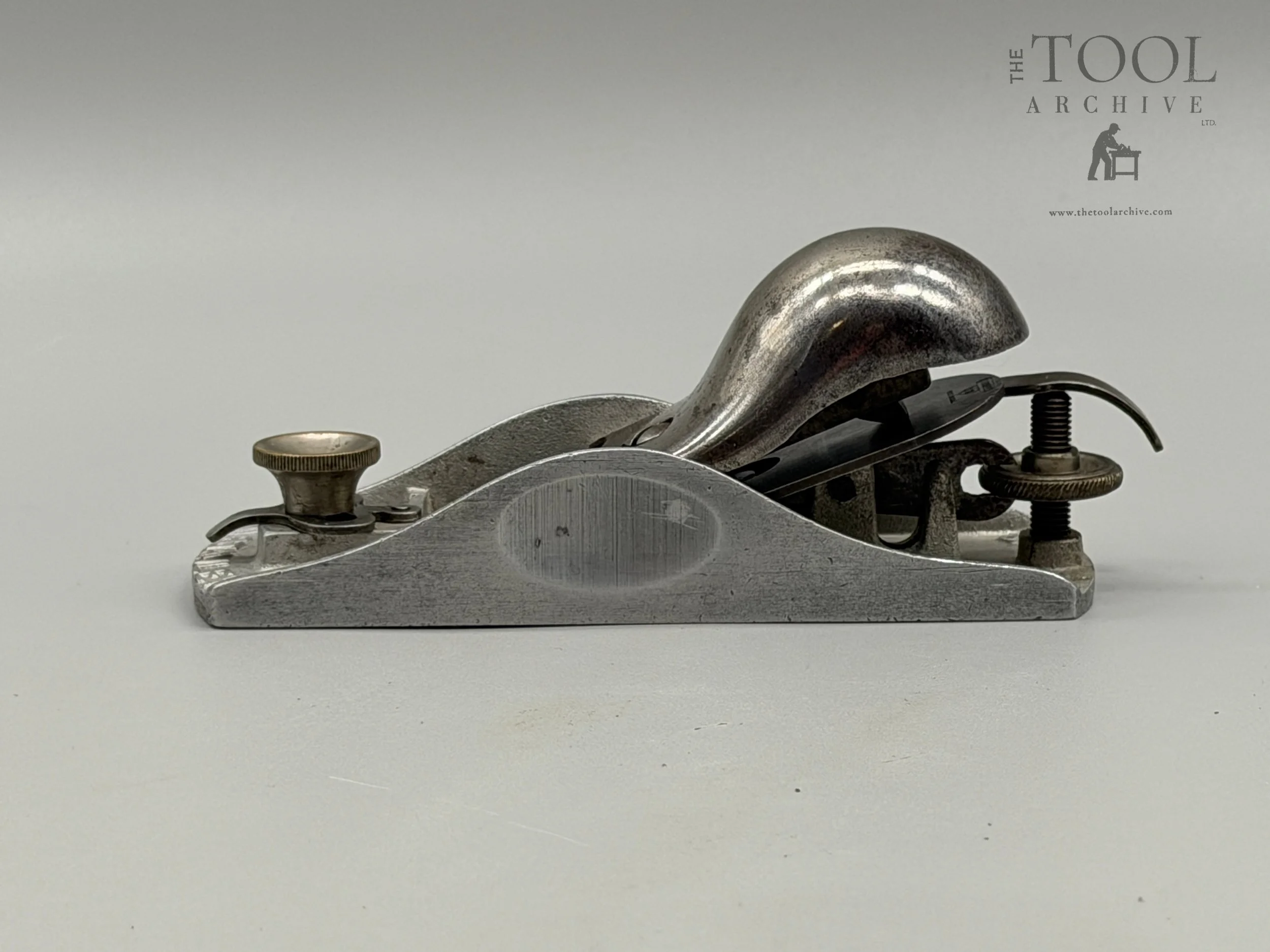
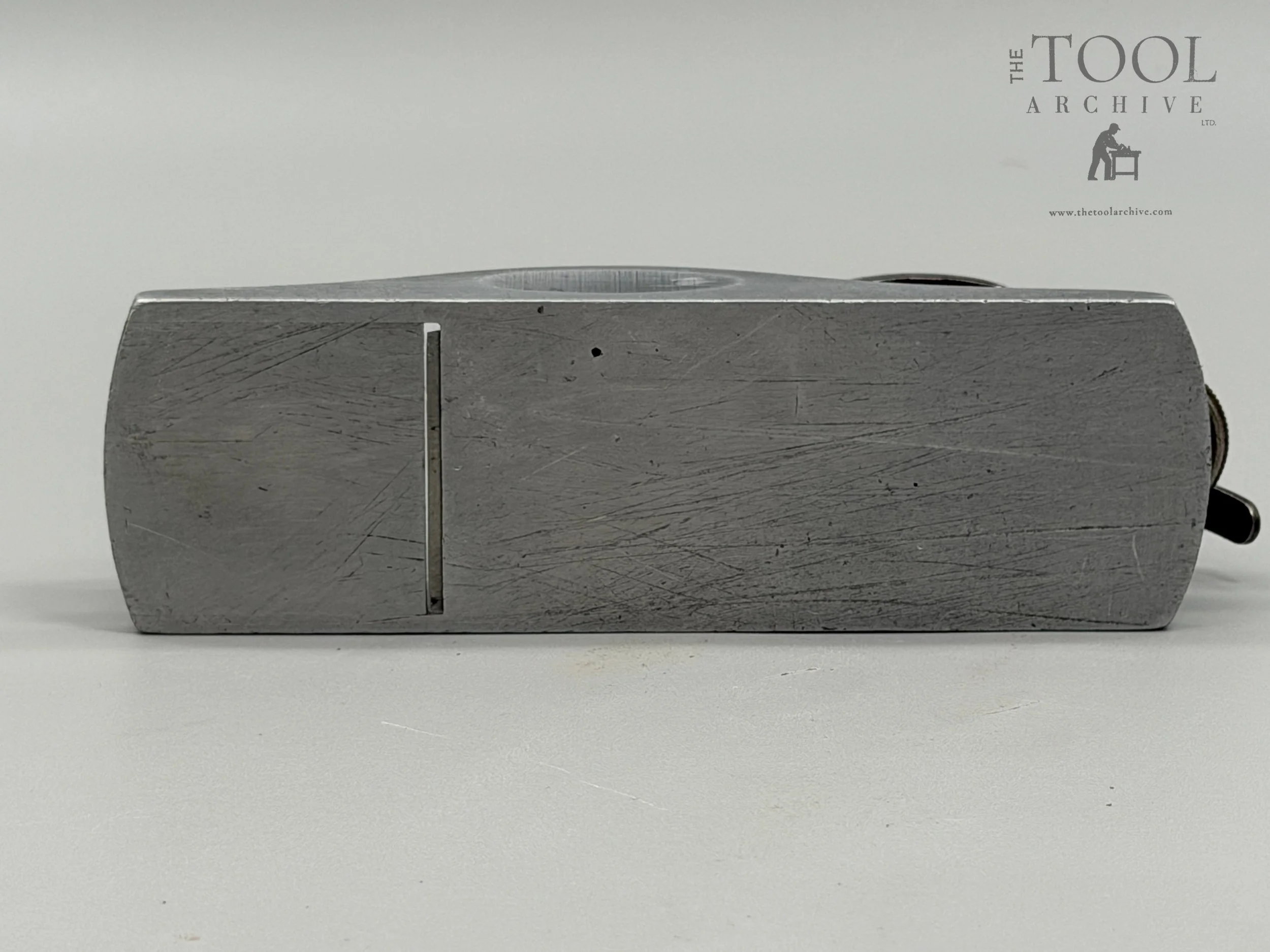
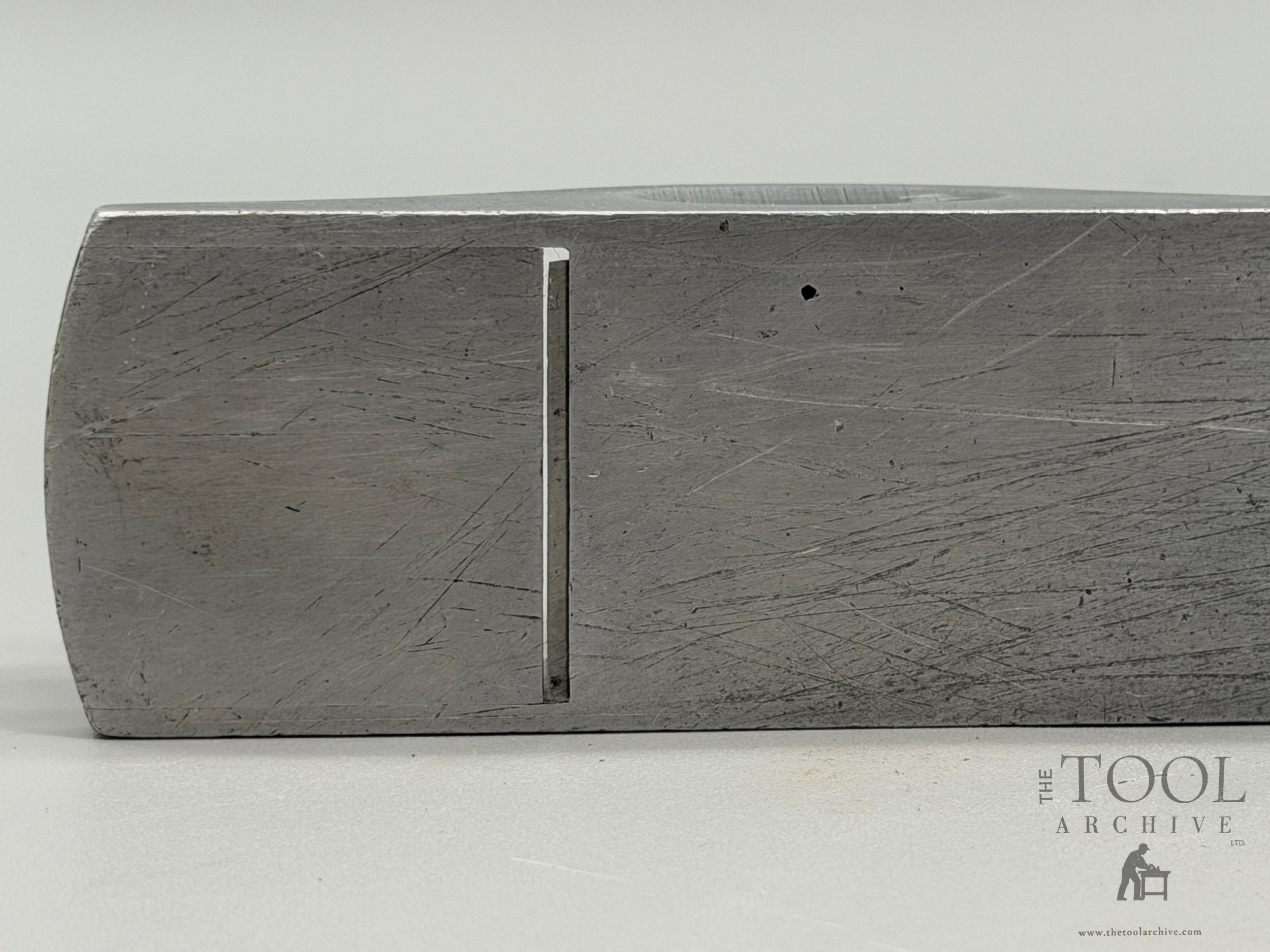
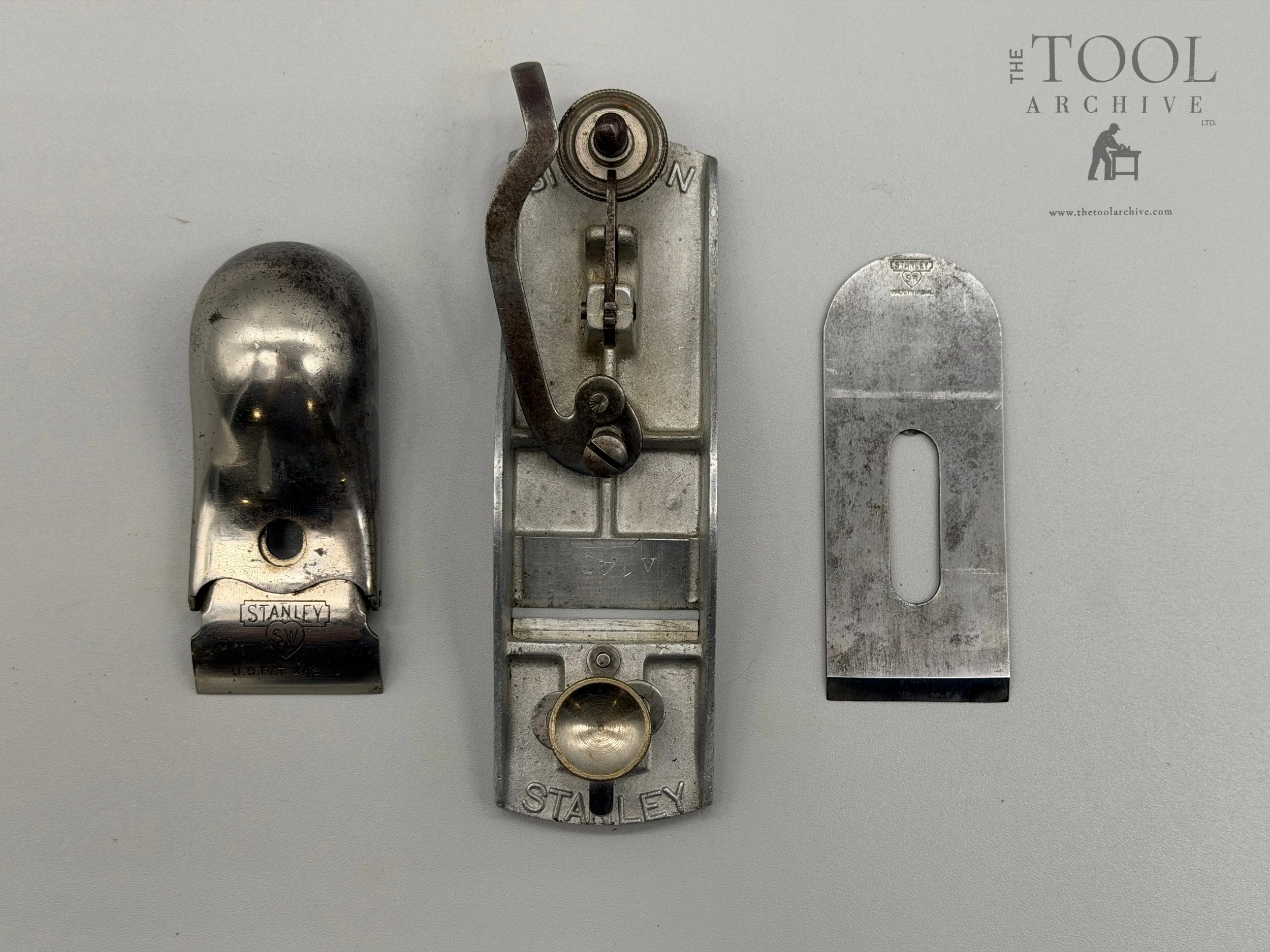
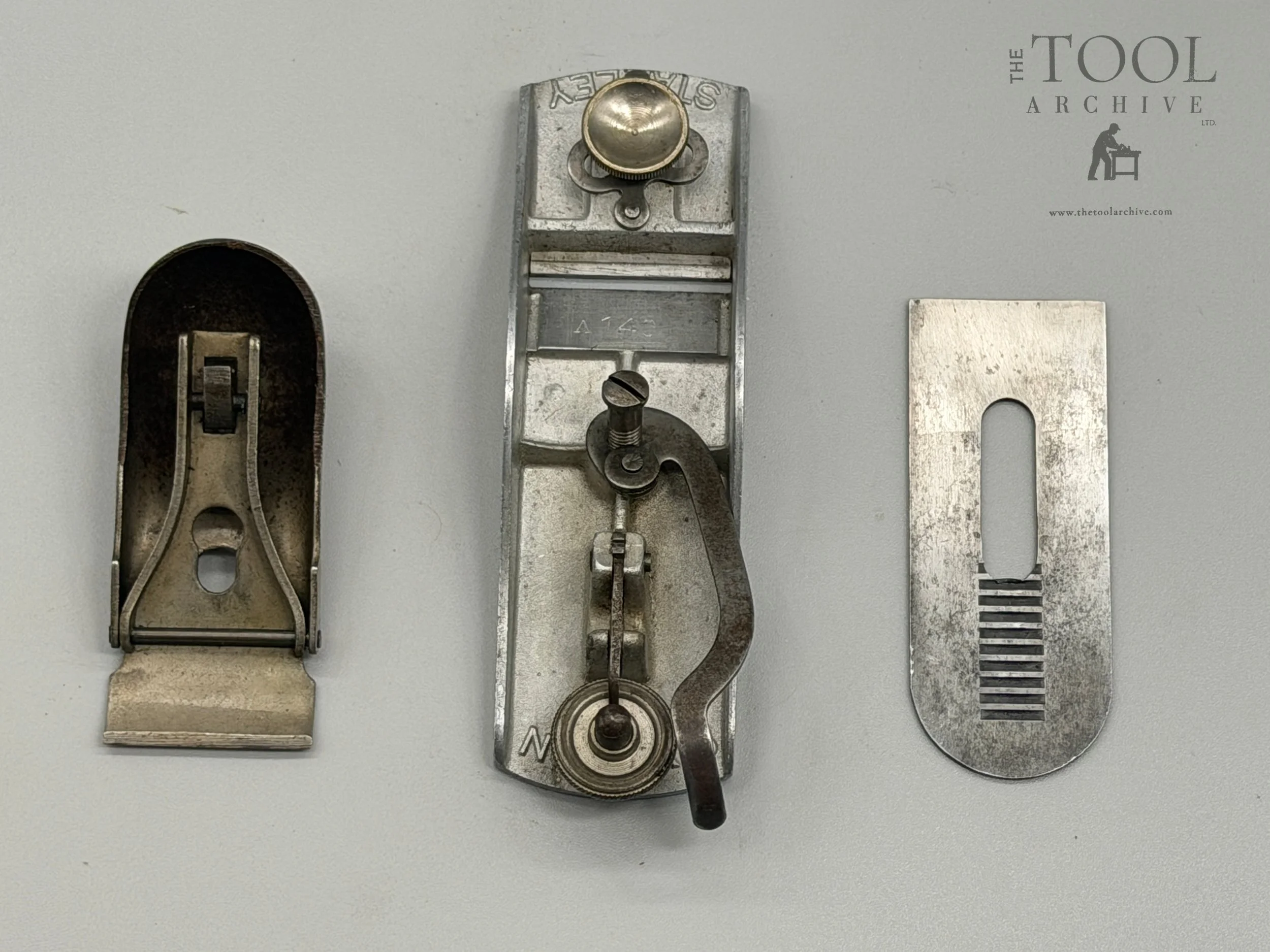
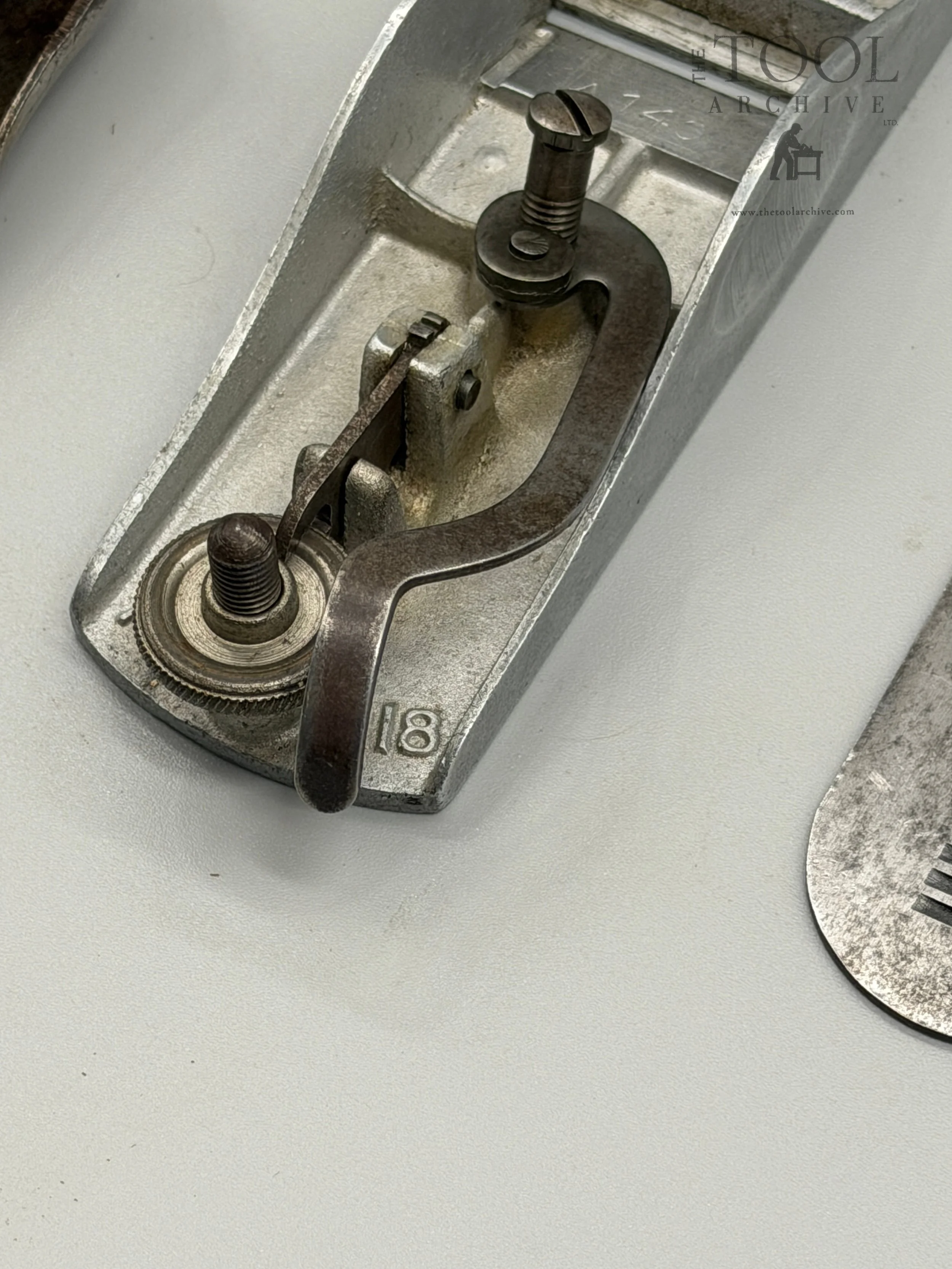
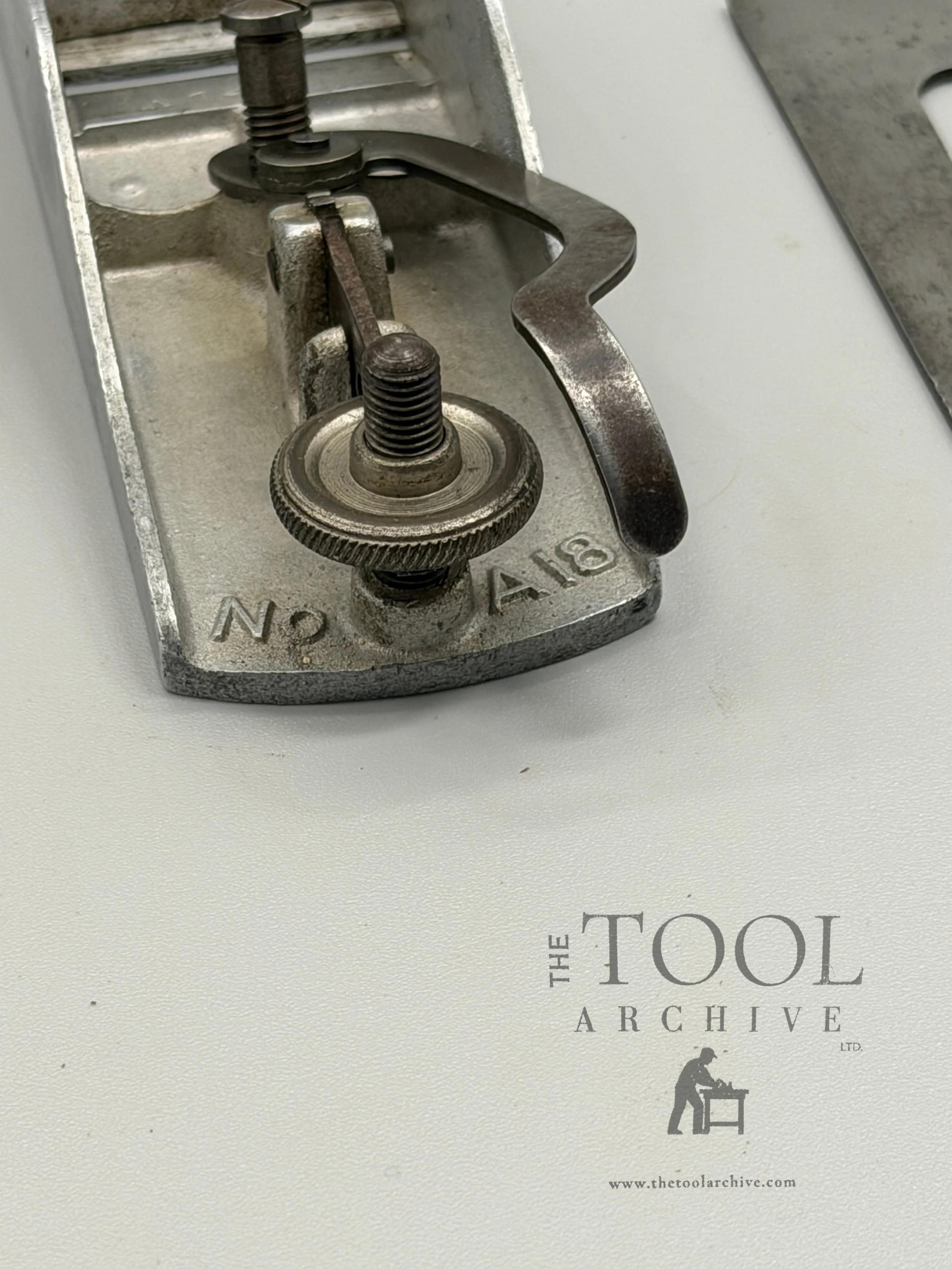
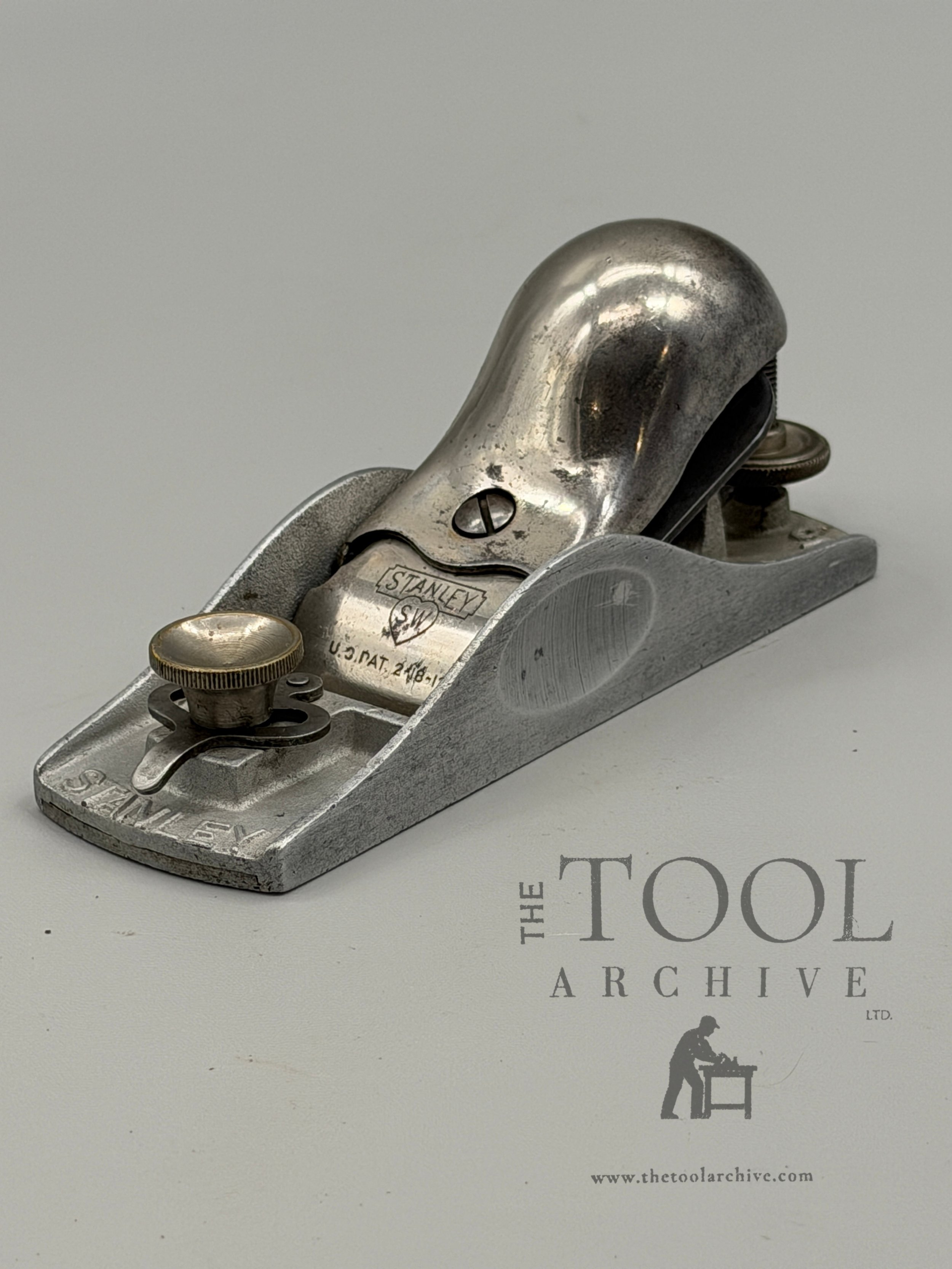
This Sweetheart aluminum No. A18 with Sweetheart iron and largely intact nickel plating is a great example of a well-cared-for aluminum block plane. Aluminum: not just for beer cans anymore.
Plus, we presume the plane body is totally recycleable with your cans if you get sick of it and really want to piss off some tool collectors.
Ships to you carefully packed to the extreme and insured just in case.
Public Service Announcement: Pair the A18 with the A5 aluminum Jack in our separate listing, and you’ve got a solid beginner pair of planes that your woodworking friends will envy because you dare to be different with aluminum while they wallow in the iron age.
Stanley’s aluminum series of planes is one of the most intriguing in the seemingly endless catalog of the tool giant’s products. The goal when Stanley developed the aluminum planes was to reduce weight and, so the thinking went, reduce the woodworker’s fatigue from planing for extended periods of time. Sort of makes sense, and why not? So Stanley pioneered a cutting-edge manufacturing process that could take any regular-sized roll of aluminum foil (brand apparently did not matter), six empty 12 oz. beer cans (again, brand not relevant), and a cheap anodized aluminum carabiner and transform those raw materials into an aluminum block plane. The process evidently involved intense compression followed by decompression, elongation, curing, and final milling. Imagine that! You stick some random aluminum crap into a machine, and out pops an aluminum No. 18 block plane body, light as a feather. Elegant. Graceful.
Of course, nothing we just said is true. At least, we don’t have any reason to think it is true. But, as we like to say, anything’s possible! Dare to dream! We don’t really like saying those things. And now we’ve lost our train of thought. Ah, this plane!
This Sweetheart aluminum No. A18 with Sweetheart iron and largely intact nickel plating is a great example of a well-cared-for aluminum block plane. Aluminum: not just for beer cans anymore.
Plus, we presume the plane body is totally recycleable with your cans if you get sick of it and really want to piss off some tool collectors.
Ships to you carefully packed to the extreme and insured just in case.
Public Service Announcement: Pair the A18 with the A5 aluminum Jack in our separate listing, and you’ve got a solid beginner pair of planes that your woodworking friends will envy because you dare to be different with aluminum while they wallow in the iron age.